
 Worksheets
Freedom Week and Westward Expansion Review 2025-2026
Total questions: 36
Worksheet time: 20mins
Which event happened first?
Declaration of Independence
United States Constitution
Bill of Rights
What event happened at the end?
Declaration of Independence
United States Constitution
Bill of Rights
The First Amendment protects your right to freedom of speech, including your right to speak out against the government. True or false
True
False
What rights were created to protect the Bill of Rights?
all rights known to humanity
inalienable rights
protection against aliens
your right to participate in government
Why did the framers of the Constitution include the Separation of Powers in the Constitution?
so that each member of our government would understand their responsibilities to the people
to prevent conflicts between the federal government and state governments
to protect the rights of citizens in the United States
to prevent any area of government from becoming too powerful
"We hold these truths to be self-evident: that all men are created equal, that they are endowed by their Creator with certain unalienable Rights, that among these are Life, Liberty, and the pursuit of Happiness.--That to secure these rights, Governments are instituted among Men, deriving their just powers from the consent of the governed,--That whenever any Form of Government becomes destructive of these ends, it is the Right of the People to alter or to abolish it, and to institute new Government, laying its foundation on such principles and organizing its powers in such form, as to them shall seem most likely to effect their Safety and Happiness."
In which document is the above excerpt found?
Bill of Rights
Constitution
Declaration of Independence
Articles of Confederation
The idea that the power of government comes from the people is called?
Limited government
Popular sovereignty
Liberty
Republicanism
How can an amendment be defined?
a law
a change to the Constitution
a change to the Declaration of Independence
an inalienable right
What was created to encourage settlers to move West?
Interstate Commerce Act
Dawes Act
Manifest Destiny
Homestead Act
What was the goal of assimilation?
to force settlers to get along with Native Americans
to permanently destroy Native American customs
to force Native Americans to become more like Eastern European Americans
to encourage Native Americans to move to reservations
What was the purpose of the Dawes Act?
to encourage settlers to move West
to promote the assimilation of Native Americans
to encourage small farmers in the West to use the railroad to transport their products to market
to promote the complete annihilation of Native Americans

Why would the United States government promote the destruction of the buffalo?
The buffalo were a danger to the Transcontinental Railroad
The buffalo roamed freely, creating problems for settlers trying to farm
Buffalo hides and skulls were valuable exports for the U.S. economy
The buffalo were the basis of Native American survival; destroying them would make Native Americans dependent on the U.S. government
Why would settlers be attracted to move to Texas?
Texas has large expanses of open land for raising cattle
Texas has coastal areas that made it easy to ship products to the East
Texas had fewer Native Americans, making settlement easier
Texas has a variety of natural resources
Which motto represents the idea that our country emerged from 13 individual states to form a single united nation?
E Pluribus Unum
In God We Trust
Life, Liberty, and the Pursuit of Happiness
Carpe Diem
Which factor had the greatest effect on the increase in population and the development of cities and states in the West?
Natural resources
The transcontinental railroad
New technologies
The cattle boom
Why did western settlers not use traditional building materials like brick and wood to construct their houses?
lack of these resources in the West
traditional materials could not withstand the extreme temperatures of the West
traditional houses were too visible to Native Americans, increasing the possibility of attack
the special wagons needed to transport these materials were too expensive for settlers
What factors attracted people to move to the West? Select all that apply.
discovery of gold
free land
Manifest Destiny
the ability to participate in government
Which of these ways allow you to participate in government? Select all that apply.
vote
volunteer in a candidate's political campaign
write to your representatives
recall and referendum
On what was de Tocqueville's observation of populism based?
All people can participate in government
All men are created equal
All people enjoy personal freedoms (liberties)
All people are unique and can express their opinions
What name did de Tocqueville give to the idea that everyone in society was equal; that there are no social classes or social hierarchy?
Egalitarianism
Populism
Liberty
Laissez-Faire
What does the idea of Laissez-faire refer to?
the government should stay out of private business
the government should allow more participation from its citizens
the government should govern with justice
the government should hold elections instead of appointing rulers
The idea that it was God's will for America to expand from the Atlantic Ocean to the Pacific Ocean was called what?
Assimilation
Manifest Destiny
Egalitarianism
Laissez-faire
Which part of the United States was most affected by the Homestead Act?
East Coast
West Coast
Great Plains
Appalachian Mountains
What was the effect of the Dawes Act?
moved Native Americans to reservations
gave tribal lands to individuals, encouraging Native Americans to "own" property
prevented white settlers from moving onto reservation lands
forced Native Americans to give up all aspects of their culture
What type of land was assigned to Native Americans as reservations?
swampy land in the South
mountainous land in the far West
fertile soil so they could develop as farmers
undesirable land
Why is the Battle of Wounded Knee so significant?
It showed that Native Americans outnumbered U.S. government soldiers.
It was the last armed conflict between the U.S. Army and Native Americans.
More than 300 Native Americans died, including women and children.
It ended the Native American culture of the time.
What were the formerly enslaved people called who moved west of the Mississippi River to seek opportunities and escape discrimination in the South?
Cowboys
Fugitives
Settlers
Exodusters
The telegraph, the steel plow, and prairie windmills are innovations that...
helped gold seekers find precious metals in the Yukon
enabled agriculture in the Great Plains
allowed more people to move west
helped move cattle to railroads for export to the East
The Battle of Little Big Horn...
(select all that apply)
was Custer's last stand
the Native Americans outnumbered the U.S. Army
led to the massacre of 300 Native Americans, many of whom were women and children
was led by Sitting Bull and Crazy Horse
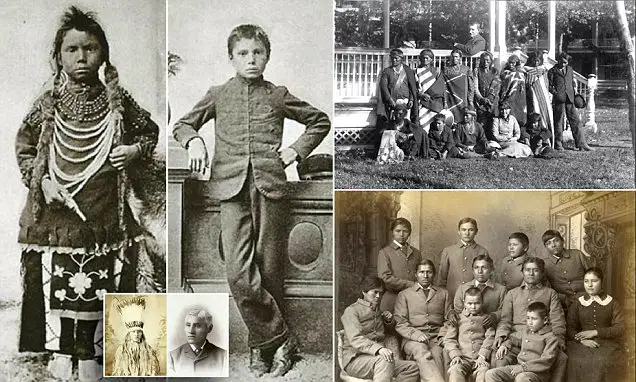
What do these photographs demonstrate?
the Americanization/assimilation of Native Americans
rights of Native Americans to become U.S. citizens
nativism
effect of the Dawes Act
What are the requirements to become a naturalized citizen in the U.S.? Select all that apply.
must be 18 years old
be able to read, speak, and write basic English
have lived in the U.S. for 5 years
have taken a U.S. history class to better understand the principles of democracy
What was the Morrill Act?
federal land grants to states to build colleges and universities
federal land grants to states to build civic buildings such as courthouses and legislative chambers
moved Native Americans to reservations
federal land grants that gave settlers 160 acres of land for free
In popular sovereignty, how are the people the power of the government?
Through voting and electing representatives
Through paying taxes
By serving in the military
By obeying the laws
The Tenth Amendment to the Constitution is unique because?
powers are shared among the states
it prohibits cruel and unusual punishments
powers are shared between the federal government and the state governments, thus limiting federal powers
It grants the right to a speedy and public trial
How was cattle transported from places like Texas and other western states to the East Coast?
driven by cowboys along trails and then put on trains
put on trains and then driven by cowboys to the market
put on trains in Texas and other states from the ranch to the East Coast
driven by cowboys all the way to the markets on the East Coast
What was one of the main reasons why people settled in the West?
land grants such as the Homestead Act and the Morrill Act
the land was more fertile and easier for farming
people wanted the opportunity to learn from Native Americans
new inventions such as sod houses, steel plows, and prairie fans

