Wayground logo

Free Printable Worksheets

Font size

S
M
L
XL
Worksheets

9 Science Unit 4 Revision Quiz

Total questions: 46

Worksheet time: 47mins

Name
Class
Date
1.
The positive particles of an atom are 
a)
electrons 
b)
positrons 
c)
neutrons 
d)
protons 
2.
Electrons have this type of charge?
a)
negative
b)
positive
c)
neutral
3.
Particles in an atom that are neutral and have no charge are 
a)
negatrons 
b)
electrons 
c)
neutrons 
d)
protons 
4.
The particles that are found in the nucleus of an atom are
a)
neutrons and electrons
b)
electrons only
c)
protons and neutrons
d)
protons and electrons
5.

What two particles determine the mass number?

a)

Protons and electrons

b)

Electrons and neutrons

c)

Protons and neutrons

6.

What charge does an atom have when it GAINS electrons?

a)

Positive

b)

Negative

c)

Neutral

7.

When an atom loses an electron, it becomes a(n) _____________ ion.

a)

positive

b)

negative

c)

neutral

d)

polyatomic

8.
Two atoms of the same element but with different mass numbers are called________
a)
electrons
b)
isotopes
c)
variables
d)
electron cloud
9.
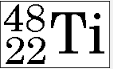
How many protons does this isotope of titanium have?
a)
48
b)
22
c)
26
d)
70
10.
What quantities vary between isotopes of an element?
a)
protons, electrons, and atomic mass
b)
protons, electrons, and atomic number
c)
neutrons and electrons
d)
neutrons and atomic mass
11.
If the number of electrons in an atom changes you make a(n) __________________.
a)
ion
b)
isotope
c)
new element
d)
isomer
12.
Ions are: 
a)
atoms with a positive or negative charge
b)
atoms with no charge
c)
atoms with ONLY a positive charge
d)
atoms with ONLY a negative charge
13.
How many neutrons does the isotope of lithium have?
a)
8
b)
3
c)
4
d)
5
14.
A helium nucleus with two protons and two neutrons is called a(n) ____.  
a)
alpha particle
b)
electroscope
c)
beta particle
d)
gamma ray
15.

The high-energy electrons given off during radioactive decay are called ____________________.

a)

beta-particles

b)

protons

c)

electrons

16.

During beta-particle emission, a neutron splits into a____________________.

a)

proton and electron

b)

neutron and electron

c)

neutron and proton

17.

The vertical (up and down) columns in the Periodic Table are called

a)

groups

b)

towers

c)

periods

d)

atomic numbers

18.
The atomic number tells you what?  READ THE ANSWERS CAREFULLY
a)
only the number of electrons
b)
 only the number of protons
c)
only the number of neutrons
d)
the number of both electrons and protons in an atom.
19.
What does the atomic mass tell you? 
a)
Basically,the number of electrons and protons
b)
The number of neutrons
c)
Basically, the number of protons and neutrons
d)
The number of protons.
20.
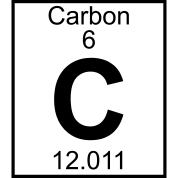
What does the 6 represent?
a)
atomic mass
b)
atomic number
c)
element name
d)
chemical symbol 
21.
What does 12.011 represent?
a)
atomic mass
b)
atomic number
c)
element name
d)
chemical symbol 
22.
What does the C represent?
a)
atomic mass
b)
atomic number
c)
element name
d)
chemical symbol 
23.
These are found on the Periodic Table.
a)
Compounds
b)
Elements
c)
Mixtures
24.

The horizontal (side to side) rows in the Periodic Table are called

a)

groups

b)

families

c)

periods

d)

atomic numbers

25.
Which has a pH below 7?
a)
Acid
b)
Base
26.
Which has a bitter taste?
a)
Base
b)
Acid
c)
flagella
d)
cila
27.
Which has a slippery texture?
a)
Acid
b)
Base
28.

What pH is the strongest base?

a)

1

b)

7

c)

4

d)

14

29.
Tastes Sour
a)
Acids
b)
Bases
c)
Salts
d)
All
30.
Human blood has a pH between 7.35 and 7.45. Which of the following best describes human blood?
a)
strongly acidic
b)
slightly acidic
c)
strongly basic
d)
slightly basic
31.
When dissolved in water, acids produce:
a)
bases
b)
salts
c)
hydrogen ions
d)
hydroxide ions
32.
Which type of ion does a base produce when it is dissolved in water?
a)
oxide
b)
oxygen
c)
hydrogen
d)
hydroxide
33.

A neutralization reaction (acid + base) will (almost) always produce...

a)

water & salt

b)

water

c)

salt

d)

water & carbon

34.
Why must we balance chemical equations? 
a)
Our teacher said so
b)
to abide by the law of conservation of energy
c)
to abide by the law of conservation of mass
35.
The substances listed on the right side of a chemical equation are the
a)
Yields
b)
Reactants
c)
Products
d)
Precipitates
36.
The substances listed on the left side of a chemical equation are the
a)
Products
b)
Coefficients
c)
Precipitates
d)
Reactants
37.
In chemical reactions, what does the principle of conservation of mass mean?
a)
Matter is not created or destroyed.
b)
The total mass of the reactants is greater than the total mass of the products.
c)
The total mass of the reactants is less than the total mass of the products.
d)
Matter is not changed.
38.
How many Hydrogen (H) atoms are in NH3O5
a)
3
b)
4
c)
5
d)
1
39.
A molecule is________
a)
a glob of gelatinous goo
b)
smaller than an atom
c)
filled with raisons
d)
more than one atom bonded together
40.
How many elements are in C6H12O6?
a)
1
b)
2
c)
3
d)
4
41.
What coefficient should be used to make the following equation balanced?
N2+O2--> _NO 
a)
1
b)
2
c)
3
d)
4
42.
Which problem is balanced?
(Check ALL answers)
a)
PbO2 + 2H2
b)
SO2 + H20 --> H2SO4
c)
2Na + 2H2O --> 2NaOH + H2
43.
How many HCl molecules do you need to balance this equation? 
Mg +  __HCl --->  MgCl2 + H2
a)
1
b)
2
c)
3
d)
4
44.
Is this balanced?
Al + O2 → 2Al2O3
a)
Yes
b)
No
45.

8.7: Combustion is when a __________ reacts with oxygen

a)

petrol

b)

fuel

c)

fire triangle

d)

carbon dioxide

46.
Why do we burn a fuel?
a)
I don't know.
b)
To release energy
c)
To lose energy
d)
To produce carbon dioxide