wayground logo

Free Printable Worksheets

Font size

S
M
L
XL
Worksheets

Periodic table families

Total questions: 21

Worksheet time: 18mins

Name
Class
Date
1.

Vertical columns on the periodic table are called ___?

a)

groups

b)

periods

c)

rows

d)

families

2.

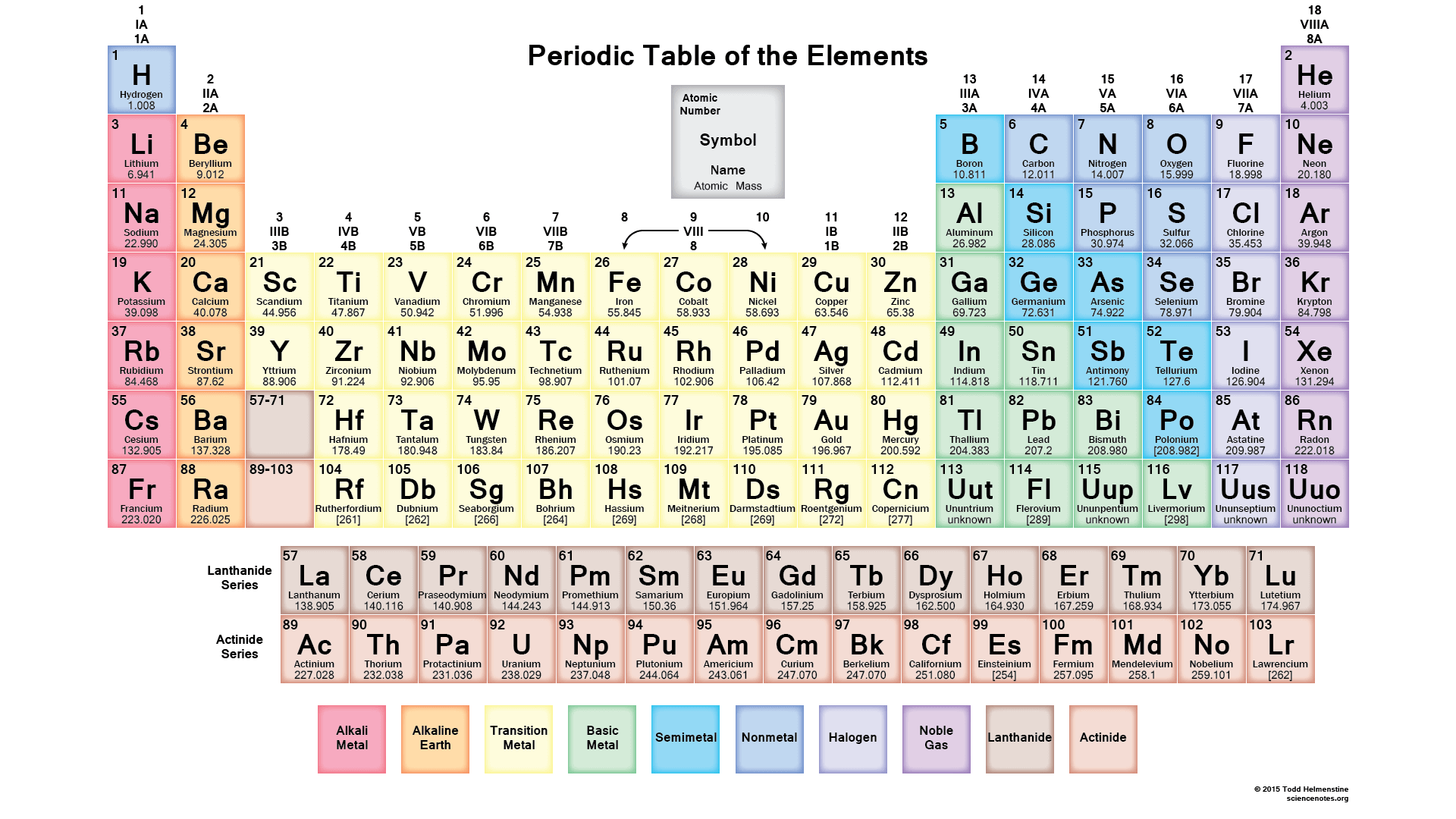
Which color on the image of the periodic table corresponds with the halogens.

a)

red

b)

black

c)

blue

d)

orange

3.

Which color on the image of the periodic table corresponds with the noble gases.

a)

red

b)

black

c)

blue

d)

orange

4.

Which color on the image of the periodic table corresponds with the transition metals.

a)

red

b)

black

c)

blue

d)

orange

5.

Horizontal rows on the periodic table are called ___?

a)

groups

b)

periods

c)

rows

d)

families

6.

Which family of elements reacts violently with water and exposure to oxygen?

a)

alkali metals

b)

alkaline earth metals

c)

lanthanides

d)

actanides

e)

transition metals

7.

The periodic table is mostly comprised of what type of element?

a)

Metals

b)

Nonmetals

c)

Metalloids

8.

When a halogen such as Chlorine, combines with an alkali metal to produce a what?

a)

compound

b)

salt

c)

mineral

d)

acid

9.

Which family of elements does not combine with other elements unless under special conditions in a laboratory?

a)

Noble gases

b)

Halogens

c)

Metalloids

d)

Alkaline earth metals

e)

Actinides

10.
The Modern Periodic Table of Elements is arranged by
a)
atomic mass
b)
atomic number
c)
valence electrons
d)
number of isotopes
11.
Sodium (Na) is found in group 
a)
1
b)
2
c)
3
d)
4
12.
The atomic number tells you what?  READ THE ANSWERS CAREFULLY
a)
only the number of electrons
b)
 only the number of protons
c)
only the number of neutrons
d)
the number of both electrons and protons in an atom.
13.
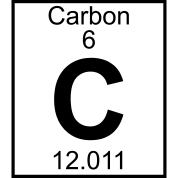
What does the 6 represent?
a)
atomic mass
b)
atomic number
c)
element name
d)
chemical symbol 
14.
What is a reactant?
a)
a volatile chemical
b)
a dangerous substance
c)
the substances you start with in a chemical reaction
d)
the substances that are formed by a chemical reaction 
15.
What is a product?
a)
a fancy word for make-up
b)
a volatile chemical
c)
the substances you start with in a chemical reaction
d)
the substances that are formed by a chemical reaction
16.
An acid reacts with metal to produce 
a)
Carbon dioxide 
b)
Hydrogen gas
c)
Hydrogen gas and water 
d)
Salt and hydrogen gas 
17.
An acid reacts with a metal carbonate to produce 
a)
Salt, water and hydrogen gas
b)
Salt, water and carbon dioxide
c)
Limewater
d)
Salt and water 
18.
Complete the following reaction:
Sulphuric acid + sodium carbonate
--> 
a)
Carbon dioxide + water 
b)
calcium carbonate + water + carbon dioxide 
c)
Sodium sulphate + water + carbon dioxide 
d)
Sodium chloride + water + carbon dioxide 
19.
Complete the following reaction:
Hydrochloric acid + magnesium hydroxide --> 
a)
Magnesium chloride + water 
b)
Magnesium + water
c)
Magnesium chloride + hydrogen gas 
d)
Magnesium chloride + water + carbon dioxide 
20.
Complete the following reaction:
Sulphuric acid + sodium carbonate
--> 
a)
Carbon dioxide + water 
b)
calcium carbonate + water + carbon dioxide 
c)
Sodium sulphate + water + carbon dioxide 
d)
Sodium chloride + water + carbon dioxide 
21.
An acid reacts with a metal carbonate to produce 
a)
Salt, water and hydrogen gas
b)
Salt, water and carbon dioxide
c)
Limewater
d)
Salt and water