wayground logo

Free Printable Worksheets

Font size

S
M
L
XL
Worksheets

Geography Unit 1 Study Guide

Total questions: 90

Worksheet time: 1hrs 4mins

Name
Class
Date
1.

What is weathering?

a)

The movement of sediment

b)

The breaking of sediment

c)

The dropping of sediment

2.

What is erosion?

a)

The movement of sediment

b)

The breaking of sediment

c)

The dropping of sediment

3.

What is deposition?

a)

The movement of sediment

b)

The breaking of sediment

c)

The dropping of sediment

4.

Water carrying sediment down a hill is an example of...

a)

weathering

b)

erosion

c)

deposition

5.

Water freezing inside a rock and breaking it into smaller sediment is an example of...

a)

weathering

b)

erosion

c)

deposition

6.

Beach waves dropping sand to create a beach is an example of...

a)

weathering

b)

erosion

c)

deposition

7.

All the water on Earth is known as...

a)

sediment

b)

lithosphere

c)

hydrosphere

8.

Small pieces of rock that have been weathered from a larger rock are known as...

a)

sand

b)

sediment

c)

soil

9.

The scientific term for land, crust or rock is...

a)

hydrosphere

b)

dirt

c)

lithosphere

10.

A landform made of sediment that is deposited where a river flows into an ocean or lake is called a...

a)

sea cave

b)

mountain

c)

delta

11.
What is an enormous mass of ice moving over land?
a)
Ice wedging
b)
Glacier
c)
Iceberg
d)
Dune
12.
Which agents  break down earth materials?
a)
wind only
b)
earthquakes and gravity
c)
ice and 007
d)
wind, water, and ice
13.
How does freezing water cause the weathering of rocks?  The freezing water—
a)
keeps the rocks in place
b)
makes the rocks last longer
c)
expands cracks and breaks rocks
d)
causes rocks to fall in landslides
14.
Rain washing away soil from a hillside
a)
Weathering
b)
Erosion
c)
Deposition
15.
Wind blowing sand from one location to another
a)
Weathering
b)
Erosion
c)
Deposition
16.
Which of the following actions causes the deposition of sand at a delta?
a)
river water slowing as it enters the ocean
b)
salt water & fresh water mixing together
c)
ocean waves transporting sand toward land
d)
ocean water slowing as it reaches the coast
17.
Which of the following best describes how erosion by groundwater might create a landform?
a)
Acidic water dissolves rock to form a cave
b)
Stream slowly wears away rock and soil
c)
Waves crashing against a shoreline
d)
Sediment building up to form a delta
18.
When would a river form a delta?
a)
when the river meanders across a plain
b)
when the river leaves the mountains
c)
when it is in the mountain
d)
when it enters the ocean
19.
What is groundwater?
a)
any form of liquid water
b)
water that is not moving
c)
water on Earth's surface
d)
water below Earth's surface
20.
Which landform is formed because of the erosion of groundwater?
a)
valley
b)
canyon
c)
channel
d)
cavern
21.
How does an alluvial fan form?
a)
where a stream enters an ocean
b)
when a stream overflows
c)
when a meandering stream is cut off
d)
when a stream reaches a flat area of land
22.
How does a sinkhole form?
a)
Stalactites erode a ceiling of a cave
b)
Streams in mountains erode sediment
c)
Underground water forms a cave
d)
Stream erodes soil making it wider
23.
What force is responsible for erosion and deposition in landslides?
a)
gravity
b)
ice
c)
wind
d)
temperature
24.
How does a glacier form?
a)
It must be below freezing & more snow melts than falls
b)
It must be mild and lots of precipitation
c)
It must be cold, more snow fall than melts
d)
It must freeze and be dry
25.
What is a type of mass movement by gravity?
a)
dune
b)
loess
c)
glacier
d)
mudslide
26.
Why is a loess so valuable?
a)
Very difficult to find.
b)
Doesn't erode easily.
c)
Contains bits of rock.
d)
Rich in minerals.
27.
What is responsible for the formation of sand dunes?
a)
Wind
b)
Water
c)
Gravity
d)
Ice
28.
What forms as wind slows?
a)
mudflows
b)
rockfalls
c)
dunes
d)
glaciers
29.
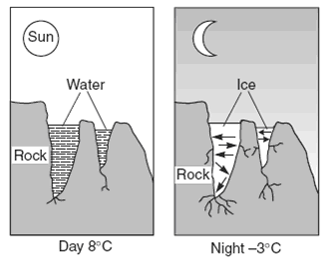
The diagrams  shows a natural process that weathers rock.
 Which statement best explains why this process results in weathering?
a)
frozen water acts as a solute
b)
water expands when it freezes
c)
the mass of water increases when it freezes
d)
frozen water dissolves most types of rock
30.
What happens when weathering and erosion work together?
a)
New Mountains are created
b)
The climate changes overnight
c)
Metal objects become rusty
d)
They change the Earth's surface
31.
How do plants weather rocks?
a)
during photosynthesis
b)
when roots grow into cracks of rocks and expand the rock
c)
when the plant moves water from the roots to the leaves
d)
Plants don't weather rocks
32.
The ___________of a mountain weathers the fastest
a)
bottom
b)
middle
c)
top
d)
all parts weather the same
33.
How does vegetation in the soil affect the rate of erosion?
a)
It doesn't affect erosion.
b)
It decreases erosion.
c)
It increases erosion.
34.
the breakdown or decomposition of rock that takes place when minerals change through chemical processes
a)
chemical weathering
b)
mechanical weathering
c)
erosion
d)
deposition
35.
fossil fuels react with water producing acid rain that wears minerals away in the rock
a)
chemical weathering
b)
mechanical weathering
c)
erosion
d)
deposition
36.

A rigid structure built from an ocean shore or from a bank (in rivers) that interrupts water flow and limits the movement of sediment used to prevent erosion.

a)

groins or groynes

b)

bridge

c)

levee

d)

dike

37.

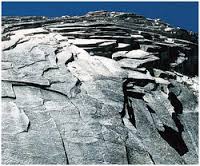
Which of the following features would be most affected by weathering?

a)

A

b)

B

c)

C

d)

D

38.

How would a sandblasted rock differ from a rock that hasn't been sandblasted?

a)

A sandblasted rock would be bigger

b)

A sandblasted rock would be smoother in shape and less jagged

c)

A sandblasted rock would be composed of volcanic material

d)

A sandblasted rock would be covered by water

39.

Why is it hard to see glacial erosion in action?

a)

Because glaciers are so big

b)

Because light from glaciers refracts too much

c)

Because glaciers move very, very slowly

d)

Because glacial erosion is usually very subtle

40.

What do floodplains, sandbars, and river deltas have in common?

a)

They've all been formed by water erosion

b)

They've all been formed by glacial erosion

c)

They've all been formed by wind erosion

d)

They've all been formed by sandblasting

41.

Based on the information presented in the video, what would be a simple way to prevent erosion?

a)

Blocking the wind

b)

Planting trees

c)

Preventing rainfall

d)

Preventing the flow of rivers

42.
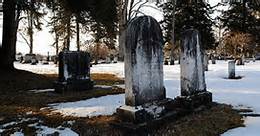
These gravestones have slowly broken down and turned a blackish color due to the action of:
a)
ice wedging
b)
abrasion
c)
acid rain
d)
mechanical weathering
43.

Potholes forming in the road after a cold winter is an example of what type of weather?

a)

mechanical weathering

b)

chemical weathering

44.
Ponds filling up with sediment and becoming marshes
a)
Weathering
b)
Erosion
c)
Deposition
45.
What is mechanical weathering?
a)
Process through which rocks are physically broken into smaller pieces.
b)
Rocks are broken down through chemical changes.
c)
Rocks are worn away from acid in plant roots.
d)
Rocks broken down by machinery.
46.

Which would most likely increase the erosion caused by a stream?

a)

Increased Rainfall

b)

Decreased animal life

c)

Decreased temperature

d)

Increased Evaporation

47.
A ______ is a section of the lithosphere that slowly moves over the asthenosphere, carrying large slabs of continental and oceanic crust.
a)
wedge
b)
plate
c)
chunk
d)
fault
48.
A break in Earth's crust along which rocks move is called a ________.
a)
plate
b)
rift
c)
fault
d)
breach
49.
_________ are vibrations that travel through Earth carrying the energy released during an earthquake.
a)
Seismic Waves
b)
Rumbles
c)
Plate Tectonics
d)
Convection Currents
50.
What is the name of the single landmass that began to break apart 200 million years ago?
a)
Panthalassa
b)
Laurasia
c)
Gondwanna
d)
Pangaea
51.
The process by which molten material adds new oceanic crust to the ocean floor is called ___________.
a)
Divergent boundary
b)
Sea-floor spreading
c)
Convergent boundary
d)
Renovating 
52.
What is an undersea mountain chain where new ocean floor is produced?
a)
Rift valley
b)
Deep-ocean trench
c)
Mid-ocean ridge
d)
Transform bounda
53.
A __________ is a deep valley along the ocean floor beneath which oceanic crust slowly sinks toward the mantle.
a)
deep-ocean trench
b)
rift valley
c)
sea-floor spreading
d)
mid-ocean ridge
54.
A _________ is a valley that forms where two plates move apart.
a)
Fissure
b)
Rift valley
c)
Sea-floor spreading
d)
Fault
55.
Do sea breezes typically happen during the day or night?
a)
Day
b)
Night
56.

What landform causes the rain shadow effect?

a)

mountains

b)

lakes

c)

plains

d)

valley

57.

As you go to the top of a mountain, what happens to the temperature?

a)

nothing

b)

it decreases

c)

it increases

d)

it fluctuates between warm and cold

58.

A rain shadow forms on the ___________ side of a mountain as a result of ___________ rainfall there.

a)

windward; more

b)

windward; less

c)

leeward; more

d)

leeward; less

59.

On the leeward side of a mountain, you might find _____.

a)

heavy rainfall

b)

less vegetation (plants)

c)

more vegetation (plants)

d)

more snow

60.

Which side of a mountain range is closer to the ocean?

a)

leeward side

b)

rain shadow side

c)

windward side

d)

downwind side

61.

What is the windward side of a mountain?

a)

The wet side that is upwind of the mountain.

b)

The side of the mountain with the most people.

c)

The dry side that is downwind of the mountain.

d)

The side of the mountain with the rain shadow.

62.
The Gulf stream carries _____________ water from the east coast of The United States to the West coast of Europe.
a)
Cold
b)
Warm 
c)
Freezing
d)
Fresh
63.
The Coriolis Effect is caused by
a)
Earth rotating around the sun
b)
Earth rotating on its axis
c)
The tides
d)
Gravity
64.

Due to the Coriolis Effect, water in the northern hemisphere moves

a)

clockwise

b)

counter clockwise

c)

both

d)

neither

65.

Due to the Coriolis Effect, water in the southern hemisphere moves

a)

clockwise

b)

counter-clockwise

c)

both

d)

neither

66.
Warm ocean currents generally come from
a)
The North Pole
b)
The South Pole
c)
The Equator
d)
Both A and B
67.
Ocean currents have an affect on which two things
a)
climate and weather
b)
temperature and density
c)
land and sea
d)
equator and poles
68.
A strong surface current that runs along the east coast of the United States and carries warm water to Europe.
a)
California Current
b)
Global Conveyor Belt
c)
Gulf Stream
d)
Surface Current
69.
The spinning of an object on its axis is called______
a)
orbit
b)
rotation
c)
revolution
d)
tide
70.
Day and night is caused by the _____________ of earth on its axis.
a)
revolution
b)
orbit
c)
rotation
71.
The earth orbits around...
a)
The sun.
b)
the moon
c)
other planets
d)
the Milky Way
72.
The Earth's _______ is an imaginary line that goes from the North Pole to the South Pole.
a)
vernal equinox
b)
axis
c)
solar eclipse
d)
solar flare
73.
1. What is gravity?
a)
A type of rock
b)
A type of plate boundary
c)
When two objects are attracted to each other.
74.
What is at the center of the Solar System?
a)
Earth
b)
Moon
c)
Sun
d)
Jupiter
75.
When the Earth travels all the way around the Sun, it is called a . . .
a)
Day
b)
Rotation
c)
Year
d)
Spin
76.
It takes the Earth _______ days to travel all the way around the Sun.
a)
28
b)
100
c)
24
d)
365
77.
When the Earth spins around its own axis one whole time, it is called a ....
a)
Year
b)
Day
c)
Hemisphere
d)
Seasons
78.
It takes the Earth ___ hours to complete a rotation.
a)
12
b)
24
c)
50
d)
365
79.
The rotation of the Earth causes . . .
a)
day & night
b)
summer & winter
c)
fall & spring
d)
Leap Year
80.
At position A, which hemisphere would have summer?
a)
Northern hemisphere
b)
Southern hemisphere
81.
What happens when the area in which you live tilts away from the sun?
a)
It is summer.
b)
It is spring.
c)
It is winter.
d)
It is fall.
82.
What is responsible for the moon's illumination?
a)
infrared rays
b)
sunlight reflecting on the surace of the moon
c)
sunlight bouncing off the earth's atmosphere
d)
gamma rays
83.
Which is the MAIN cause of the ocean's tides?
a)
the tilt of the Earth's axis
b)
The earth's rotation on it's axis
c)
the gravitational pull of the moon,
d)
the uneven heating of the oceans by the sun
84.
What do June 21 and December 21 have in common?
a)
equinox dates
b)
the moon is full
c)
solstice dates
d)
the cold fronts blow in
85.
a natural satellite that orbits a planet. 
a)
sun
b)
atmosphere
c)
moon
d)
craters
86.
What season is being experienced in the southern hemisphere when the northern hemisphere is tilted away from the sun?
a)
Summer
b)
Fall
c)
Winter
d)
Spring
87.
The Earth's _____ causes the daily light cycle of day & night, while the Earth's _____ around the sun is called a year.
a)
revolution; rotation
b)
rotation; revolution
c)
tilt; revolution
d)
tilt; rotation
88.
In which two sections of the image shown would Earth be experiencing an equinox?
a)
A and B
b)
A and C
c)
B and D
d)
D and C
89.
In which two sections of the image shown would Earth be experiencing a solstice?
a)
A and B
b)
A and C
c)
B and D
d)
D and C
90.
WHAT DOES NASA  STAND FOR ?  
a)
NATIONAL AERONAUTICS AND SPACE ADMINISTRATION
b)
NATIONAL ADMINISTRATION FOR SPACE AND AIR EXPLORATION
c)
NATIONAL ALLIANCE OF SPACE AND AIR TRAVEL 
d)
NAUTICAL ADMINISTRATION AND SPACE TRAVEL