wayground logo

Free Printable Worksheets

NEW

Font size

S
M
L
XL
Worksheets

Biomolecules

Total questions: 50

Worksheet time: 55mins

Name
Class
Date
1.
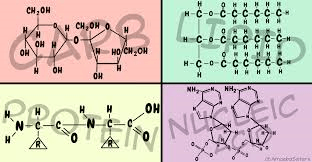
What are the four biological molecules?
a)
proteins, carbohydrates, lipids, nucleic acids
b)
A, T, C, G
c)
water, air, earth, and fire
d)
Joe, Nick, and Kevin Jonas
2.
Which biomolecule is also known as enzymes?
a)
Carbohydrate
b)
Lipid
c)
Nucleic Acid
d)
Protein
3.
Which biomolecule are in starches and fibers?
a)
Lipid
b)
Protein
c)
Nucleic Acid
d)
Carbohydrate
4.
Which biomolecule is made of nucleotides and contain you DNA?
a)
Carbohydrate
b)
Lipids
c)
Protein
d)
Nucleic Acid
5.

Which biomolecule helps form muscles?

a)

Nucleic Acid

b)

Carbohydrate

c)

Protein

d)

Lipids

6.
Which biomolecule is responsible for insulation and energy storage?
a)
Protein
b)
Nucleic Acid
c)
Lipid
d)
Carbohydrate
7.
Which biomolecule is made of amino acids?
a)
Nucleic Acid
b)
Carbohydrate
c)
Protein
d)
Lipid
8.
Which biomolecule is your main source of quick energy?
a)
Nucleic Acid
b)
Protein
c)
Lipid
d)
Carbohydrate
9.
Which biomolecule contains fats and oils?
a)
Proteins
b)
Nucleic Acid
c)
Lipids
d)
Carbohydrate
10.
Proteins don't have specific shapes.
a)
True
b)
False
11.
What elements are common to all 4 biomolecules?
a)
Carbon, hydrogen, nitrogen
b)
Carbon, Nitrogen, Phosphorus
c)
Carbon, Hydrogen, Oxygen
d)
Carbon, Hydrogen, Phosphorus
12.
What does the word organic mean?
a)
has nitrogen
b)
has sulfur
c)
has carbon
d)
has oxygen
13.
Which of the following is NOT a biomolecule?
a)
Water
b)
Nucleic Acid
c)
Protein
d)
Lipid
14.
A monomer is ...
a)
a single atom
b)
a building block for polymers
c)
a single element
d)
is an inorganic molecule
15.
What is the monomer for a protein?
a)
Monosaccharide
b)
Triglyceride
c)
Amino Acid
d)
Nucleotide
16.
The more bonds a molecule has, the more....
a)
water is stored
b)
force is stored
c)
energy is stored
d)
oxygen is stored
17.
The process that builds molecules by removing water to bind them together is
a)
Hydrolysis
b)
Protein Synthesis
c)
Dehydration Synthesis
d)
Lysis
18.
Identify the biomolecule
a)
monosaccharide
b)
disaccharide
c)
polysaccharide
d)
glycogen
19.
Identify the biomolecule
a)
Protein
b)
Lipid
c)
Carbohydrate
d)
Nucleic Acid
20.
This biomolecule would be used for
a)
Building enzymes
b)
Storing energy
c)
Key source of energy
d)
Storing genetic information
21.
Lipids are made of
a)
monosaccharides
b)
amino acids
c)
glycerol and 3 fatty acids
d)
nucleotides
22.
Which examples are a sources of energy?
a)
Starch, cellulose, glycogen
b)
Valine, Histidine, Cysteine
c)
DNA, RNA
d)
Unsaturated and Saturated Fats
23.

Which of the following is represented in the image?

a)

Nucleotide

b)

Carbohydrate

c)

Lipid

d)

Protein

24.
Lipids are made up of which of the following?
a)
glycerol and fatty acids tails
b)
glycerol and monolipids
c)
fatty acids and phosolipids
d)
amino acids and nucleotides
25.
The loss of a protein's structure is called...
a)
Denaturation
b)
Unfolding
c)
Coiling
d)
Inactivation
26.
What is the monomer of nucleic acids?
a)
Glycerol
b)
Monosaccharides
c)
Amino Acids
d)
Nucleotides
27.
The general structure for a lipid can be described by which letter?
a)
F
b)
C
c)
E
d)
D
28.
Which is a Carbohydrate's monomer?
a)
Sugar
b)
Amino acids
c)
Monosacharide
d)
Nucleotide
29.

When 2 amino acids undergo condensation, what bond is formed?

a)

Hydrogen bond

b)

Peptide bond

c)

Van der Waals

d)

Hydrophobic interaction

30.

All amino acids must have these EXCEPT

a)

Carboxylic

b)

Aldehyde

c)

Amine

d)

Hydrogen

31.

The polymer of carbohydrate EXCEPT

a)

Starch

b)

Collagen

c)

Cellulose

d)

Glycogen

32.

The molecule shown below is

a)

ATP

b)

ADP

c)

AMP

d)

a polysaccharide

e)

a sugar

33.

The level of polypeptide folding in which the primary sequence coils around itself, stabilized by regularly spaced hydrogen bonds, is called

a)

primary structure

b)

alpha helix

c)

beta sheet

d)

tertiary structure

e)

quaternary structure

34.

What is the highest level of structure represented below? (Note: in this model, different polypeptide chains are represented by different colors)

a)

primary structure

b)

alpha helix

c)

beta sheet

d)

tertiary structure

e)

quaternary structure

35.

Which of the following levels of protein structure is often stabilized by S-S bonds?

a)

primary structure

b)

secondary structure

c)

tertiary structure

d)

quaternary structure

e)

both tertiary and quaternary structures

36.

What does N-terminus refer to?

a)

The first amino acid with the abbreviation 'N' in the protein

b)

The end of a protein with a free carboxylic acid group

c)

A protein chain

d)

The end of a protein with a free amine group

37.

Glucose molecules in cellulose are linked by ............... glycoside bonds.

a)

α;1→4

b)

β;1→4

c)

α;1→6

d)

β;4→1

e)

β;1→6

38.
Which type of bond holds two water molecules together?
a)
polar covalent bond
b)
ionic bond
c)
hydrogen bond
d)
peptide bond
39.

The process used to split polymers; this is done by adding water

a)

Dehydration

b)

Hydrolysis

c)

Condensation

d)

Tetratonic

40.

The image is an example of a

a)

Disaccharide

b)

Polysaccaride

c)

Polypeptide

d)

Triglyceride

41.

Organic or Inorganic?

a)

organic

b)

inorganic

42.
Which type of carbohydrate is this?
a)
monsaccharide
b)
disaccharide
c)
polysaccharide
d)
glyceride
43.

Name this carbohydrate:

a)

Glycogen

b)

Starch

c)

Cellulose

d)

Chitin

44.

______+_____= lactose

a)

glucose + glucose

b)

glucose+ fructose

c)

glucose + galactose

d)

amylose + amylopectin

45.

The bond linking these two monomers is called a:

a)

1,4 Glycosidic Bond

b)

1,6 Glycosidic Bond

c)

Peptide Bond

d)

Hydrogen Bond

46.

This is a section of which polysaccharide?

a)

Amylose

b)

Amylopectin

c)

Cellulose

d)

Chitin

47.

Which isomer of glucose is this?

a)

Beta glucose

b)

Alpha glucose

48.

Which isomer of glucose is this?

a)

Beta glucose

b)

Alpha glucose

49.
Cellulose s a polymer made from:
a)
Alpha Glucose
b)
Beta Glucose
c)
Ribose
d)
Amino Acids
50.

Name the polysaccharide shown

a)

Glycogen

b)

Starch

c)

Chitin

d)

Cellulose