
 Worksheets
Week 2 Microevolution Quiz
Total questions: 15
Worksheet time: 20mins
What is the term for a feature that allows an organism to survive better in its environment?
variation
adaptation
homologous structure
vestigial structure


When organisms are better adapted to their environment they will survive and reproduce more successfully than organisms less adapted. This process is called what?
Selective breeding
Natural Selection
Cloning
Evolution of all species
What is the study of organisms at the early stages of development?
DNA studies
Comparative Embryology
Extinction
Fossil Record

If 98 out of 200 individuals in a population express the recessive phenotype, what percent of the population would you predict would be heterozygous?
70%
30%
42%
49%

What type of selection is depicted in the picture where one phenotype is favored?
stabilizing
directional
disruptive
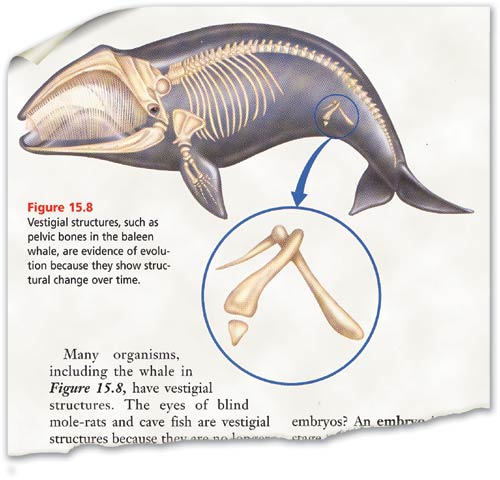
The hind leg bones in a whale, which are a rudimentary structure in humans corresponding to a functional structure or organ in ancestral animals, are examples of
homologous structures
analogous structures
fossils
vestigal structures
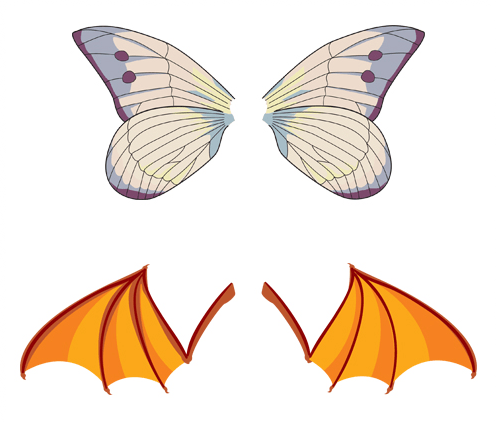
Body parts that share a common function, but not structure would be considered
Homologous structure
Analogous structure
Structural adaption
Functional adaption
Within a population of 500 butterflies, the color purple is dominant over the color white. 200 of the butterflies are white. What is the frequency of homozygous dominant individuals? Give your answer as a decimal to the nearest hundredth.
.47
.37
.14
.4
In a population that is in Hardy-Weinberg equilibrium, the frequency of the homozygous recessive genotype is 0.09. What is the frequency of individuals that are homozygous for the dominant allele?
.49
.42
.09
.7

