
 Worksheets
Unit 2 Review
Total questions: 76
Worksheet time: 1hrs 26mins
Name
Class
Date
1.
What subject is attracted to a magnet?
a)
Silver
b)
Water
c)
Metal
d)
Iron
2.
What happens when two north poles of a magnet are placed together?
a)
they repel
b)
they attract
c)
they cancel each other out
d)
the strength of the magnet is doubled
3.
True or False: All metals stick to magnets.
a)
True
b)
False
4.
True or False:
A magnet wrapped in cloth will attract paper clips.
A magnet wrapped in cloth will attract paper clips.
a)
True
b)
False
5.
What do magnets stick to?
a)
copper
b)
wood
c)
iron
d)
plastic
6.
Magnetism is a type of ____________
a)
force
b)
book
c)
plant
d)
animal
7.
When two magnets attract, they ______________
a)
push apart
b)
change color
c)
get colder
d)
pull together
8.
When two magnets repel, they ________________
a)
change color
b)
pull together
c)
push apart
d)
get colder
9.
The force of magnetism is stronger when magnets are ________________
a)
cold
b)
round
c)
closer together
d)
farther apart
10.
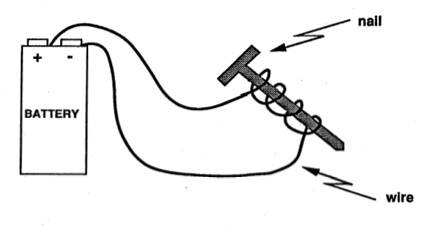
This is a picture of a simple electromagnet. How can the electromagnet be made stronger?
a)
Add more coils of wire to the nail.
b)
Use a smaller battery.
c)
Reverse the poles of the magnet.
d)
Remove all the coils and the nail.
11.
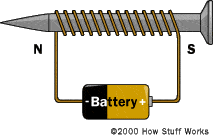
What kind of magnet can be turned on and off?
a)
refridgerator magnet
b)
electromagnet
c)
magnetite
d)
iron
12.
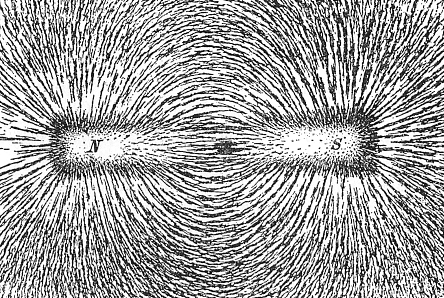
Surrounding every magnet is a __________ __________.
a)
magnetic field
b)
electrical current
c)
another magnet
d)
an enemy
13.
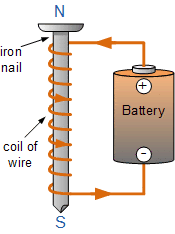
In order for an electromagnet to be formed, an __________ current must pass through a coil of __________ wrapped around an ________ core.
a)
wire, iron, electric
b)
electric, wire, iron
c)
iron, electric, wire
d)
excited, hair, apple
14.
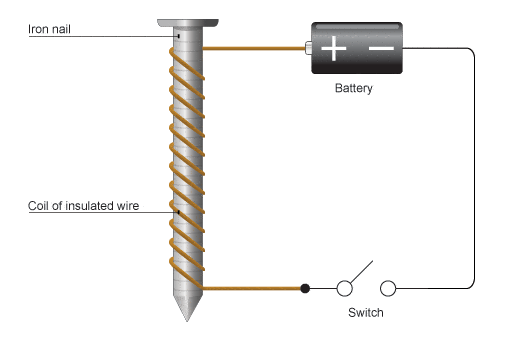
What is most likely to happen when the switch is closed?
a)
A magnetic field should be produced
b)
The nail will rust
c)
The battery will explode
d)
The wire will catch on fire
15.
What are the ends of a magnet called?
a)
East and west poles
b)
Left and Right ends
c)
North and South ends
d)
North and South poles
16.

How do electromagnets differ from regular magnets?
a)
A. They can be turned off and on
b)
B. Their polarity can be reversed
c)
C. Their strength can be changed
d)
D. All of the above
17.

The picture shows an electrical circuit. This circuit is a series circuit because:
a)
It has 3 light bulbs.
b)
The same current flows through all three light bulbs.
c)
It uses a single battery.
d)
The electrical current is divided between the three light bulbs.
18.
Levi is wanting to light a bulb. What does he need to get the bulb to light?
a)
A battery and a paper clip
b)
A battery and a wire
c)
A paper clip and a wire
d)
A switch and a wire
19.

If you replace the paper clip with a plastic spoon, what happens?
a)
The bulb doesn't light
b)
The bulb is dimmer
c)
The wires get hot
d)
There is no change
20.
A series circuit has ____ path(s) that the electric current can take.
a)
One
b)
Two
c)
Three
d)
Four
21.
In a parallel circuit, if one connection is broken, all of the connections stop working.
a)
True
b)
False
22.
Which of these objects is an insulator?
a)
Copper Wire
b)
Paper Clip
c)
Steel Pole
d)
Rubber Gloves
23.
An object through which electrons can easily flow is called a(n) ___________.
a)
Conductor
b)
Insulator
24.

Which statement is true?
a)
The light bulb will light up because the circuit is complete.
b)
The light bulb will light up because the circuit is broken.
c)
The light bulb will not light up because the circuit is complete.
d)
The light bulb will not light up because the circuit is broken.
25.
Which one is a conductor?
a)
wood
b)
iron
c)
plastic spoon
d)
paper
26.

Would would best complete this circuit?
a)
A wire
b)
A switch
c)
A battery
d)
A light bulb
27.

What kind of circuit is this?
a)
series
b)
parallel
28.
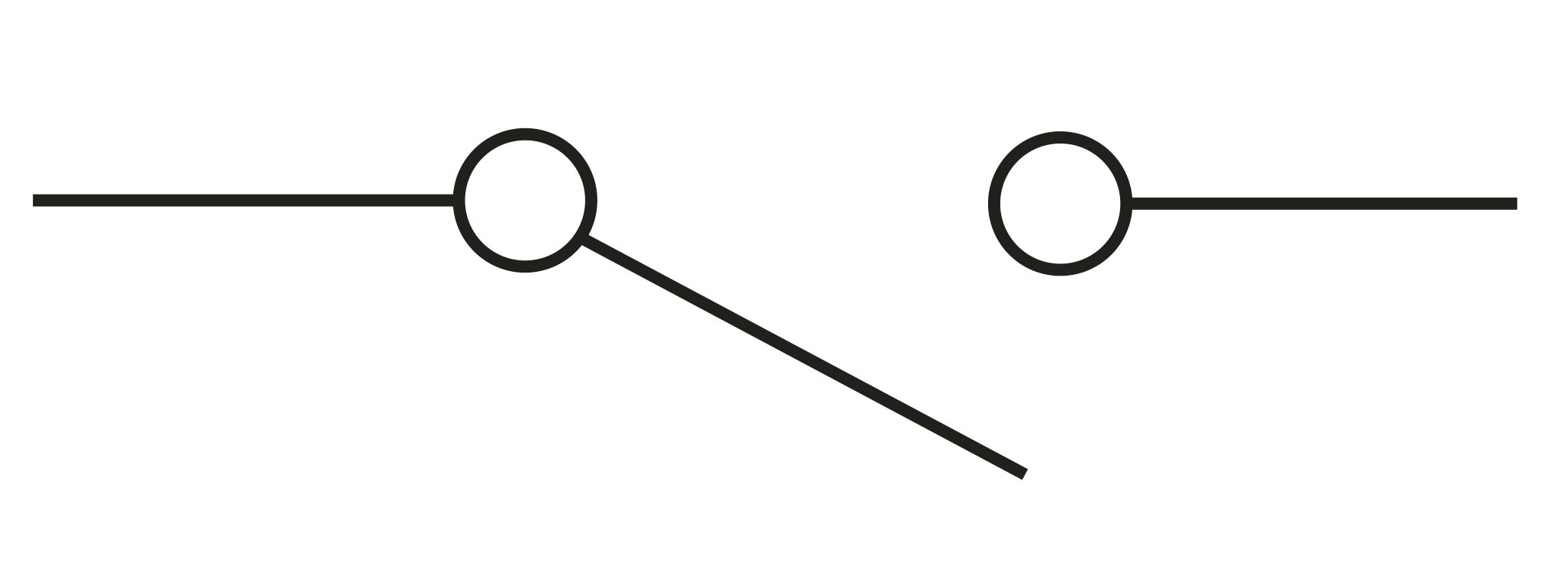
this is the symbol for a _____?
a)
switch
b)
light
c)
battery
d)
wires
29.

What kind of circuit is this?
a)
Series
b)
Consecutive
c)
Parallel
d)
Training
30.
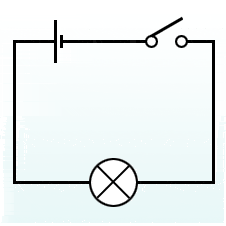
this circuit is .....?
a)
open
b)
parallel
c)
closed
d)
The cutest little circuit evah!
31.
When all parts of the circuit are connected it is a ______ circuit.
a)
open
b)
closed
32.
Protons and Electrons balance the charge of an atom.
a)
True
b)
False
33.
Electric charges that are alike _______ each other.
a)
Attract
b)
Repel
34.
What charge does a proton have?
a)
negative (-)
b)
positive (+)
c)
neutral or no charge (0)
35.
What charge does an electron have?
a)
negative (-)
b)
positive (+)
c)
neutral or no charge (0)
36.
Gravity attracts all objects towards one another.
a)
False
b)
True
c)
It depends
37.
Batteries and power plants are examples of ______________.
a)
energy sources
b)
energy conduction
c)
energy transformation
38.

______________ are materials such as rubber that do not allow charges to flow.
a)
conductors
b)
circuits
c)
insulators
d)
amps
39.

A complete, unbroken path that charges can flow through is called an __________________.
a)
conductor
b)
electric circuit
c)
electric current
d)
insulator
40.

The unit for the rate of current is the ______________.
a)
ampere
b)
volt
c)
ohm
d)
joule
41.

Metals such as copper and aluminum are good ______________.
a)
insulators
b)
conductors
c)
circuits
d)
charges
42.

Which of the following does not determine the resistance of a wire?
a)
temperature
b)
color
c)
length
d)
diameter
43.

A circuit with only one path for the current to flow is a __________________.
a)
parallel circuit
b)
series circuit
c)
mini circuit
d)
device
44.

Circuits often include a _____________ to control the flow of current.
a)
switch
b)
conductor
c)
voltage
d)
current
45.
If the Voltage is increased and the resistance stays the same, Current will
a)
Increase
b)
Decrease
c)
Stay the same
d)
Not enough info
46.
If the Voltage stays the same and Resistance is increased, Current will
a)
Increase
b)
Decrease
c)
Stay the same
d)
Not enough info
47.
What is current measured in?
a)
Ω (Ohms)
b)
V (Volts)
c)
A (Amps)
d)
W (Watts)
48.
What is resistance measured in?
a)
Ω (Ohms)
b)
V (Volts)
c)
A (Amps)
d)
W (Watts)
49.
AC stands for ___.
a)
Alternating Current
b)
Attraction Connections
50.
The flow of electricity in a circuit-
a)
current
b)
flow
c)
circuit
51.
Magnetism created by an electric current
a)
electricity
b)
electromagnetism
c)
wind energy
52.
____________ allows electricity to flow.
a)
A conductor
b)
An insulator
c)
A magnet
53.
____________ stops the flow of electricity.
a)
A conductor
b)
An insulator
c)
A magnet
54.
To complete a circuit the switch must be
a)
unattached
b)
open
c)
closed
55.
When the switch is closed, the light
a)
comes on
b)
stays off
c)
burns out
56.
The plastic around the wire is
a)
conductor
b)
insulator
c)
decoration
57.
Two batteries in a circuit make the lights in the circuit brighter than one battery.
a)
true
b)
false
58.
Two types of circuits are
a)
parallel and magnetic
b)
electromagnetic and series
c)
series and parallel
59.
An example of a parallel circuit is
a)
the wiring in a house
b)
a flashlight
c)
a single circular path
60.
The flow of electricity requires a
a)
complete path
b)
incomplete path
c)
insulated current
61.
All objects in the universe have a gravitational attraction to each other.
a)
True
b)
False
62.

What force brings the pencil down?
a)
Applied
b)
Magnetic
c)
Normal
d)
Gravitational
63.
An _______ force must act on an object for it to CHANGE it's motion
a)
balanced
b)
unbalanced
c)
gravitational
d)
electrical
64.
What is defined as a push or pull?
a)
force
b)
motion
c)
vector
d)
speed
65.
Velocity is both ____ and _____.
a)
speed , direction
b)
direction, mass
c)
volume, density
d)
direction, magnitude
66.
The unit we use to measure acceleration is ___.
a)
meters / second
b)
meters
c)
seconds
d)
meters / second / second
67.
Acceleration is a change in ________.
a)
direction
b)
speed
c)
velocity
d)
distance
68.
You are walking in a straight line at a consistent speed. Do you have acceleration?
a)
no
b)
yes
69.
As you walk you make a right turn. Do you have acceleration?
a)
yes
b)
no
70.
What is the speed of an object that travels 60 meters in 4 seconds?
a)
240 m/s
b)
15 m/s
c)
0.067 m/s
d)
15 mph
71.
What is the speed of a car that travels 400 m in 20 minutes?
a)
20 miles/hr
b)
20 m/min
c)
800 m/min
d)
200 miles/hr
72.
What is the speed of a man who runs 10 miles in 1 hr?
a)
20 miles
b)
10 m/min
c)
10 miles/hr
d)
20 hrs
73.
A train travels 25 km in .5 hrs. How fast is the train going?
a)
25 miles/hr
b)
5 miles/hr
c)
125 km/hr
d)
50 km/hr
74.
What is the equation to calculate speed?
a)
speed = distance/time
b)
speed = time/distance
c)
speed = time x distance
d)
speed = speed/time
75.
What is the equation to calculate time?
a)
time = speed/distance
b)
time = distance/speed
c)
time = speed x distance
d)
time = distance x speed
76.
What is the equation to calculate distance?
a)
distance = speed/time
b)
distance = time/speed
c)
distance = speed/distance
d)
distance = speed x time
100 %

