
 Worksheets
Classification Review
Total questions: 40
Worksheet time: 24mins
Name
Class
Date
1.
Has nucleus
a)
Prokaryote
b)
Eukaryote
c)
both
2.
Bacteria
a)
Prokaryote
b)
Eukaryote
c)
both
3.
more complex
a)
Prokaryote
b)
Eukaryote
c)
both
d)
both
4.
plants
a)
Prokaryote
b)
Eukaryote
c)
both
5.
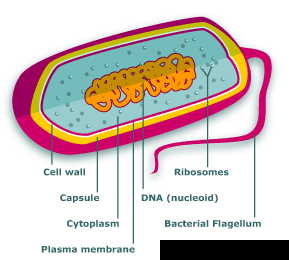
Which type of cell?
a)
Prokaryote
b)
Eukaryote
6.

Which type of cell?
a)
Prokaryote
b)
Eukaryote
7.

Which type of cell?
a)
Prokaryote
b)
Eukaryote
8.
A single-celled organism that lacks a membrane-bound nucleus, mitochondria, or any other membrane -bound organelle .
a)
Prokaryote
b)
Eukaryote
c)
Nucleus
d)
Single-celled organism
9.
Where is the DNA found in a prokaryotic cell?
a)
floating around in the cytoplasm
b)
in the nucleus
10.
Where is the DNA found in a eukaryotic cell?
a)
floating around in the cytoplasm
b)
in the nucleus
11.
What type of cell has a nucleus?
a)
eukaryotic
b)
prokaryotic
12.
What type of cell does not have a nucleus?
a)
eukaryotic
b)
prokaryotic
13.
Plants and animal cells are examples of ___ cells
a)
prokaryotic cells
b)
eukaryotic cells
14.

This is a picture of:
a)
Prokaryote
b)
Eukaryote
15.

What type of cell is this?
a)
Prokaryotic
b)
Eukaryotic
16.
An organism is observed under a microscope. A nucleus is seen in its cells. What domain should that organism be classified into?
a)
Bacteria
b)
Archaea
c)
Eukaryota
17.
An organism is observed under a microscope. It was collected from an extremely hot environment. Its cell has only free DNA. What domain should the organism be classified into?
a)
Bacteria
b)
Archaea
c)
Eukaryota
18.
What do Prokaryotes and Eukaryotes have in common?
a)
Genetic Material
b)
free DNA
c)
A Nucleus
19.
Which domain contains cells which all contain a nucleus?
a)
Bacteria
b)
Archaea
c)
Eukaryota
20.

Which cell is a prokaryote?
a)
A
b)
B
c)
C
d)
D
21.
Which domain contains cells which are found in normal environments and have no nucleus?
a)
Archea
b)
Bacteria
c)
Eukaryota
22.

Which cell has a nucleus?
a)
A
b)
B
23.

Which domain is capable of living in extreme environments like hot springs, geysers, or very salty waters?
a)
Bacteria
b)
Archaea
c)
Eukarya
24.

Which domain includes all animals and plants?
a)
Archaea
b)
Eukarya
c)
Bacteria
25.

Almost all bacteria are...
a)
Unicellular
b)
Multicellular
26.

Which two kingdoms are entirely multicellular?
a)
Animalia and Plantae
b)
Animalia and Protista
c)
Protista and Plantae
27.
To say that an organism is heterotrophic means...
a)
it cannot reproduce asexually
b)
it cannot make its own food
c)
it cannot breathe oxygen gas
28.
Which kingdoms have some organisms that can make their own food (autotrophic)?
a)
Plantae and Animalia
b)
Fungi and Plantae
c)
Protista and Plantae
29.
True or False: All living things are made of one or more cells.
a)
True
b)
False
30.

An organism that gets its food by consuming other organisms is known as a:
a)
heterotroph
b)
autotroph
c)
prokaryote
d)
eukaryote
31.

Which characteristics best describes the Plant Kingdom?
a)
unicellular; eukaryote; autotroph
b)
multicellular, prokaryote, autotroph
c)
multicellular, eukaryote, autotroph
d)
unicellular, prokaryote, heterotroph
32.

Which characteristics best describes the Animal Kingdom?
a)
unicellular, eukaryote, autotroph
b)
multicellular, prokaryote, heterotroph
c)
multicellular, eukaryote, autotroph
d)
multicellular, eukaryote, heterotroph
33.

Which characteristics best describe the Kingdom Protista?
a)
multicellular, eukaryote, heterotroph and autotroph
b)
multicellular and unicellular, heterotoph and autotroph, eukaryote
c)
unicellular, autotroph, prokaryote
d)
multicellular and unicellular, prokaryote, heterotroph
34.

Which characteristics best describe the Kingdom Fungi?
a)
multicellular and unicellular, eukaryote, autotroph
b)
multicellular and unicellular, prokaryote, heterotroph
c)
multicellular, eukaryote, heterotoph
d)
multicellular and unicellular, eukaryote, heterotroph
35.

Which characteristics best describes the Kingdoms Eubacteria and Archaebacteria?
a)
unicellular, prokaryote, heterotroph
b)
unicellular, prokaryote, heterotroph and autotroph
c)
multicellular, eukaryote, autotroph
d)
multicellular, prokaryote, heterotroph and autotroph
36.

The study of how things are classified is known as:
a)
binomial nomenclature
b)
a dichotomous key
c)
taxonomy
37.
Which of the following is the broadest taxonomic level?
a)
Cell
b)
Species
c)
Kingdom
d)
Domain
38.
Which of the following is the smallest unit of life?
a)
cell
b)
species
c)
Kingdom
d)
Domain
39.
Taxonomy is just a fancy word for...
a)
doing your taxes
b)
Sales tax on clothes
c)
Taking a taxi to the airport
d)
Classification
40.

Which of the following is correct?
a)
There are 3 kingdoms and 6 domains
b)
Kingdoms are more broad than domains
c)
Domain Bacteria and Archaea only have one kingdom
d)
Each Domain has many different kingdoms
100 %

