wayground logo

Free Printable Worksheets

NEW

Font size

S
M
L
XL
Worksheets

Newton First and Second Law of Motion

Total questions: 49

Worksheet time: 39mins
Name
Class
Date
1.
What is a PUSH or PULL of an object?
a)
Motion
b)
Force
c)
Friction
d)
Gravity
2.
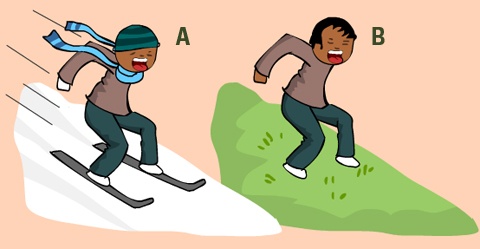
Why is it harder for the boy in Image B to get down the hill?
a)
Motion
b)
Friction
c)
Work
d)
Displacement
3.
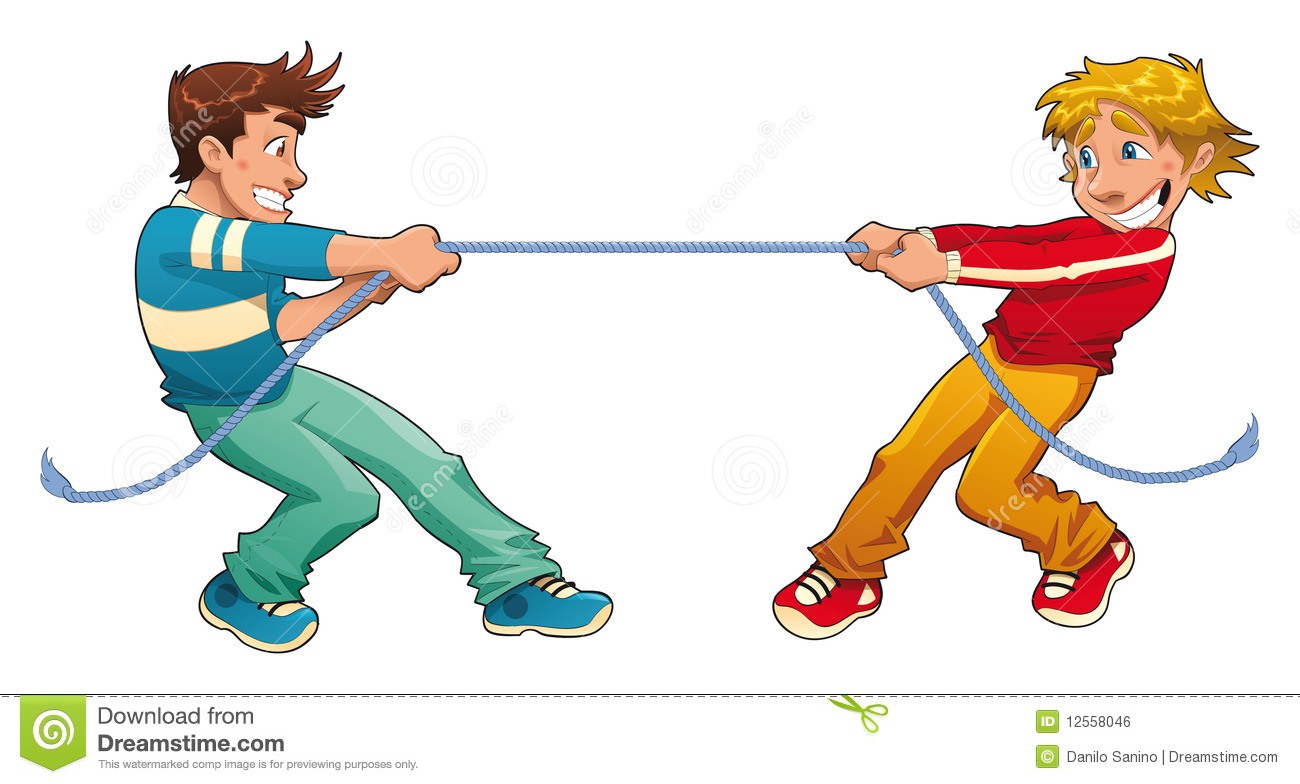
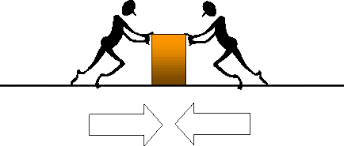
If these boys are pulling with the same amount of force.  What will happen?
a)
The boy in blue will win.
b)
They will not move at all.
c)
The boy in red will win.
d)
Both will fall down.
4.
Which force produces a change in motion?
a)
unbalanced force
b)
balanced force
c)
gravitational force
d)
frictional force
5.
It takes more force to accelerate the iron man on the left than the iron man on the right because the iron man on the left has more mass. This best describes
a)
Newton's first law, the law of inertia
b)
Newton's second law, the law of acceleration
c)
Newton's third law, the law of action reaction 
d)
The law of universal gravitation
6.
The formula 
? = mass x acceleration
or 
? = m x a 
is used to find 
a)
Force
b)
Velocity
c)
Momentum
d)
Gravity
7.
One object has twice as much mass as another object. The first object also has also twice as much...
a)
velocity
b)
gravitational acceleration
c)
inertia
d)
all of these
8.
If an object is stationary (not moving) the forces acting upon it are _____________
a)
unbalanced
b)
weak
c)
balanced
d)
Hulk Smash!
9.
What Newtons law does this picture represent
a)
Newtons 2nd law 
b)
Law of gravity 
c)
Newtons 1st law
d)
Newtons 5th law
10.
What do each of the letters correctly represent?
a)
Funny, Monkeys, Arrive
b)
Force, Mass, Acceleration
c)
Free, Mass, Access
d)
Force, Magnesium, Arsenic
11.
What kind(s) of objects have inertia?
a)
all objects with mass
b)
only objects at rest
c)
only objects in motion
d)
only objects whose motion is being changed
12.
a force that opposes motion between any surfaces that are touching
a)
velocity
b)
friction
c)
inertia
d)
position
13.
the tendency of an object to resist a change in its motion
a)
acceleration
b)
inertia
c)
mass
d)
frame of reference
14.
What is the tendency of an object to resist a change in motion?
a)
coffee
b)
motion
c)
inertia
d)
gravity
15.
If you increase the force on an object, its acceleration
a)
decreases
b)
stays the same
c)
also increases
d)
stops
16.
If you increase the mass on an object, its acceleration
a)
decreases
b)
stays the same
c)
also increases
d)
stops
17.
Objects with greater _________ also have greater inertia.
a)
speed
b)
mass
c)
temperature
d)
friction
18.
What is the unit of measurement for force?
a)
AMP
b)
Seconds
c)
Newtons
d)
Miles
19.
Newton's 1st law is also called....
a)
friction 
b)
inertia
c)
unbalanced forces
d)
Newtons
20.
Measure of how fast an object is going.
a)
frame of reference
b)
speed
c)
force
d)
displacement
21.
An objects location, x is used to represent this.
a)
force
b)
position
c)
distance
d)
acceleration
22.
the amount of matter in an object
a)
displacement
b)
mass
c)
friction
d)
friction
23.
the tendency of an object to resist a change in its motion
a)
acceleration
b)
inertia
c)
mass
d)
frame of reference
24.
Inertia is the tendency of an object to resist a change in its ___________. 
a)
temperature
b)
shape
c)
size
d)
motion
25.
Because of inertia, a resting object will remain at ________.
a)
rest
b)
a constant speed
c)
school
d)
inertia 
26.
Because of inertia, a moving object will keep ________.
a)
at rest
b)
moving
c)
in one spot
d)
inertia 
27.
What kind(s) of objects have inertia?
a)
all objects with mass
b)
only objects at rest
c)
only objects in motion
d)
only objects whose motion is being changed
28.
You push on a car and it does not move.  What is true about the inertia?
a)
The inertia is changing
b)
The inertia of the car is too great 
c)
The inertia of the person is equal to the car
d)
There is not inertia because of no movement
29.

While you’re ice-skating with your friends, you push off from one end of the rink and slide forward. Based on Newton’s first law of motion, what is true?

a)

You will lose your balance and fall over before you reach the middle of the rink.

b)

You will continue to glide until a force causes you to stop or change direction,

c)

The force of gravity will keep your velocity until your friends make you stop.

d)

The size of your skates will determine how quickly or slowly you move over ice.

30.

How is velocity different from speed?

a)

Velocity is when an object goes in reverse.

b)

Velocity is the direction an object moves in; it has nothing to do with speed.

c)

Velocity is speed and direction together.

d)

Velocity is exactly the same as speed.

31.

What is the relationship between heavy objects and inertia?

a)

Only heavy objects have inertia.

b)

Heavy objects have more inertia.

c)

Heavy objects have less inertia.

d)

Heavy objects have no inertia.

32.

You are riding in the car with your grandfather, and he turns left. Why do you shift to the right?

a)

It takes a moment to catch up with the new velocity of the car.

b)

You have more inertia than the car, so it takes longer for you to shift to the left.

c)

You had been sitting at rest until the force of the turn set you in motion.

d)

The car continued in the same velocity, but you had a different inertia.

33.

What does the second part of Newton’s first law say about objects at rest?

a)

They cannot move unless they have a bit of friction.

b)

If they are heavy, they will stay at rest, but if they are light, they will move.

c)

They will stay at rest unless an outside force makes them move.

d)

They have more inertia than objects in motion.

34.
Gravity attracts all objects towards one another.
a)
False
b)
True
c)
It depends
35.
Because of inertia, a moving object will keep ________.
a)
at rest
b)
moving
c)
in one spot
d)
inertia 
36.

A force which tries to pull two objects towards each other is

a)

gravity

b)

inertia

c)

mass

d)

speed

37.

Anything with ____________ also has a gravitational pull.

a)

mass

b)

size

c)

depth

d)

light

38.

What is weight?

a)

how much fat is on your body

b)

how strong you are

c)

how strongly your body is being pulled down by gravity

d)

when you have to stand in line

39.

Inertia tells us that we need ____________ to get an object moving or to make it stop.

a)

a force

b)

gravity

c)

friction

d)

strength

40.

Why do the planets in our solar system orbit the sun?

a)

because the sun is the brightest object

b)

because the sun was there first

c)

because the sun has the most mass

d)

because nothing can orbit planets

41.

What keeps the planets in orbit around the sun?

a)

gravity and inertia together

b)

gravity

c)

inertia

d)

neither gravity or inertia

42.

What would happen to Earth if there were no inertia?

a)

Earth would crash into the sun

b)

Earth would fly out to space

c)

Earth would collapse

d)

Earth would orbit the moon

43.

What would happen to Earth if there were no gravity?

a)

Earth would crash into the sun

b)

Earth would fly out to space

c)

Earth would collapse

d)

Earth would orbit the moon

44.

If you dropped a bowling ball and a golf ball off the top of a tall building, which one would hit the ground first?

a)

bowling ball

b)

golf ball

c)

they would hit at the same time

d)

they would not hit the ground

45.
What is gravity?
a)
A resistance to change. 
b)
A force that attracts and repels objects.
c)
A force that pulls objects "in" or together.
d)
A force that causes objects in motion to stay in motion. 
46.
Gravity attracts all objects towards one another.
a)
False
b)
True
c)
It depends
47.
Every object in the universe attracts every other object.
a)
True
b)
False
48.
Two factors impacting the strength of the force of gravity between 2 objects are...
a)
mass and distance 
b)
mass and matter
c)
distance and weight 
d)
weight and mass
49.
What is inertia? 
a)
A force that attracts and repels objects. 
b)
An object in motion that was to stay in a straight path unless it is acted upon by another force. 
c)
A force that pulls objects "in" or together. 
d)
A force that is measured in Newtons.