
NEW
Font size
S
M
L
XL
 Worksheets
Intro to Cells/Organelles
Total questions: 52
Worksheet time: 1hrs 5mins
Name
Class
Date
1.
What is the function of a cell wall?
a)
to protect and support the cell
b)
to perform different functions in each cell
c)
to prevent water from passing through it
d)
to prevent oxygen from entering the cell
2.
Which organelle is the control center of a cell?
a)
mitochondrion
b)
ribosome
c)
nucleus
d)
chloroplast
3.
What is the function of a cell membrane?
a)
to support the cell
b)
to perform different functions in each cell
c)
to control which substances enter and leave the cell
d)
to form a hard outer covering for the cell
4.
Which of the following best describes the function of mitochondria?
a)
They convert energy from food molecules into energy the cell can use.
b)
They store energy from food molecules.
c)
They store energy from sunlight.
d)
They produce nucleic acids that release energy.
5.
Organelles that use energy from sunlight to produce food are called mitochondria.
a)
True
b)
False
6.
Organelles known as _________ contain chemicals that break down food particles and old cell part.
a)
compound
b)
convext
c)
lysosomes
d)
tissue
7.
Plants and animals have what type of cells?
a)
prokaryotic
b)
eukaryotic
c)
unicellular
d)
prison
8.
Bacteria has what type of cell?
a)
prokaryotic
b)
eukaryotic
c)
opaque
d)
cell phone
9.
The two types of cells are?
a)
human/plant
b)
bacteria/e.coli
c)
prokaryotic/eukaryotic
d)
Protozoan/eucalyptus
10.
Eukaryotic cells contain ____________ surrounded by membranes.
a)
organelles
b)
organs
c)
cells
d)
plants
11.

Which type of cell is pictured?
a)
Prokaryote
b)
Eukaryote
c)
Aardvarck
d)
Bleu Cheese
12.

Which type of cell is pictured?
a)
Prokaryote
b)
Eukaryote
c)
zipper
d)
blue
13.
The oldest, most primitive cell type
a)
Prokaryote
b)
Eukaryote
c)
both
d)
Chain Saw Cells
14.
This cell part is in ALL cells. It is the gel-like substance that provides cell shape.
a)
Chloroplasts
b)
Chromosomes
c)
Cytoplasm
d)
Mitochondria
15.
This tiny particle is not considered alive and is neither prokaryotic nor eukaryotic. But it does make us sick often!
a)
haploid
b)
virus
c)
Golgi apparatus
d)
the color blue
16.
What is one example of a unicellular organism?
a)
A Flower
b)
A bacteria
c)
A bird
d)
A cow
17.

How does this protist move?
a)
Cilia
b)
Flagella
c)
Pseudopods
d)
In just floats
18.
Cells with a nucleus are called
a)
Organelles
b)
Mitochondria
c)
Eukaryotes
d)
Prokaryotes
19.

In prokaryotic cells, Where is DNA stored?
a)
Prokaryotic cells do not have DNA
b)
DNA is free floating in the nucleoid region
c)
DNA is in the nucleus
d)
DNA is in the mitochondria
20.
Which of the following is NOT a eukaryote? (section 4.5)
a)
Bacteria
b)
Plants
c)
Fungi
d)
Animals
21.

Which of the following is NOT a membrane bound organelle? (Table 4.2, pg 60)
a)
Ribosomes
b)
Nucleus
c)
Mitochondria
d)
Chloroplast
22.

How do the smooth endoplasmic reticulum (SER) and rough endoplasmic reticulum (RER) differ? (4.5)
a)
SER makes lipids, RER modifies protein
b)
SER makes carbs, RER makes proteins
c)
They both make proteins
d)
They both make lipids
23.

The Golgi apparatus _____.
a)
packages cell products for export
b)
eliminates waste
c)
stores DNA
d)
makes energy
24.

Which organelle is only found in a plant cell?
a)
nucleus
b)
chloroplast
c)
mitochondria
d)
cell membrane
25.

Where is DNA stored in a cell?
a)
Lysosomes
b)
Golgi Complex
c)
Ribosomes
d)
Nucleus
26.
This organelle eliminates waste.
a)
Nucleus
b)
ER
c)
Vacuole
d)
Lysosome
27.

Plant and animal cells are identical.
a)
True
b)
False
28.
This organelle creates ATP.
a)
Nucleus
b)
Ribosome
c)
Mitochondria
d)
ER
29.
A network of proteins that allow a cell to maintain shape, size, and allows organelles to move within a cell.
a)
cytoplasm
b)
cytoskeleton
c)
cytosol
d)
cell membrane
30.
What do viruses need to reproduce?
a)
they need genetic material
b)
They need a host cell
c)
They need bacteria
d)
They need insulin
31.
How does a virus cause a person to develop the common cold?
a)
invades the host cell to reproduce
b)
removes energy from the host cell
c)
produces toxins in the host cell
d)
protects the host cell from bacteria
32.
Is a virus considered living or non-living?
a)
Living
b)
Non-Living
c)
Neither
33.
Why do scientists classify viruses as non-living?
a)
They DO respond to a stimulus
b)
They need a host's energy because they do not have their own energy
c)
They produce wastes
d)
They are really small
34.
What is the first step of the virus reproduction cycle?
a)
The viruses genetic material (DNA) starts to take over the functions of the cell
b)
The host cell bursts open, releasing the new viruses
c)
The virus injects its genetic material into the cell
d)
A virus attaches to the surface of a host cell
35.
What is the last step in the viral reproduction cycle?
a)
A virus attaches to the surface of a host cell
b)
The proteins and genetic material start to assemble in the cell
c)
The host cell bursts open, releasing the new viruses
d)
The virus injects its genetic material into the cell
36.
What are the two types of cells?
a)
Prokaryotic & Eukaryotic
b)
Bacteria & Eukaryotic
c)
Eukaryotic
d)
Animal & Plant
37.
Which of the following is not under the Cell Theory?
a)
Cells are the basic unit of life
b)
All organisms are made up of cells
c)
Cells came from other cells
d)
A cell is an indestructible particle
38.
Which organelle is responsible for the production of ribosomes?
a)
Nucleolus
b)
Nucleus
c)
Rough ER
d)
Golgi Apparatus
39.

Which of these pictures shows a plant under a microscope?
a)
A
b)
B
c)
C
d)
D
40.

The picture shows a cell. Which correctly identifies the structures in the cell?
a)
W-chloroplast
X-cell wall
Y-cytoplasm
Z-nucleus
X-cell wall
Y-cytoplasm
Z-nucleus
b)
W-cell wall
x-nucleus
Y-cytoplasm
Z-Chloroplast
x-nucleus
Y-cytoplasm
Z-Chloroplast
c)
w-cytoplasm
x-nucleus
Y-cell wall
Z-chloroplast
x-nucleus
Y-cell wall
Z-chloroplast
d)
W-cytoplasm
X-chloroplast
Y-cell wall
Z-nucleus
X-chloroplast
Y-cell wall
Z-nucleus
41.

Robert Hooke, Anton van Leeuwenhoek, Theodor Schwann, Rudolf Virchow, and Matthias Schliden were all responsible for what theory?
a)
The Theory of Gravity
b)
The Theory of Relativity
c)
The Cell Theory
d)
The Theory of Continental Drift
42.
Rocks are not living because
a)
they never move
b)
they aren't needed for humans
c)
they are not made of cells
d)
they don't break down
43.
What is the basic structural and functional unit of all living things?
a)
atom
b)
cell
c)
molecule
d)
human
44.
All cells are produced ____________.
a)
From pre-existing and deceased cells
b)
from other pre-existing cells
c)
Cells can come from anywhere, as long as there is the sun.
45.
An organism made of one cell is called
a)
unicellular organism
b)
multicellular organism
46.

What is one way in which all living things on Earth are alike?
a)
All living things have hair.
b)
All living things are made of cells and come from other cells.
c)
The cells of all living things have chloroplast.
d)
All living things can move.
47.
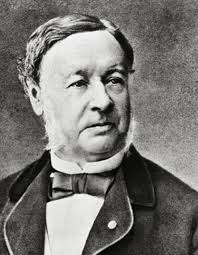
Which of the following scientists concluded that all animals are made of cells?
a)
Rudolf Virchow
b)
Matthais Schleiden
c)
Robert Hooke
d)
Theodor Schwann
48.

Which of the following scientists was the first to observe bacteria under a microscope?
a)
Anton van Leuwenhoek
b)
Matthais Schleiden
c)
Robert Hooke
d)
Theodor Schwann
49.
Which is NOT part of the Cell Theory
a)
New cells are produced from existing cells
b)
All living things are composed of cells
c)
Only eukaryotic cells have a nucleus
d)
Cells are the basic unit of structure & function in living things
50.
Who looked at cork and named the cell?
a)
Robert Hooke
b)
Van Leeuwenhoek
c)
Robert Brown
d)
Francesco Redi
51.
What was Schleiden convinced of?
a)
All plants are made of cells
b)
All animals are made of cells
c)
All cells form spontaneously
d)
None of the above
52.
Microscopic single-cells that do not have a nucleus or other membrane-bound organelles.
a)
DNA
b)
RNA
c)
Eukaryotes
d)
Prokaryotes
Reset

