
 Worksheets
Physical Science Unit 1
Total questions: 66
Worksheet time: 58mins
Name
Class
Date
1.
Metric unit used to measure the space an object takes up.
a)
Meter
b)
Liter
c)
degree Celsius
d)
Second
2.
Metric unit used to measure the amount of matter in an object.
a)
Meter
b)
Liter
c)
degree Celsius
d)
Gram
3.
Metric unit used to measure the amount of time.
a)
Liter
b)
Degree Celsius
c)
Second
d)
Gram
4.
The prefix "milli" means which of the following?
a)
10
b)
1
c)
1000
d)
1 million because it says milli
5.
The prefix "centi" means which of the following?
a)
10
b)
1000
c)
100
d)
1 Penny because it says cent
6.
Select all the following that describe an element
a)
A mixture of different chemicals
b)
One capital letter followed by a lower case
c)
One capital letter followed by a second capital letter
d)
Pure substance
e)
Can be found on periodic table
7.
Select all from the following that are elements
a)
Pb
b)
O2
c)
NO
d)
H
e)
H2O
8.
What is the standard unit of measurement for length?
a)
Meters
b)
Liters
c)
Grams
d)
Miles
9.
Convert 470 meters to kilometers.
a)
0.470 km
b)
4.70 km
c)
47.0 km
d)
470,000 km
10.
Convert 5 minutes to seconds.
a)
5 seconds
b)
50 seconds
c)
300 seconds
d)
500 seconds
11.
all matter is made of what
a)
energy
b)
atoms
c)
electrons
d)
compounds
12.
The positive particles of an atom are
a)
electrons
b)
positrons
c)
neutrons
d)
protons
13.
Particles in an atom that are neutral and have no charge are
a)
negatrons
b)
electrons
c)
neutrons
d)
protons
14.
Neutrons are _______________ particles.
a)
negative
b)
positive
c)
neutral
d)
cows
15.
electrons have this type of charge?
a)
negative
b)
positive
c)
neutral
16.
The smallest part of an element is known as the
a)
Periodic Table
b)
Atom
c)
Group
d)
Period
17.
Where are neutrons located in the atom?
a)
shells/orbitals
b)
rings
c)
center
d)
nucleus
18.

What is the overall charge of this atom?
a)
+3
b)
-3
c)
0
d)
+1
19.
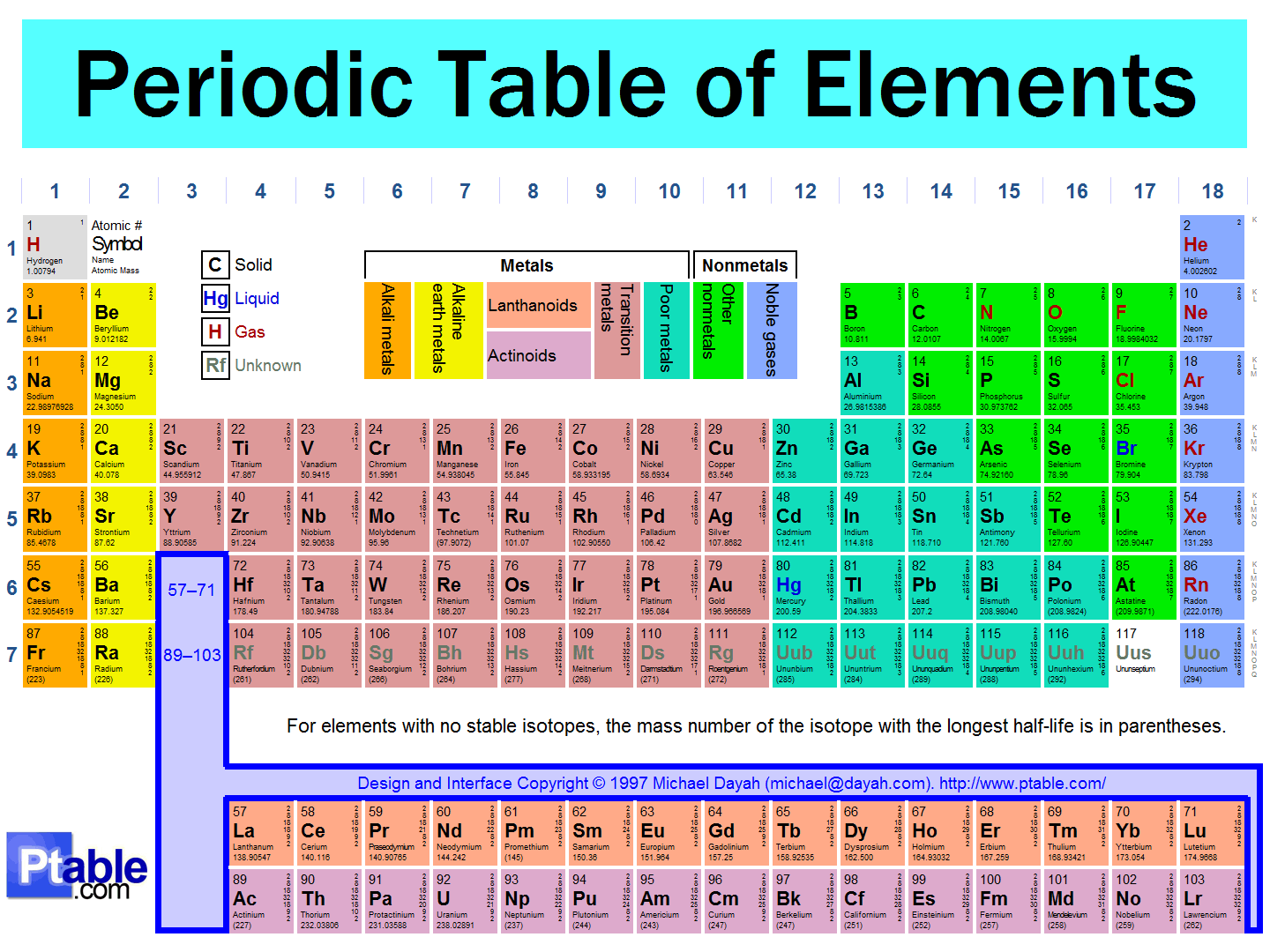
The vertical (up and down) columns in the Periodic Table are called
a)
groups
b)
towers
c)
periods
d)
atomic numbers
20.
The Modern Periodic Table of Elements is arranged by
a)
atomic mass
b)
atomic number
c)
valence electrons
d)
number of isotopes
21.
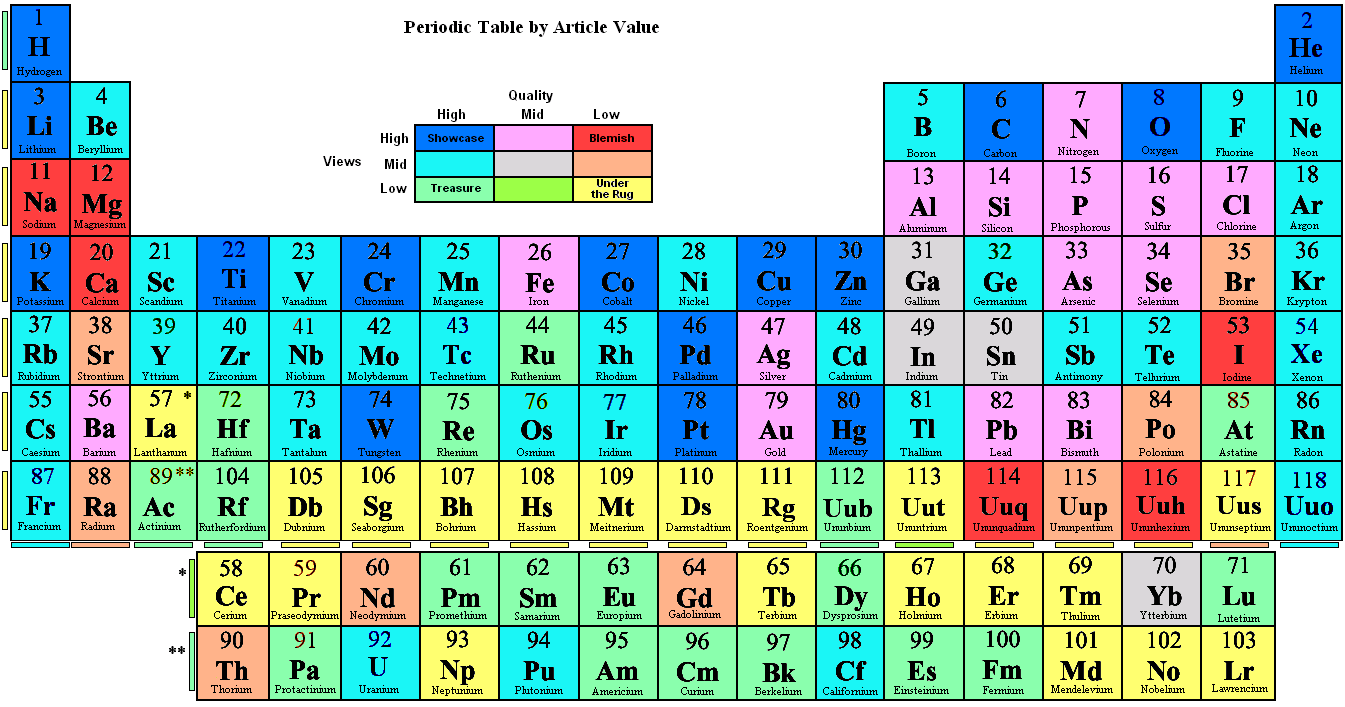
Sodium (Na) is found in period
a)
3
b)
2
c)
4
d)
1
22.
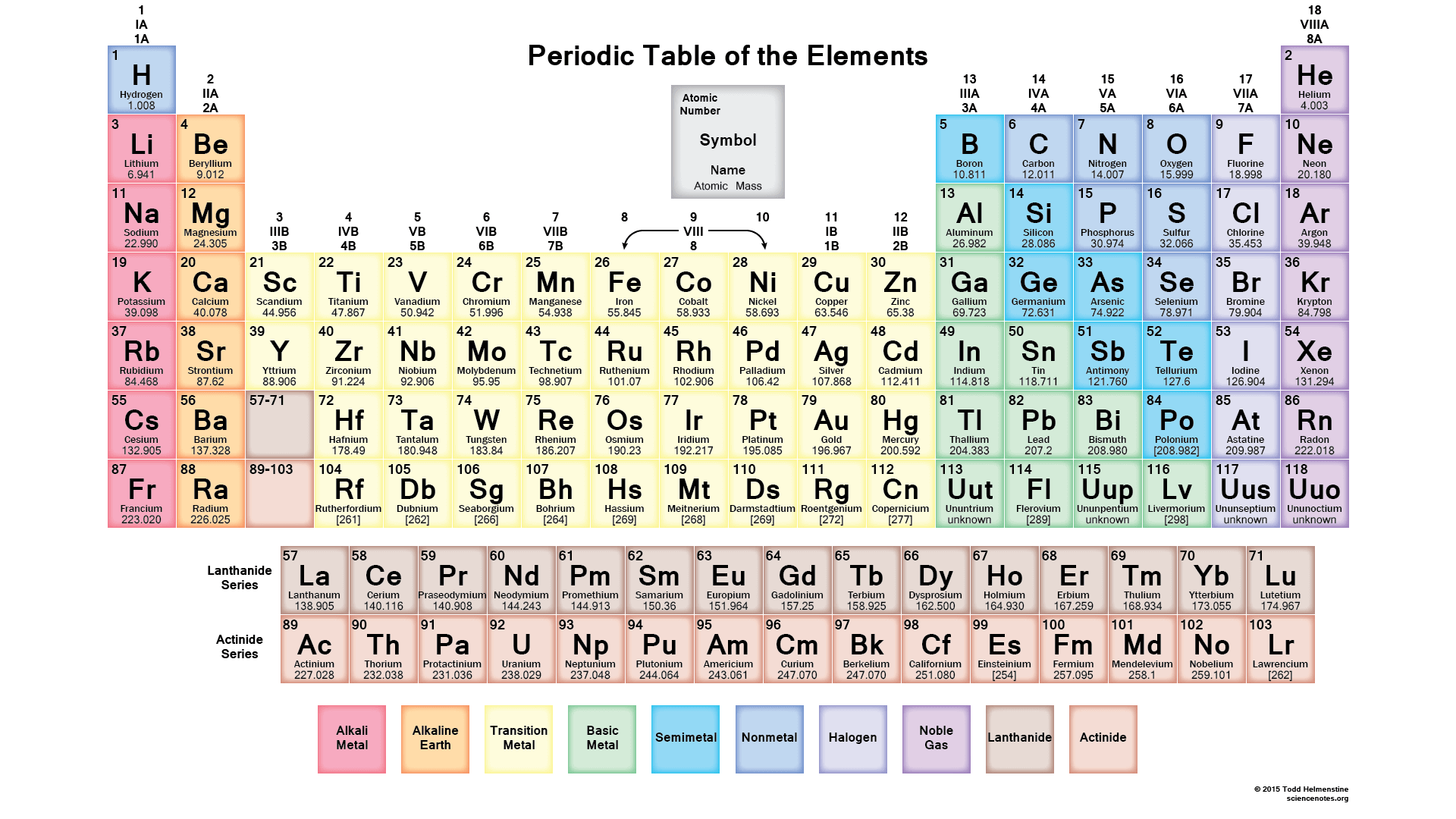
Sodium (Na) is found in group
a)
1
b)
2
c)
3
d)
4
23.
The atomic number tells you what? READ THE ANSWERS CAREFULLY
a)
only the number of electrons
b)
only the number of protons
c)
only the number of neutrons
d)
the number of both electrons and protons in an atom.
24.
What does the atomic mass tell you?
a)
Basically,the number of electrons and protons
b)
The number of neutrons
c)
Basically, the number of protons and neutrons
d)
The number of protons.
25.
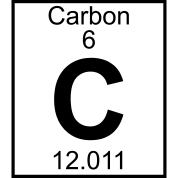
What does the 6 represent?
a)
atomic mass
b)
atomic number
c)
element name
d)
chemical symbol
26.
What does 12.011 represent?
a)
atomic mass
b)
atomic number
c)
element name
d)
chemical symbol
27.
What does the C represent?
a)
atomic mass
b)
atomic number
c)
element name
d)
chemical symbol
28.
These are found on the Periodic Table.
a)
Compounds
b)
Elements
c)
Mixtures
29.
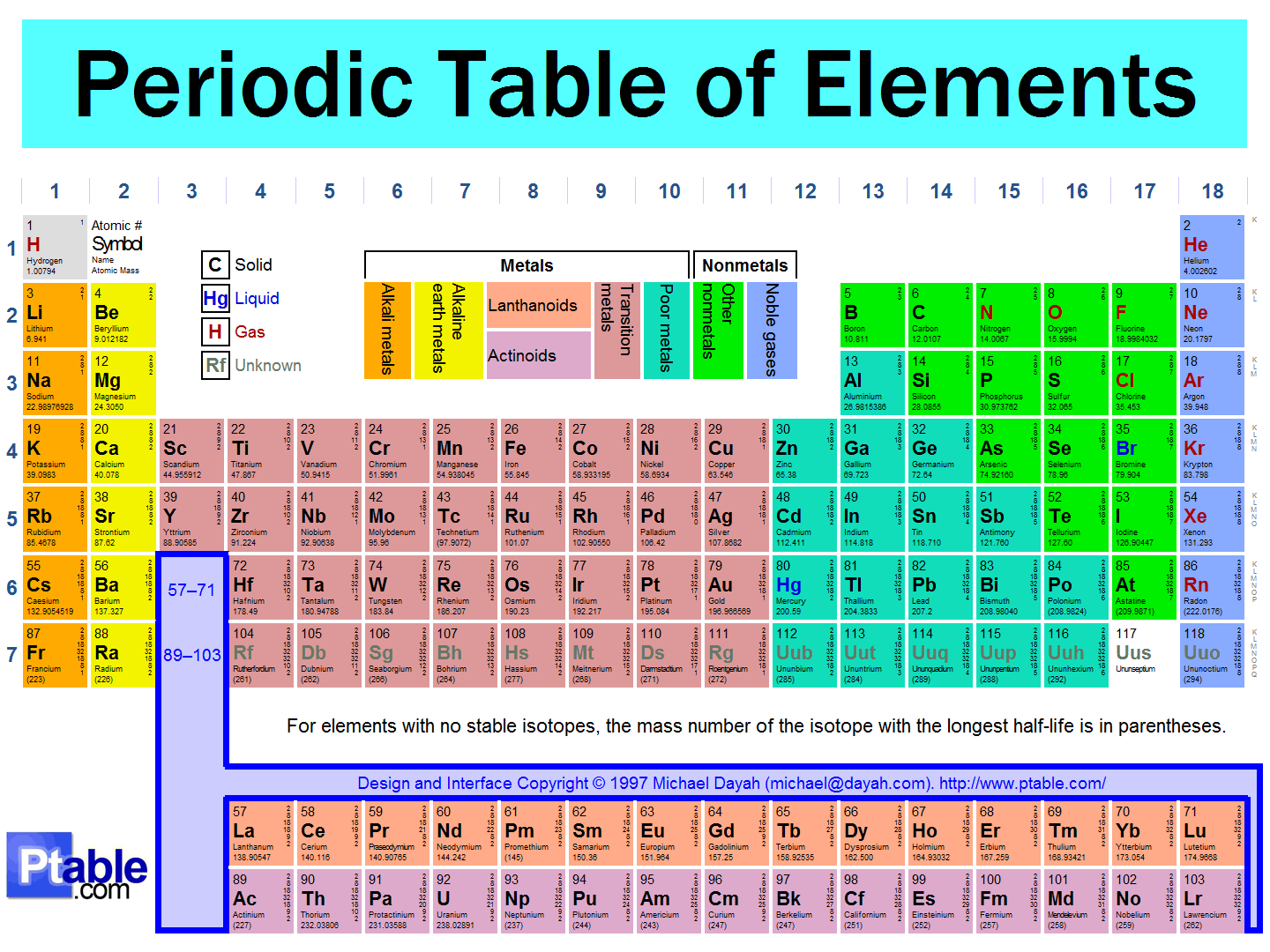
The horizontal (side to side) rows in the Periodic Table are called
a)
groups
b)
families
c)
periods
d)
atomic numbers
30.

How many neutrons does the isotope of lithium have?
a)
8
b)
3
c)
4
d)
5
31.
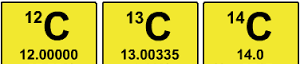
What do these isotopes of carbon all have in common?
a)
neutrons & mass number
b)
atomic number and neutrons
c)
atomic number and electrons
d)
protons, atomic number, and mass number
32.
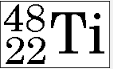
How many protons does this isotope of titanium have?
a)
48
b)
22
c)
26
d)
70
33.

In a correctly written symbol what would be located in the "A" position?
a)
number of neutrons
b)
atomic number
c)
number of electrons
d)
mass number
34.
What quantities vary between isotopes of an element?
a)
protons, electrons, and atomic mass
b)
protons, electrons, and atomic number
c)
neutrons and electrons
d)
neutrons and atomic mass
35.
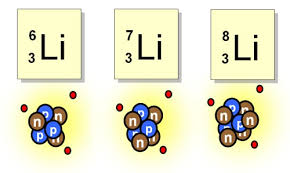
which atom has 4 neutrons?
a)
Li-6
b)
Li-7
c)
Li-8
d)
they have the same # of neutrons
36.
Isotopes are atoms of the same element with different #’s of __________ & therefore different __________.
a)
n0 ; atomic #’s
b)
p+ ; atomic #’s
c)
e- ; atomic masses
d)
n0 ; atomic masses
37.
An atom is electrically neutral when
a)
protons and neutrons are the same
b)
protons and electrons are the same
c)
neutrons and electrons are the same
d)
neutrons balance the protons and electrons
38.
If the number of electrons in an atom changes you make a(n) __________________.
a)
ion
b)
isotope
c)
new element
d)
isomer
39.
Ions are:
a)
atoms with a positive or negative charge
b)
atoms with no charge
c)
atoms with ONLY a positive charge
d)
atoms with ONLY a negative charge
40.
How many electrons are in an atom that has an atomic number of 34, an atomic mass of 74 and a charge of -2?
a)
34
b)
36
c)
2
d)
40
41.

Why are ions formed?
a)
To make our lives difficult
b)
Because atoms want 8 valence electrons
c)
Because atoms have the same number of protons and electrons
d)
Because atoms gained neutrons
42.

Cations are...
a)
Positive
b)
Negative
c)
Neutral
d)
Purring
43.

An atom becomes _________ when it gains electrons.
a)
Positive
b)
Negative
c)
Neutral
d)
Invinsible
44.
Valence electrons are:
a)
Electrons farthest away from the nucleus
b)
Electrons closest to the nucleus
c)
Electrons that just come and go - they don't stay with the atom
45.
Ions are:
a)
atoms with a positive or negative charge
b)
atoms with no charge
c)
atoms with ONLY a positive charge
d)
atoms with ONLY a negative charge
46.
When an atom loses a valence electron, it becomes a(n) _____________ ion.
a)
positive
b)
negative
c)
neutral
d)
polyatomic
47.
an atom with atomic number 6 would have how many protons
a)
6
b)
12
c)
3
d)
cannot be determined
48.
Particles in an atom that are neutral and have no charge are
a)
negatrons
b)
electrons
c)
neutrons
d)
protons
49.
Alpha makes the atomic number decrease by how many?
a)
1
b)
2
c)
3
d)
5
50.
What is radioactive decay?
a)
The spontaneous breakdown of an atomic nucleus resulting in only energy release
b)
The spontaneous breakdown of an atomic nucleus resulting in only matter release
c)
The spontaneous breakdown of an atomic nucleus resulting in a release of energy and matter
d)
The decay of the use of radios and the increased use of televisions.
51.
The process of nuclear change in an atom of radioactive material is called...
a)
nuclear decay
b)
nuclear mass
c)
isotopes
d)
radon
52.
During beta decay, a nucleus ....
a)
gives up two protons and two neutrons.
b)
maintains the same number of protons and neutrons.
c)
loses a proton and gains a neutron.
d)
gains a proton and loses a neutron.
53.
Radioactive materials have unstable...
a)
electrons
b)
protons
c)
nuclei
d)
neutrons
54.
A helium nucleus with two protons and two neutrons is called a(n) ____.
a)
alpha particle
b)
electroscope
c)
beta particle
d)
gamma ray
55.
The process by which nuclei having low masses are united to form nuclei with larger masses is ____.
a)
a chain reaction
b)
fission
c)
a chemical reaction
d)
fusion
56.
Takes two small nuclei and combines them into a larger nucleus
a)
fission
b)
fusion
57.
The splitting of a nucleus into smaller nuclei is
a)
fusion
b)
fission
c)
half-life
d)
gamma radiation
58.
How do nuclear power-plants work?
a)
Fusion
b)
Half-life
c)
Fission
d)
Fusion or fission
59.
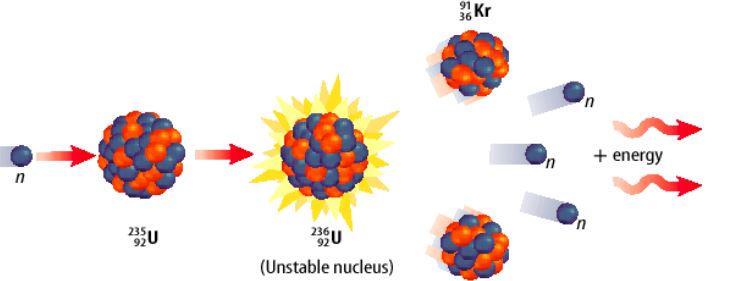
This is an example of...
a)
Fission reaction
b)
Fusion reaction
c)
Decomposition reaction
d)
Decay
60.
An example of an uncontrolled fission reaction is _______________
a)
Nuclear power plants
b)
Radio active decay
c)
Atomic Bomb
d)
On the surface of the sun
61.

Do all stars make energy through fusion?
a)
Yes
b)
No
c)
Just our sun
d)
Only large stars
62.
_________ happens naturally due to an unstable nucleus.
a)
fission
b)
fusion
c)
radioactive decay
d)
K-capture
63.
What is a benefit of nuclear fission?
a)
The ability to absorb energy
b)
The ability to release tremendous amounts of energy
c)
The ability to produce more energy than nuclear fusion
d)
There are no beneficial aspects of nuclear fission
64.
The major drawback to nuclear fission reactors is the difficulty of achieving safe disposal of radioactive waste products.
a)
true
b)
false
65.
One disadvantage of nuclear energy is ___.
a)
it is a fossil fuel
b)
it leaves behind radioactive waste
c)
it emits large amounts of pollution into the atmosphere
d)
there are no disadvantages
66.
The splitting of a nucleus into smaller nuclei is
a)
fusion
b)
fission
c)
decay
d)
gamma radiation
100 %

