
 Worksheets
2.4 Inertia
Total questions: 70
Worksheet time: 44mins

Diagram 1 shows a man jerking at the table cloth. The glass remain on the table because of inertia. Which action increase the inertia?
Rajah 1 menunjukkan seorang lelaki menyentap sehelai alas meja. Gelas itu kekal di atas meja disebabkan inersia. Aksi manakah yang meningkatkan inersia?
Use a rough cloth
Gunakan sehelai kain yang lebih kasar
Use a smoother cloth
Gunakan sehelai kain yang lebih licin.
Pull the cloth with greater force
Menarik kain dengan daya yang lebih besar.
Fill the glass with more water
Mengisi gelas dengan air yang lebih banyak.

Diagram shows a pillion rider moving backwards when the motorcycle accelerates. The backward movement of the pillion rider can be explained by
Gambar rajah menunjukkan keadaan pembonceng motosikal yang bergerak ke belakang apabila motosikal mula memecut. Pergerakan pembonceng itu ke belakang boleh diterangkan oleh
the concept of inertia
konsep inersia
the concept of equilibrium of forces
konsep keseimbangan daya
principle of conservation of momentum
prinsip keabadian momentum
principle of conservation of energy
prinsip keabadian tenaga

Diagram shows the position of a plate before and after the table cloth is snatched away. The plate remain stationary due to
Rajah menunjukkan kedudukan sebiji pinggan sebelum dan selepas sehelai alas meja disentap. Pinggan itu kekal pegun disebabkan oleh
inertia
inersia
impulse
impuls
momentum
momentum
linear motion
gerakan linear

Diagram 3 shows a cat chasing a rat. The inertia of the cat is bigger than the rat because
Rajah 3 menunjukkan seekor kucing sedang mengejar seekor tikus. Inersia bagi kucing lebih besar daripada tikus kerana
the size of the cat is bigger than the rat
saiz kucing lebih besar daripada tikus
the length of the cat is more than the rat
panjang kucing lebih besar daripada tikus.
the mass of the cat is bigger than the rat
lisim kucing lebih besar daripada tikus.

Which phenomenon shows the effect of inertia?
Fenomenon manakah yang menunjukkan kesan inersia?
A
B
C
D
Which object has the biggest inertia?
Objek yang manakah mempunyai inersia terbesar?


Diagram shows a trolley used in a supermarket. Which modification increases the inertia of the trolley?
Rajah menunjukkan sebuah troli yang digunakan di sebuah pasaraya. Modifikasi manakah yang meningkatkan inersia troli itu?


Diagram shows two identical tops, F and G. Several pieces of aluminium are placed on the top of G. Both top are then spun simultaneously. What is the concept that causes the top G to take a longer time to stop?
Rajah menunjukkan dua buah gasing yang serupa, gasing F dan gasing G. Beberapa kepingan aluminium diletakkan di atas gasing G. Kedua-dua gasing itu kemudiannya diputarkan secara serentak. Apakah konsep yang menyebabkan gasing G mengambil masa yang lebih panjang untuk berhenti?
Force
Daya
Inertia
Inersia
Impulse
Impuls
Linear motion
Gerakan linear
A body stays stationary, or continues to move with a uniform velocity, unless there is an external force that changes its state of motion. Which law is explained by the above statement?
Satu jasad berada dalam eadaan pegun, atau terus bergerak dengan halaju malar, kecuali terdapat satu daya luar yang mengubah keadaan gerakannya. Apakah hukum yang diterangkan oleh pernyataan di atas?
Newton's first law of motion
Hukum gerakan Newton pertama
Newton's second law of motion
Hukum gerakan Newton kedua
Newton's third law of motion
Hukum gerakan Newton ketiga

The diagram shows two students skating towards P. What will happen to the girls when the boy releases her hand?
Gambarajah menunjukkan dua pelajar yang sedang meluncur ke arah P. Apakah akan terjadi kepada pelajar perempuan itu apabila pelajar lelaki melepaskan pegangan tangannya?
Stays stationary
Pegun
Moves towards P
Bergerak ke P
Moves towards Q
Bergerak ke Q
is the tendency of an an object to remain at rest or if moving to continue its motion in a straight line at uniform velocity.
acceleration
inertia
mass
frame of reference
Which phenomenon shows the effect of Inertia?


Which object has the greatest inertia?


Figure shows a hammer. The head of the hammer can be tightened onto the handle by
pushing the head of the hammer
rotating the handle of the hammer
applying a knock on the handle of the hammer
When a boy is chased by a cow, which of the following is the best path to run.


Which phenomenon cannot be explained by the principle of inertia?
In a game of carrom , the striker can strike a stake of carrom pieces but only dislodge the bottom piece
When the lowest coin is struck with a steel ruler, the rest of the stack of coins do not collapse
A boy on a bicycle does not immediately come to stop although he stops pedalling
The bubbles formed by a fish expand as they float towards the surface
When a bus moves left then the passengers appear to move right, and vice versa. This phenomenon is caused by
the inertia of the bus
the reaction of the bus
the inertia of the passengers
the reaction of the passengers
The period of oscillations of an inertial balance depends on
The acceleration due to gravity
The amplitude of the oscillations
The mass of the metal cylinder
The force to push the balance
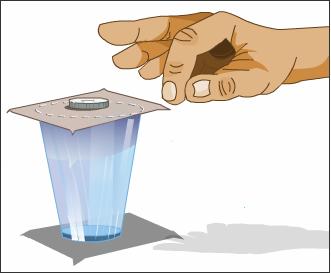
Inertia of an object is
the friction force exerts to the object
the friction force exerts to the object
the force against the motion of the object
the property of the object which resists a change in
its motion.
What is the name of the property of a body which resists a change in its state of rest or of uniform motion?
Acceleration
Density
Inertia
Velocity
The factor that affect the inertia of an object is
the acceleration of the object
the temperature of the object
the weight of the object
the mass of the object
Which object has the greatest inertia?
An inertial balance can be used to compare
the acceleration of an object
the momentum of an object
the weight of an object
inertia of an object

An object's inertia is effected by its mass.
Diagram 1 shows a man jerking at the table cloth. The glass remain on the table because of inertia. Which action increase the inertia?
Use a rough cloth
Use a smoother cloth
Pull the cloth with greater force
Fill the glass with more water
Which phenomenon shows the effect of Inertia?
More mass = Less inertia
True
False
Inertia is a force that keeps stationary objects at rest and moving objects in motion at a constant velocity.
True
False

Diagram shows an oil tanker truck has its storage tank divided into several separate tanks.Why
To reduces the impact of the impulsive force an of object
To reduces the impact of an acceleration of the truck
To reduces the impact of the inertia of the petrol.

Diagram shows driver of a car are advised to wear seat belts. When a car stops abruptly
The driver in the car thrown forward
Selt belts prevent his from being thrown forward and hurting
all of the above
What kinds of objects have inertia?
All objects with mass
only objects at rest
only objects in motion
only objects whose motion is being changed
Inertia is a force
True
False
Suppose that an astronaut throws a baseball in outer space at a location far from significant influences of gravity and air resistance. One would expect that the baseball would ____.
eventually stop since all objects ultimately "lose their steam"
eventually stop as its inertia slowly becomes used up
continue in motion with the same speed and direction
either a, b, or c -- depending on whether the astronaut continues to push it
When all individual forces acting on an object are balanced, it is the natural tendency of an object to _____. List all that apply in alphabetical order with no spaces between letters.
maintain its state of motion
eventually stop
accelerate
either speed up, slow down or keep the same speed
keep its velocity constant (either at a zero or non-zero value)
The law of inertia (Newton's first law) applies _____.
to moving objects only
only to objects that are not moving
to both moving and nonmoving objects
Inertia refers to _____
the tendency of moving objects to remain in motion
the force which keeps moving objects in motion with a constant velocity
the force that keeps stationary objects at rest
the tendency of stationary objects to remain at rest
A skateboard rolls down a hill, reaches the level surface and eventually comes to a stop. The fact that the skateboard ultimately stops is best explained by ____.
an unbalanced force would be required to keep the sled moving forward at constant speed
the presence of an unbalanced force (e.g., friction) can cause a moving object to stop
the presence of inertia causes it to stop
the natural tendency of any object is to ultimately stop
Inertia depends on ______
Velocity
Speed
Distance
Mass
All objects have inertia
True
False

Mr. S guides a golf ball around the outside rim of the green at the Hole-In-One Putt-Putt Golf Course. When the ball leaves the rim, which path (J, K, or I) will the golf ball follow?
J
K
I
An astronaut kicks a soccer ball in outer space at a location far from significant influences of gravity and air resistance. The soccer ball will _________.
continue in motion with the same speed and direction
eventually stop as its inertia slowly becomes used up
eventually stop since all objects ultimately "lose their steam"
either a, b, or c -- depending on whether the astronaut continues to kick it
A rightward-moving object would naturally and ultimately come to rest in the absence of forces. A rightward force is required to keep such an object moving rightward. Inertia is the general name given to that force.
True
False
More mass = More inertia
True
False

Michael Jordan guides a golf ball around the outside rim of the green at the Hole-In-One Putt-Putt Golf Course. When the ball leaves the rim, which path (A, B, or C) will the golf ball follow?
A
B
C

Rank these objects in order of their inertia, from greatest to least.
ABCD
DABC
DCBA
CBAD
the tendency of an object to resist a change in its motion
acceleration
inertia
mass
frame of reference
Inertia is the tendency of an object to resist a change in its ___________.
temperature
shape
size
motion
What kinds of objects have inertia? Apakah jenis objek yang mempunyai inersia?
All objects with mass / Semua objek yang mempunyai Jisim
only objects at rest/ Objek dalam keadaan rehat
only objects in motion/ objek yang sedang bergerak
only objects whose motion is being changed / objek ynag gerakannya berubah
Complete the excerpt of Newton's First Law of Motion
"...and an object at rest will ________ until acted on by an unbalanced force."
...stay at rest...
...start an increasing motion...
...start a decreasing motion...
What force is there on Earth that makes inertia hard to understand because our objects do not stay in motion forever?
friction
air resistance/drag
gravity
What force is there on Earth that makes inertia hard to understand because our objects do not stay in motion forever?
friction
air resistance/drag
gravity
Which of these are GREAT example of inertia?
a person flying through the windshield during a car wreck because they weren't wearing their seat belt
a person staying in the vehicle and hitting the air bag during a car wreck because they are wearing a seat belt
earth constantly traveling at the same speed in it's orbit
a meteor traveling through space at a constant speed until it hits something
Objects with MORE mass have...
MORE inertia
LESS inertia
the SAME amount of intertia

