wayground logo

Free Printable Worksheets

Font size

S
M
L
XL
Worksheets

Chapter 1 Review (8DA)

Total questions: 155

Worksheet time: 5hrs 55mins

Name
Class
Date
1.

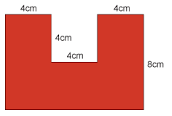
Which expression would find the area of this figure?

a)

(9 x 7) + (3 x 4)

b)

(12 x 12) + (7 x 12)

c)

(3 x 7) + (3 x 4)

d)

(12 x 7) + (3 x 3)

2.

Find the area of the figure

a)

294 meters squared

b)

4560 meters squared

c)

2350 meters squared

d)

414 meters squared

3.

Find the area of the figure

a)

24 square centimeters

b)

63 square centimeters

c)

12 square centimeters

d)

19 square centimeters

4.

Find the area of the shaded region.

a)

48 square yards

b)

68 square yards

c)

78 square yards

d)

43 square yards

5.

What is the area of the shaded region?

a)

16 square units

b)

26 square units

c)

38 square units

d)

32 square units

e)

26 units

6.

Which expression would find the perimeter of this figure?

a)

12 + 7 + 9 + 3 + 3 + 4

b)

12+7+3+4

c)

12(2) + 7(2)

d)

12 + 7 + 9 + 3 + 4

7.

A point is ___-dimensional

a)

0

b)

1

c)

2

d)

3

e)

4

8.

A line is ___-dimensional

a)

0

b)

1

c)

2

d)

3

e)

4

9.

A plane is ___-dimensional

a)

0

b)

1

c)

2

d)

3

e)

4

10.

A ray is ___-dimensional

a)

0

b)

1

c)

2

d)

3

e)

4

11.

A line segment is ___-dimensional

a)

0

b)

1

c)

2

d)

3

e)

4

12.

A cube is ___-dimensional

a)

0

b)

1

c)

2

d)

3

e)

4

13.

If two points are colinear then they...

a)

are part of the same line

b)

are not part of the same line

c)

are part of the same plane

d)

are not part of the same plane

14.
Name 3 coplaner points.
a)
ZRW
b)
VZX
c)
VWX
d)
WYZ
15.

When naming a plane, we should use...

a)

any 2 points

b)

a lower case cursive letter

c)

3 points that are either collinear or noncollinear

d)

3 noncollinear points

16.

Two lines intersect at a ....

a)

segment

b)

point

c)

line

d)

plane

e)

ray

17.
Points that lie on the same plane are ________. 
a)
collinear
b)
coplanar
c)
parallel
d)
perpendicular
18.
Points that lie on the same line are _________.
a)
coplanar
b)
collinear
c)
parallel
d)
perpendicular
19.

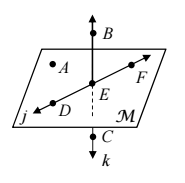
A plane containing point A.

a)

DEA

b)

Plane k

c)

CDF

d)

Plane F

20.

Give another name for line k.

a)

Line BC

b)

Line BCE

c)

Line ED

d)

Line k is the only possible name

21.

The plane that connects points A, B, H, G represents a diagonal of this prism. Which points are components the other diagonal? Select all that apply

a)

E

b)

H

c)

C

d)

B

e)

G

22.

Any two points can make a line

a)

True

b)

False

23.

Two planes intersect at a ....

a)

segment

b)

point

c)

line

d)

plane

e)

ray

24.

Name the figure above.

a)

Line AB

b)

Line Segment AB

c)

Ray AB

d)

Points AB

e)

Line BA

25.

Name the figure above.

a)

Ray CD

b)

Line Segment CD

c)

Plane CD

d)

Line CD

26.

Name the figure above.

a)

Plane P

b)

Point P

c)

Ray P

d)

Line P

27.

Name the figure above.

a)

Ray AB

b)

Ray BA

c)

Line AB

d)

Segment AB

28.
Part of a line. Has two endpoints and includes all of the points in between.
a)
Point
b)
Angle
c)
Line
d)
Line Segment
29.
Part of a line. Has one endpoint and continues on forever in one direction.
a)
Line Segment
b)
Line
c)
Ray
d)
Point
30.

What is the term for a part of a line with two endpoints?

a)

Point

b)

Ray

c)

Angle

d)

Line segment

31.

Determine the intersection of AEF and DEC.

a)

E

b)

Line EF

c)

AEFDC

d)

Line BA

e)

Plane EFHG

32.

What 2 planes intersect at line BC?

a)

ABD

b)

HFE

c)

EFG

d)

GHC

e)

AFG

33.

x=

a)

5

b)

6

c)

7

d)

8

34.
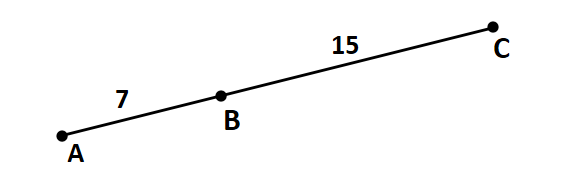
Find AC
a)
7
b)
8
c)
22
d)
23
35.

Find MK.

a)

6

b)

4

c)

14

d)

8

36.

What does the word BISECT mean?

a)

To cut something into more than five pieces

b)

It is a plane with two sets of wings

c)

A shape that has three sides

d)

To cut something into two congruent pieces or in half

37.

If AB = 2x+3, BC = 3x-5, and AC = 38, what is the value of x ?

a)

11

b)

12

c)

8

38.

M is the midpoint of AB. If AM = 5x+10 & MB = 4x+16, find the value of AM.

a)

6

b)

4

c)

70

d)

40

39.

Line e is a segment bisector of AB at point M. If AM = 4n-40 & MB = 7(-2n+2), find the value of n.

a)

7

b)

3

c)

5

40.
XY=
a)
15
b)
17
c)
6
d)
7
41.
Find XY
a)
16
b)
32
c)
24
d)
12
42.
Find AC
a)
8.5
b)
9.5
c)
25.5
d)
10
43.

Find the length of DE

a)

58

b)

6

c)

36

d)

61

44.
The rectangle shown has coordinates (3, 2), (-2, 2), (-2, -1), (3, -1)
What is the length of the longest side of the rectangle?
a)
4 units
b)
5 units
5 units
c)
6 units
d)
8 units
45.
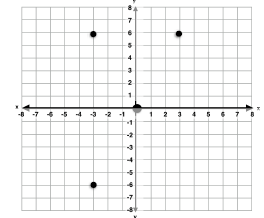
Points G, H, and I are plotted on the coordinate grid.  How many units are between points G and H?
a)
9 units
b)
14 units
c)
13 units
d)
12 units
46.
What is length of the longest side of the rectangle?
a)
2 units
b)
15 units
c)
14 units
d)
8 units
47.
Which of the coordinates given could be the fourth point used to form a rectangle?
a)
(3, -6)
b)
(-3, -6)
c)
(-6, 3)
d)
(4, -6)
48.
What is the length of the shortest side of the rectangle?
a)
3 units
b)
4 units
c)
9 units
d)
2 units
49.
What is the distance between points (3, -5) and (3, -8)?
a)
1 unit
b)
2 units
c)
3 units
d)
4 units
50.
What is the distance between points (-7, 8) and (2, 8)?
a)
4 units
b)
5 units
c)
3 units
d)
9 units
51.

What is the distance between -1 and 10?

a)

11

b)

17

c)

2

d)

-11

52.

What is the distance between -8 and -6?

a)

10

b)

4

c)

2

d)

6

53.

What is the distance between -8 and 10?

a)

17

b)

13

c)

18

d)

3

54.

What is the distance between 2 and 6?

a)

8

b)

5

c)

3

d)

4

55.

What is the distance between 2 and 4?

a)

2

b)

4

c)

8

d)

12

56.
Find the distance.
a)
9.7
b)
10.7
c)
11.7
d)
12.7
57.
Find the distance between J and K.
a)
8.2
b)
7.7
c)
9
d)
10.2
58.
Find the distance.
a)
7.1
b)
7.8
c)
8.7
d)
8.9
59.
What is the distance between the two points?
a)
6.3
b)
6.5
c)
6.7
d)
16
60.
What's the midpoint of the the line-segment starting at (4, 5) and ending at (-12, 5)
a)
(-4, 5)
b)
(-8, 5)
c)
( 8, 2.5)
d)
(8, 5)
61.
What's the midpoint of the the line-segment starting at (2,4) and ending at (2, 8)
a)
(-2,-6)
b)
(2, 12)
c)
(4, 12)
d)
(2, 6)
62.

This point that divides a line segment into 2 equal parts

a)

Point

b)

Vertex

c)

Midpoint

d)

Angle

63.
Given that C is between A and B, which Segment Addition statement is correct?
a)
AC + AB = CB
b)
AC + CB = AB
c)
AB + BC = AC
d)
CA + CB = CA
64.
Given that A is between B and C, which Segment Addition statement is correct?
a)
AB + BC = AC
b)
BC + BA = BC
c)
BA + AC = BC
d)
AB + BC = AC
65.

Congruence ( \cong ) is used to compare...

a)

Numerical values

b)

Geometric figures

c)

Both numerical values AND geometric figures

d)

Neither numerical values AND geometric figures

66.

Equality ( == ) is used to compare...

a)

Numerical values

b)

Geometric figures

c)

Both numerical values AND geometric figures

d)

Neither numerical values AND geometric figures

67.

Which point is the vertex of ∡DEF

a)

D

b)

E

c)

F

d)

Not enough information to answer

68.

Which point is the vertex?

a)

A

b)

B

c)

C

d)

None of the Above

69.

What is the measure of the angle?

a)

10 degrees.

b)

40 degrees.

c)

67 degrees.

d)

168 degrees.

70.
What is the measure of the angle?
a)
110 degrees. 
b)
140 degrees.
c)
150 degrees.
d)
170 degrees. 
71.

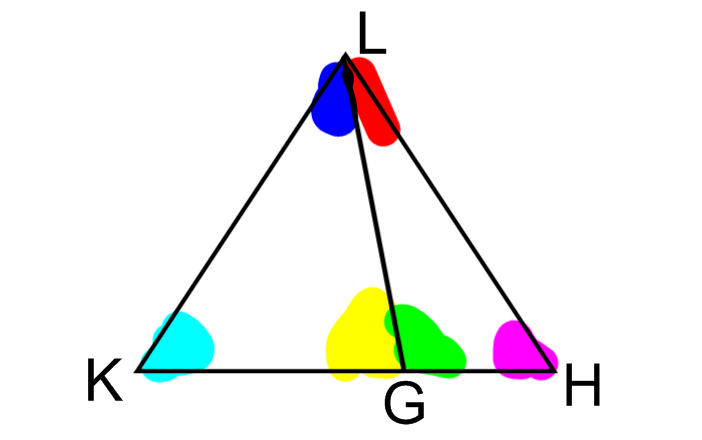
∠KGL is the _____ angle

a)

Light blue

b)

Yellow

c)

Blue

d)

Green

72.

∠LGH is the _____ angle

a)

Red

b)

Purple

c)

Yellow

d)

Green

73.

What is the name of the red angle?

a)

∠HLG

b)

∠KLH

c)

∠LHG

d)

∠HGL

74.

Which angle is ∠L?

a)

Green

b)

Purple

c)

Red

d)

Light blue

e)

Not enough information

75.
What is another name for ∠H
a)
∠KGH
b)
∠LGH
c)
∠LHG
d)
∠K
76.

There are UP TO _____ ways to name every angle

a)

1

b)

2

c)

3

d)

4

77.

m∠ABC=

a)

45°

b)

60°

c)

105°

d)

15°

78.

m∠DEF=

a)

180°

b)

60°

c)

120°

d)

80°

79.

If m∠RST = (12x -1)°, m∠RSU = (9x -15)°,

and m∠UST = 53°, find each measure.

a)

x = 13

m∠RST = 155°

m∠RSU = 102°

b)

x = 3

m∠RST = 35°

m∠RSU = 12°

c)

x = 22

m∠RST = 263°

m∠RSU = 183°

d)

x = 8

m∠RST = 95°

m∠RSU = 57°

80.
Find the value of ∠A.
a)
25 degrees
b)
30  degrees
c)
35 degrees
d)
90 degrees
81.

∠1 and ∠2 form a linear pair.

If m∠1 = (5x + 9)° and m∠2 = (3x + 11)°, find the measure of each angle.

a)

m∠1 = 110° and m∠2 = 70°

b)

m∠1 = 109° and m∠2 = 71°

c)

m∠1 = 70° and m∠2 = 110°

d)

m∠1 = 71° and m∠2 = 109°

82.

∠K and ∠L are complementary angles.

If m∠K = (3x + 3)° and m∠L = (10x -- 4)°, find the measure of each angle.

a)

m∠K = 24° and m∠L = 66°

b)

m∠K = 66° and m∠L = 24°

c)

m∠K = 40° and m∠L = 50°

d)

m∠K = 30° and m∠L = 60°

83.
Find the value of ∠A.
a)
79 degrees
b)
87 degrees
c)
90 degrees
d)
97 degrees
84.
Find the value of ∠A.
a)
39 degrees
b)
49 degrees
c)
51 degrees
d)
59 degrees
85.
What is m∠ABD
a)
80
b)
120
c)
20
d)
100
86.
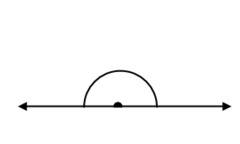
What type of angle is shown?
a)
acute
b)
obtuse
c)
right 
d)
straight
87.
What type of angle is shown?
a)
acute
b)
obtuse
c)
right
d)
straight
88.
What type of angle is shown?
a)
acute
b)
obtuse
c)
right
d)
straight
89.
What type of angle is shown?
a)
acute
b)
obtuse
c)
right
d)
straight
90.
The angle relationship shown is -
a)
complementary angles
b)
supplementary angles
c)
vertical angles
d)
angle bisector
91.
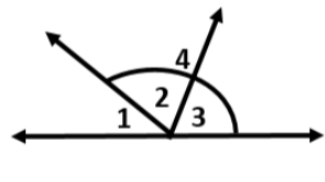
∠1 and ∠3 can best be described as -
a)
complementary angles
b)
supplementary angles
c)
vertical angles
d)
adjacent angles
92.
∠AOB and ∠COB can best be described as - 
a)
complementary angles
b)
supplementary angles
c)
vertical angles
d)
adjacent angles
93.
The angle relationship shown is - 
a)
complementary angles
b)
supplementary angles
c)
vertical angles
d)
adjacent angles
94.
∠XOZ is bisected by ray OY. Which statement is true?
a)
∠XOZ ≅ ∠XOY
b)
∠XOZ ≅ ∠ZOY
c)
∠XOY ≅ ∠ZOY
d)
∠OXY ≅ ∠OZY
95.

What qualities must be shared between angles in order to form a linear pair?

a)

They must be adjacent

b)

They must form a straight line (180o)

c)

Their non-common sides must be opposite rays

d)

They must be complementary

e)

Their common side must bisect the parent angle

96.

Two angles must be adjacent in order to be supplementary or complementary.

a)

True

b)

False

97.
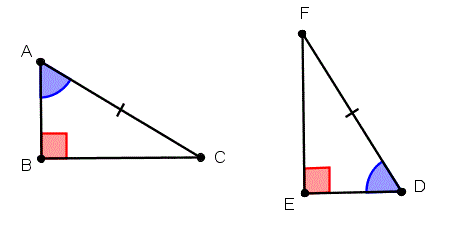
∠A ≅∠?
a)
∠B
b)
∠E
c)
∠D
d)
∠F
98.
∠E ≅ ∠ __
a)
A
b)
B
c)
C
d)
D
99.
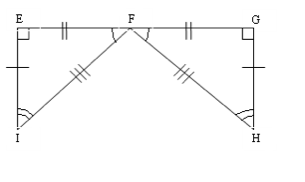
Which segment is congruent to EF? 
a)
HG
b)
HF
c)
GF
d)
IE
100.
The symbol for congruence is ______
a)
=
b)
c)
d)
101.
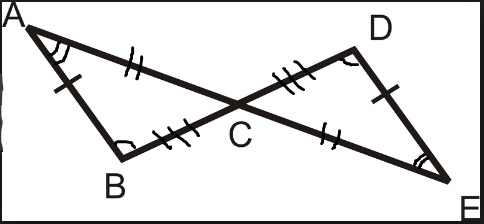
Congruent sides have the same number of ______
a)
arcs
b)
slash marks
c)
dots
102.
Congruent angles have the same number of ______
a)
arcs
b)
slash marks
c)
dots
103.

∠1 and ∠4 are _____________

a)

Adjacent and Supplementary

b)

Complementary and Supplementary

c)

Adjacent and Complementary

d)

Vertical

104.

∠1 and ∠2 are _____________

a)

Complementary

b)

Supplementary

c)

Adjacent

d)

Vertical

105.

∠TPU and ∠UPQ are ______________

a)

Vertical

b)

Complementary and Adjacent

c)

Supplementary and Adjacent

d)

Nothing

106.

∠7 and ∠TPU are _______________

a)

Complementary and Adjacent

b)

Supplementary and Adjacent

c)

Adjacent

d)

Vertical

107.

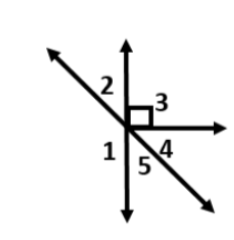
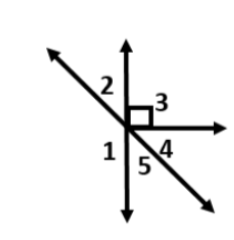
What angle is vertical to angle 2?

a)

∠4

b)

∠1

c)

∠2

d)

∠5

108.

What angle is complementary to angle 4?

a)

∠5

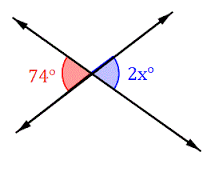
b)

∠3

c)

∠2

d)

∠1

109.

What angle is adjacent and supplementary to angle 5?

a)

∠4

b)

∠1

c)

∠3

d)

∠2

110.

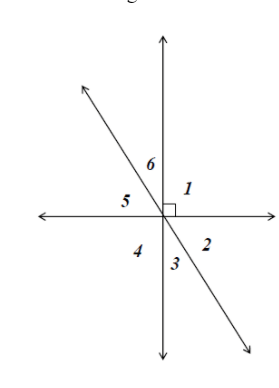
Name a pairs of vertical angles in the figure.

a)

∠1 and ∠4

b)

∠6 and ∠5

c)

∠2 and ∠4

d)

∠1 and ∠6

111.
If the measure of ∠2 is 83°, what is the measure of ∠3?
a)
b)
17°
c)
83°
d)
97°
112.
What is the value of x?
a)
37
b)
72
c)
108
d)
18
113.

Given a diagram, which of the following can you assume?

a)

Segment length

b)

Angle size

c)

Straight lines

d)

Congruence

114.

Find the endpoint of the segment with the endpoint of (-4, 5) and midpoint of (7, -9)

a)

(18, -23)

b)

(13, 18)

c)

(11,4)

d)

(1.5, -2)

115.
Find the endpoint of the segment with the endpoint of  (-4, 5) and midpoint of (7, -9) 
a)
(18, 13)
b)
(13, 18)
c)
(11,4)
d)
(1.5, -2)
116.
Find the other endpoint of the line segment with the given endpoint and midpoint. Endpoint: (9,8)   Midpoint (0,9)
a)
(-9, 10)
b)
(1.5, -1)
c)
(4.5, -0.5)
d)
(8.5, 4.5)
117.
  Find the missing endpoint if the midpoint is at (2, -5) and one endpoint is at (12, -5).
a)
(2, -5)
b)
(10, -8)
c)
(-8, -5)
d)
(12, -5)
118.
Find the midpoint of the segment with the endpoints:  (-2, 6) and (-3, 7)   
a)
(0.5, 0.5)
b)
(6.5, -2.5)
c)
(-1.5, 7)
d)
(-2.5, 6.5)
119.

A circle has a radius of 4. What is the circumference of the circle?

a)

4π or about 12.56

b)

16π or about 50.24

c)

2π or about 6.28

d)

8π or about 25.12

120.

A circle has a radius of 4. What is the area of the circle?

a)

4π or about 12.56

b)

16π or about 50.24

c)

2π or about 6.28

d)

8π or about 25.12

121.

A circle has a diameter of 10 centimeters. What is the circumference of the circle?

a)

5π or about 15.7 cm

b)

10π or about 31.4 cm

c)

20π or about 62.8 cm

d)

100π or about 314 cm

122.

A circle has a radius of 6 inches. What is the area of the circle?

a)

3π or about 9.42 in2

b)

6π or about 18.84 in2

c)

12π or about 37.68 in2

d)

36π or about 113.04 in2

123.
What is the formula for area of a circle?
a)
A = π×r²
b)
A = 2×π×r
124.
A line that goes from one end of the circle to the other and crosses the center point.  
a)
center
b)
diameter
c)
dime eater
d)
radius
125.
What is the formula for Circumference?
a)
C = π×r²
b)
C = 2×π×r
126.
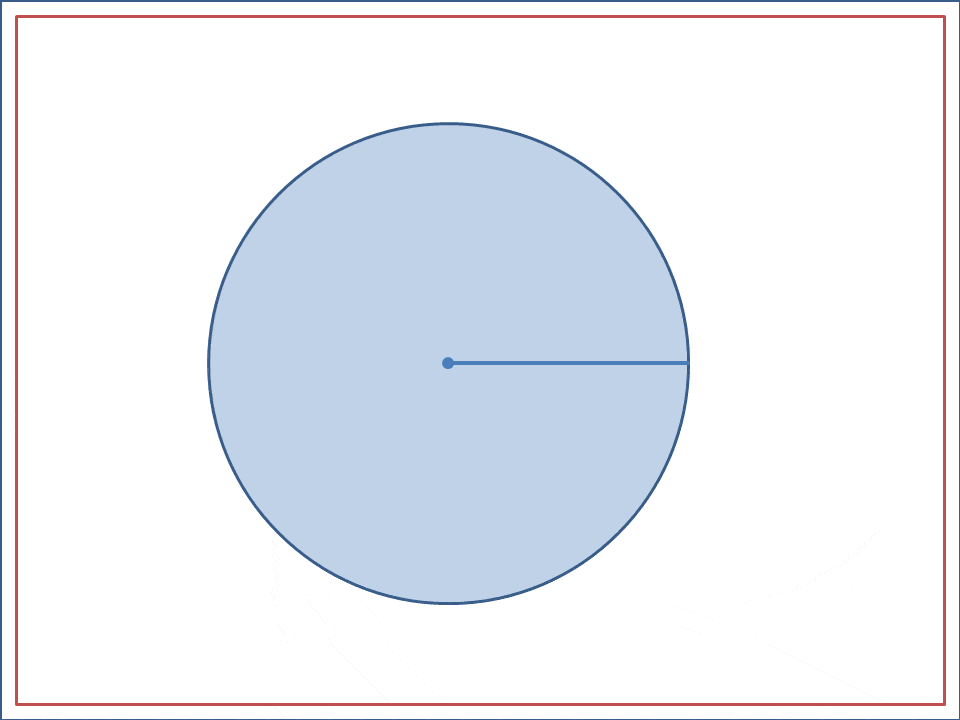
What is the radius of this circle?
a)
18 in
b)
10 in
c)
9 in
d)
8 in
127.
What is the diameter of this circle?
a)
3.5 m
b)
3 m
c)
5 m
d)
7 m
128.
The circumference is 62.8 inches.  What is the radius?
a)
20 inches
b)
10 inches
c)
6.28 inches
d)
31.4 inches
129.
Which segment is not a radius?
a)
CA
b)
CB
c)
CD
d)
LM
130.

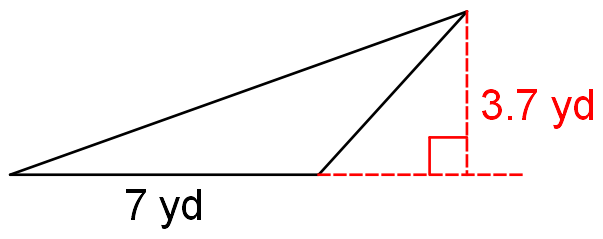
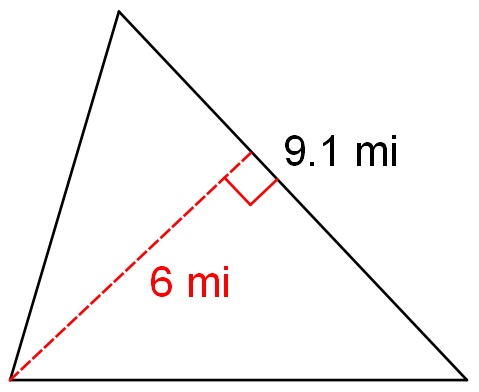
What is the area of the triangle?

a)

25.9 yd2

b)

12.95 yd2

c)

6.475 yd2

d)

12.95 m2

131.

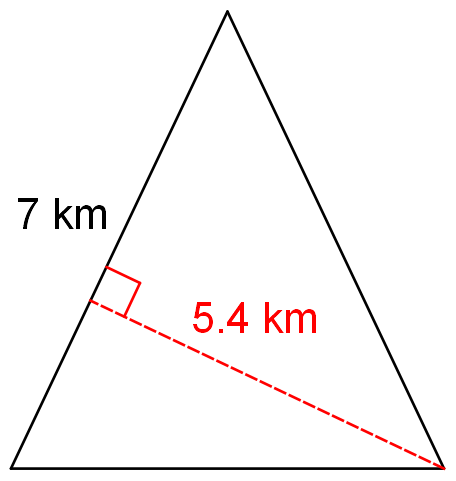
What is the area of the triangle?

a)

19.8 km2

b)

37.8 km2

c)

18.9 km2

d)

35 km2

132.

What is the area of the triangle?

a)

27.3 mi2

b)

54 mi2

c)

27 mi2

d)

54.6 mi2

133.

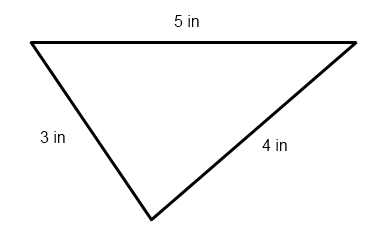
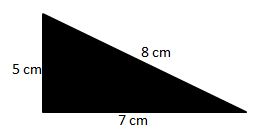
What is the perimeter of the shape?

a)

4 in.

b)

10 in.

c)

12 in.

d)

7.5 in.

134.

Find the perimeter of this triangle.

a)

20 cm

b)

21 cm

c)

40 cm

d)

12.5 cm

135.
Area represents the
a)
The number of square units inside a figure
b)
The number of units around a figure
136.
Perimeter represents the
a)
Number of square units inside a figure
b)
The numbers of units around the figure
137.
How do you find the perimeter of a rectangle?
a)
P = 2 (l + w)
b)
P = l + w
c)
P = l · w
d)
P = 1/2 (b · h)
138.
Find the perimeter of the rectangle.
a)
40 mm 
b)
82 mm 
c)
420 mm 
d)
41 mm 
139.
Find the perimeter of the rectangle.
a)
94 in.
b)
47 in.
c)
38 in.
d)
532 in.
140.
Find the area of the rectangle.
a)
140 cm2
b)
70 cm2
c)
34 cm2
d)
64 cm2
141.
Find the area of the rectangle.
a)
36 in.2
b)
72 in.2
c)
26 in.2
d)
13 in.2
142.
How do you find the area of a rectangle?
a)
A = 2 ( l + w) 
b)
A = 1/2 (b · h) 
c)
A = l · w
d)
A = l ÷ w
143.

What is the area of the figure?

a)

30

b)

225

c)

195

d)

255

144.

What is the area of the figure?

a)

390

b)

130

c)

520

d)

295

145.

What is the area of the figure?

a)

200

b)

152

c)

48

d)

248

146.

What is the area of the figure?

a)

40 sq cm

b)

65 sq cm

c)

52.5 sq cm

d)

25 sq cm

147.

What is the area of the figure?

a)

80 cm2

b)

16 cm2

c)

96 cm2

d)

32 cm2

148.
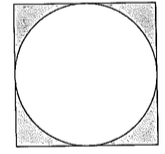
Jeff drew a circle inside a square, as shown below.  Which method can Jeff use to find the area of the square not covered by the circle?
a)
Subtract the area of the circle from the area of the square.
b)
Subtract the area of the square from the area of the circle.
c)
Subtract 1/4 the area of the square from the area of the circle.
d)
Subtract 1/4 the area of the circle from the area of the square.
149.

Find the perimeter

a)

3 inches

b)

8.28 inches

c)

3.57 inches

d)

5 inches

150.

Find the perimeter

a)

10.99 cm

b)

35 cm

c)

71.96 cm

d)

38.99 cm

151.

Find the perimeter

a)

9 in

b)

4.71 in

c)

15.42in

d)

24.84in

152.
A ray that divides an angle into two congruent angles.
a)
angle bisector
b)
segment bisector
c)
midpoint
d)
perpendicular bisector
153.
Two segments that have the same length
a)
segment bisector
b)
perpendicular bisector
c)
congruent segments
d)
congruent angles
154.

What are complementary angles?

a)

Two angles which sum is 100º

b)

Two angles which sum is 90º

c)

Two angles which sum is 180º

155.

What is a bisector?

a)

A line that divides one angles into two equals angles.

b)

A line that divides an angle from the vertex.

c)

A line that you use to calculate where the vertex is.