Wayground logo

Free Printable Worksheets

Font size

S
M
L
XL
Worksheets

Bonding and Predicting Products

Total questions: 103

Worksheet time: 5hrs 17mins

Name
Class
Date
1.
Predict the products for the following reactants.
C6H12 + O2 --> 
a)
CO + H2
b)
CO2 + O2
c)
C3H6O
d)
CO2 + H2O
2.
Predict the products for the following reactants.
Mg + I2 --> 
a)
MgI
b)
MgI2
c)
Mg + I2
d)
Mg2I
3.
Predict the products for the following reactants.
Na + MgCl2 -->
a)
NaCl + Mg
b)
NaCl2 + Mg
c)
No Reaction
d)
NaMgCl2
4.
Predict the products for the following reactants.
Al + O2 --> 
a)
AlO
b)
AlO2
c)
Al2O3
d)
Al2O
5.
Predict the products for the following reactants.
AgNO3 + Na2CO3 -->
a)
Ag2CO3 + NaNO3
b)
No Reaction
c)
AgCO3 + NO3Na
d)
AgCO3 + NaNO3
6.
Predict the products for the following reactants.

Al + CuCl2 -->
a)
No Reaction
b)
CuAl + Cl2
c)
Cu + AlCl3
d)
Cu2 + AlCl2
7.
Predict the products for the following reactants.

K2CO3 + BaCl2 -->
a)
No Reaction
b)
KCl + BaCO3
c)
K2Cl + BaCO3
d)
KCl2 + BaCO3
8.
Write a complete balanced reaction for the following.
Calcium metal reacts with oxygen gas to form a solid
a)
2 Ca (s) + O2 (g) --> 2 CaO (s)
b)
2 Ca (s) + 2 O (g) --> 2 CaO (s)
c)
Ca (s) + O2 (g) --> 2 CaO (s)
d)
Ca (s) + O2 (g) -->  CaO2 (s)
9.

What is the charge of Iron in this compound. (Hint: think swap drop method):

Fe3(PO4)2

a)

3+

b)

2+

c)

1+

d)

6+

10.

If an element is diatomic it should have a subscript of___

a)

1, always

b)

2, only when it is an element

c)

it shouldn't have a subscript, it should have a coefficent

d)

2, when bonded in a compound

11.

The symbol for a substance dissolved in solution is ______

a)

(s)

b)

(l)

c)

(aq)

d)

(g)

12.

Fill in the blank. (Copper has a charge of 2+)

Cu+ AgNO3 → Ag + _____

a)

Cu(NO3)2

b)

CuNO3

c)

CuAg

d)

Cu

13.

Predict the products for the this Double Replacement reaction:

AgNO3 + KCl →

a)

AgCl + KNO3

b)

AgK + ClNO3

c)

KAg + NO3Cl

d)

AgCl + 3 KNO

14.

Complete the balanced equation for this Double Replacement reaction.

3 NaOH + Fe(NO3)3 →

a)

NaFe + OH(NO3)3

b)

NaNO3 + Fe(OH)3

c)

3 NaNO3 + Fe(OH)3

d)

3 NaFe + 3 (OH)NO3

15.
When balancing equations a ____ can be placed to the left of a formula of a substance to make the equations balanced
a)
charge
b)
subscript
c)
random number
d)
coefficient
16.
Classify
Zn + H
2S → ZnS + H2
a)
synthesis
b)
combustion
c)
single replacement
d)
double replacement
17.
Classify
FeS + HCl → H
2S + FeCl2
a)
synthesis
b)
combustion
c)
single replacement
d)
double replacement
18.
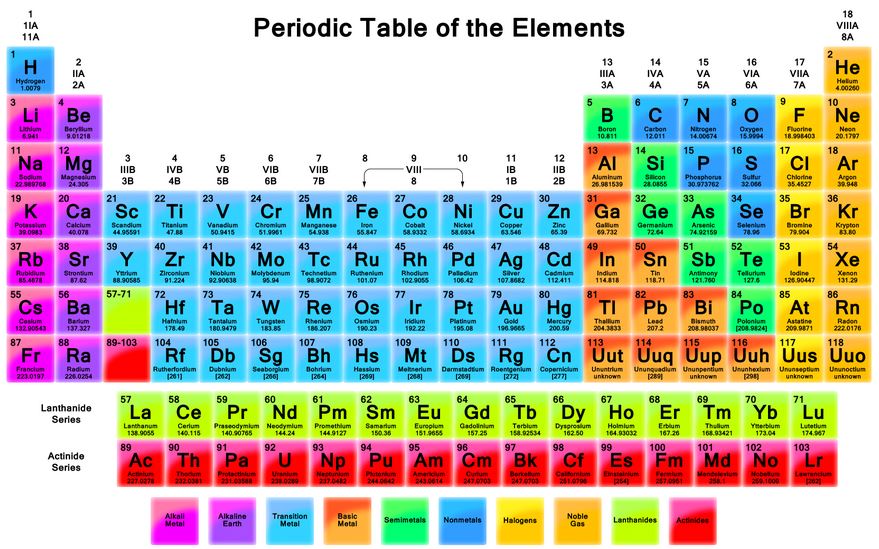
Which of the following has a full valence shell?
a)
Oxygen
b)
Neon
c)
Barium
d)
Carbon
19.
Elements on the LEFT side of the periodic table will most likely form:
a)
Positive ions
b)
Negative ions
c)
Neutral Ions
d)
None of these
20.
An ionic bond forms when atoms ___________ electrons.
a)
gain
b)
share
c)
increase
d)
transfer
21.
Which type of bond has an equal sharing of electrons?
a)
Polar Covalent 
b)
Non Polar Covalent
c)
Ionic
d)
Metallic
22.
Which type of bond has an unequal sharing of electrons?
a)
Polar Covalent 
b)
Non Polar Covalent
c)
Ionic
d)
Metallic
23.
Which type of bond has a transfer of an electron from on atom to another?
a)
Polar Covalent 
b)
Non Polar Covalent
c)
Ionic
d)
Metallic
24.
If an atom loses two electrons what charge will it have?
a)
+ 2
b)
 - 2
c)
+1
d)
-1
25.
If an atom gains one electron what charge will it have?
a)
-2
b)
-1
c)
+1
26.
What is the number of valence electrons for Oxygen?
a)
8
b)
6
c)
2
d)
1
27.
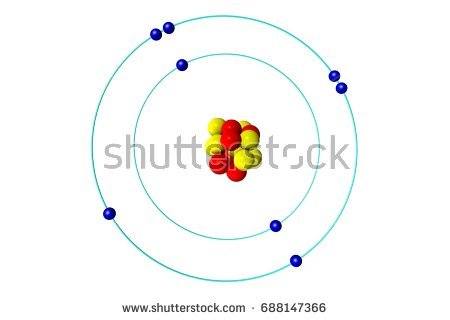
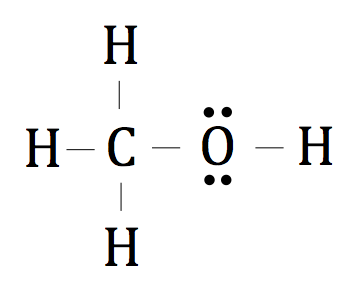
How many valence electrons in this structure?
a)
6
b)
5
c)
4
d)
7
28.
When electrons are shared unequally a/an ___________ bond is formed 
a)
ionic 
b)
hydrogen
c)
polar covalent 
29.
How are covalent bonds explained?
a)
When one atom takes the other atom's electron
b)
When the atom shares an electron with an another atom
c)
When the two nucleus merge
d)
When the neutrons leave the nucleus
30.
What two types of atoms make a covalent bond?
a)
2 Nonmetals
b)
1 Nonmetal and 1 Metal
c)
2 Metals
d)
2 Noble Gases
31.
Is Hydrogen considered a metal or a non-metal?
a)
Metal
b)
Non-metal
32.
In chemical compounds, covalent bonds form when
a)
the electronegativity difference between two atoms is very large.
b)
electrons are completely transferred between two metals.
c)
pairs of electrons are shared between two nonmetal atoms.
d)
two nonmetal atoms are attracted to each other by opposite charges.
33.
What region of the periodic table contains atoms that form covalent bonds?
a)
the left side
b)
the middle
c)
the right side
d)
top left
34.
Are the atoms more stable when they are bonded together or when they are apart? 
a)
Bonded Together
b)
Apart
35.

Why do atoms bond?

a)

They typically don't bond

b)

To add or take away energy levels

c)

To have a full valance shell.

d)

To have a full inner shell

36.

What happens when magnesium loses 2 electrons?

a)

It stabilizes to a net charge of 0

b)

It turns into an atom

c)

It becomes negatively charged

d)

It becomes positively charged

37.

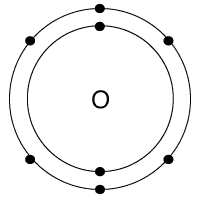
Which is the correct Lewis Structure for oxygen?

a)
b)
c)
d)
38.

What is the chemical formula for Lithium Nitride?

a)

Li3N

b)

LiN3

c)

NLi3

d)

N3Li

39.

What is the ionic formula for a bond between Calcium and Phosphorus?

a)

Ca2P3

b)

Ca3P2

c)

Ca2P5

d)

P5Ca2

40.

What category of element usually forms a positive ion?

a)

Metals

b)

Nonmetals

c)

metalloids

d)

Noble gases

41.

Which category of elements usually form negative ions?

a)

metals

b)

nonmetals

c)

metalloids

d)

noble gases

42.

CaCl2 is an example of what type of bond?

a)

Covalent

b)

Metallic

c)

Ionic

43.

what is the name of CCl4?

a)

carbon tetrachloride

b)

monocarbon tetrachloride

c)

tetracarbon monochloride

d)

carbon chloride

44.

Name this formula:

KNO3

a)

Potassium Nitrogen Oxide

b)

Potassium Nitride

c)

Potassium Nitrate

d)

Potassium (I) Nitrite

45.
Name the following ionic compound: LiNO3
a)
lithium nitrate
b)
lithium III nitrate
c)
lithium nitride
d)
lithium oxide
46.

What is the name of the compound SO2

a)

Monosulfate oxide

b)

Sulfur Dioxide

c)

Monosulfur dioxide

47.

What is the name of the compound P2O5

a)

Pentaphosphorus dioxide

b)

Phoshphide dioxide

c)

Diphosphorus pentoxide

48.

What is the name for MgF2 ?

a)

magnesium fluoride

b)

manganese Phosphide

c)

magnesium(III) fluoride

d)

magnesium fluoride(II)

49.

Name Al2S3

a)

Aluminum sulfide

b)

Dialuminum trisulfide

c)

ammonium sulfide

d)

aluminum (II) sulfice

50.

Name the compound NH4OH

a)

ammonium hydroxide

b)

ammonia oxyhydride

c)

mononitrogen tetraoxihydride

d)

hydrogen nitrate

51.

Name the compound CuO

a)

copper (II) oxide

b)

copper oxide

c)

copper (I) oxide

d)

carbon uranium oxide

52.

Name the compound CuCO3

a)

cobalt carbonate

b)

copper (III) carbonate

c)

copper (II) carbonate

d)

copper carbonate

53.
Name the following compound: SnO2
a)
tin(II) oxide
b)
tin(IV)oxide
c)
tin(II)oxygen 
d)
tin oxide
54.
What is the name of Ca(NO3)2
a)
calcium nitrite
b)
calcium (II) nitrate
c)
calcium nitrate
d)
carbon nitrate
55.
Name the following ionic compound: Cr(NO2)3
a)
chromium nitrite
b)
chromium nitride
c)
chromium (III) nitride
d)
chromium (III) nitrite
56.
Name the following ionic compound: FeCl3
a)
iron chloride
b)
iron (III) chloride
c)
iron chlorate
d)
iron (III) chlorate
57.
Select the correct formula for sulfur hexachloride
a)
S2Cl6
b)
S6Cl
c)
SCl6
d)
SF6
58.
What is the formula for lead (II) carbonate?
a)
PbCO3
b)
Pb2CO3
c)
Pb(CO3)2
d)
Pb(CO)4
59.
State whether the following compound is soluble or insoluble.  calcium carbonate CaCO3 
a)
soluble
b)
insoluble
60.
State whether the following compound is soluble or insoluble. potassiun bromide KBr
a)
Soluble
b)
Insoluble
61.
State whether the following compound is soluble or insoluble. Zinc hydroxide Zn(OH)2
a)
Soluble 
b)
Insoluble
62.
State whether the following compound is soluble or insoluble. Silver iodide AgI
a)
Soluble 
b)
Insoluble 
63.
State whether the following compound is soluble or insoluble. Zinc  carbonate ZnCO3 
a)
Soluble 
b)
Insoluble 
64.
State whether the following compound is soluble or insoluble.Potassium hydroxide KOH
a)
Soluble 
b)
Insoluble
65.
State whether the following compound is soluble or insoluble.Lead iodide PbI2
a)
Soluble
b)
Insoluble
66.
State whether the following compound is soluble or insoluble.Barium chloride BaCl2
a)
soluble
b)
insoluble
67.

CaSO4

a)

Soluble

b)

Insoluble

68.

Na2SO4

a)

Soluble

b)

Insoluble

69.
Choose the correct shape for this molecule:
a)
Trigonal planar
b)
Trigonal pyramidal
c)
Tetrahedral
d)
Linear
70.
Choose the correct shape for this molecule:
a)
Trigonal planar
b)
Trigonal pyramidal
c)
Bent
d)
Linear
71.
Choose the correct shape for this molecule:
a)
Tetrahedral
b)
Trigonal pyramidal
c)
Bent
d)
Trigonal planar
72.
Choose the correct shape for this molecule:
a)
Bent
b)
Linear
c)
Tetrahedral
d)
Trigonal pyramidal
73.
How many total lone pairs would there be in the Lewis structure for the oxygen molecule?
a)
1
b)
2
c)
3
d)
4
74.
The polarity of a bond between two elements can be best determined by
a)
The difference in electronegativity between the elements
b)
The difference in first ionization energy between the elements
c)
The number of electrons shared in the bond
d)
The difference in atomic radius between the elements
75.

Is the following molecule polar or nonpolar?

a)

polar

b)

nonpolar

76.

Is the following molecule polar or nonpolar?

a)

polar

b)

nonpolar

77.

Is the following molecule polar or nonpolar?

a)

polar

b)

nonpolar

78.

Is the following molecule polar or nonpolar?

a)

polar

b)

nonpolar

79.
Some elements combine chemically and no longer have the same ________________ they did before forming a compound.
a)
valence electons
b)
energy
c)
properties
d)
group number
80.
Atoms form compounds when the compound is more ______________ than the separate atoms.  Noble gases are more _________than other elements because they have a complete outer energy level.
a)
reactive
b)
stable
c)
explosive
d)
toxic
81.
Elements that do not have full outer energy levels are more stable in __________________.
a)
bonds
b)
formulas
c)
reactions
d)
compounds
82.
A _______ is a charged particle because it has more or fewer electrons than protons.  When an atom _____ an electron, it becomes a positively charged ion.  When an atom ____an electron, it becomes a negatively charged ion.
a)
isotope, gains, loses
b)
isotope, loses, gains
c)
ion, loses, gains
d)
ion, gains, loses
83.
The result of this bond is a _________compound.
a)
neutral
b)
polar
c)
positively charged
d)
negatively charged
84.
The sum of the charges on the ions in a unit of the compound is ___________. 
a)
positive
b)
negative
c)
zero
d)
±1
85.
__________are neutral particles formed as  result of sharing electrons.
a)
Protons
b)
Electrons
c)
Molecules
d)
Ions
86.
All solids at room temperature
a)
ionic compounds
b)
covalent compounds
87.
Some are solids, some are liquids, and some are gases at room temperature.
a)
ionic compounds
b)
covalent compounds
88.
Molten compound conducts electricity.
a)
ionic compound
b)
covalent compound
89.
Molten compound does NOT conduct electricity.
a)
ionic compound
b)
covalent compound
90.
Have a high m.p. (1000°C-3000°C)
a)
ionic compounds
b)
covalent compounds
91.
Have a low m.p. (< 200°C)
a)
ionic compounds
b)
covalent compounds
92.
When dissolved in water, the solution is a good conductor of electricity.
a)
ionic compounds
b)
covalent compounds
93.
When dissolved in water, the solution does NOT conduct electricity.
a)
ionic compounds
b)
covalent compounds
94.
forms ions in solution
a)
ionic compounds
b)
covalent compounds
95.

Why do atoms form bonds?

a)

to attain a noble gas configuration

b)

to increase their mass

c)

to increase their atomic number

d)

to attain an alkali metal configuration

96.

What property is describing an ionic compound?

a)

shares electrons

b)

high melting point

c)

weak bonds

d)

made up of nonmetals.

97.
What information do we look for on the periodic table if we  want to examine intermolecular forces?
a)
atomic mass
b)
atomic number
c)
electronegativity
d)
ionization 
98.
Intermolecular forces are the forces
a)
within molecules
b)
between molecules
99.

Which substance would have the weakest intermolecular forces of attraction?

a)

CH4

b)

NaCl

c)

H2O

d)

MgF2

100.
Which of the following molecules, based on the elements present, would be most polar?
a)
HF
b)
H2
c)
HCl
d)
HBr
101.
A molecule containing polar covalent bonds is always polar.
a)
True
b)
False
102.
Which of these typically increases when IMF's increase?
a)
boiling point
b)
melting point
c)
viscosity
d)
all of these 
103.
What is viscosity?
a)
a measure of inward forces at the surface of a liquid
b)
a measure of the cohesive properties of a liquid
c)
a measure of the adhesive properties of a liquid
d)
resistance to flow of a liquid