
 Worksheets
IPC Semester Exam Review
Total questions: 100
Worksheet time: 3hrs 30mins

A firework display
Physical
Chemical

At what part of the atom is the arrow pointing?
nucleus
energy level
electron
proton
The change from a solid to a gas is called
vaporization
sublimation
melting
freezing
In a __________, molecules are packed tightly together and vibrate but do not flow.
solid
liquid
gas
plasma
Which state of matter can be easily compressed and why?
Solids because particles are close together.
Liquids because particles can flow.
Gases because particles are far apart.
Gases because particles are close together.
Which states of matter can not be easily compressed?
Solids and liquids
Liquids and gases
Gases and solids
Solids and plasmas
In a __________, molecules are far apart, flow and the volume changes if the container changes.
solid
liquid
gas
plasma
Which of these is the difference between a solid and a liquid?
Solids are made of atoms, but liquids are not.
A solid has definite volume but indefinite shape, while a liquid has definite shape but indefinite volume.
The particles in a solid vibrate in place, while a liquid's particles can flow.
Solids are compressible, but liquids are only slighly compressible.
This state of matter can have a variable volume that will change when the container changes?
solid
liquid
gas
When you melt an ice cube, what is the new phase of water?
solid
liquid
gas
plasma
All are chemical changes except
Rusting a bicycle
Tarnishing pennies
A car tire deflates
Fireworks exploding
Which of the following is a chemical change?
Freezing water
Dissolving sugar
Color change of leaves
Evaporation of gasoline
Which statement describes a chemical property of silicon?
Silicon has a blue-gray color.
Silicon is a brittle solid at 293 K.
Silicon melts at 1700K
Silicon reacts with fluorine.
Which of the following changes listed is a chemical change?
Melting butter on toast
Tearing paper in small pieces
Wood burning in a fireplace
Water droplets forming on the outside of a can
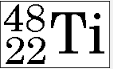

Which property listed for bromine is a physical property?
A
B
C
D
Which of the following is a chemical property for water?
Water has a mass of 18.015 grams
Sodium chloride dissolves in water
Sodium ignites when placed into water.
Water boils at 100˚C
Which of the following describes a physical change?
Dying your hair black
Leaves changing color in the fall
Burning a candle
Salt dissolves in water

Which of the properties above is a chemical property for the element hydrogen?
A
B
C
D
Which state of matter is the most greatly compressibility and why?
Liquids because the particles are close together and have stronger intermolecular forces
Liquids because the particles are far apart and have weaker intermolecular forces
Gases because the particles are far apart and have weaker intermolecular forces
Gases because the particles are closer together and have stronger intermolecular forces

In the nucleus
In the energy levels
Which of the following explains why liquids take on the shape of their containers?
Particles in them are close together and causes the attraction forces to be negligible.
Particles in them are far apart and causes the attraction forces to be negligible
Particles in them vibrate rapidly and causes it to overcome attractive forces
Particles in them vibrate slowly and causes it to overcome attractive forces
Which is not a chemical change?
Burning a candle
Dissolving sugar in Kool-Aid
Cold medicine making bubbles in water
Two substances mixing to form a precipitate
Which of the following represents a chemical property of oxygen?
oxygen is a gas at room temperature
oxygen will support combustion
when condensed as a liquid, oxygen is pale blue
oxygen is colorless
Conductivity is the ability to conduct heat or electricity. Metals are considered good conductors and wood is considered a good insulator. Conductivity is an example of which of the following?
Chemical property
Physical property
Chemical change
Physical change

Which state of matter is characterized by having an indefinite shape, but a definite volume?
A
B
C
B and C
A and B


Which state of matter takes both the shape and volume of its container?
A
B
C
B and C
A and C

Which state of matter is characterized by high compressibility?
A
B
C
B and C
A and C

Matter is defined as anything that_______.
Has a definite volume
Has mas and takes up space
Has a fixed volume and weight
Can be weighed on a balance
Which of the following is a physical property of all metals?
Silvery color
Hardness
Solid at room temperature
Ductile
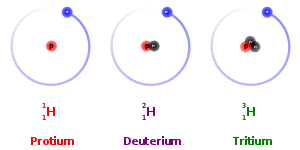
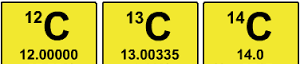
Isotopes of an element have a different number of...
Protons
Neutrons
Electrons
Mass


Mixing Mentos and Coke
Physical
Chemical

Subatomic particles with a negative charge
Electrons
Neutrons
Protons
Quarks

Look at this picture of Argon off the periodic table. Which of the following is true for this element?
18 protons
40 protons
22 protons
21.9 protons

Which state of matter has a definite volume and takes the shape of its container?
A
B
C
A and B
B and C

Is an ice cream cone melting a physical or chemical change?
Physical
Chemical
Which part of an atom is used to identify it?
number of protons
number of neutrons
number of electrons

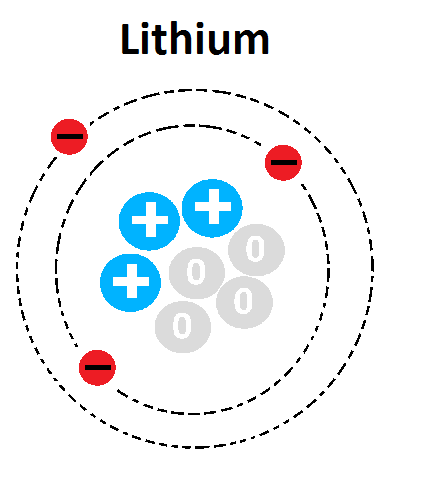
How many electron levels does this atom have?
1
2
3
4
In a neutral atom,
protons = electrons
protons = neutrons
neutrons = electrons
protons = neutrons = electrons

Food digestion
Physical
Chemical

What is one way Neutrons are different from electrons?
they both are negative
neutrons have no charge, while electrons have a negative charge
Both are in the nucleus( center of atom)
Electrons are inside nucleus and neutrons are outside the nucleus.

Which element is this?
Nickel
Neon
Sodium
Nitrogen

What is the atomic number of this atom?
2
4
6
8

What does the Bohr Model represent?
The structure of molecules
The structure of the Solar System
The structure of an atom
The structure of East Hills

What is this element?
Beryllium (atomic #4)
Boron (atomic #5)
Carbon (atomic #6)
Nitrogen (atomic #7)


What is a physical property of these strawberries?
Red
Rotten
Flammable

What is a chemical property of paper?
Flammable
White
Light

Which state of matter is characterized by having a definite shape and a definite volume?
A
B
C
A and C
A and B

Is toasting bread a physical or chemical change?
Physical
Chemical

Is crumpling a piece of paper a physical or chemical change?
Physical
Chemical
Which subatomic particle is responsible for an atoms reactivity?
protons
nucleus
neutrons
electrons
Physical properties....
change the matter when studied
can be observed and measured without changing the matter being studied
include the ability to burn and rust
are useless unless studied in a lab

Name this element.
Neon
Magnesium
Sodium
Manganese
Which of the following is a chemical property of water?
Reacts with pure sodium
Boils at 100 oC
Is liquid at room temperature
Has a density of 1 gm/mL
All of the following are examples of physical properties EXCEPT
Density
Heat conductivity
pH (acidic or basic)
Boiling point

Smashing cookies
Physical
Chemical

Name this element.
Argon
Chlorine
Aluminum
Boron

Frying eggs
Physical
Chemical
Baking a cake
Physical
Chemical

Melting butter
Physical
Chemical


Burning wood
Physical
Chemical


What is the mass number of this atom of Chlorine?
17
18
35
35.453

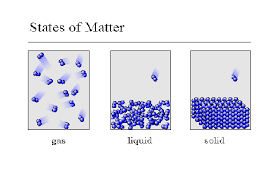
What is condensation?
gas to solid
gas to liquid
liquid to solid
Liquid to Gas
Condensation
Vaporization
Sublimation

What state of matter is pictured?
Solid
Liquid
Gas
Plasma
In a __________, molecules are not packed tightly together and flow but the volume does not change.
solid
liquid
gas
plasma

