wayground logo

Free Printable Worksheets

Font size

S
M
L
XL
Worksheets

Unit 2 Part 1 Review

Total questions: 35

Worksheet time: 2hrs 5mins

Name
Class
Date
1.
subatomic particles found on the outermost shell & responsible for the atom's reactivity
a)
neutrons
b)
valence electrons
c)
isotopes
d)
ions
2.
Value representing the number of protons in an element
a)
Atomic Mass
b)
Mass Number
c)
Valence Electrons
d)
Atomic Number
3.
The smallest particle of an element that shows all the properties of that element.
a)
Subatomic Particles
b)
Atom
c)
Quarks
d)
Gluons
4.
Where electrons are likely to be found as they travel around the nucleus
a)
Nucleus
b)
Electron Cloud
c)
Within a Proton
d)
Within a Neutron
5.
A tiny but very dense, positively charged portion of the atom that holds most of the atomic mass
a)
Electron Shells
b)
Orbitals
c)
Electron Cloud
d)
Nucleus
6.
Discovered the nucleus of the atom through the Gold Foil Experiment
a)
Rutherford
b)
Chadwick
c)
Thomson
d)
Dalton
7.
Discovered the electron within the atom
a)
Thomson
b)
Chadwick 
c)
Schrodinger & Heisenberg
d)
Dalton
8.
Discovered the neutron within the atom
a)
Democritus
b)
Thomson
c)
Rutherford
d)
Chadwick
9.
Believed that atoms of the same element are identical to each other
a)
Bohr
b)
Rutherford
c)
Dalton
d)
Thomson
10.
Calculation used to find the number of neutrons in an atom
a)
Atomic Mass - Atomic Number
b)
Atomic Number - Atomic Mass
c)
Atomic Mass - Electrons
d)
none of these
11.
Subatomic particles with a positive charge
a)
neutrons
b)
atomic mass
c)
protons
d)
isotopes
12.

Subatomic particles with a negative charge

a)

Electrons

b)

Neutrons

c)

Protons

d)

Quarks

13.
Subatomic particles that are neutral in charge
a)
Neutrons
b)
Protons
c)
Nucleus 
d)
Electrons
14.
Atoms of the same element with a different number of neutrons
a)
Ion
b)
Gluons
c)
Isotope
d)
Quarks
15.
How many protons does an Oatom have?
a)
8
b)
24
c)
16
d)
When is lunch? 
16.
An atom is said to be neutral if it has the same # of electrons and ________. 
a)
thing-ons 
b)
electrons 
c)
neutrons 
d)
protons 
17.

Who was the first contributor to the atomic theory?

a)

John Dalton

b)

Ernest Rutherford

c)

JJ Thompson

d)

Democritus

e)

Neils Bohr

18.

Mass is neither created nor destroyed during chemical reactions or physical changes.

a)

Law of multiple proportions

b)

law of definite proportions

c)

law of scientific theory

d)

law of conservation of mass

19.

states that, regardless of the amount, a compound is always composed of the same elements in the same proportion by mass

a)

law of definite proportions

b)

law of conservation of mass

c)

law of multiple proportions

d)

periodic table

20.

What were John Dalton three contributions to atomic history?

a)

Created the atomic theory

b)

Discovered that the atom is mostly empty space

c)

Believed that atoms of a given element are identical

d)

Hypothesized that the atom is a tiny, hard sphere

e)

Believed that the universe was made of tiny "uncuttable" particles

21.

What is the correct order of scientists in order of their work related to the atomic theory from earliest to most recent?

a)

Neils Bohr, Ernest Rutherford, JJ Thomson, John Dalton, & Democritus

b)

JJ Thomson, John Dalton, Neils Bohr, Ernest Rutherford, & Democritus

c)

Democritus, John Dalton, JJ Thomson, Ernest Rutherford, and Neils Bohr

d)

John Dalton, Neils Bohr, JJ Thomson, Democritus, & Ernest Rutherford

22.

What were J. J. Thomson's three contributions to the atomic theory?

a)

Discovered the electron

b)

Discovered the nucleus -did the gold foil experiment

c)

Used the cathode ray tube in his discovery

d)

Created a model of the atom with electrons moving around the nucleus in fixed orbits

e)

Created the "plum pudding" model of the atom

23.

What are two facts about Democritus's?

a)

Greek philosopher

b)

Created the atomic theory

c)

Used the cathode ray tube in his discovery

d)

Believed that the universe was made of tiny "uncuttable" particles

e)

Discovered that the atom is mostly empty space

24.

What is Neils Bohr's contribution to the atomic theory?

a)

Created the atomic theory

b)

Created a model of the atom with electrons moving around the nucleus in a fixed orbits

c)

Discovered that the proton had a positive charge

d)

Believed that atoms of a given element are identical

e)

Discovered the electron

25.

What were Ernest Rutherford's three contributions to atomic theory?

a)

Discovered that the atom is mostly empty space

b)

Discovered the nucleus- did the gold foil experiment

c)

Used the cathode ray tube in his discovery

d)

Discovered the electron

e)

Discovered that the proton had a positive charge

26.
Which scientist saw the atom as a solid sphere?
a)
Dalton
b)
Thomson
c)
Rutherford
d)
Bohr
27.
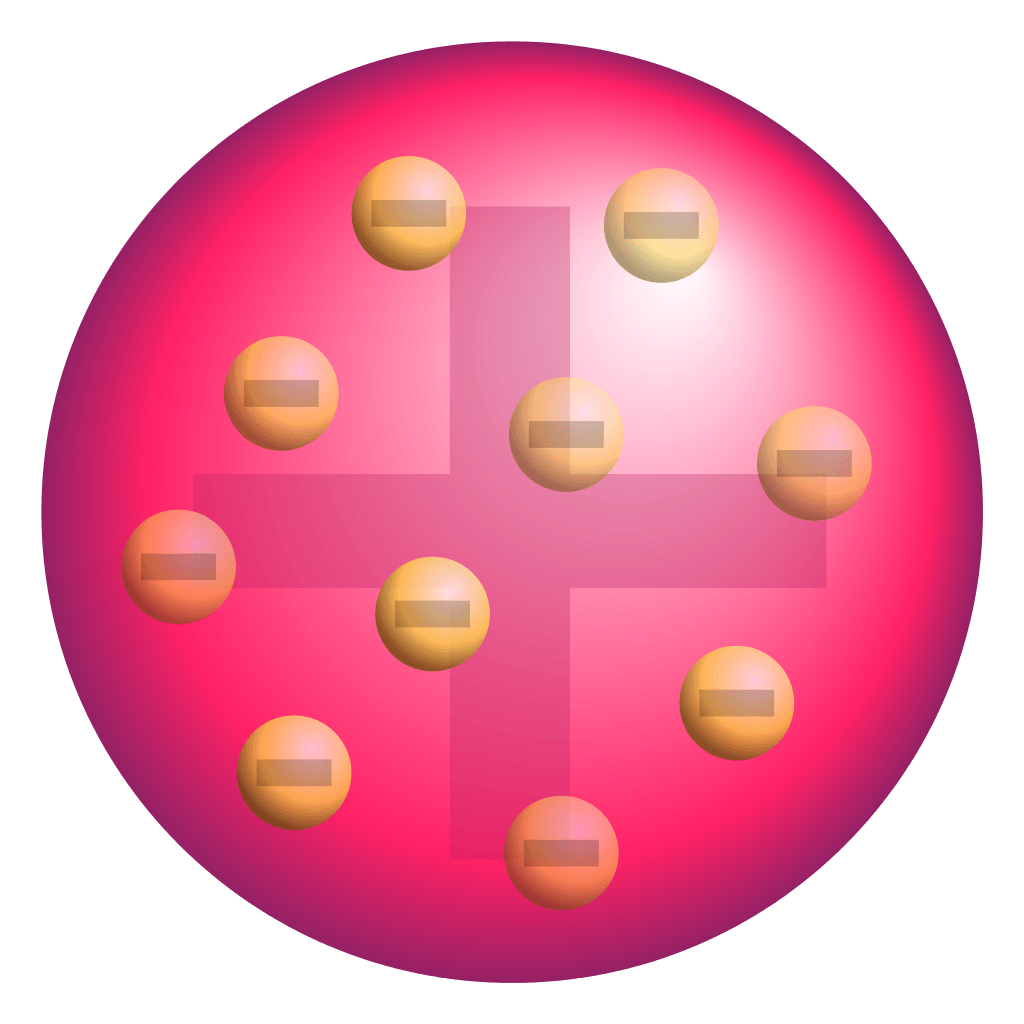
Who came up with this model of an atom?
a)
J.J. Thompson
b)
Ernest Rutherford
c)
Neils Bohr
d)
James Chadwick
28.
Who's model is this?
a)
Thomson
b)
Rutherford
c)
Democritus
d)
Bohr
29.
Who came up with this model?
a)
Dalton
b)
Thomson
c)
Rutherford
d)
Bohr
30.
Proposed electrons move around the nucleus in shells
a)
James Chadwick
b)
J.J. Thomson
c)
Niels Bohr
d)
Ernest Rutherford
31.
Rutherford’s experiment determined that the nucleus of an atom is tiny, dense and  ______ charged. 
a)
neutrally
b)
negatively
c)
positively
32.
What is an isotope? 
a)
A charged atom
b)
An atom with different amounts of neutrons
c)
An atom with different amounts of protons
d)
A neutral atom
33.
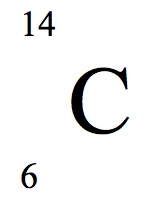
The photo above shows the isotopic notation for which isotope?
a)
Carbon 12
b)
Carbon 13
c)
Carbon 14
d)
Carbon 15
34.
How many neutrons does an Oxygen-19 isotope have?
a)
19
b)
8
c)
11
d)
10
35.
How many neutrons does a Flourine-14 isotope have?
a)
4
b)
5
c)
9
d)
14