
NEW
Font size
S
M
L
XL
 Worksheets
General Chemistry 1 - PreFinal
Total questions: 48
Worksheet time: 34mins
Name
Class
Date
1.
Who stated that atoms cannot be divided?
a)
Democritus
b)
Dalton
c)
Thomson
d)
Bohr
2.

What contribution did John Dalton make to atomic theory?
a)
He discovered that every atom was positively charged.
b)
He discovered that every element consisted of one type of atom that couldn't be divided.
c)
He discovered that atoms had nuclei.
d)
He discovered that atoms could be divided into smaller parts.
3.

Which of the following are parts of Dalton's theory?
a)
All substances are made of atoms.
b)
Atoms Join with other atoms to make new substances.
c)
Atoms of different elements are different
d)
All of these are part of his theory
4.

What two particles are part of the nucleus of an atom?
a)
Protons and Electrons
b)
Electrons and Neutrons
c)
Protons and Neutrons
d)
Alpha and Beta
5.

What particle resides in the nucleus and has no charge?
a)
Proton
b)
Neutron
c)
Electron
d)
Crouton
6.

When you add the number of protons and neutrons together, you are calculating...
a)
Atomic Number
b)
Atomic Mass
c)
Mass Number
d)
Pythagorean's Theorem
7.

The average mass of all naturally occurring isotope is also known as ...
a)
Atomic Number
b)
Atomic Mass
c)
Mass Number
d)
Radioactivity
8.

The number of protons in the nucleus of an atom is the ____________ ____________.
a)
Atomic Number
b)
Atomic Mass
c)
Mass Number
d)
12
9.

What is an element that has a different number of neutrons called?
a)
ion
b)
isotope
c)
carbon
d)
radioactive
10.

What is an atom that has an unstable nucleus referred to as?
a)
radioactive
b)
isotope
c)
ion
d)
Bill
11.

What is a charged atom that has a different amount of protons and electrons called?
a)
ion
b)
isotope
c)
radioactive
d)
Frank
12.

The vertical (up and down) columns in the Periodic Table are called
a)
groups
b)
towers
c)
periods
d)
atomic numbers
13.
The Modern Periodic Table of Elements is arranged by
a)
atomic mass
b)
atomic number
c)
valence electrons
d)
number of isotopes
14.
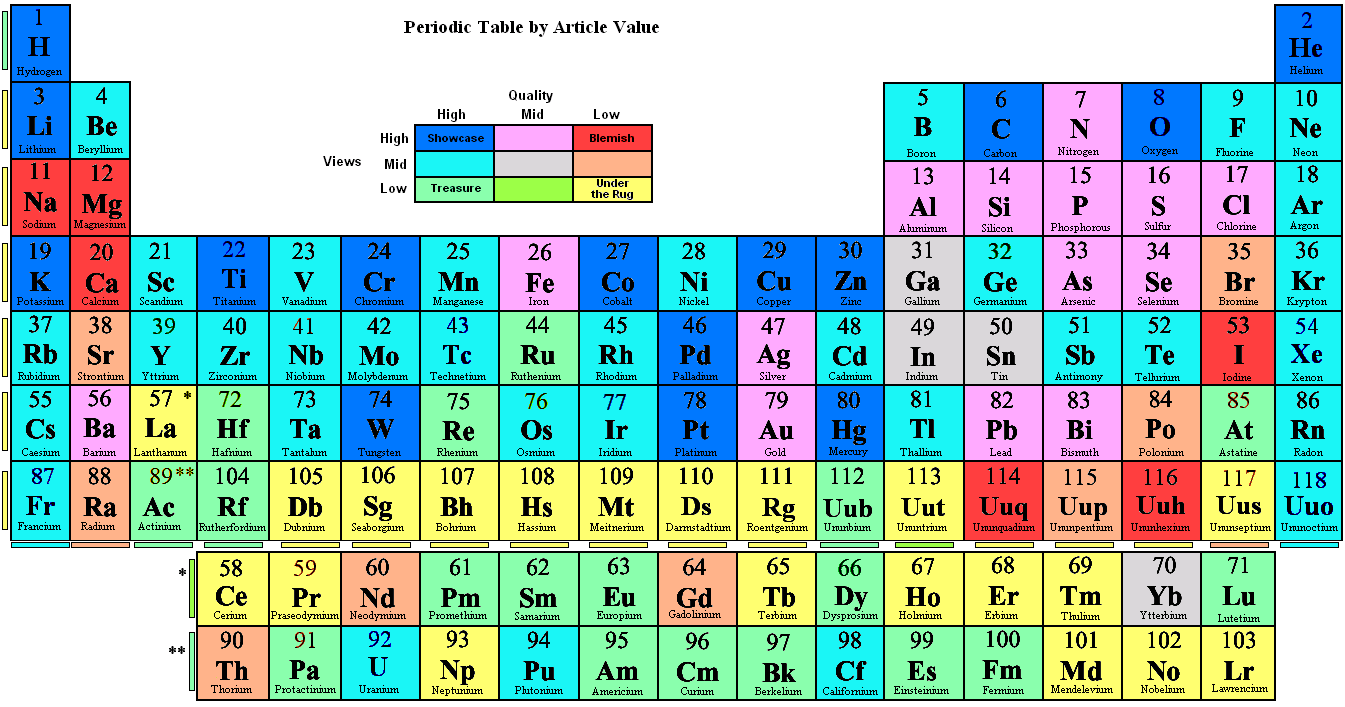
Sodium (Na) is found in period
a)
3
b)
2
c)
4
d)
1
15.
The atomic number tells you what? READ THE ANSWERS CAREFULLY
a)
only the number of electrons
b)
only the number of protons
c)
only the number of neutrons
d)
the number of both electrons and protons in an atom.
16.
What does the atomic mass tell you?
a)
Basically,the number of electrons and protons
b)
The number of neutrons
c)
Basically, the number of protons and neutrons
d)
The number of protons.
17.
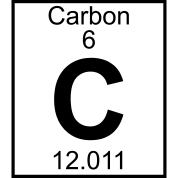
What does the 6 represent?
a)
atomic mass
b)
atomic number
c)
element name
d)
chemical symbol
18.
What does 12.011 represent?
a)
atomic mass
b)
atomic number
c)
element name
d)
chemical symbol
19.

The horizontal (side to side) rows in the Periodic Table are called
a)
groups
b)
families
c)
periods
d)
atomic numbers
20.

GOLD
a)
Al
b)
Ag
c)
Ar
d)
Au
21.

CHLORINE
a)
C
b)
Ca
c)
Cl
d)
Cu
22.

CALCIUM
a)
C
b)
Ca
c)
Cu
d)
Cl
23.

COPPER
a)
C
b)
Ca
c)
Cu
d)
Cl
24.

SULFUR
a)
Su
b)
S
c)
Sf
d)
Si
25.

POTASSIUM
a)
P
b)
Ka
c)
K
d)
Pt
26.
How many different elements are in this chemical formula: C2H2ClK3
a)
6
b)
8
c)
2
d)
4
27.
Which of the following is a pure substance?
a)
O2
b)
Al2CO5
c)
C6H12O6
d)
SiO2
28.
Which of the following atomic symbols for bromine is written correctly?
a)
bR
b)
BR
c)
Br
d)
br
29.
Which of the following chemical formulas represents a compound?
a)
C3
b)
O2
c)
CH3CHO
d)
H2
30.

When two or more elements chemically combine
a)
element
b)
compound
c)
mixture
d)
solution
31.
What is the chemical symbol for mercury?
a)
Hg
b)
Mc
c)
My
d)
C
32.
What are subatomic particles?
a)
the nucleus
b)
electron cloud
c)
positive charge
d)
electrons, protons, and neutrons
33.
Adding or subtracting neutrons (charge = 0, mass = 1) makes the element change into an...
a)
ion
b)
mixture
c)
isotope
d)
neutral atom
34.
The atomic number is equal to _.
a)
the number of protons and electrons
b)
the number of neutrons only
c)
the total number of protons and neutrons
d)
the number of protons neutrons and electrons
35.

Is the element shown in this image an ion, isotope or normal atom?
a)
atom
b)
isotope
c)
cation (+ ion)
d)
anion (- ion)
36.

What is the net charge on the element shown above?
(Calcium - atomic number 20)
(Calcium - atomic number 20)
a)
cation +1 charge
b)
cation +2 charge
c)
anion -1 charge
d)
anion -2 charge
37.
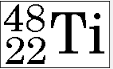
How many protons does this isotope of titanium have? Hint titanium has an atomic number of 22.
a)
48
b)
22
c)
26
d)
70
38.
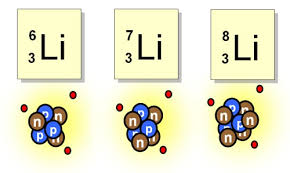
Which atom has 4 neutrons?
a)
Li-6
b)
Li-7
c)
Li-8
d)
they have the same # of neutrons
39.
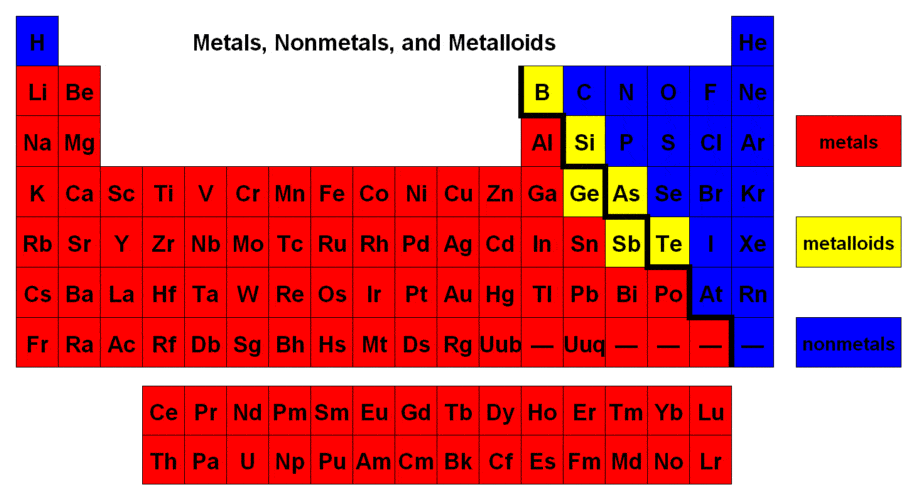
What elements generally make an ionic bond?
a)
metal and nonmetal
b)
2 or more nonmetals
c)
metal
d)
none of the above
40.
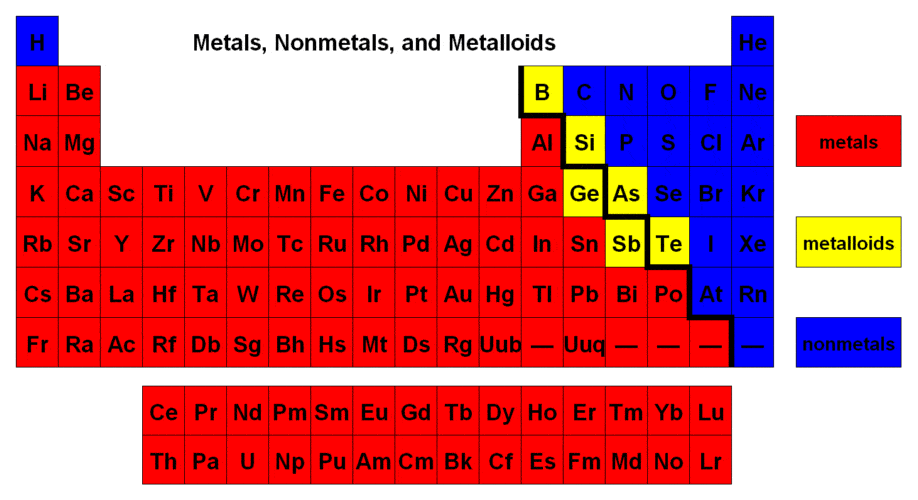
What elements generally make a covalent bond?
a)
metal and nonmetal
b)
2 or more nonmetals
c)
metal
d)
none of the above
41.
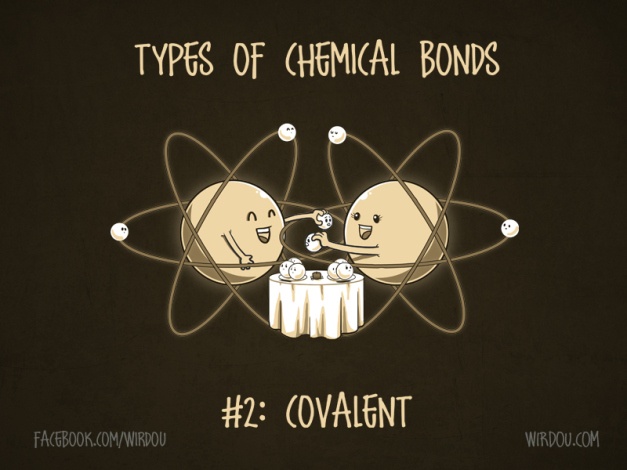
In chemical compounds, covalent bonds form when
a)
the electronegativity difference between two atoms is very large.
b)
electrons are completely transferred between two metals.
c)
pairs of electrons are shared between two nonmetal atoms.
d)
two nonmetal atoms are attracted to each other by opposite charges.
42.
An ionic bond forms when
a)
Valence electrons are shared
b)
a sea of mobile electrons surround the cations
c)
valence electrons are transferred between atoms
d)
none of the above
43.

How many Protons does Ca2+ have?
a)
41
b)
20
c)
18
d)
21
44.
Which is the strongest interaction?
a)
Covalent bonds
b)
Ionic bonds
c)
Hydrogen bonds
d)
Van der Waals forces
45.
The symbol for beryllium is
a)
B
b)
b
c)
Be
d)
BE
46.
The symbol for boron is
a)
B
b)
Be
c)
Bo
d)
BO
47.
The ________________ tells you how many energy levels are used in an element.
a)
group number
b)
atom
c)
protons
d)
period number
48.
The element Tellurium has the atomic mass of 127.60 and its atomic number is 52. How many neutrons are in the element Tellurium?
a)
179.60
b)
127.60
c)
52
d)
76
Reset

