wayground logo

Free Printable Worksheets

NEW

Font size

S
M
L
XL
Worksheets

Chapter 3 Test Review

Total questions: 45

Worksheet time: 1hrs 21mins

Name
Class
Date
1.
24.1% of all the isotopes of a an element have a mass of 75.23 amu, 48.7% have a mass of 74.61 amu, and 27.2% have a mass of 75.20 amu.
What is the average mass of this element?
a)
74.92 amu
b)
24.97 amu
c)
75.01 amu
d)
74.51 amu
2.
Calcium has three different isotopes. One has a mass of 35.00 amu; another has a mass of 41.00 amu; and another has a mass of 40.00 amu. Which isotope is the most abundant of the three?
a)
40.00 amu
b)
41.00 amu
c)
35.00 amu
d)
impossible to tell
3.
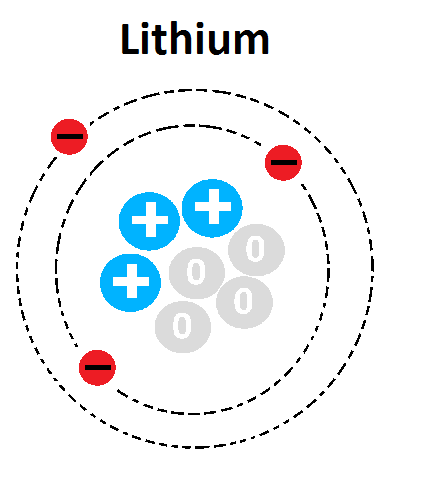
What is the name of the atom pictured here?
a)
Nitrogen
b)
Nitrogen-15
c)
Nitrogen-7
d)
Nitrogen-8
4.
the smallest particle of an element that retains all the properties of that element; is electrically neutral, spherically shaped, and composed of electrons, protons, and neutrons
a)
electron
b)
neutron
c)
atom
d)
proton
5.
the weighted average mass of the isotopes of that element
a)
mass number
b)
atomic number
c)
nuclear equation
d)
atomic mass
6.
the number of protons in an atom
a)
mass number
b)
atomic number
c)
atomic mass unit (amu)
d)
atomic mass
7.
theory which states that matter is composed of extremely small particles called atoms; atoms are invisible and indestructible; atoms of a given element are identical in size, mass, and chemical properties; atoms of a specific element are different from those of another element; different atoms combine in simple whole-number ratios to form compounds; in a chemical reaction, atoms are separated, combined, or rearranged
a)
radioactive decay
b)
dalton's atomic theory
c)
nuclear equation
d)
radioactivity
8.
a negatively charged, fast-moving particle with an extremely small mass that is found in all forms of matter and moves through the empty space surrounding an atom's nucleus
a)
proton
b)
atom
c)
electron
d)
neutron
9.
atoms of the same element with different numbers of neutrons
a)
isotopes
b)
atom
c)
cathode ray
d)
dalton's atomic theory
10.
the number after an element's name, representing the sum of its protons and neutrons
a)
atomic mass
b)
mass number
c)
atomic mass unit (amu)
d)
atomic number
11.
the extremely small, positively charged, dense center of an atom that contains positively charged protons and neutral neutrons
a)
proton
b)
nucleus
c)
neutron
d)
atom
12.
a subatomic particle in an atom's nucleus that has a positive charge of 1+
a)
neutron
b)
nucleus
c)
proton
d)
electron
13.

What law states that, regardless of the amount, a compound is always composed of the same elements in the same proportion by mass?

a)

Law of definite proportions

b)

Law of conservation of mass

c)

Law of multiple proportions

d)

Law of mass action

14.

In oxides of nitrogen, atoms combine in small whole number ratios. This evidence supports the law of

a)

mass action

b)

conservation of mass

c)

definite proportions

d)

multiple proportions

15.

Which of the following is NOT a part of Dalton's atomic theory?

a)

Atoms cannot be divided, created or destroyed.

b)

The number of protons in an atom is its atomic number.

c)

In chemical reactions, atoms are combined, separated or rearranged.

d)

All matter is composed of extremely small particles called atoms.

16.

A pure sample of ammonia contains 14 g of nitrogen and 3 grams of hydrogen. A second sample of pure ammonia contains 28 g nitrogen and 6 g of hydrogen. This is an example of the

a)

law of universal gravitation

b)

law of multiple proportions

c)

law of definite proportions

d)

law of mass action

17.

Which of the following sets of compounds illustrate the law of multiple proportions?

a)

MgO, CaO

b)

FeO, Fe2O3

c)

PbI2, PbF2

d)

CBr4, CF4

18.
What is the atomic number?
a)
the number of protons
b)
the number of protons and neutrons
c)
the number of neutrons
d)
the number of protons and electrons
19.
What is the mass number defined as?
a)
the number of protons
b)
the number of protons and neutrons
c)
the number of neutrons
d)
the number of protons and electrons
20.

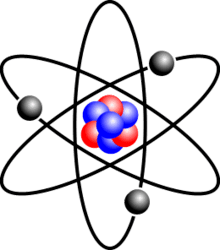
What is the mass number of this atom?

a)

1

b)

3

c)

4

d)

7

21.

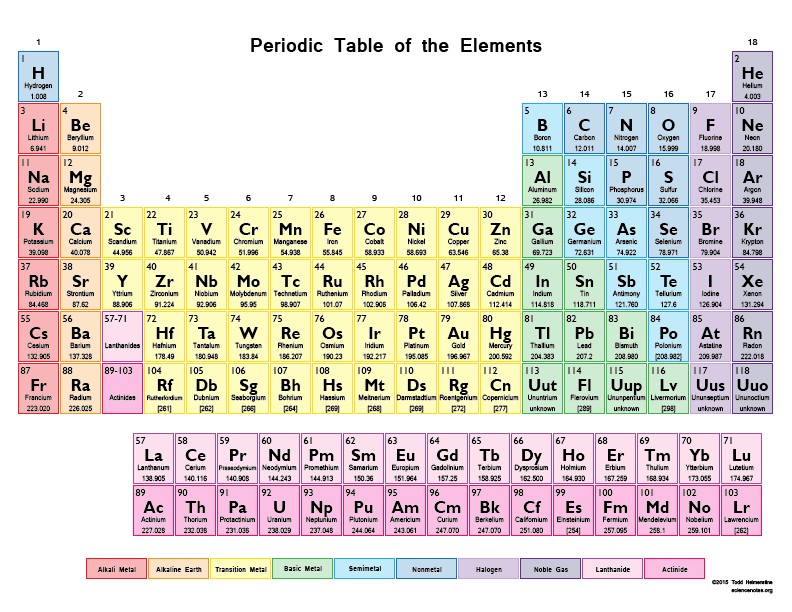
How many protons are in a sodium atom, Na? (tap to enlarge the periodic table)

a)

Sodium has 1 proton.

b)

Sodium has 3 protons.

c)

Sodium has 11 protons

22.

An element has the mass number 12 and atomic number 6. The number of neutrons in it is:

a)

6

b)

10

c)

4

d)

8

23.

Atoms of the same element which have a different number of neutrons are called _________________.

a)

ions

b)

isotopes

c)

quarks

d)

molecules

24.

Which subatomic particle has a negative charge in the atom?

a)

proton

b)

neutron

c)

electron

d)

quark

25.

The number in Kr-84 represents what about Krypton?

a)

The number of electrons

b)

The number of protons

c)

The mass number

26.

How many electrons are in an atom with an atomic number of 50?

a)

5

b)

8

c)

50

d)

2

27.
What is an ion?
a)
A Charged Atom
b)
A Large Atom
c)
A Small Atom
d)
A Cute Atom
28.
Cations are...
a)
Positive
b)
Negative
c)
Neutral
d)
Purring
29.
Anions are...
a)
Positive
b)
Negative
c)
Neutral
d)
Crying
30.
An atom becomes _________ when it gains electrons.
a)
Positive
b)
Negative
c)
Neutral
d)
Invinsible
31.
An atom becomes _______ when it loses electrons.
a)
Positive
b)
Negative
c)
Neutral
d)
Invinsible
32.
Which particles change the charge in atoms when ions are formed?
a)
Protons
b)
Electrons
c)
Neutrons
d)
Kittens
33.
How many molecules are in 2.5 mol of NaCl?
a)
1.51x10²³
b)
146
c)
4.15
d)
1.51x1024
34.
How many molecules of sugar (C6H12O6) are in a mole?
a)
24 molecules
b)
180 molecules
c)
180 g
d)
6.02 x 10²³ molecules
35.
How many atoms of carbon are in 6.00g of carbon?
a)
1.20x1024atoms C
b)
6.02x10²³atoms C
c)
3.01x10²³atoms C
d)
1.50x10²³atoms C
36.

How many steps are in a gram to mole conversion of the same substance?

a)

1

b)

2

c)

3

d)

4

37.
What are the units for molar mass?
a)
grams
b)
amu
c)
grams/mole
d)
liters
38.
If an atom of Fluorine has an atomic mass of 19 amu, it has a Molar mass of ____
a)
19 lbs.
b)
19 kg
c)
How am I supposed to know?
d)
19 g/mol
39.
What is the molar mass of table salt (NaCl)?
a)
116.886 g/mol
b)
35.453 g/mol
c)
22.990 g/mol
d)
58.443 g/mol
40.

How many steps are in a gram to molecule conversion of the same substance?

a)

1

b)

2

c)

3

d)

4

41.
Which conversion factor should be used to solve the following, "How many moles in 28 grams of CO2?"
a)
1 mol = 22.4 L 
b)
1 mol = 44.01 g
c)
1 mol = 6.02x10²³ atoms
d)
more than one
42.
Which conversion factor should be used for the following question " How many molecules are there in 4.00 moles of glucose, C6H12O6
a)
1 mole = 78.12 g
b)
1 mole = 22.4 L 
c)
1 mol = 6.02x 10²³ particles 
d)
more than one
43.
How many grams of Hydrogen are there in 25 moles of water?
a)
25 g
b)
450 g
c)
18 g
d)
50 g
44.
In the equation 2 Al2O3 --> 4 Al + 3 O2, what is the mole ratio of aluminum to oxygen?
a)
10:6 
b)
3:4
c)
4:3
d)
2:3
45.

How many moles of Hydrogen are in 16.94 mg of water?

a)

16.94 mol H2O

b)

0.001880 mol H2O

c)

305.3 mol H2O

d)

1.063 mol H2O