
 Worksheets
C1.1 Enzymes
Total questions: 17
Worksheet time: 9mins
Name
Class
Date
1.
Enzymes are an example of
a)
Lipids
b)
Carbohydrate
c)
Protein
d)
Nucleic Acid
2.
What is the purpose of an enzyme?
a)
give permission for the reaction
b)
raise activation energy
c)
speed up reactions
d)
control how many reactions occur
3.
Enzymes are capable of increasing the rate of a chemical reaction within a living cell. Enzymes accomplish this through which of the following means?
a)
reducing the number of products
b)
reducing the activation energy
c)
increasing the temperature of the cell
d)
increasing the concentration of reactants
4.
Each enzyme only has 1 substrate that will fit its active site. What is this called?
a)
reusable
b)
catalyst
c)
specific
d)
fragile
5.
What 3 letters do enzymes typically end in?
a)
-ose
b)
-ase
c)
-ese
d)
-tic
6.
Any substance that is acted upon by an enzyme is called a(n)?
a)
Coenzyme
b)
Substrate
c)
Vitamin
d)
Polypeptide
7.
After the enzyme and substrate bind together and perform the reaction, what does the substrate become?
a)
a substrate
b)
an enzyme
c)
a product
d)
an active site
8.
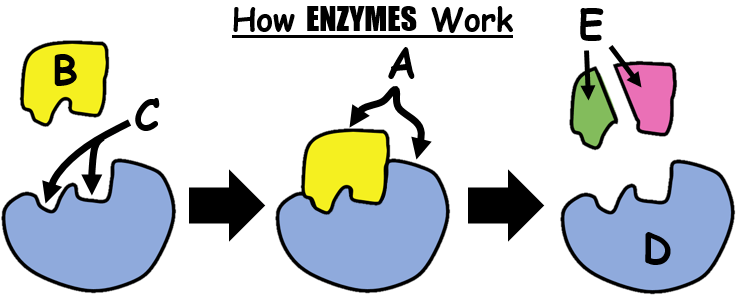
Letter D...
a)
active site
b)
enzyme
c)
substrate
d)
products
9.
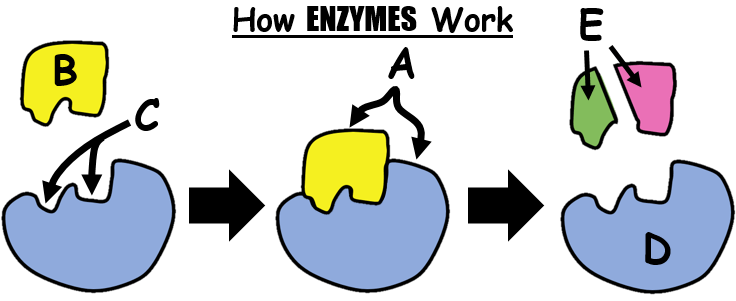
Letter B...
a)
active site
b)
enzyme
c)
substrate
d)
products
10.
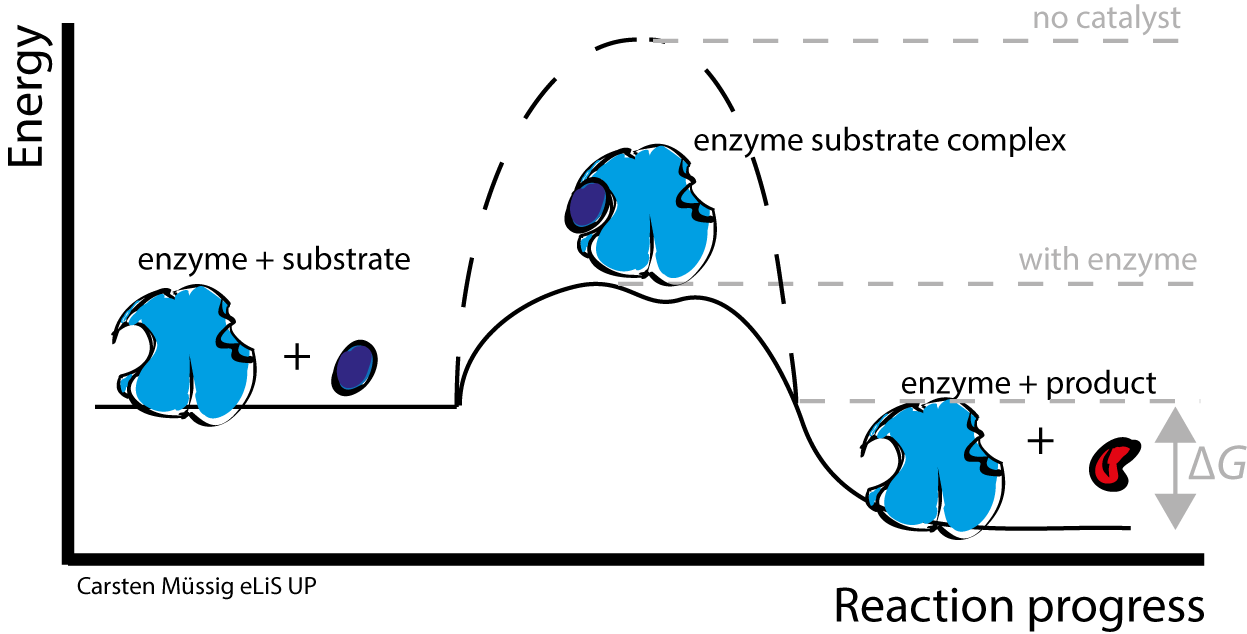
An enzyme speeds up a reaction by
a)
lowering the activation energy.
b)
raising the activation energy.
c)
releasing energy.
d)
absorbing energy.
11.
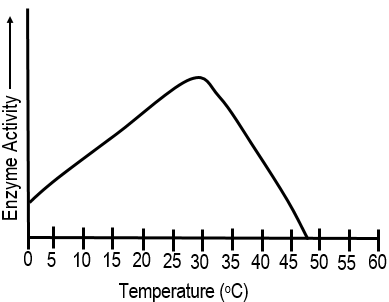
Based on the graph, what is the optimal temperature for this enzyme?
a)
15oC
b)
40oC
c)
30oC
d)
35oC
12.
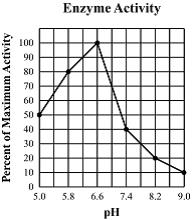
Which of the following conclusions can be drawn from this graph?
a)
The optimum pH of the enzyme is 6.6.
b)
The optimum pH of the enzyme is 5.8
c)
The enzyme’s activity increases as pH increases 5.0 to 9.0
d)
The enzyme’s activity is greater around pH of 8.0 .
13.

Many of the proteins in the human body are enzymes that catalyze chemical reactions. Which graph showcases the relationship between pH and enzyme activity the best?
a)
chymotrypsin
b)
pepsin
c)
cholinesterase
d)
papain
14.
As food travels through the digestive system, it is exposed to a variety of pH levels. The stomach has a pH of 2 due to the presence of hydrochloride acid (HCl), and the small intestine has a pH ranging from 7 to 9. HCl converts pepsinogen into pepsin, an enzyme that digests proteins in the stomach. Which of the following most likely happens to pepsin as it enters the small intestine?
a)
It becomes inactive.
b)
It begins to replicate.
c)
It's shape changes to engulf large proteins.
d)
It's activity increases to digest more proteins.
15.

The graph shows how the activity of an enzyme changes over a range of pH values. Which of the following conclusions can be drawn from this graph?
a)
pepsin works best at a pH near 2
b)
pepsin works best at a pH of 9
16.
Select ALL the statement/terms that are associated with enzymes.
a)
Protein
b)
Catalyst
c)
Lower Activation Energy
d)
Specific- Lock and Key
17.

Is the graph an example of an endergonic or exergonic reaction?
a)
Exergonic
b)
Endergonic
c)
Neither
100 %

