wayground logo

Free Printable Worksheets

NEW

Font size

S
M
L
XL
Worksheets

19-20 Major 2 Review (Measurement, Structure of the Atom, Periodic Table)

Total questions: 40

Worksheet time: 48mins

Name
Class
Date
1.

UP and DOWN columns on the periodic table are

a)

groups

b)

periods

2.

SIDE TO SIDE rows on the periodic table are

a)

groups

b)

periods

3.

Which elements have properties in common?

a)

elements in a group

b)

elements in a period

4.

The group number tells you the number of

a)

protons

b)

valence electrons

c)

energy levels

5.

The period number tells you the number of

a)

protons

b)

energy levels

c)

valence electrons

6.

Which two elements have properties in common?

a)

Nitrogen and Phosphorous

b)

Oxygen and Nitrogen

c)

Sulfur and Nitrogen

7.

which elements have 4 valence electrons?

a)

group 3

b)

group 4

c)

group 14

8.
An element with a mass number of 10 and an atomic number of 6 has how many protons?
a)
5
b)
8
c)
6
d)
10
9.
Name group 18 on the periodic table.
a)
alkali metals
b)
alkaline earth metals
c)
transition metals
d)
noble gases
10.
Which group has the most reactive nonmetals?
a)
alkali metals
b)
noble gases
c)
metalloids
d)
halogens
11.
Where are the nonmetals located on the periodic table?
a)
top left corner
b)
bottom left corner
c)
top right corner
d)
bottom left corner
12.

Physical property: is malleable

a)

metal

b)

nonmetal

13.

Physical property: is lustrous

a)

metal

b)

nonmetal

14.

Physical property: some of these elements are gases at room temp.

a)

metal

b)

nonmetal

15.

Forms negative ions to be more stable

a)

metal

b)

nonmetal

16.

Physical Property: ductile (can be stretched thin without snapping)

a)

metal

b)

nonmetal

17.

Physical Property: brittle (shatters when hit)

a)

metal

b)

nonmetal

18.
Which element is a metalloid?
a)
Titanium
b)
Selenium
c)
Potassium
d)
Polonium
19.
The blue atoms are called 
a)
metals
b)
nonmetals
c)
metalloids
d)
noble gases
20.
The atoms along the staircase are called 
a)
metals
b)
nonmetals
c)
metalloids
d)
noble gases
21.

What is the name of the family that is highlighted?

a)

Alkali Metal Family

b)

Halogen Family

c)

Noble Gas Family

d)

Transition Metal Family

22.

Which color on the image of the periodic table corresponds with the transition metals.

a)

red

b)

black

c)

blue

d)

orange

23.

Which color on the image of the periodic table corresponds with the noble gases.

a)

red

b)

black

c)

blue

d)

orange

24.

Which color on the image of the periodic table corresponds with the metalloids.

a)

bright yellow

b)

gold

c)

teal

d)

light blue

25.

Which color on the image of the periodic table corresponds with the alkaline earth metals.

a)

yellow

b)

dark yellow

c)

blue/green

d)

teal

26.
How many neutrons does  Fluorine-19 contain?
a)
9
b)
19
c)
10
27.
How many protons does Fluorine-19 contain?
a)
9
b)
19
c)
10
28.
The number '14' in the name Carbon-14 represents the ______.
a)
mass number
b)
atomic number
c)
number of protons
d)
number of electrons
29.
What is the name of this element?
a)
Lithium
b)
Boron
c)
Carbon
d)
Neon
30.
What is the name of this element?
a)
Beryllium
b)
Boron
c)
Barium
d)
Bromine
31.
Remember to use your Periodic Table of Elements to help you identify which Bohr Model is pictured...
a)
calcium
b)
magnesium
c)
bromine
d)
neon
32.
What is the formula to solve for the neutron?
a)
Mass + Atomic Number= Neutrons
b)
Mass x Atomic Number = Neutrons
c)
Mass - Atomic Number = Neutrons
d)
Mass + Number of Protons = Neutron
33.

How many Neutrons are in Neon

a)

10

b)

21

c)

20

d)

30

34.

Which model below is Dalton's original idea for the atom?

a)
b)
c)
d)
35.
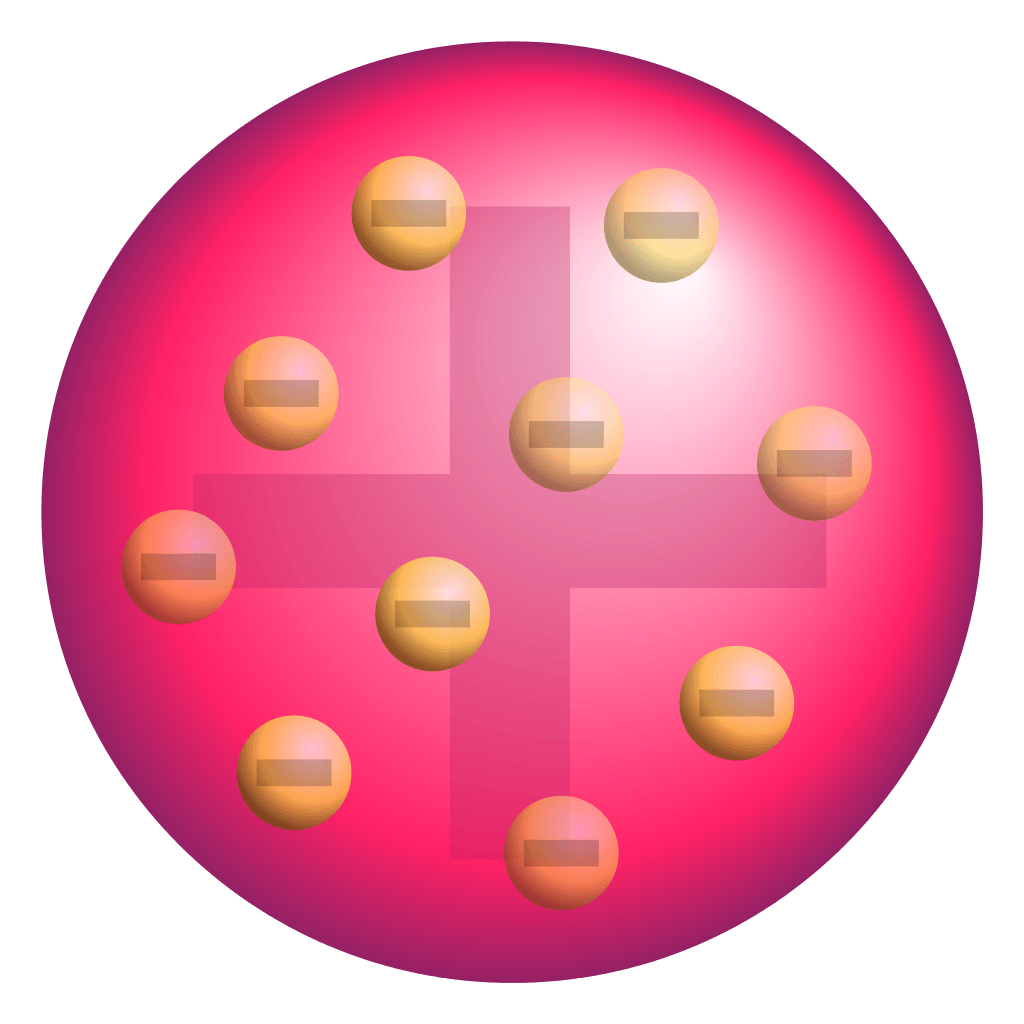
This model was developed after J.J. Thompson discovered electrons, a particle smaller than an atom. Is shows electrons floating freely in a positive space.
a)
The "Plum Pudding Model" of the atom
b)
The "Rutherford Model" of the atom
c)
Democritus's model of the atom
d)
The "Quantum Mechanical Model" of the atom
36.
He discovered the electron using cathode ray tube experiment.
a)
Joseph Thomson
b)
John Dalton
c)
Ernest Rutherford
d)
Robert Millikan
37.
His atomic model was depicted similar to a planetary/solar system
a)
Niels Bohr
b)
Joseph Thomson
c)
Ernest Rutherford
d)
Democritus
38.

Frank has a box. It has a mass of 40.0 g and a volume of

13.0 cm3. What is its density?

a)

0.325 g/cm3

b)

3.08 g/cm3

c)

1/2 g/cm3

d)

520 g/cm3

39.
What is the volume of 150 grams of lead if it has a density of 11.3 g/cm3?
a)
13.3 g
b)
13.3 cm3
c)
.075 g
d)
1695 cm3
40.

What is the mass of a 350 cm3 sample of pure silicon with a density of 2.336 g/cm3?

a)

818 g

b)

0.0067 g

c)

150 g