Wayground logo

Free Printable Worksheets

Font size

S
M
L
XL
Worksheets

Thomas Hobbes and John Locke

Total questions: 20

Worksheet time: 9mins

Name
Class
Date
1.

What did Hobbes describe people as?

a)

kindhearted

b)

mean

c)

generous

d)

selfish

2.

Hobbes' book was called...

a)

Qur'an

b)

Leviathan

c)

Odyssey

d)

Don Quixote

3.

In Hobbes' mind, who should be in charge?

a)

king

b)

pope

c)

queen

d)

himself

4.

Hobbes thought that a _ would be the best form of unitary, absolute government.

a)

republic

b)

monarchy

c)

democracy

d)

oligrachy

5.

People give up some portion of their liberty in exchange for _, according to Thomas Hobbes.

a)

legitimacy

b)

security

c)

oligarchy

d)

antidisestablishmentarianism

6.

Hobbes saw human beings as __________.

a)

Kind and Selfless

b)

Selfish and Aggressive

c)

Self-Interested, but not always violent

d)

Shaped by our experiences in life.

7.

Why did Hobbes believe it was necessary to have all the power in the hands of 1 King?

a)

It would prevent war and chaos

b)

They could make rules faster

c)

They could declare war against enemies of the kingdom

d)

It would be easier to make decisions
8.
For both Hobbes and Locke, the social contract is an agreement between...
a)
plaintiff and defendant
b)
sovereign states
c)
companies and shareholders
d)
citizens and government
9.
Locke's inalienable rights include...
a)
life, liberty, and property
b)
pizza, chipa, and soda
c)
life, property, and travel
d)
freedom of speech, freedom to bear arms, and freedom of assembly
10.
How did Hobbes view human nature?
a)
We are inquisitive and industrious.
b)
We are naturally selfish and quick to fight.
c)
We are naturally altruistic and usually willing to compromise.
d)
We are born a 'blank slate', and we develop differently according to our life's experiences..
11.
How did Locke view human nature?
a)
We are a born a 'blank slate', and we develop differently according to our life's experiences..
b)
We are naturally altruistic and usually willing to compromise.
c)
We are inquisitive and industrious.
d)
We are naturally selfish and quick to fight.
12.

According to John Locke, if the government didn't protect the people's natural rights, what could the people do?

a)

Overthrow the government

b)

Petition the government for their rights

c)

Nothing, the people don't have rights

13.

What role did the government have, according to John Locke?

a)

Protect the people's natural rights

b)

Take away people's natural rights

c)

Help determine the people's natural rights

14.

Tabula rasa theory suggests that people are born...

a)

evil and need to be governed.

b)

good and need no government.

c)

a blank slate, neither good or bad.

d)

to be in nature living with the animals.

15.

Locke believed that the job of government was...

a)

to create and enforce laws.

b)

to give people as much freedom as possible.

c)

to prevent the country from going to war.

d)

to make the country as rich as possible.
16.
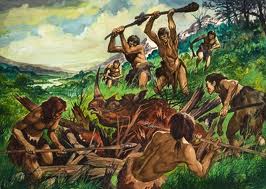
How did Hobbes sum up people's quality of life in a state of nature?
a)
life, liberty, and the pursuit of happiness
b)
poor, nasty, brutish, and short
c)
fulfilling, long-lived, philosophical, and introspective
d)
scared, hungry, lonely, and cold
17.
According to Hobbes, people agreed to give up some __________________ in exchange for __________________ as part of the social contract.
a)
rights and power / protection
b)
food and shelter / weapons
c)
security and protection / freedom
d)
money / goods and services
18.
For both Hobbes and Locke, the social contract is an agreement between...
a)
plaintiff and defendant
b)
sovereign states
c)
companies and shareholders
d)
citizens and government
19.
According to Locke, all humans share a set of __________.
a)
 internal organs
b)
natural rights
c)
hopes and dreams
d)
traits and motivations
20.

The willingness of people to hand over their rights to rules in exchange for law and social order is called...

a)

method of government

b)

enlightenment agreement

c)

social contract

d)

US Constitiution