wayground logo

Free Printable Worksheets

Font size

S
M
L
XL
Worksheets

AP Chemistry Unit 2

Total questions: 40

Worksheet time: 35mins

Name
Class
Date
1.

In the nitrite ion (NO2-), __________.

a)

both bonds are single bonds

b)

both bonds are double bonds

c)

both bonds are the same because of resonance

d)

there are 20 valence electrons

e)

there is one single and one double bond

2.

The ability of an atom in a molecule to attract electrons is best quantified by the ______.

a)

electronegativity

b)

paramagnetism

c)

diamagnetism

d)

electron change-to-mass ratio

e)

first ionization energy

3.

A valid Lewis structure of _______ cannot be drawn without violating the octet rule.

a)

NF3

b)

IF3

c)

PF3

d)

SbF3

e)

SO42-

4.

Which atom can accommodate an octet of electrons, but doesn't necessarily have to accommodate an octet?

a)

N

b)

C

c)

H

d)

O

e)

B

5.

In the resonance form of ozone shown, the formal charge on the central oxygen atom is _______.

a)

0

b)

+1

c)

-1

d)

+2

e)

-2

6.

As the number of covalent bonds between two atoms increases, the distance between the atoms ______ and the strength of the bond between them ______.

a)

increases, increases

b)

decreases, decreases

c)

increases, decreases

d)

decreases, increases

e)

is unpredictable

7.

The Lewis structure of the CO32- ion is

a)
b)
c)
d)
e)
8.

Which of these bonds takes the most energy to break?

a)

single

b)

double

c)

triple

d)

quadruple

9.

The ion NO- has _____ valence electrons.

a)

10

b)

12

c)

14

d)

15

e)

16

10.

Potassium iodide, KI,has the following bonding:

a)

ionic

b)

metallic

c)

nonpolar covalent

d)

polar covalent

11.

The formal charge on carbon in the molecule shown is _______.

a)

0

b)

+1

c)

+2

d)

+3

e)

-1

12.

Choose the correct shape for H2S

a)

Tetrahedral

b)

Trigonal pyramidal

c)

Bent

d)

Trigonal planar

13.
The electronegativity of C is 2.5, F is 4.0.  predict the character of a C-F bond.
a)
polar covalent
b)
nonpolar covalent
c)
ionic
d)
metallic
14.
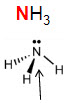
The following molecules all contain polar bonds however only one is a polar molecule.  Which one?
a)
CCl4
b)
CO2
c)
NH3
d)
CH4
15.
How are compounds with metallic bonds similar to ionic compounds? 
a)
Both tend to have double and triple bonds
b)
Both tend to have low boiling points 
c)
Both tend to have poor conductivity
d)
Both tend to have high melting points 
16.

How many sigma and pi bonds are there in C2H2? (the structure will be ordered HCCH)

a)

1 sigma and 1 pi

b)

3 sigma and 1 pi

c)

3 sigma and 2 pi

d)

2 sigma and 3 pi

17.
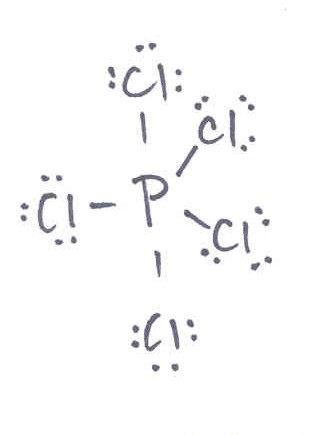
What is the VSPER shape of PCl5
a)
See-saw
b)
trigonal planar
c)
octahedral
d)
trigonal bipyramidal
18.
Of the following molecules, which has the largest dipole moment?
a)
CO
b)
CO2
c)
O2
d)
HF
19.

Why are metals alloyed?

a)

To improve the appearance of a metal

b)

To make them less likely to corrode

c)

To reduce the amount of iron used

d)

To change the properties of the metal

20.

Why are alloyed metals usually stronger?

a)

They have atoms of different metals in them, which makes it easier for the layer to move past each other...less likely to break

b)

They have atoms of different metals in them, which makes it harder for the layer to move past each other...less likely to break

21.

Definition: an alloy in which the atoms of the different elements are about the same size, so they can replace each other in the metal crystal.

a)

Alloy

b)

Substitutional alloy

c)

interstitial alloy

22.

Definition: an alloy in which the smaller atoms fit into the spaces between the larger atoms

a)

Alloy

b)

Substitutional alloy

c)

interstitial alloy

23.
Br & Br
a)
Ionic 
b)
Polar Covalent 
c)
Nonpolar Covalent 
24.

Does the following reference Polar, Nonpolar, or both:

"affected by an electrical charge"?

a)

Polar

b)

Nonpolar

c)

Both

25.

Does the following reference Polar, Nonpolar, or both:

"electronegativity values are the same"?

a)

Polar

b)

Nonpolar

c)

Both

26.

The two (2) factors that determine if a molecule is Polar or Non-polar:

a)

The atoms's ionization energy

b)

the type of atoms in the molecule

c)

The atom's oxidation number

d)

the shape of the molecule

27.
CCl4 has polar bonds but is a non polar molecule. Why?
a)
bond polarity exist between atoms
b)
bond polarity between atoms cancel
c)
dipole moment exist between atoms in molecule
d)
difference in EN between C and Cl
28.
Which statement is TRUE, based on the diagram provided?
a)
atomic orbital overlap to produce sigma bond
b)
s orbital overlap to produce π bond
c)
s orbital overlap with s orbital to produce sigma bond
d)
p orbital overlap to produce π bond
29.
Diagram below shows
a)
formation of hybrid orbital
b)
atomic orbital overlap to produce hybrid orbital
c)
atomic orbital overlap to form sp hybrid orbital
d)
s orbital overlap with p orbital to form sp hybrid orbital
30.
Which of the statement is TRUE?
a)
s orbital overlap with p orbitals to form sp hybrid orbital
b)
s orbital with two p orbitals to form one sp2 hybrid orbital
c)
s orbital with two p orbitals to form two sp2 hybrid orbital
d)
s orbital with two p orbitals to form three sp2 hybrid orbital
31.
Carbon atom undergo
a)
sp hybridization
b)
sp2 hybridization
c)
sp3 hybridization
d)
dsp3 hybridization
32.
Nitrogen atom undergo
a)
sp hybridization
b)
sp2 hybridization
c)
sp3 hybridization
d)
dsp3 hybridization
33.
Carbon atom undergo
a)
sp hybridization
b)
sp2 hybridization
c)
sp3 hybridization
d)
dsp3 hybridization
34.
How many sigma and pi bonds does this have?
a)
1 sigma and 1 pi
b)
2 sigma and 1 pi
c)
1 sigma and 2 pi
d)
2 sigma and 2 pi
35.
How many sigma and pi bonds does this have? 
a)
3 sigma and 2 pi
b)
5 sigma and 5 pi
c)
5 sigma and 0 pi
d)
0 sigma and 5 pi
36.
How many pi bonds are there in a single bond? 
a)
0
b)
1
c)
2
d)
3
37.

What is the hybridization of a linear molecule?

a)

sp

b)

sp2

c)

sp3

d)

sp3d

38.

What is the hybridization of the central atom of a bent molecule? (AB2E2)

a)

sp

b)

sp2

c)

sp3

d)

sp3d

39.

How many pi bonds are in the molecule shown here?

a)

4 pi bonds

b)

8 pi bonds

c)

16 pi onds

d)

12 pi bonds

40.
Forms when one atom donates a pair of electrons to be shared with an atom or ion that needs two electrons to becomes stable.
a)
covalent bond 
b)
sigma bond
c)
polar covalent bond
d)
coordinate covalent bond