
NEW
Font size
 Worksheets
Chemistry Spring Final 25
Total questions: 38
Worksheet time: 36mins
The CO2 in the ocean is make it more ________.
Basic
Acidic
Neutral
water
As the pH decreases in the ocean what molecule is less available to make sea shells?
Calcium Carbonate
Water
Carbon Dioxide
Hydrogen
If a system (chemical equation) is said to be at equilibrium then the reaction rates of the forward and backwards reaction are said to be _____.
equal
different
not related
destructive
What is the Molarity of a solution that has 6 moles of NaCl in 3 Liters of water?
2 M
0.5 M
3 M
4 M
When making a solution the solid that is dissolved is called the ___________ and the liquid doing the dissolving is called the __________.
solute, solvent
solvent, solute
acid, base
hydrogen, oxygen

At 50 C, 50 grams of NH4Cl solution is considered to be __________.
saturated
unsaturated
supersaturated
solvent
What is the molarity of a solution with 522 grams of NaCl in a 6 Liter solution? (round molar mass to the nearest 1)
1.5 M
2 M
15 M
0.67 M
The law of conservation of mass states
Nothing ever changes
Mass can not be created or destroyed
Volume can not be created or destroyed
Length can not be created or destroyed
Show answersExplanationPreviousNext
MgCO3 → MgO + CO2 is what type of reaction?
Synthesis
Single Replacement
Double Replacement
Decomposition
What are the coefficients for the balanced equation:
MgCO3 → MgO + CO2
1, 1, 1
1, 2, 1
2, 1, 2
2, 1, 1
What type of reaction is Fe2O3 + H2 → Fe + H2O?
Synthesis
Decomposition
Single Replacement
Double Replacement
What are the coefficients for the below equation when balanced?
Sn + Cl2 → SnCl4
1, 1, 1
1, 2, 2
1, 1, 2
1, 2, 1
If an element is a diatomic what is the subcript you must include on the element?
1
2
3
4
What is Activation energy?
The amount of energy for a reaction to begin
The amount of energy for a reaction to end
The amount of energy of a reaction
The amount of energy a reaction releases
Is a catalyst used up in a reaction?
yes
no
For a reaction to occur what physically has to happen with the atoms?
They must collide
They must break down
They must destroy each other
They must be saturated
If you increase the surface area, temperature, or concentration of a substance how does it affect the reaction rate of a reaction?
Increases the reaction rate by increasing the number of collisions
Decreases the reaction rate by increasing the number of collisions
Increases the reaction rate by decreasing the number of collisions
Decreases the reaction rate by decreasing the number of collisions
How does a catalyst speed up a reaction rate?
Increases the activation energy
Decreases the activation energy
Does not change the activation energy
Using the balanced equation,
Mg (s) + 2 HCl (aq) → MgCl₂ (aq) + H₂ (g)
How many grams of HCl are consumed by the reaction of 2.50 moles of magnesium?
5.00 g
7.29 g
182 g
218 g
Using the balanced equation,
Mg (s) + 2 HCl (aq) → MgCl₂ (aq) + H₂ (g)
How many moles of HCl are consumed in the production of 7.5 moles of MgCl₂?
3.8 moles
15 moles
7.5 moles
23 moles
What is the molar mass of H2O? (round to the nearest 1)
2 g/mol
18 g/mol
16 g/mol
33 g/mol
C + O2 → CO2.
How many grams of CO2 are produced from 10g of Carbon?
5286 g
36.6 g
40.0 g
10.0 g
92233U → 24He + 90229Th
What type of decay is the above equation?
alpha
beta
gamma
4399Tc + −10e → 4499Ru
What type of decay is the above equation?
alpha
beta
gamma
Which decay does NOT change the nucleus of an atom?
alpha
beta
gamma
What is the correct order of weakest to strongest decay?
alpha, beta, gamma
gamma, beta, alpha
beta, gamma, alpha
gamma, alpha, beta
Is this following reaction a fission or a fusion reaction?
13H + 12H → 25He
fusion
fission
alpha
beta
Find the missing element X in the following fission reaction:
92235U +01n → 55138Cs + X
3797Rb
3798Rb
3896Sr
3596Br
How many neutrons in the following isotope?
3273Ge
41
-41
20
32
Which isotope has 20 protons?
Calcium-40
Phosphorus-30
Neon-20
Magnesium-24
What is the molar mass of PbSO4?
303.27 g/mol
255.27 g/mol
163.87 g/mol
372.27 g/mol
Shivani measures out 6.0 moles of epsom salt (MgSO4) to put in her bath. How many grams of MgSO4 went in the bath?
3.6 x 1024 g
720 g
0.050 g
340 g
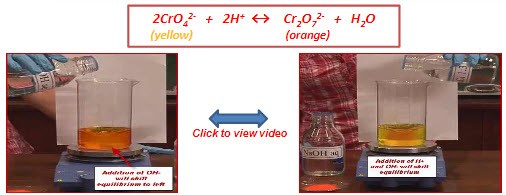
Equilibrium for 2CrO42- + 2H+→Cr2O72- + H2O. What happens when OH- ions are added to the system?
Position of equilibrium will shift to right
Color of system will turn from orange to yellow
Kc will decrease
OH- ions will not react, and thus no change is seen.
What 2 elements will make an ionic bond?
Na and Cl
O and F
S and Cl
P and I
What is the chemical formula for Magnesium (Mg) Fluoride (Fl)?
MgF2
MgF
Mg2F
F2Mg
What is the charge (oxidation) of the Iron (Fe) ion in the chemical formula
FeCl3
Iron (III)
Iron (II)
Iron (IV)
Iron
What is the chemical formula of Copper (II) phosphide.
Cu3P2
Cu2P3
CuP
PCu
What is the chemical formula for ammonium phosphide (P)?
(NH4)3P
NH4P3
NH4P
P(NH4)3

