
 Worksheets
4NA Revision Test Chemistry 1
Total questions: 85
Worksheet time: 1hrs 25mins


Which dyes are present in the ink spot?
blue, green and purple
red, yellow and blue
red, yellow and purple
yellow, blue and green
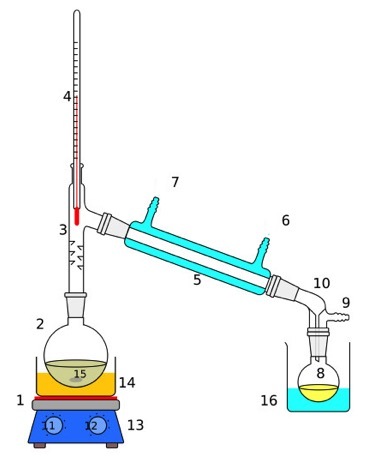
What is the flow of water in 6 and 7?
6: water in; 7: water out
6: water out; 7: water in

What is the function of adding boiling chips to 15?
to ensure smooth boiling of the mixture
to increase the boiling point of the mixture
to increase the speed of distillation
to be dissolved in the mixture

A mixture of water (bp 100oC) and alcohol (bp 78oC) is distilled. Which will be found in 8 first?
water
ethanol
Sublimation is a ____________ change when __________________________
chemical; gas turns into solid
chemical; solid turns into gas
physical; gas turns into solid
physical; solid turns into gas
Which of the following is the best method to separate ink?
Separating funnel
Chromatography
Distillation
Filtration

A
B
C
D

A
B
C
D

A
B
C
D
How to test for hydrogen gas?
Gas produced relights glowing splint.
Gas produced extinguishes glowing splint with "pop" sound.
Gas produced extinguishes lighted splint with "pop" sound.
Gas produced gives a white ppt in limewater,
How are solid particles arranged?
Closely packed and orderly
Closely packed and disorderly
Far apart and orderly
Far apart and disorderly
During melting,
heat energy is lost
heat energy is gained
temperature increases
temperature remains constant
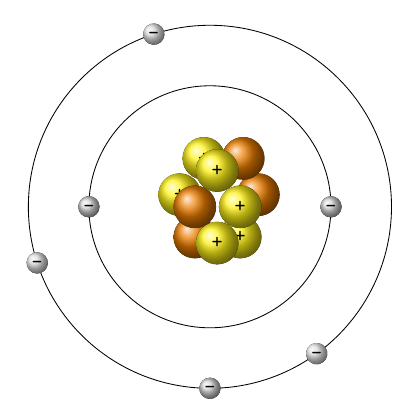
Subatomic particles with a negative charge
Electrons
Neutrons
Protons
Quarks


B
A
C
C
D

A
B
C
D

A
B
C
D
Limestone buildings made of calcium carbonate can react with ‘acid rain’.
Which gas is produced in this reaction?
carbon dioxide
carbon monoxide
nitrogen dioxide
sulfur dioxide
The chemical formula of propanoic acid is C2H5COOH.
How many elements are present in propanoic acid?
3
4
6
11
Rubidium, Rb, is a Group I element.
Which compound is formed when rubidium reacts with cold water?
RbO
Rb2O
RbOH
Rb(OH)2
A blast furnace is used to extract iron from its ore. The raw materials used are haematite, limestone and coke.
Why is limestone added to the blast furnace?
to convert the ore into iron
to cause the furnace to heat up
to remove impurities in the ore as slag
to produce oxygen for the coke to burn
Which of the following is true for all aqueous solutions of acids?
They turn blue litmus paper red
They taste bitter and feel slippery.
They react with all metals to form hydrogen gas.
They react with ammonium salts to form ammonia gas
Which pollutant is produced by both lightning activity and internal combustion engines?
nitrogen dioxide
carbon monoxide
ozone
sulfur dioxide
Which statement about amphoteric oxide is correct?
It will not react with either hydrochloric acid or sodium hydroxide.
It will react with hydrochloric acid but not with sodium hydroxide.
It will react with sodium hydroxide but not with hydrochloric acid.
It will react with both hydrochloric acid and sodium hydroxide.
EC of 2,8,7 means the element is in
Group 7 and Period 3
Group VII and Period 3
Group 3 and Period 7
Group III and Period 7
Which metal is extracted by electrolysis?
calcium
copper
zinc
iron
pH of 1 means the substance is a
weak acid
weak alkali
strong acid
strong alkali
Acid reacts with carbonate to form
salt and water
salt and hydrogen
salt, water and carbon dioxide
salt, water and ammonia
Which solution causes Universal indicator to turn from green to blue?
nitric acid
vinegar
water
calcium hydroxide
Neutralisation happens when
acid reacts with metals
acid reacts with alkalis/bases
acid reacts with metal carbonates
acid reacts with ammonium salts
Bases are
metal oxides / hydroxides
non - metal oxides
What is the approximate volume of nitrogen in 500 cm3 of air?
50 cm3
100 cm3
200 cm3
400 cm3
How is carbon monoxide produced?
complete combustion of fuels in cars
complete combustion of fossil fuels in cars
incomplete combustion of fossil fuels in cars
incomplete combustion of fuels in cars
What is the effect of sulfur dioxide on the evnvironment?
It causes acid rain.
It causes acid rain which corrodes limestone buildings.
It forms stable compound with haemoglobin in blood and starve the body of oxygen and cause death.
Why are alloys generally used to make everyday objects?
Alloys are often stronger 7 stronger than pure metals.
Alloys have higher melting point than pure metals.
Alloys are less expensive to produce than pure metals.
Alloys have ionic bonds instead of metallic bonds.

Which statement is not a reason for recycling iron?
Recycling decreases the energy requirement.
Recycling decreases the amount of natural resources available.
Recycling decreases the environmental damage due to mining.
Recycling decreases the amount of scrap iron accumulating in the environment.

Which diagram shows arrangement in steel?
A
B
C
D
Sodium + calcium bromide -->
sodium bromide + calcium
no visible reaction
calcium + copper(II) bromide --> calcium bromide + copper
calcium is less reactive than copper, thus it displaces copper from copper(II) bromide
calcium is more reactive than copper, thus it displaces copper(II) from copper(II) bromide
calcium is more reactive than copper, thus it displaces copper from copper(II) bromide
What are the three raw materials for iron extraction?
calcium, limestone and hematit
coke, limestone and haematite
coke, limestone and hematite
coke, limewater and haematite
Which of the following correctly describes metal reactions?
Metals react with water to form metal oxide and hydrogen.
Metals react with water to form metal hydroxide and hydrogen.
Metals react with acids to form metal hydroxide and hydrogen.
Metals react with steam to form metal oxide and hydrogen.
Metals react with acids to form salt and hydrogen.
8.7: What liquid is used to detect carbon dioxide?
Water
Alkene Water
Bromine Water
Limewater
The general formula of the alkanes is:
CnH2n
CnH2n-2
CnH2n+2
C2nHn
Petrol is used for:
Fuel in cars
Fuel in aircraft
Domestic heating and cooking
Road surfacing
Kerosene (paraffin) is used for:
Fuel for cars
Domestic heating and cooking
Fuel in aircraft
Fuel for large ships and in power stations
Diesel oil is used for:
Fuel in cars
Fuel in aircraft
Road and roof surfacing
Fuel in some cars and larger vehicles
Members of a homologous series have:
The same general formula
A trend in chemical properties
A trend in physical properties
The molecular formulas of successive members differ by CH2
Cracking conditions are:
Catalyst
Temperatures of 200°C - 400°C
Temperatures of 400°C - 700°C
Pressure of 70 atm
Pressure of 40 atm
Alkanes are unsaturated hydrocarbons.
True
False
The general formula of the alkenes is:
CnH2n+2
CnH2n
CnH2n-2
Cn+2H2n

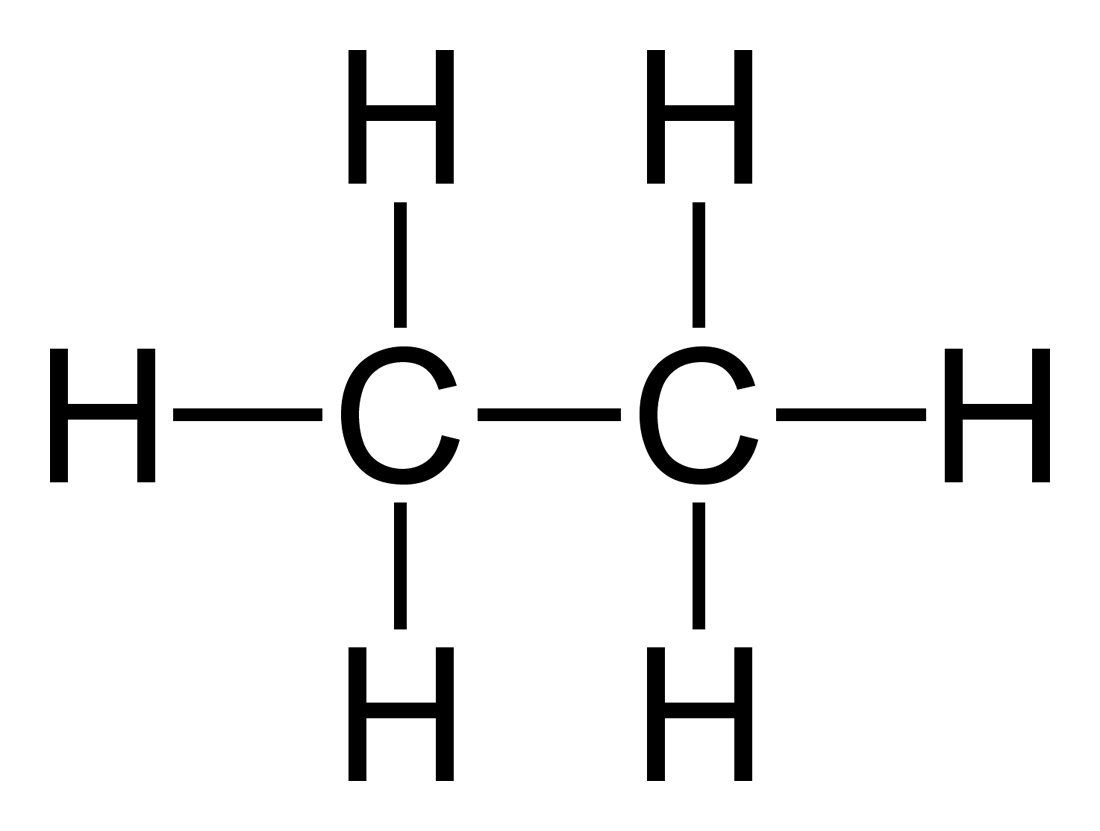
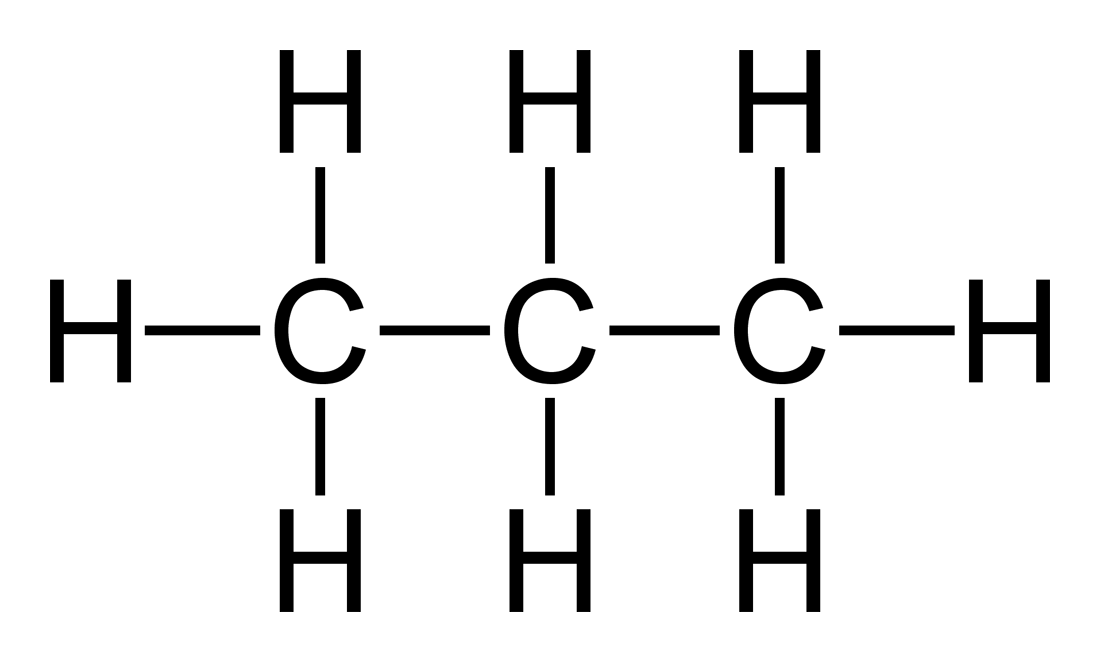
What is this molecule?
Butane
But-1-ene
But-2-ene
Butene
What is the chemical test to differentiate between alkane and alkene?
Pass aqueous bromine into both substances.
with alkane: Red brown bromine turns colourless quickly
with alkene: No visible reaction.
Pass aqueous bromine into both substances.
with alkane: No visible reaction.
with alkene: Red brown bromine turns colourless quickly
Which of the following best describes alkanes?
They are unsaturated hydrocarbons with C-C single bonds only.
They undergo substituition when there is light catalyst.
They undergo addition with hydrogen when there is light catalyst.
They undergo substitution with chlorine when there is light catalyst.
A bond between a metal and a nonmetal is called a(n)
covalent bond
ionic bond
metallic bond
transfer bond
Identify the following compound as ionic or covalent: MgO
ionic
covalent
Covalent molecules have ____ BP because _____ amount of heat energy is needed to overcome _________ ____________ force of attraction between ______.
high ; large; strong electrostatic ; ions
high ; large; strong intermolecular ; molecules
low ; small; weak intermolecular ; molecules
low ; small; weak electrostatic ; molecules
Addition with hydrogen to ethene requires
aluminium oxide catalyst, high temperature and high pressure
nickel catalyst, 200 deg Celsius
light catalyst
aqueous bromine
Cracking is
the breakdown of long hydrocarbon molecules to smaller molecules
when alkene undergo addition
when alkane undergo combustion
when ethene undergoes addition with hydrogen
Down Group I,
reactivity decrease
melting point decrease
colour darkens

