
 Worksheets
Unit 3 Review - 20s and Great Depression
Total questions: 63
Worksheet time: 52mins
Which amendment ended prohibition?
19th Amendment
18th Amendment
21st Amendment
13th Amendment
Why were the 1920s called the “Roaring ‘20s”?
because times were hard, and life was awful for most people
because it was the sound that Model T cars made
because it was another name for jazz music
because times were good, and life improved for most people
_________ allowed people to share their culture with each other in the 1920s, resulting in a new, common American culture.
Television and Newspapers
Radio and Movies
Telephone and Music
Telegraph and Art
The Great Depression that began in 1929 hit farmers especially hard. Farmers had not been doing well in the 1920s and several years of severe drought turned the land into a "dust bowl." What was an immediate result of this?
Many farmers decided to grow crops that did not use as much water.
The government built large dams in the West for irrigation.
Many farmers and their families lost their farms and moved west.
The government helped farmers by buying their land and equipment.
True or False: The Great Depression only affect America
True
False

During the 1930s, the conditions shown in this photograph occurred mainly
In the Southeast
on the Great Plains
in the Rocky Mountains
in the Pacific Northwest
Select the "3 Rs" of the New Deal
Reform
Responsibility
Recovery
Relief
Which is NOT a cause of the Great Depression?
Too many people bought things on credit
Stock Market Crash of 1929
Overproduction of goods and crops (making more than people want to buy)
World War 1
Which of the following programs were a part of the New Deal? (Select all)
Securities and Exchange Commission (SEC)
Federal Deposit Insurance Corporation (FDIC)
Civilian Conservation Corps (CCC)
Social Security
Transportation Security Authority (TSA)
New Deal Programs that aimed to prevent another event like the Great Depression were...
Relief Programs
Recovery Programs
Reform Programs

What event does this map show?
The Great Migration
Immigration
Movement of Okies during the Dust Bowl
First US highways

What was the "New Deal" of the 1930s?
a government program that gave free land to homesteaders
a government program that helped women get the vote
a government program that spread civil rights throughout the country
a government program designed to help people during the depression
Which of these statements is true of the 1932 presidential election during the Great Depression?
Franklin Roosevelt won on the promise to put Americans back to work
Hoover won by a narrow margin because of his New Deal program
Huey Long ran a strong third-party campaign.
Roosevelt lost the election to Hoover
This person was blamed for not helping struggling Americans during the beginning of the Depression.
Franklin D Roosevelt
Harry Truman
Calvin Coolidge
Herbert Hoover


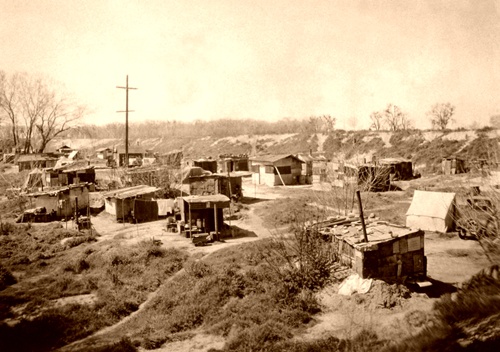
The photograph best illustrates which cause of the Great Depression?


What war ended right before the start of the Roaring Twenties?
Civil War
World War 1
War of 1812
Revolutionary War
True or False: Automobiles were affordable for the average family during the Roaring Twenties.
True
False
What Constitutional amendment gave women the right to vote?
5th
14th
19th
21st
What decade did the majority of the Great Depression occur?
1900s
1910s
1930s
1940s
What was the primary way flappers of the 1920s challenged the traditional role of women?
fought for increased job opportunities
pressured colleges and universities to accept female students
displayed fashions and behaviors that shocked mainstream society
helped female politicians win campaigns
What was a immediate effect of the radio?
help with finances
mobility for the working class
improved access to information
helped women get away from traditional roles
Which of these was NOT a characteristic of the Harlem Renaissance?
helped to break stereotypes about Blacks
helped to increase respect for Blacks
decreased support for the civil rights movement
increased appreciation for Black art and literature
Modern 1920s woman who had a new liberated lifestyle (nontraditional)
floozie
flapper
flubber
flippant
The Ku Klux Klan was most closely associated with
nativism
education
helping immigrants
assembly line
What is Nativism
hatred for/discrimination against Native Americans
sense of extreme pride for your country
support of farmers
hatred for/discrimination against immigrants
Who did the Palmer Raids target?
anti-imperialists
progressives
communists
fascists
Why was the Sacco-Vanzetti case significant during the 1920s?
involved the arrest and conviction of two immigrants - a sign of nativism that was huge during this time
led to the Tennessee law that bans the teaching of evolution in schools
it ended Prohibition
it led to the conviction of Al Capone
What amendment gave women the right to vote?
16
18
19
21
What amendment banned alcohol (Prohibition)?
16
18
19
21
Why was the 1920s known as the "Roaring 20s?"
huge increase in immigration which led to fighting
economic depression
people were free to drink and party at their leisure
it was a time of cultural and social changes
What was the "noble experiment?"
outlawing alcohol
spreading awareness for Black American culture
fight for women's right to vote
getting rid of big business
Amendment that ended prohibition
16
18
19
21
What was the major reason that prohibition (18th amendment) was repealed?
resulted in organized crime
violated bill of rights
led to the great depression
reduce taxes collected by the US
What kind of people were targeted during the Red Scare?
anarchists and socialists
socialist candidates
people with freedom of speech who talk bad about the government
What was one of the biggest reasons why the American economy boomed in the 1920s?
mass production led to goods being made faster and an increase in supply
the arrest of criminals who wouldn't stop killing people
the banning of alcohol
giving women the right to vote
What was the purpose of the Hawley-Smoot Tariff?
opened trade between the US and Germany
US raised tariffs on imports
provided jobs for people in factories
Raised tariffs on imported goods in1930
Clayton Antitrust Act
Sedition Act
GI Bill
Hawley-Smoot Tariff

Hawley-Smoot Tariff
A protectionist law created by Senator Smoot and Representative Hawley that increased taxes on imported goods making the Great Depression even worse.
A project law created by Senator Hawley and Representative Smoot that increased taxes on exported goods making the Great Depression even worse.
A prohibition law created by Senator Smoot and Representative Hawley that decreased taxes on imported goods making the Great Depression even worse.
A protectionist law created by Senator Smoot and Representative Hawley that decreased taxes on imported goods making the Great Depression much better.
a law, enacted in 1930, that established the
highest protective tariff in U.S. history,
worsening the depression in America
Hawley-Smoot Tariff Act
Credit
Speculation
Buying on Margin
Black Tuesday

