
Font size
 Worksheets
U02 Core Concepts Review
Total questions: 35
Worksheet time: 44mins
This particle is represented by the atomic number AND is used to identify all atoms.
Neutron
Proton
Electron
Idontknowatron

Isotopes have the same number of ____, but different number of ____.
neutrons; protons
protons; electrons
protons + electrons; neutrons
electrons; protons
How many neutrons are in fluorine-20?
20
11
10
9

What evidence did Rutherford use to support the idea that the atom was mostly empty space?
the vast majority of the alpha particles went through the foil unaffected.
the vast majority of the alpha particles were deflected at 90 degrees.
one alpha particle was deflected by the gold foil.
beams of alpha particles were deflected by magnets.

Which is a finding attributed to Rutherford's Gold Foil Experiment?
atoms are indivisible and have a dense positive nucleus.
atoms are divisible and have multiple layers of electrons scattered uniformly about the atom.
atoms are like plum pudding with positive and negative charges uniformly scattered throughout the atom.
atoms are mostly empty space with a dense positive nucleus.

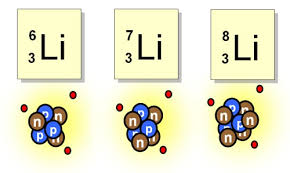


What is a Rubidium ion's symbol? (Z=37)
Rb-
Rb+
Rb-2
Rb+2
What is the ionic symbol for Selenium? (Z=34)
Se-2
Se+2
Se-3
Se+3
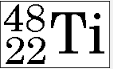
How many neutrons does this isotope of titanium have?
48
22
26
70

What is the correct name for this isotope
boron - 9
fluorine - 13
beryllium - 9
beryllium - 5

Which of these are correct statement about this atom?
It has a +3 charge
It is stable
Mass Number is 15
It is Nitrogen
It is Oxygen
During chemical reactions, bonds are...
broken only
formed only
both broken and formed
none of the above are correct
It takes energy to ________________ bonds.
break
form
Energy is released when bonds are _________________.
Broken
Formed
During a particular chemical reaction it takes 100 Kj of energy to break all the bonds and 150 Kj of energy is released when the new bonds form. Which is true about the overall reaction?
It is endothermic and absorbs energy.
It is exothermic and releases 150 Kj
It is exothermic and releases 50 Kj
It is endothermic and releases energy.

What type of reaction is this?
Exothermic
Endothermic
Kinetic
Potential
How much activation energy is needed for this reaction?
300 KJ
500 KJ
400 KJ
100 KJ
What is the Heat of Reaction ΔH for this reaction?
-200 KJ
200 KJ
400 KJ
-300 KJ
What is the Heat of Reaction ΔH for this the REVERSE reaction?
-200 KJ
200 KJ
400 KJ
-300 KJ

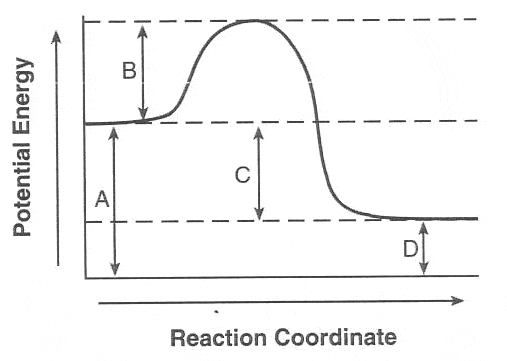

Which letter corresponds to the activation energy for the forward reaction?
How would you calculate the Change in Enthalpy (ΔH) for the forward reaction?
ΔH = C - A
ΔH = D - A
ΔH = C - D
ΔH = A - D
Which factor increases both collision frequency and collision energy?
pressure
concentration
adding a catalyst
temperature

