
 Worksheets
The Prologue Review
Total questions: 83
Worksheet time: 5hrs 37mins
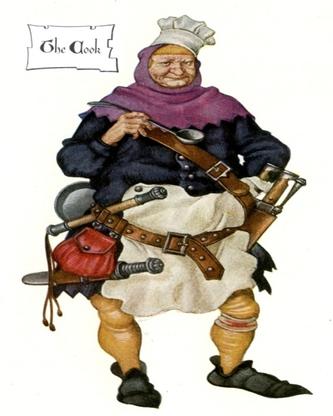
Which of the following best describes the cook?
very fancy dresser, always wanted to be first at the alter to give her offering, well-traveled, married 5 times
big, brawny, tells dirty tavern stories, he is strong and plays the bagpipes
has an oozing ulcer on his knee, questionable hygiene
very poor, ideal parish priest,well-educated
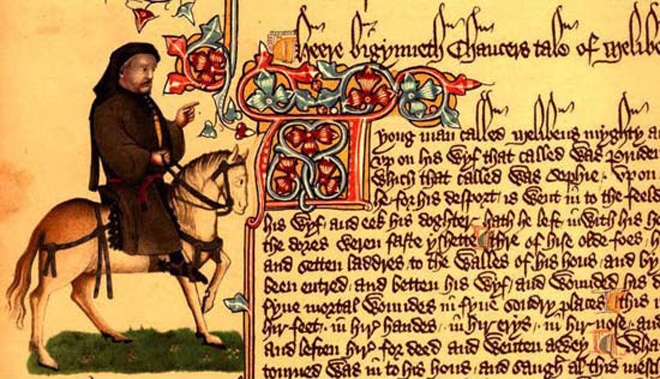


The Canterbury Tales serves as an example of
short story
collection of essays
frame story
biography


In the prologue, Chaucer examines which four segments of Medieval England:
Old Feudal order, Upper order, Peasants, Politicians
Old Feudal order, Merchant Class, Lower Rank, Clergy
Peasants, Cook, Preacher, Politician


What is type of English is The Canterbury Tales written in?
Elizabethan
Middle English
Modern English
This is English?
The most accurate description of the group of pilgrims is as a
number of people who represent many different occupations, classes, and personalities
collection of people are who are obsessed with money and sensual pleasures.
group that comes from many walks of life, but consists only of deeply flawed individuals.
variety of individuals who have qualities that are meant to make you unhappy.
What does the narrator mean in saying these lines from the Prologue?
But first I beg you, not to put it down / To my ill-breeding if my speech be plain.
He uses these words, especially "ill-breeding," to indicate that he is not royalty.
Forgive me for making up details to make what they said more interesting.
I am embarrassed to admit it, but I don't always stick to the truth.
I apologize for leaving out things that they said and did that are rude.
Near the beginning of "The Prologue," the narrator reveals that his main motivation for making the pilgrimage?
His religious devotion.
He likes to travel.
Neither of the above.
Both of the above
Where are the pilgrims going?
Southwark, England
Canterbury Cathedral
Tabard Inn
London, England
Religion was important in the Middle Ages (the time when the story is written) because ...... was rampant in their society.
Taxes
Death
Love
Darkness
This pilgrim is a wealthy weaver, has a gap between her teeth, is slightly deaf, and has been married five times.
Merchant
Nun
Wife of Bath
Yeoman
This pilgrim sells fake artifacts and makes "monkeys of the priest and congregation."
Summoner
Friar
Pardoner
Monk
Which character does the narrator seem to admire the most?
Summoner
Pardoner
Parson
Friar
Chaucer describes the cook as having amazing talent with food but "What a pity... that he should have an ulcer on his knee." What does this tell us about Chaucer's attitude toward food preparation?
even a small, remote blemish makes a person unsanitary for preparing food
people should not prepare food with their knees
the cook really should wear pants
food can make a person ill

How does the narrator know the pilgrims at the Tabard Inn?
They decided to travel together on their way making a pilgrimage to Canterbury.
They were on a trip to see the Archbishop.
They were looking for a place to eat.
They were in need of supplies and rest.
In The Canterbury Tales the Skipper is the character that ...
the author considered a "proper forester" with a longbow and a face as brown as a nut
made his prisoners walk the plank on his ship
is a great hunter who used horses and greyhounds to bag his prey
is both an author and a pilgrim
Why does the author make the Oxford Cleric, who won't work but only focuses on study, such an ironic figure (well-educated yet poor, a philosopher yet short in his speech)?
to explain that prayers will only take one so far
to show that education without application cannot accomplish much
to make the cleric pathetic and unbelieveable
to imply that students are worthless people

Which of the following lines best describe the Prioress?
"She reached a hand sedately for the meat."
"French in the Paris style she did not know."
"And well she sang a service."
"She was by no means undergrown."

Which of the following best describes the squire?
expert woodsman, strong, and loyal
would rather be hunting, loves the outdoors, big sparkly eyeballs
very thin, only loves books, spends all his money on education
the son of the Knight, had curly hair, and had many girlfriends
By focusing mainly on the battles, the Knight had fought successfully and the nobility of the work he'd done, the reader can assume that Chaucer feels what about knights?
curiousity and awe
annoyance and dismay
love and sympathy
respect and understanding
Chaucer does not believe that the Doctor has true spiritual reasons for going on the pilgrimage. What line best supports this statement?
"There were no superfluities for pleasure."
"Yet he was rather close as to expenses."
He did not read The Bible very much."
"He gave the man his medicine then and there."
The Friar's most obvious character trait is
unhappiness
compassion
greed
lechery
The author describes the activities of the Friar with the lines, "...nothing good can come/ Of commerce with such slum-and gutter-dwellers." Which answer interprets Chaucer's feelings on the Friar's character the best?
The Friar is a really lazy guy.
The Friar is very careless.
The Friar doesn't like being dirty.
That the Friar is a snob only out for money.
Why do the pilgrims tell tales during the journey?
to pass the time in fun instead of being bored
to compete against each other
because the host came up with the idea
all answers are incorrect
What is Chaucer's primary purpose in writing The Prologue?
To establish himself as narrator
To introduce his cast of characters
To ridicule the church and English society
All answer are correct
How does Chaucer feel about the church based upon the majority of the descriptions of the clergy class?
views them with disdain and disgust
envies their positions in society
believes they are too noble and unapproachable for the lower classes
sees them as holy and good examples to follow
What figurative language device does Chaucer mainly use to depict the clergy class?
alliteration
satire/irony
metaphors
repetition
What is important about the pilgrimage occurring in April?
spring symbolizes new beginnings and better weather for England
spring is the most reliable season for the pilgrims
spring is the least busy time of year for the English
Chaucer's favorite season was springtime
Which member of the clergy (church) does Chaucer NOT use irony to describe?
Friar
Nun
Monk
Parson
These were the people in the Nun’s group.
Three priests and one nun
four nuns
one priest and three monastery students
two converts and a priest
Who is the narrator of the tales?
Chaucer
The Knight
The Host
None of these is correct
Why is it important the nun has a brooch with the inscription “Love conquers all?”
It means she most likely was forced into being a nun
She puts the love of God above all else but she shouldn't have jewelry
She is more concerned with looking pretty rather than looking her part as a nun
It represents her love of gold and riches
“He was an honest worker, good and true.”
Yeoman
Plowman
Knight
Miller
“He knew the taverns well in every town and every innkeeper and barmaid too Better than lepers, beggars and that crew.”
Miller
Franklin
Friar
Reeve
“God stimulates the heart, or so we’re told. He therefore had a special love of gold.”
Doctor
Oxford Cleric
Sgt of Law
Monk
“Was deeply in debt but no one knew.”
Oxford Cleric
Skipper
Merchant
Doctor
“In fifteen mortal battles he had been.”
Knight
Squire
Summoner
Skipper
“He was less busy than he seemed.”
Sgt of Law
Manciple
Yeoman
Friar
“He rode a farmer’s horse as best he could.”
Skipper
Manciple
Sgt of Law
Plowman
“Children were afraid when he appeared”
Pardoner
Summoner
Knight
Miller
He was the Squire's servant. He was a woodsman, a Robin Hood type character.
The Host
The Shipman
The Yeoman
The Manciple
He was bald and fat. He had a preference for fine clothes and luxuries. He didn't like hard work, but he did like to ride.
The Knight
The Monk
The Squire
The Franklin
He takes bribes for easy penance. He knows the taverns and barmaids better than he does the lepers and beggars. He is rather aristocratic, and he lisps.
The Pardoner
The Parson
The Friar
The Summoner
He has a forked beard and a motley coat. He is careful with money, a good negotiator, and always tells his opinions about business.
The Haberdasher
The Shipman
The Merchant
The Host
He seemed wise. He made a lot of money. He seemed busier than he really was.
The Knight
The Squire
The Manciple
The Sergeant at Law
He looked a little like Santa Claus. He liked to eat, drink and be merry. He was a country gentleman with a dagger and a silk purse.
The Yeoman
The Franklin
The Host
The Pharmacist
What tradesmen were there?
A Minstrel, a Barrel-maker, a Tailor, and a Reeve
A Merchant, a Teacher, a Lawyer, a Potter and a Weaver
A Haberdasher, a Dyer, a Carpenter, a Weaver, and a Carpet-maker
A Clerk, a Carpenter, a Barrel-maker, a Plowman, and a Haberdasher
He was from Dartmouth, didn't ride well, and was a good navigator. He had little conscience about killing the enemy, and seemed rather like a pirate.
The Miller
The Knight
The Reeve
The Skipper
He knew his profession well, and took kickbacks from one in another profession. He was not particularly religious. He was dressed in red and blue-gray garments, and loved gold.
The Doctor
The Squire
The Pharmacist
The Manciple
This pilgrim was truly Christ-like; patient, giving, holy and virtuous, and didn't believe in pomp or glory. He practiced what he preached.
The Monk
The Friar
The Parson
The Pardoner
He was the Parson's brother. He was an honest worker who paid his tithes on time.
The Reeve
The Plowman
The Skipper
The Haberdasher
He had a football-player build. He had a red beard, a wart on his nose, and a filthy mouth. He cheated customers and in his spare time played the bagpipes.
The Miller
The Cook
The Cleric
The Merchant
He was a shrewd buyer. Lawyers with all their knowledge were no match for him. He purchased well and kept the extra money for himself. He stole the lawyers blind.
The Franklin
The Manciple
The Sergeant at Law
The Merchant
He was old, choleric, and thin. He was a good manager and good carpenter, feared by the farm workers. He usually brought up the rear of the party, lagging behind.
The Pardoner
The Friar
The Squire
The Reeve
He had a red face full of sores. He ate onions and drank too much. He would take bribes.
The Summoner
The Cook
The Haberdasher
The Miller
This pilgrim sang in a strong voice, had long, yellow hair, bulging eyes, was baby-faced and carried a bunch of false relics to sell.
The Friar
The Monk
The Pardoner
The Prioress/Nun
Which of the following ideas is expressed most clearly in the Prologue from The Canterbury Tales?
the basic evil of mankind
the conflicts inherent in society
the pitfalls of sensual pleasure
the infinite variety of human nature
Chaucer wrote all of the following EXCEPT:
Sir Gawain and the Green Knight
House of Fame
Troilus and Criseyde
The Legend of Good Women
Which of the following was NOT an occupation that Chaucer held?
soldier
merchant
yeoman
diplomat
Which of the following is an indication that Chaucer was close to the king?
His capture by the French while fighting in the English army.
His portrayal of royalty in The Canterbury Tales.
His dedication to the crown on the inside cover of his first major publication.
King Edward’s payment of 16 pounds for Chaucer’s ransom.
By positioning his description of the Miller almost immediately after that of the Plowman, Chaucer accentuates
the virtues of the Plowman.
the buffoonishness and criminality of the Miller.
the kinship between these two laborers.
the virtues of the Plowman as well as the buffoonishness and criminality of the Miller
The Prioress is distinguished by the fact that she
spoke perfect Parisian French
ate almost nothing
dressed very plainly
could not stand cruelty to animals
In order to reveal his characters, Chaucer uses all of the following techniques except
telling us directly what the characters are like
describing how the characters look and dress
providing detailed descriptions of the characters’ homes
presenting the characters’ words and actions

