wayground logo

Free Printable Worksheets

Font size

S
M
L
XL
Worksheets

Benchmark Review

Total questions: 200

Worksheet time: 3hrs 20mins

Name
Class
Date
1.

The name for the ionic compound NaF is

a)

Sodium fluoride

b)

Nappium fluoride

c)

Sodium fluorine

d)

Fluorine sodiumide

2.

A cation is where

a)

There are more electrons than protons

b)

Protons and electrons are equal

c)

The number of electrons are less than the number of protons

3.

Which of the following is true about the composition of ionic compounds?

a)

They are composed of anions and cations.

b)

They are composed of anions only.

c)

They are composed of cations only.

d)

They are formed from two or more nonmetallic elements.
4.
The phase change from water vapor to liquid water is known as...
a)
evaporation
b)
precipitation
c)
condensation
d)
sublimation
5.
2. A change of state from a liquid to a solid is called....
a)
Melting
b)
Freezing
c)
Evaporation
6.
5. What is it called when a solid turns directly into a gas?
a)
Sublimation
b)
Condensation
c)
Liquid
7.
7. All phase changes (changing states) requires energy to be added or taken away.
a)
True
b)
False
8.
4. What type of state of matter is a gas that has electrons flowing through it?
a)
Gas
b)
Liquid
c)
Plasma
d)
Solid
9.
Change from Gas to Solid is called........
a)
Sublimation
b)
Deposition
c)
Fusion
d)
condensation
10.
Change from gas to liquid...
a)
condensation
b)
evaporation
c)
expansion
d)
movement
11.
Change from Liquid to Solid is call......
a)
fusion
b)
Freezing
c)
sublimation
d)
evaporation
12.
change from liquid to gas is called....
a)
expansion
b)
evaporation
c)
condensation
d)
sublimation
13.
All changes in the state of matter of a substance requires
a)
vibration
b)
water
c)
permission
d)
energy
14.
What happens to particles when they are heated?
a)
They speed up and spread out
b)
They slow down and compress
c)
They stop moving
d)
They move closer together and speed up
15.
What is deposition?
a)
Phase change from gas to solid
b)
phase change from liquid to solid
c)
Phase change from solid to gas
d)
Phase change from liquid to gas
16.
What is sublimation?
a)
phase change between solid and liquid
b)
pahse change from gas to solid
c)
phase change from solid to gas
d)
phase change from solid to solid
17.
Melting is ...
a)
liquid to solid
b)
solid to liquid
c)
solid to gas
d)
gas to liquid
18.
Freezing is...
a)
Solid to gas
b)
Liquid to solid
c)
Gas to solid
d)
Liquid to gas
19.
Boiling is ...
a)
liquid to gas
b)
gas to solid
c)
gas to liquid
d)
solid to liquid
20.

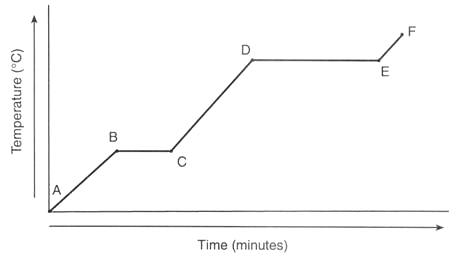
Is the substance gaining or losing energy?

a)

Gaining

b)

Losing

21.

Are the particles moving faster or slower as time goes on?

a)

Faster

b)

Slower

22.

What is happening to the particles in the substance between points A and B?

a)

Melting

b)

Freezing

c)

Speeding Up

d)

Slowing Down

23.

What is happening to the particles in the substance between points D and E?

a)

Melting

b)

Freezing

c)

Vaporizing

d)

Sublimating

24.

Where on the graph are phase changes taking place?

a)

1

b)

2

c)

3

d)

4

e)

5

25.

Is the substance gaining or losing energy?

a)

Gaining

b)

Losing

26.
Which of the following has a full valence shell?
a)
Oxygen
b)
Neon
c)
Barium
d)
Carbon
27.
Elements on the LEFT side of the periodic table will most likely form:
a)
Positive ions
b)
Negative ions
c)
Neutral Ions
d)
None of these
28.
An ionic bond forms when atoms ___________ electrons.
a)
gain
b)
share
c)
increase
d)
transfer
29.
Which type of bond has a transfer of an electron from on atom to another?
a)
Polar Covalent 
b)
Non Polar Covalent
c)
Ionic
d)
Metallic
30.
Chemical bonds form when atoms
a)
combined nuclei
b)
give up neutrons
c)
gain protons
d)
share or transfer electrons
31.
All chemical bonds involve two atoms sharing electrons.
a)
True
b)
False
32.
If an atom loses two electrons what charge will it have?
a)
+ 2
b)
 - 2
c)
+1
d)
-1
33.
If an atom gains one electron what charge will it have?
a)
-2
b)
-1
c)
+1
34.
Covalent compounds
a)
Share electrons
b)
transfer electrons
c)
contain a sea of electrons
d)
conduct electricity
35.
What is the number of valence electrons for Oxygen?
a)
8
b)
6
c)
2
d)
1
36.
How many valence electrons in this structure?
a)
6
b)
5
c)
4
d)
7
37.
A bond that forms when electrons are transferred is called a/an
a)
ionic bond
b)
covalent bond
c)
hydrogen bond
38.

Why do atoms bond?

a)

They typically don't bond

b)

To add or take away energy levels

c)

To have a full valance shell.

d)

To have a full inner shell

39.

What do positive ions tend to do?

a)

lose electrons

b)

gain electrons

c)

lose protons

d)

gain protons

40.

What happens when magnesium loses 2 electrons?

a)

It stabilizes to a net charge of 0

b)

It turns into an atom

c)

It becomes negatively charged

d)

It becomes positively charged

41.

Predict the bond between Mg and Cl

a)

covalent

b)

ionic

c)

metallic

d)

none of the above

42.

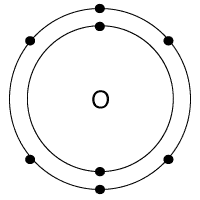
Which is the correct Lewis Structure for oxygen?

a)
b)
c)
d)
43.

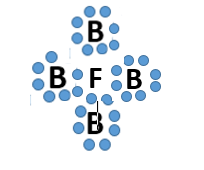
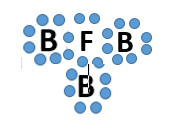
What is the correct Lewis structure for BF3?
a)
b)
c)
d)

BF3 (The formula is the Lewis Structure)

44.

What is the chemical formula for Lithium Nitride?

a)

Li3N

b)

LiN3

c)

NLi3

d)

N3Li

45.

What is the ionic formula for a bond between Calcium and Phosphorus?

a)

Ca2P3

b)

Ca3P2

c)

Ca2P5

d)

P5Ca2

46.

What category of element usually forms a positive ion?

a)

Metals

b)

Nonmetals

c)

metalloids

d)

Noble gases

47.

Which category of elements usually form negative ions?

a)

metals

b)

nonmetals

c)

metalloids

d)

noble gases

48.

CaCl2 is an example of what type of bond?

a)

Covalent

b)

Metallic

c)

Ionic

49.
What elements generally make an ionic bond?
a)
metal and nonmetal
b)
2 nonmetals
c)
metal
d)
none of the above
50.
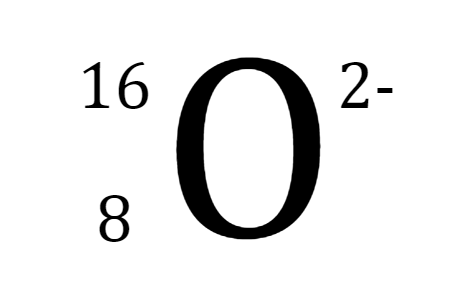
If an oxygen atom has 8 protons (+) and 10 electrons (-), what is it's charge?
a)
O10-
b)
O8+
c)
O2-
d)
O10+
51.
The correct formula for the diagram is _________.
a)
K2O
b)
2KO
c)
KOK2
d)
KO2
52.
What is the correct term for "atom with more electrons than protons"?
a)
positive ion (cation)
b)
negative ion (anion)
c)
neutral atom
d)
stable atom
53.
What is the correct term for "atom with more protons than electrons"?
a)
positive ion (cation)
b)
negative ion (anion)
c)
neutral atom
d)
stable atom
54.
Carbon has four electrons in its valence shell. How many nore electrons does carbon need to have a full valence shell?
a)
2 more
b)
4 more
c)
8 more
d)
0 more, it is already full
55.
Which of the following formulas represents the harmful gas, carbon monoxide?
a)
CO
b)
CO2
c)
NO
d)
SO2
56.
Which compound contains covalent bonds?
a)
NaI
b)
K2O
c)
N2O3
d)
BeO
57.
Which two elements would form an ionic bond?
a)
carbon and hydrogen
b)
oxygen and silicon
c)
cesium and iodine
d)
potassium and calcium
58.
Which of the following is a property of all covalent compounds?
a)
They are formed froma metal and a nonmetal.
b)
They are solids.
c)
They share electrons.
d)
They conduct electricity.
59.

The chemical formula for CaS is

a)

Cerium sulfide

b)

Carbon sulfur

c)

Calcium sulfide

d)

Calcium sulfur

60.

The name for the ion O2- is

a)

Oxygen anion

b)

Oxide anion

c)

Oxygen

d)

Oxide cation

61.
What is the right ratio of chemicals for the BCE (Balanced Chemical Equation)?__Na + __H2O --> __NaOH + __H2
a)
2,2 --> 2,1
b)
4,4 --> 4,1
c)
1,2 --> 2,4
d)
1,2 --> 2,1
62.
What is the right ratio of chemicals for the BCE (Balanced Chemical Equation)?__CO + __Fe2O3--> __Fe + __CO2
a)
3,1 --> 2,3
b)
3,2 --> 1,1
c)
3,2 --> 2,4
d)
3,2 --> 2,1
63.
What is the right ratio of chemicals for the BCE (Balanced Chemical Equation)?__CH4 + __O2 --> __CO2+ __H2O
a)
2,1 --> 2,1
b)
1,2 --> 1,1
c)
1,2 --> 1,2
d)
1,2 --> 2,1
64.
What is the right ratio of chemicals for the BCE (Balanced Chemical Equation)?__AgNO3 + __H2S --> __Ag2S+ __HNO3
a)
2,1 --> 1,2
b)
1,2 --> 1,1
c)
1,2 --> 1,2
d)
1,2 --> 2,1
65.
What is the right ratio of chemicals for the BCE (Balanced Chemical Equation)?__H2 + __S --> __H2S
a)
1,1 --> 1
b)
2,2 --> 2
c)
1,2 --> 1
d)
1,2 --> 2
66.
What is the right ratio of chemicals for the BCE (Balanced Chemical Equation)?__H2SO3 + __KOH--> __H2O+ __K2SO3
a)
2,1 --> 2,1
b)
1,2 --> 1,1
c)
1,2 --> 1,2
d)
1,2 --> 2,1
67.
What is the right ratio of chemicals for the BCE (Balanced Chemical Equation)?__FeCl3 + __Ca(OH)2 --> __Fe(OH)3 + __CaCl2
a)
4,3--> 2,1
b)
3,2 --> 3,1
c)
2,3 --> 2,2
d)
2,3 --> 2,3
68.
The substances listed on the left side of a chemical equation are the
a)
Products
b)
Coefficients
c)
Precipitates
d)
Reactants
69.
What is the right ratio of chemicals for the BCE (Balanced Chemical Equation)?__MnO2 + __HCl --> __MnCl2 + __H2O __Cl2
a)
4,1 --> 2,1,2
b)
1,2 --> 1,1,4
c)
1,4 --> 1,2,1
d)
1,4 --> 2,2,1
70.
In chemical reactions, what does the principle of conservation of mass mean?
a)
Matter is not created or destroyed.
b)
The total mass of the reactants is greater than the total mass of the products.
c)
The total mass of the reactants is less than the total mass of the products.
d)
Matter is not changed.
71.
How many Hydrogen (H) atoms are in NH3O5
a)
3
b)
4
c)
5
d)
1
72.
Name the part in red:

H2 + O2 -> H2O
a)
Coefficient
b)
Product
c)
Yield
d)
Subscript
73.
Name the part in red:

_2_H+ _1_O2 -> _2_H2O
a)
Coefficient
b)
Product
c)
Yield
d)
Subscript
74.
Name the part in red:

H+ O2 -> H2O
a)
Coefficient
b)
Product
c)
Reactant
d)
Subscript
75.
Name the part in red:

H+ O-> H2O
a)
Coefficient
b)
Product
c)
Reactant
d)
Subscript
76.
How many phosphorus atoms are in PO4?
a)
1
b)
2
c)
3
d)
4
77.
How many hydrogens are in 4H2O?
a)
6
b)
8
c)
2
d)
4
78.
Is this balanced?
Al + O2 → 2Al2O3
a)
Yes
b)
No
79.
How many Oxygen atoms are in 4H2O?
a)
4
b)
1
c)
0
d)
8
80.
What is the arrow in a chemical equation...
H2 + O --> H2O
a)
Reactants
b)
Products 
c)
Yields 
d)
Chemical Equation 
81.
How many atoms of aluminum are on each side of the following equation: 4Al + 3O--> 2AlO3
a)
2
b)
6
c)
1
d)
4
82.

Which of the following is an unbalanced equation?

a)

CaCO3 --> CaO + CO3

b)

PbO2 + 2H2-->2Pb + H2O

c)

2Na+ 2H2O-->2NaOH + H2

d)

CS2 + 2O2 --> CO2 + 2SO2

83.

Which of the following correctly balances this equation:

Sodium phosphate and potassium hydroxide will produce sodium hydroxide and potassium phosphate.

a)

1 Na3PO4+3 KOH

--->

3 NaOH + 1 K3PO4

b)

2 Na3PO4+2 KOH

--->

3 NaOH + 1 K3PO4

c)

1 S3PO4+3 SOH

--->

3 SOH + 1 K3PO4

d)

3 Na3P+3 KO2H

--->

3 NaH2O + 1 K3P

84.
4Si + S8 --> 2Si2S4
a)
Synthesis
b)
Decomposition
c)
Single displacement
d)
Double displacement
85.
3Ca + 2AlCl3 --> 3CaCl2 + 2Al
a)
Synthesis
b)
Decomposition
c)
Single diplacement
d)
Double displacement
86.
3Mg + N2 --> Mg3N2
a)
Synthesis 
b)
Decomposition
c)
Single displacement
d)
Combustion
87.
2NO2 --> N2 + 2O2
a)
Synthesis
b)
Decomposition
c)
Single displacement
d)
Combustion
88.
P4 + 3O--> 2P2O3
a)
Synthesis 
b)
Decomposition
c)
Single displacement
d)
Combustion
89.
Fe + H2SO4 --> Fe2(SO4)3 + H2
a)
Synthesis (combination)
b)
Decomposition
c)
Single replacement
d)
Combustion
90.
Which reaction type is the following: C5H10O4 + O2 --> CO2 + H2O
a)
Decomposition
b)
Single Replacement
c)
Combustion
d)
Double Replacement
91.
When balancing equations a ____ can be placed to the left of a formula of a substance to make the equations balanced
a)
charge
b)
subscript
c)
random number
d)
coefficient
92.
What coefficient should be used to make the following equation balanced?
N2+O2--> _NO 
a)
1
b)
2
c)
3
d)
4
93.
C4H12 + O2 --> CO2 + H2O
a)
Synthesis
b)
Combustion
c)
Single Replacement
d)
Double Replacement
94.
H2SO4 + Fe -->H2 + FeSO4
a)
Synthesis
b)
Decomposition
c)
Single Replacement
d)
Double Replacement
95.
Which chemical reaction switches 2 elements?
a)
Double Replacement
b)
Single Replacement
c)
Combustion
d)
Decomposition
96.
PbCl2 + AgNO3 ---> Pb(NO3)2 + AgCl 
a)
Synthesis
b)
Decomposition
c)
Single Replacement
d)
Double Replacement
97.
Which chemical reaction takes place when 2 substances react to form a single product?
a)
Decomposition
b)
Double Replacement
c)
Single Replacement
d)
Synthesis
98.
At the end of chemical reactions, what is the total mass of the reactants compared to the total mass of the products?
a)
the product is doubled
b)
the product is half the mass of the reactants
c)
the mass is the same
d)
the mass changes depending on the reaction
99.
What does (aq) mean in a chemical reaction?
a)
Ag
b)
silver
c)
aqualirious
d)
aqueous
100.

True or false: bases are sometimes called alkaline.

a)

True

b)

False

101.

Which of the following statements is true concerning acids and bases?

a)

acids and bases don't react with each other

b)

acids mixed with bases neutralize each other

c)

acids mixed with bases make stronger bases

d)

acids mixed with bases make stronger acids

102.

Which is the correct set of acid properties, as described by Boyle:

a)

sour taste, corrosive, change litmus from red to blue

b)

sour taste, corrosive, change litmus from blue to red

c)

sweet taste, slippery, change litmus from blue to red

d)

sour taste, slippery, change litmus from blue to red

103.

Neutral solutions have a pH of:

a)

0

b)

1

c)

7

d)

14

104.

Which is true?

a)

pH of less than 7 is basic; pH of more than 7 is acidic

b)

pH of less than 7 is acidic; pH of more than 7 is basic

105.

Vinegar, fruit juice, and cola are examples of:

a)

strong acids

b)

strong bases

c)

strong bases

d)

weak acids

106.

HCl is found in household products, including some toilet bowl cleaners. Is HCl an acid or a base?

a)

Acid

b)

Base

c)

Neither (Neutral)

107.

NaOH may be found in drain cleaners and as a component of soaps. Is NaOH an acid or a base?

a)

Acid

b)

Base

c)

Neither (Neutral)

108.

Is laundry detergent an acid or a base?

a)

Acid

b)

Base

c)

Neither (Neutral)

109.

Is pure water acidic, basic, or neutral?

a)

Acidic

b)

Basic

c)

Neutral

110.

Vinegar is an example of:

a)

An acid.

b)

A base.

c)

Neither an acid nor a base.

111.

If you check the pH of cooking oil with litmus paper, the results will indicate that the oil is:

a)

Acidic.

b)

Basic.

c)

Neither acidic nor basic, since a substance must dissociate in water to cause a change to litmus paper.

112.

Stronger acids have a pH closer to...

a)

7

b)

0

c)

14

d)

9

113.

Weaker bases have a pH closer to...

a)

8

b)

0

c)

14

d)

4

114.

The pH scale is a range from:

a)

1-7

b)

0-14

c)

1-5

d)

1-14

115.

What is the only substance with a neutral pH of 7?

a)

Milk

b)

Orange Juice

c)

Pure water

d)

Bleach

116.
A solution with a pH of 8.6 would be...
a)
Acid
b)
Base
c)
Neutral
d)
Acid and Base
117.

What would be considered the weakest base?

a)

3

b)

14

c)

8.2

d)

11.6

118.
Which of the following is a pH for a strong base? 
a)
1
b)
8
c)
7
d)
13
119.
all matter is made of what 
a)
energy 
b)
atoms 
c)
electrons 
d)
compounds 
120.
The positive particles of an atom are 
a)
electrons 
b)
positrons 
c)
neutrons 
d)
protons 
121.
the central region of an atom where its neutrons and protons are is its 
a)
nucleus 
b)
electron cloud
c)
core 
d)
center 
122.
an atom with atomic number 6 would have how many protons 
a)
6
b)
12
c)
3
d)
cannot be determined 
123.
Particles in an atom that are neutral and have no charge are 
a)
negatrons 
b)
electrons 
c)
neutrons 
d)
protons 
124.
A particle that moves around the nucleus is a(n)...
a)
Proton
b)
Neutron
c)
Electron
d)
Quark
125.

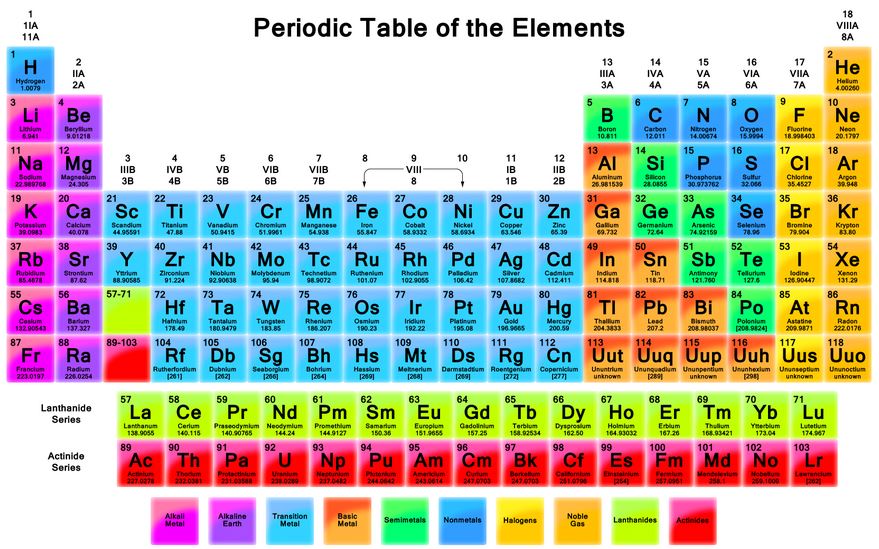
What does the 1.00794 stand for?

a)

mass number

b)

atomic number

c)

average atomic mass

d)

number of protons

126.
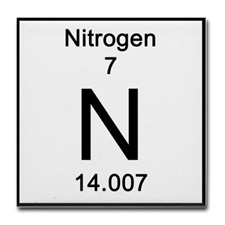
What is the number of protons that the element in this image contain?
a)
14
b)
7
c)
15
d)
18
127.

If an atom has 12 protons, which of the following must it also have to be considered a neutral atom?

a)

12 neutrons

b)

12 electrons

c)

12 protons

d)

24 protons and neutrons

128.
If an atom has 10 protons, 10 neutrons, and 10 electrons, what is the mass of the atom?
a)
10
b)
20
c)
30
129.

What charge does an atom have when it GAINS electrons?

a)

Positive

b)

Negative

c)

Neutral

130.

What two particles determine the mass number?

a)

Protons and electrons

b)

Electrons and neutrons

c)

Protons and neutrons

131.

When an atom loses an electron, it becomes a(n) _____________ ion.

a)

positive

b)

negative

c)

neutral

d)

polyatomic

132.

If the mass number of this chlorine atom is 36, how many neutrons does it have?

a)

17

b)

18

c)

19

d)

can't be determined

133.

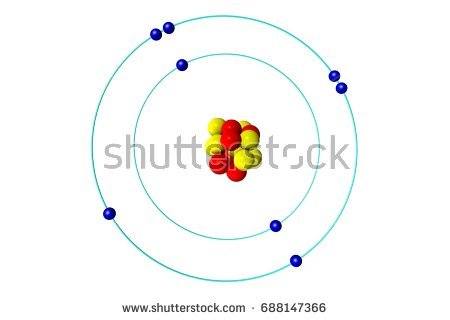
What is the atomic number of this atom shown in the Bohr model?

a)

11

b)

12

c)

13

d)

can't be determined

134.

What is the mass number of the atom shown in the Bohr model?

a)

11

b)

12

c)

23

d)

Can't be determined

135.

Is this atom an ion? If so what would it's charge be?

a)

Yes, 1-

b)

No it is neutral

c)

Yes, 1+

d)

Can't be determined

136.

Most of the mass of an atom is found in the ______.

a)

nucleus

b)

proton

c)

electron cloud

d)

isotope

137.
An atom with an unequal number of protons and electrons is said to have (a) ___.
a)
no charge
b)
balance
c)
charge
d)
unbalance
138.
Two atoms of the same element but with different mass numbers are called________
a)
electrons
b)
isotopes
c)
variables
d)
electron cloud
139.

An isotope of an element has the same number of _________, but a different number of _________.

a)

Protons, electrons

b)

Protons, neutrons

c)

Electrons, neutrons

d)

Neutrons, protons

140.

A radioactive nuclide has a ____ stable nucleus than a non-radioactive nucleus of the same element.

a)

more

b)

less

c)

identical

d)

small

141.
What makes something radioactive?
a)
elements with an atomic number above 81
b)
an unstable nucleus
c)
contaminated sewage
d)
It decays over time
142.
_______________ is the process by which unstable atoms emit radiation until they become stable.
a)
Radiation
b)
Chemical Reaction
c)
Radioactive Decay
d)
Isotopes
143.
The rate at which a radioactive element decays is its ____.
a)
quarter life
b)
whole life
c)
wonderful life 
d)
half life
144.
The half-life of Zn-71 is 2.4 minutes. If one had 100.0 g at the beginning, how many grams would be left after 7.2 minutes has elapsed?
a)
100.0g
b)
50.0g
c)
12.5g
d)
8.5g
145.
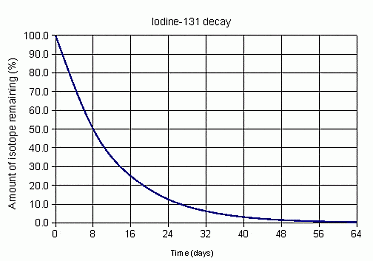
What is the half-life of iodine-131?
a)
32 days
b)
8 days
c)
16 days
d)
24 days
146.
If one-fourth of the carbon-14 is remaining then how many half-lives have passed?
a)
1
b)
2
c)
3
d)
4
147.
Takes two small nuclei and combines them into a larger nucleus
a)
fission
b)
fusion
148.
The splitting of a nucleus into smaller nuclei is
a)
fusion
b)
fission
c)
half-life
d)
gamma radiation
149.
Where does fusion occur naturally?
a)
Underwater
b)
All around us
c)
In the radioactive waste
d)
On the sun
150.
What is a benefit of nuclear fission?
a)
The ability to absorb energy
b)
The ability to release tremendous amounts of energy
c)
The ability to produce more energy than nuclear fusion
d)
There are no beneficial aspects of nuclear fission
151.
Very high temperature and pressure is required for:
a)
Fission
b)
 Fusion
c)
Radioactive Decay
152.

On the periodic table, Groups are

a)

Horizontal rows

b)

Vertical columns

153.

On the periodic table, Periods are

a)

Horizontal rows

b)

Vertical columns

154.

What is a valence electron?

a)

Electrons in the first energy shell

b)

Electrons in the second energy shell

c)

Electrons in the outer shell

d)

Total number of electrons

155.

The innermost energy level has a maximum of how many electrons?

a)

1

b)

2

c)

6

d)

8

156.

Which element is this?

a)

Nickel

b)

Neon

c)

Sodium

d)

Nitrogen

157.

Name this element.

a)

Argon

b)

Chlorine

c)

Aluminum

d)

Boron

158.

Which group includes soft, highly reactive metals with one electron in their outer shell?

a)

Alkai metals (group 1)

b)

Alkaline metals (group 2)

c)

Halogens (group 17)

d)

Noble gasses (group 18)

159.

Which group includes non-reactive gasses that have a full outer electron shell?

a)

Alkai Metals

b)

Alkaline Metals

c)

Halogens

d)

Noble Gases

160.

Elements in Group number 17 are known as

a)

Alkai Metals

b)

Alkaline Metals

c)

Halogens

d)

Noble Gases

161.

How many valence electrons?

a)

2

b)

5

c)

6

d)

8

162.

What group does this element belong to?

a)

1

b)

2

c)

17

d)

18

163.

How many valence electrons?

a)

2

b)

3

c)

4

d)

5

164.

How many valence electrons?

a)

2

b)

3

c)

4

d)

5

165.
This is the correct dot diagram for sodium (Na)
a)
true
b)
false
166.
This is a correct dot diagram for oxygen (O)
a)
true
b)
false
167.
According to the octet rule most elements need _______ valence electrons.
a)
2
b)
8
c)
6
d)
18
168.
Hydrogen needs _____ electrons in its valence shell to be stable.
a)
4
b)
6
c)
8
d)
2
169.
Which of the following is the correct Lewis dot structure for the molecule fluorine (F2)?
a)
A
b)
B
c)
C
d)
D
170.
What is the correct structure for BF3?
a)
Option A.
b)
Option B. 
c)
Option C.
d)
Option D.
171.
How many electrons does each line indicate are shared?
a)
1
b)
2
c)
3
d)
4
172.
When writing Lewis Structures, only __________ electrons are used.
a)
Inner shell
b)
Core 
c)
Valence
d)
Stable
173.
Atoms of H only form _________ bonds.
a)
Double
b)
Single
c)
Multiple
d)
Triple
174.
What is the correct formula for this molecule?
a)
NH
b)
N3H
c)
NH3
d)
NH4
175.
Which of the following is the correct Lewis structure for the compound PBr3?
a)
structure A
b)
structure B
c)
structure C
d)
structure D
176.
How many electrons should Carbon have around its Lewis dot model?
a)
1
b)
3
c)
4
d)
5
177.
Which of the following is the correct Lewis structure for CH2O?
a)
Option A
b)
Option B
c)
Option C
d)
Option D
178.
In the correct Lewis structure for water, how many unshared pairs of electrons will oxygen have?
a)
1
b)
4
c)
3
d)
2
179.
What is the first thing you need to do when drawing Lewis Structures?
a)
Draw your bonds
b)
Count the number of valence electrons
c)
Subtract to make the valence number even
d)
Add to make the valence number even
180.
How many electrons do atoms need to be stable?
a)
1
b)
2
c)
6
d)
8
181.

Which one of the following discoveries came first?

a)

electrons

b)

neutrons

c)

quarks

d)

atoms

182.

Which scientist discovered the electrons?

a)

Dalton

b)

Thomson

c)

Atristotle

d)

Bohr

183.

Rutherford and his students did experiments that showed

a)

quark

b)

nucleus

c)

proton

d)

electron

184.

Bohr discovered that electrons are located in

a)

the nucleus

b)

inside protons

c)

electron cloud

d)

circular orbits around the nucleus

185.

The smallest particle of an element that still represents that element.

a)

Nucleus

b)

electron

c)

proton

d)

atom

186.
Frank has a paper clip. It has a mass of 9g and a volume of 3cm3. What is its density?
a)
3 g/cm3
b)
1/3 g/cm3
c)
27 g/cm3
d)
39 g/cm3
187.
Frank has an eraser. It has a mass of 4g, and a volume of 2cm3. What is its density?
a)
8 g/cm3
b)
2 g/cm3
c)
1/2 g/cm3
d)
24 g/cm3
188.

Which SI unit is used to measure length?

a)

mol

b)

m or cm

c)

kg

d)

m2

189.

Which SI unit is used to measure mass?

a)

s

b)

m

c)

g or kg

d)

Pa

190.

Which SI unit is used to measure volume?

a)

m

b)

m2

c)

mL or cm3

d)

kg/m3

191.
Which of the following is NOT correct?
a)
kilo means 1000
b)
hecto means 100
c)
milli means one-thousandth
d)
centi means one tenth  (0.1)
192.
A possible explanation to a problem that has not yet been tested. 
a)
data
b)
theory
c)
hypothesis
d)
fact
193.
An experiment is performed on plants to see how different liquids affect plant growth. Each plant in the experiment is given a different liquid; water, apple juice, or milk. Each plant has the same amount of soil, sunlight, and listens to the same music. In this investigation, the independent variable is ...
a)
The type of plant
b)
The amount of sunlight
c)
The type of music
d)
The type of liquid
194.
The summary at the end of an experiment that explains the results. 
a)
conclusion
b)
procedures
c)
materials
d)
responding variable
195.
A student wants to test the effects of type of exercise on heart rate.  What is the dependent variable?
a)
heart rate
b)
type of exercise
c)
amount of exercise
d)
time of day exercise occurs
196.
An experiment is performed on plants to see how different liquids affect plant growth. Each plant in the experiment is given a different liquid; water, apple juice, or milk. Each plant has the same amount of soil, sunlight, and listens to the same music. In this investigation, what are the controlled variables?
a)
Type of plant, amount of music, and sunlight
b)
Water, apple juice, milk
c)
Plant growth
197.
Which is NOT a step in the scientific method?
a)
Make observation
b)
Form a theory
c)
Collect data
d)
Form a hypothesis
198.

Choose the best-written hypothesis that answers the question:

Question: Why is my room warmer during the day than at night?

a)

Sunlight is making my room warmer.

b)

Mr. Nuzzo has the heat turned on in the morning.

c)

If I close my blinds during the day, then my room will be cooler because sunlight cant get in.

d)

Sunlight actually cools down a room.

199.
The information you record in an experiment is called your ____________.
a)
data
b)
conclusions
c)
notebook
d)
inquiry
200.
3 Pb + 2 H3PO4 ----> 3 H2 + 1 Pb3(PO4)2
a)
Synthesis (or combination)
b)
Decomposition
c)
Single displacement
d)
Double displacement