wayground logo

Free Printable Worksheets

Font size

S
M
L
XL
Worksheets

Monache 2018 Spring Final Review

Total questions: 200

Worksheet time: 5hrs 26mins

Name
Class
Date
1.
Balance this reaction: ____ RbNO3 + ____ BeF2 ----> ____ Be(NO3)2 + ____ RbF
a)
1,1,1,1
b)
1,2,1,1
c)
2,1,1,2
d)
2,1,2,1
2.
Balance this reaction: ____ HCN + ____ CuSO4 ---->____ H2SO4 + ____ Cu(CN)2
a)
2,1,1,2
b)
2,1,1,1
c)
1,2,2,1
d)
1,2,1,1
3.
If the equation is balanced, what will the coefficient on Oxygen gas?
Al + O2 → Al2O3
a)
2
b)
3
c)
1
d)
4
4.
Which satement is true?
a)
When balancing a reaction, change the subscripts as needed. 
b)
Chemical reactions do not follow the law of conservation of matter.
c)
Products are written to the left of the arrow. 
d)
The coefficient represents the number of molecules present.
5.
If 4.0 moles of  AgNOare used up, how many moles of Pb(NO3)2 are produced?
PbCl2 + 2AgNO3 → Pb(NO3)2 + 2AgCl
a)
8.0 moles
b)
2.0 moles
c)
1.0 moles
d)
4.0 moles
6.
2Na + 2H2O → 2NaOH+ H2
How many grams of hydrogen are produced if 120 g of Na are available?
a)
5.2 g
b)
2.6 g
c)
690 g
d)
45 g
7.
How many moles is 4 grams of Calcium?
a)
0.10 moles
b)
10 moles
c)
44 moles
d)
160 moles
8.
In chemistry, a "mole" is:
a)
6.02x10²² particles
b)
3.01x10²² particles
c)
6.02x10²³ particles
d)
12.02x10²³ particles
9.
How many molecules are there in 5.9 moles of NaCl?
a)
3.5x1024molecules
b)
9.79x10⁻²⁴molecules
c)
1.02x10²³molecules
10.
How many grams are in 1.2 x 1024 molecules of CO?
a)
28 grams
b)
56 grams
c)
6.02 grams
d)
1.2 grams
11.
How many molecules are in 2.5 mol of NaCl?
a)
1.51x10²³
b)
146
c)
4.15
d)
1.51x1024
12.
A container with a volume of 893 L contains how many moles of air at STP?
a)
20003.2 L
b)
39.9 L
c)
22.4 L
d)
none of the choices
13.
N2 +  3H2 → 2NH3 
How many moles of hydrogen are needed to react with 2 moles of nitrogen?
a)
6
b)
2
c)
3
d)
1
14.
How many grams are in 7.8 moles of NaCl?
a)
476grams
b)
460 grams
c)
452 grams
d)
462 grams
15.
WO3 + H2 --> W + H2O
What coefficient goes in front of H2?
a)
1
b)
2
c)
3
d)
4
16.
Using the following equation:
Fe2O3(s) + 3H2(g) → 2Fe(s) + 3H2O(l)
How many moles of iron can be made from  6 moles H2
a)
4 moles Fe
b)
6 moles Fe
c)
9 moles Fe
d)
2 moles Fe
17.
In the reaction 2 H2 + O2 → 2 H2O what is the mole ratio of oxygen to water
a)
1:2
b)
2:1
c)
3:4
d)
4:3
18.
In order for a reation to take place, 
a)
chemical bonds must  remain in place
b)
chemical bonds must be broken
c)
nothing happens to the bonds 
19.
Which letter corresponds to the activation energy of the forward reaction?
a)
A
b)
B
c)
C
d)
D
20.
If the theoretical yield is 2.0 g and you get 1.5 grams, what is your percent yield?
a)
15%
b)
20%
c)
50%
d)
75%
21.
Theoretical yield = 73g
Actual yield = 62g
Calculate the percent yield.
a)
1.16%
b)
116%
c)
85%
d)
76%
22.

This is the strongest force in an atom

a)

Atomic radii

b)

Nuclear Forces

c)

Electromagnetic Forces

d)

All of these

23.
The technetium-99 isotope has a half-life of 6.0 hours. If 100.0 mg were injected into a patient how much remains after 18 hours?
a)
33.0 mg
b)
12.5 mg
c)
.33 mg
d)
15.8 mg
24.
What happens to the atomic number during alpha decay?
a)
The atomic number decreases by 4
b)
The atomic number increases by 1
c)
The atomic number decreases by 2.
d)
The atomic number stays the same.
25.
Arrange in order of increasing ability to penetrate matter.
a)
Beta, gamma, alpha
b)
Alpha, gamma, beta
c)
Gamma, beta, alpha
d)
Alpha, beta, gamma
26.
Balance the following equation:
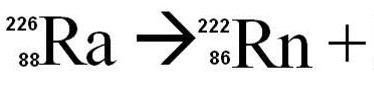
146C --> 0-1e + ________
a)
145B
b)
146C
c)
147N
d)
42He
27.

In the symbol 167N what the 7 stand for?

a)

Mass number

b)

Atomic number

c)

Atomic mass

d)

Number of neutrons

28.
Complete the nuclear equation and determine the type of decay that is occurring in this reaction. 
a)
alpha
b)
beta
c)
gamma
d)
none
29.
Which of the following best describes the process of nuclear fission? 
a)
Splitting an atom's nucleus apart 
b)
Separating an atom's electrons from its nucleus 
c)
Fusing two atomic nuclei together 
d)
Splitting an atom's electrons in half 
30.
How many neutrons does the isotope of lithium have?
a)
8
b)
3
c)
4
d)
5
31.
What do these isotopes of carbon all have in common?
a)
neutrons & mass number
b)
atomic number and neutrons
c)
atomic number and electrons
d)
protons, atomic number, and mass number
32.
What quantities vary between isotopes of an element?
a)
protons, electrons, and atomic mass
b)
protons, electrons, and atomic number
c)
neutrons and electrons
d)
neutrons and atomic mass
33.
An alpha particle consists of 
a)
two protons, two neutrons, and two electrons.
b)
two neutrons and two electrons.
c)
two protons and two neutrons.
d)
two protons and two electrons.
34.
When a nucleus emits a beta particle, its atomic number 
a)
changes, and so does its mass number.
b)
changes, but its mass number remains constant.
c)
remains constant, and so does its mass number.
d)
remains constant, but its mass number changes.
35.
Identify the missing substance in each of the following nuclear reactions.
 _____→137 56 Ba + 0 −1
a)
13755Ba
b)
13757La
c)
13856Ba
d)
137 55Cs
36.
What is Half-life?
a)
The amount of time it takes for some of the nuclei in a sample of the isotope to decay
b)
The amount of time it takes for half the electrons in a sample of the isotope to decay
c)
The amount of time it takes for half the nuclei in a sample of the isotope to decay
d)
the amount of time it takes to double the nuclei in a sample of the isotope to decay
37.
Barium-122 has a half-life of 2 minutes. A fresh sample weighing 80 g was obtained. If it takes 10 minutes to set up an experiment using barium-122, how much barium-122 will be left when the experiment begins?
a)
0.25g
b)
2.5g
c)
25g
d)
80g
38.
The half-life of strontium-90 is 25 years. How much strontium-90 will remain after 100 years if the initial amount is 4.0 g?
a)
3.0g
b)
0.25mg
c)
0.3g
d)
0.25g
39.
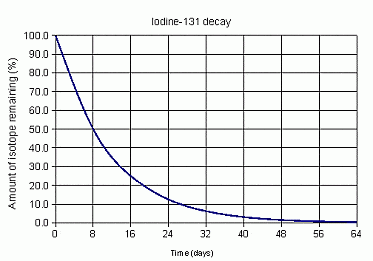
What is the half-life of iodine-131?
a)
32 days
b)
8 days
c)
16 days
d)
24 days
40.
Which type of nuclear reaction do we use in nuclear power plants today?
a)
Nuclear Fusion
b)
Nuclear Fission
c)
Nuclear Expansion
d)
Nuclear Chemistry
41.
What happens to the nuclei of isotopes during a FUSION reaction
a)
They break down or break a part
b)
They fuse and/or combine together
c)
They add more neutrons to its mass
d)
They collapse into a black hole 
42.
Energy in the sun is produced as a result of nuclear ____ reactions.
a)
fusion
b)
fission
c)
waste
d)
sub
43.
Name the instrument used to detect radioactivity.
a)
voltmeter
b)
ohmeter
c)
seismograph
d)
geiger counter
44.
What makes something radioactive?
a)
elements with an atomic number above 81
b)
an unstable nucleus
c)
contaminated sewage
d)
It decays over time
45.
If the half life of a radioactive element is 100yrs, how long would it take for the radioactivity to reduce by one half?
a)
200yrs
b)
100yrs
c)
50yrs
d)
300yrs
46.
What is the molar mass of (NH4)2CO3 ?
a)
144 g
b)
138 g
c)
96 g
d)
78 g
47.
The following is what type of reaction:
PbCl2 + AgNO3 → Pb(NO3)2 + AgCl
a)
Synthesis
b)
Decomposition
c)
Single Replacement
d)
Double Replacement
48.
The following is what type of reaction:
NH3 + HCl  → NH4Cl
a)
Synthesis
b)
Decomposition
c)
Single Replacement Replacement
d)
Double Replacement Replacement
49.
2H2   +   O2  →  2H2O
How many moles of water can be produced if 8 moles H2 reacts with 8 moles O2?
a)
4 moles
b)
8 moles
c)
16 moles
d)
2 moles
50.
Which of the following is an example of a synthesis reaction:
a)
2 H2O → 2 H2 + O
b)
2 Na + Cl2 → 2 NaCl
c)
CH4 + 2 O2 → 2 H2O + CO2
d)
2 HCl + Zn → ZnCl+ H2
51.
What type of chemical reaction is this?
Al(OH)3 → Al2O3  + H2O
a)
Decomposition
b)
Combustion
c)
Synthesis
d)
Single Replacement 
52.
What coefficients are needed to correctly balance the equation?
_Bi   +   _O2   →  _Bi2O3
a)
3,2,3
b)
2,3,2
c)
4,3,2
d)
none of these
53.
Why must chemical equations be balanced?
a)
So that the equation doesn't explode
b)
The reaction won't happen until it is balanced
c)
Matter cannot be created or destroyed, merely rearranged
d)
None of these
54.
Balance this equation:  H2 + N2 → NH3
a)
 H2 + 4N2 → NH3
b)
 H2 + 3N2 → 2NH3
c)
 3H2 + N2 → 2NH3
d)
 2H2 + 2N2 → 2NH3
55.
Balance this equation,            Al2O3 ---> Al + O2 
a)
Cannot be balanced
b)
2Al2O3 ---> 2Al + 3O2 
c)
2Al2O3 ---> 4Al + 3O2 
d)
3Al2O3 ---> 2Al + O2 
56.
Which compound has the smallest molar mass?
a)
CO
b)
CO2
c)
H2O
d)
H2O2
57.
What is the molar mass of AuCl3?
a)
96 g
b)
130 g
c)
232.5 g
d)
303.3 g
58.
Which of the following is not a physical property of a base?
a)
Slippery Touch
b)
Sour Taste
c)
Conduct electricity
d)
Turns red litmus into blue
59.

Solution of acid A has pH 1 and acid B with pH 2. Which statement is CORRECT ?

a)

Acid A stronger than acid B

b)

[A] > [B]

c)

Concentration of H+ in A is higher than B

d)

Concentration of H+ in B is twice as high than A

60.
Which of the following properties describes a base?
a)
turns litmus pink
b)
bitter
c)
low pH
d)
sour
61.
Which of the following describes an acid?
a)
turns litmus blue
b)
low pH
c)
bitter
d)
high pH
62.
Holly has an unknown substance in a beaker. She wants to determine the relative pH of the unknown substance. She places a piece of blue litmus paper into the substance, and the litmus paper stays blue.
The substance in the beaker
a)
is a base.
b)
has a neutral pH.
c)
is an acid.
d)
does not have a pH.
63.
Which of the following substances would have the greatest concentration of H+ ions?
a)
Ammonia with
pH 13
b)
Water with 
pH 7
c)
Milk with 
pH 5
d)
Lemon juice with 
pH 2
64.
According to the pH range which substance is more acidic than lemon juice
a)
Hydrochloric acid
b)
cabbage
c)
milk
65.
Bases are substances that ...
a)
accept hydrogen atoms
b)
reject hydrogen atoms
66.

Most household cleaners are

a)

Mildly acidic

b)

Strongly acidic

c)

Mildly basic

d)

Neutral

67.

If [H+] > [OH-]

a)

The solution is basic

b)

The solution is neutral

c)

The pH must be above 7

d)

The solution must be acidic

68.
Which of the following word pairs correctly completes the sentence below?
_______ are corrosive substances characterized as having a strong smell, a sour taste, and a _______.
a)
Acids; pH less than 7
b)
Acids; pH greater than 7
c)
Bases; pH greater than 7
d)
Bases; pH less than 7
69.
Human blood has a pH between 7.35 and 7.45. Which of the following best describes human blood?
a)
strongly acidic
b)
slightly acidic
c)
strongly basic
d)
slightly basic
70.
Strong acids and bases...
a)
do not break apart into ions (non-electrolyte)
b)
partially break apart into ions (weak electrolyte)
c)
completely break apart into ions (non-electrolyte)
d)
completely break apart into ions (strong electrolyte)
71.

Identify the following: HCl - Fully dissociates

a)

Strong Acid

b)

Weak Acid

c)

Strong Base

d)

Weak Base

72.

Identify the following: KOH- Fully dissociates

a)

Weak Base

b)

Strong Base

c)

Weak Acid

d)

Strong Acid

73.

Identify the following: NH3 - partially dissociates

a)

Weak Base

b)

Weak Acid

c)

Strong Acid

d)

Strong Base

74.

Accepts protons (H+)

a)

Acid

b)

Base

c)

Neither

75.

Alkaline substance that breaks into (OH-) ions in water

a)

Base

b)

Neither

c)

Acid

76.

If the [H+] = 4.2 x 10⁻⁸, what is the pOH?

a)

7.4

b)

6.6

c)

1.0

d)

9.8

77.

If the pH is 6, what is the [OH-]?

a)

1 x 10⁻⁶ M

b)

1 x 10⁻⁸ M

c)

1 x 10⁻¹⁰ M

d)

1 x 10⁻⁴ M

78.

If the [OH-] is 1 x 10-12 what is the pOH?

a)

12

b)

-12

c)

2

d)

10

79.

If a sample has warning labels that it may cause chemical burns and skin damage, it likely has which pH values?

a)

6-8

b)

8-9

c)

3-5

d)

1 or 13

80.

pH is a measure of

a)

Hydrogen gas content

b)

Hydroxide ion concentration

c)

Hydrogen ion concentration

d)

Hydrolysis of water

81.
Buffer is defined as
a)
ability to resist pH change
b)
ability to prevent pH from decreasing
c)
ability to resist a pH increase
d)
ability to resist pH change when small amount of acid added
82.

What might happen if buffers did not exist within the human body?

a)

Our blood and other bodily fluids might become too acidic or basic.

b)

Our stomach acid would not be able to break down food.

c)

We would not be able to process glucose within our cells.

d)

We would not be able to inhale oxygen into our lungs.

83.

With increasing carbon dioxide levels in our atmosphere, there are also increasing levels of carbon dioxide in our water. What is the solvent in this situation?

a)

Carbon dioxide

b)

water

c)

salt

d)

solute

84.
What is a solute?
a)
The substance that does the dissolving in a solution.
b)
The substance that is dissolved into the solution.
c)
The mixing of different substances.
d)
The process in which neutral molecules lose or gain electrons
85.
What is a solvent?
a)
The substance that does the dissolving in a solution.
b)
The substance that is being dissolved in a solution.
c)
The mixing of different substances.
d)
The process in which neutral molecules lose or gain electrons
86.

What happens when you try and mix a polar and a non-polar substance?

a)

They mix evenly

b)

They mix, but unevenly

c)

They don't mix

d)

They explode

87.

Water softeners work to remove dissolved minerals in tap water. Which is true?

a)

The water is the solvent and the minerals are the solutes.

b)

Both are solutes

c)

Both are solvents

d)

The minerals are the solvents, and the water is the solute.

88.

Na+ and Cl- dissolved in water are also known as

a)

NaCl (s)

b)

NaCl (aq)

c)

NaCl (g)

d)

table salt

89.
molecule in which opposite ends have opposite electric charges
a)
cohesion
b)
polar molecule
c)
hydrogen bond
d)
solution
90.

Oils are ______________ and tend to dissolve other molecules that are __________________.

a)

nonpolar, polar

b)

polar, nonpolar

c)

polar, polar

d)

nonpolar, nonpolar

91.

Ionic compounds can ________________ in water, while covalent compounds can ___________________________ in water.

a)

completely dissociate, completely dissolve.

b)

completely dissolve, completely dissociate

c)

partially dissolve, partially dissociate

d)

never dissolve, always dissociate

92.

The rate of dissolving can be increased by

a)

raising the temperature

b)

increasing the surface area of the solute

c)

reducing the size of the solute particles

d)

all of these

93.

A saturated solution

a)

can hold less solute at higher temperatures

b)

can hold more solute at higher temperatures

c)

is at its maximum molarity regardless of temperature

d)

all of these

94.
How many grams of solute are dissolved in 125.0 mL of 5.00M NaCl?
a)
0.625 g NaCl
b)
36.52 g NaCl
c)
36.5 g NaCl
d)
0.625 mol NaCl
95.
What is the molarity of a solution made from 325.4g of AlCl3 with enough water to make 500.0 mL?
a)
4.88 M
b)
4.880 M
c)
2.440 M
d)
2.44 M
96.

What is the mass percent of 4.7 g of MgCl2 in 45.3 g of water?

a)

10.4%

b)

9.4%

c)

15.8%

d)

.103%

97.

When ionic compounds dissolve in water, the ions

a)

dissociate and are free to conduct electricity

b)

dissolve and tightly hold on to their electrons

c)

are resistant to electrical impulses

d)

none of these

98.

5 L of a 2M solution has more moles than

a)

10 L of 1.4 M solution

b)

5 L of 3 M solution

c)

6 L of 2 M solution

d)

6 L of 1.5 M solution

99.

10 mg of NaCl in 50 ml solution would be

a)

200 ppm

b)

0.2 ppm

c)

5 ppm

d)

0.005 ppm

100.
A 2 M solution is made by dissolving...
a)
2 mol of solute in 1 L of solvent
b)
1 mol of solute in 2 L of solvent
c)
2 mol of solute in 1 mol of solvent
d)
2 mol of solute in 1 kg of solvent
101.
How many moles of Na2SO4 is needed to make 2.5 L of 2.0 M solution?
a)
5 moles
b)
1 moles
c)
1.25 moles
d)
0.80 moles
102.
What is the molarity of 3 mole of hydrochloric acid in 3 L of water. 
a)
3 M
b)
1 M
c)
6 M
d)
9 M
103.
Temperature is a measure of the...
a)
total energy in a substance
b)
total kinetic energy in a substance
c)
average potential energy in a substance
d)
average kinetic energy of molecules in a substance
104.

Heat is

a)

A measure of the temperature of an object

b)

The flow of energy due to a temperature difference

c)

How hot or cold something is

d)

How spicy your burrito tastes

105.

If the melting point of a substance is 123 oC and the boiling point is 300 oC, at what temperature would the substance be a liquid?

a)

50 oC

b)

100 oC

c)

150 oC

d)

400 oC

106.
As the kinetic energy of the molecules in a substance increases, the temperature of the substance __________.
a)
increases
b)
decreases
107.
When you freeze water, it turns to ice.  What process is this?
a)
 Exothermic
b)
Endothermic
108.
If a chemical reaction is EXOTHERMIC, the temperature would....
a)
Stay the same
b)
Increase
c)
Decrease
109.
During an endothermic reaction in a beaker if we are part of the surroundings and touched the beaker, it would feel _______. 
a)
Warm
b)
Cold
110.
If 25 J are required to change the temperature of 5.0 g of substance A by 2.0°C, what is the specific heat of substance A? 
a)
250 J/g C
b)
10 J/g C
c)
63 J/g C
d)
2.5 J/g C
111.
The specific heat of aluminum is 0.21 J/g°C.  How much heat(Q) is released when a 10 g piece of aluminum foil is taken out of the oven and cools from 100° to 50°?
a)
105 J
b)
10.5 J
c)
1.05 J
112.

The specific heat(c) of copper is 0.39 J/g °C.

What is the temperature change(∆t)

when 100 Joules of heat(Q) is added to 20 grams?
a)
12.82 °C
b)
24.12°C
c)
351 °C
113.
The specific heat of aluminum is 0.21 cal/g°C.  How much heat(Q) is released when a 10 g piece of aluminum foil is taken out of the oven and cools from 100° to 50°?
a)
105 J
b)
10.5 J
c)
1.05 J
114.
20 g of water. specific heat of water is 4.18 J/x°C.  temperature changes from 25° C to 20° Chow much heat energy (Q) moves from the water to the surroundings?
a)
418 Joules
b)
209 J
c)
83 J
d)
4.18 J
115.
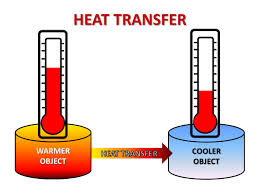
Heat transfers from an area of ____temperature to an area of ___ temperature.
a)
high to low
b)
low to high
c)
high to high
d)
It can travel high to low and low to high. 
116.

1 calorie is

a)

Equal to 1000 Calories

b)

4.184 kJ

c)

the amount of heat needed to raise 1 g of water 1 oC

d)

a unit to measure temperature

117.

The amount of heat gained or lost depends on

a)

the mass of the object

b)

the specific heat of the object

c)

the temperature change of the object

d)

all of these

118.

Liquid only

a)

P-Q

b)

Q-R

c)

R-S

d)

S-T

e)

T-U

119.

Freezing

a)

P-Q

b)

Q-R

c)

R-S

d)

S-T

e)

T-U

120.

Melting Point

a)

P-Q

b)

T1

c)

R-S

d)

T2

e)

T-U

121.
When the change in enthalpy is positive the reaction is ___. When the change in enthalpy is negative the reaction is ___.
a)
 delayed ; spontaneous
b)
spontaneous ; delayed
c)
endothermic ; exothermic
d)
exothermic ; endothermic
122.

How much energy is required to completely melt 50g of ice at 0 oC?

a)

700 J

b)

16700 cal

c)

113 kcal

d)

16.7 kJ

123.

34.3 g of an unknown metal is heated to 100 oC. It is then placed in 51.0 g of water at 25 oC, the temperature of the water rises to 30 oC. Based on the chart, what is the most likely material the metal is made out of?

a)

Zn

b)

Cu

c)

Ni

d)

Mn

124.
Which of the following has the greatest amount of movement at a given temperature?
a)
Gas
b)
Liquid
c)
Solid
d)
They all have the same movement
125.
How can we increase the gas pressure inside a sealed container?
a)
Increase the number of particles inside the container
b)
Increase the temperature
c)
Decrease the volume of the container
d)
All of these
126.
Which state of matter has a definite volume but no real shape of its own?
a)
solid
b)
liquid
c)
gas
127.
If a nitrogen gas occupies a volume of 500ml at a pressure of 0.971atm. What volume will the gas occupy at a pressure of 1.50 atm, assuming the temperature remains constant?  
a)
323.6 ml
b)
728.25 ml
c)
772.39 ml
d)
None of the above
128.
An increase in temperature does what to diffusion?
a)
Speeds it up
b)
Slows it down
c)
Has no effect
d)
I wish i knew. Really I do.
129.
If air is removed from a rigid container, the pressure inside will
a)
increase
b)
decrease 
c)
remain the same
d)
vary
130.
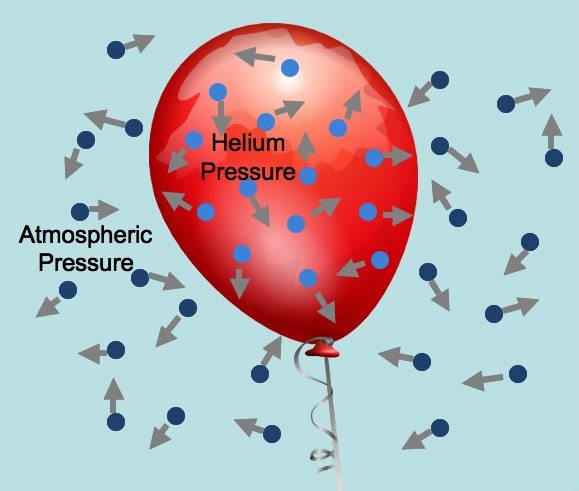
In what direction(s) does air exert pressure?
a)
everywhere
b)
no where
c)
there is no pressure
d)
downward
131.
Diffusion is the movement of molecules from an area of _____ concentration to an ______ concentration
a)
High, low
b)
Low, high
c)
Low, low,
d)
High, high
132.
You have a gas that has a pressure of 2 ATM and a volume of 10L.  What would be the new volume if the pressure was changed to 1 ATM?
a)
5 L
b)
20 L
c)
It would stay at 10L
d)
1 L
133.
What causes pressure?
a)
The walls of the container
b)
The vacuum in the container
c)
The collisions of the particles
d)
Atmospheric pressure acting on the outside walls
134.
Graph A shows
a)
Charle's Law where volume and temperature are directly proportionate.
b)
Charle's Law where volume and temperature are inversely proportionate.
c)
Boyle's law where pressure and volume are inversely proportionate
d)
Boyle's law where pressure and volume are directly proportionate
135.
Graph B shows
a)
Charle's Law where volume and temperature are directly proportionate.
b)
Charle's Law where volume and temperature are inversely proportionate.
c)
Boyle's law where pressure and volume are inversely proportionate
d)
Boyle's law where pressure and volume are directly proportionate
136.
STP refers to 
a)
100 degrees C and 0 atm
b)
0 atm and 273 K
c)
0 degrees C and 273 mm Hg
d)
273 K and 760 mm Hg
137.
At constant pressure, the temperature of 4.8 L of an ideal gas is 500K.  What will the volume be at standard temperature?
a)
2.6 L
b)
2.8 L
c)
2.0 L
d)
3.2 L 
138.
If 200 mL of a gas at 27°C is cooled to -33°C at a constant pressure, the volume will be
a)
250 mL
b)
204 mL
c)
196 mL
d)
160 mL
139.
What happens to the average kinetic energy of matter when it is heated?
a)
It increases
b)
It decreases 
c)
It doesn't change
d)
It cannot be determined
140.
At higher temperatures...
a)
particles in an object have less energy
b)
particles in an object move faster
c)
a gas contracts
141.
What will happen to the volume of a gas under constant temperature if the pressure increases?
a)
Increase
b)
Decrease
c)
Nothing
d)
Explosion!
142.
At STP, 4.8 L of CO2 contains the same number of molecules as 
a)
2.4 L of CH4
b)
4.8 L of Hydrogen
c)
9.6 L of O3
d)
1.2 L of Neon
143.
Convert 273 K to oC
a)
0oC
b)
100oC
c)
-273oC
d)
50oC
144.
Convert -89 oC to K
a)
184K
b)
362K
c)
-362K
d)
-184K
145.
Each of these flasks contains the same number of molecules. In which container is the pressure highest?
a)
Flask 1
b)
Flask 2
c)
Flask 3
d)
Flask 4
146.
You have a gas that has a pressure of 2 ATM and a volume of 10L.  What would be the new volume if the pressure was changed to 1 ATM?
a)
5 L
b)
20 L
c)
It would stay at 10L
d)
1 L
147.
If 200 mL of a gas at 27°C is cooled to -33°C at a constant pressure, the volume will be
a)
250 mL
b)
204 mL
c)
196 mL
d)
160 mL
148.
1. If a gas at 25.0 °C occupies 3.60 liters at a pressure of 1.00 atm, what will be its volume at a pressure of 2.50 atm?
a)
1.5L
b)
45 L
c)
1.44L
d)
27.4L
149.
If 10L of O2 at 273K and 1 atm is compressed to a 7L container at 250K, what is the new pressure?
a)
1.31 atm
b)
9.16 atm
c)
0.76 atm
d)
6.0 atm
150.
A weather balloon has a volume of 105L at 0.97 atm when the temperature is 318K. What is the volume at 293K and 1.05 atm?
a)
89.4 L
b)
0.32 L
c)
93.8 L
d)
3.13 L
151.
You have a gas that has a pressure of 2 ATM and a volume of 10L.  What would be the new volume if the pressure was changed to 1 ATM?
a)
5 L
b)
20 L
c)
It would stay at 10L
d)
1 L
152.
Which of the following would increase the pressure on a system?
a)
Increase the Temperature
b)
Pump in more gas
c)
Decrease the volume
d)
All of these
153.
Ionic bonds form when
a)
electrons are shared
b)
electrons are transferred 
c)
noble gases are present
d)
two anions  combine
154.
Which is NOT an ionic bond?
a)
H2O
b)
NaCl
c)
CaS
d)
Be3N2
155.
When metals bond with non-metals they form what type of bonds
a)
covalent
b)
ionic
c)
cooperative
d)
lewis
156.
How do the following two elements bond together?
Cr3+  O2-         
a)
CrO
b)
Cr3O2
c)
Cr2O3
d)
CrO3
157.
Ionic bonds found in salts are strong bonds.  There is evidence of this in the fact that
a)
they are water soluble.
b)
they have low melting points.
c)
they have high melting points.
d)
they are insoluble in water. 
158.
Why are noble gases generally unreactive?
a)
They have empty shells
b)
They are explosive
c)
They have a full valence shell
d)
They combine with water
159.
nonmetals
a)
high density, poor conductors, low melting points
b)
low density, poor conductors, low melting points
c)
low density, great conductors, high melting points.
d)
high density, poor conductors, high melting point
160.
A diatomic molecule like O2 is always_______ because electrons are shared ________.
a)
nonpolar; equally
b)
polar; equally
c)
nonpolar; unequally
d)
nonpolar; unequally
161.
What atom matches this electron configuration?
1s22s22p63s23p64s23d10
a)
Zinc
b)
Copper
c)
Nickel
d)
Germanium
162.
Which electron configuration belongs to Chlorine (Cl)?
a)
1s2s2p3s3p5
b)
1s2s2p3s3p6
c)
1s2s2p3s3p7
163.
What is the shorthand electron configuration for Sulfur atom?
a)
[Ar] 3p4
b)
[He] 3s23p4
c)
[Ne] 3s23p4
d)
[Na] 3s23p3
164.
This could be the dot diagram of
a)
P
b)
Ar
c)
Na
d)
B
165.
This could be the dot diagram of
a)
O
b)
B
c)
Li
d)
Ne
166.
What element has the valence shell configuration
3s2 3p2
a)
Al
b)
B
c)
Si
d)
Ga
167.
Which of the following is the correct Lewis dot structure for the molecule fluorine (F2)?
a)
A
b)
B
c)
C
d)
D
168.
O-2 has
a)
8 protons and 6 electrons
b)
8 protons and 8 electrons
c)
10 protons and 8 electrons
d)
8 protons and 10 electrons
169.
A stable form of Chlorine has ______ protons, _______ electrons, and behaves like___________________. 
a)
17, 16, Argon
b)
17, 18, Argon
c)
18, 17, Neon
d)
17, 17, Krypton
170.
Liquid particles are...
a)
tightly packed
b)
loosely bonded and flowing
c)
free to fly in all directions
d)
so hot that the electrons are removed from the nucleus.
171.
Solids melt when solid particles _____ energy, liquids freeze when liquid particles _____ energy.
a)
absorb, release
b)
release, absorb
c)
absorb, absorb
d)
release, release
172.
Most of the volume of an atom is composed of
a)
empty space
b)
the nucleus
c)
subatomic particles
d)
protons
173.
The Atomic Mass is equal to the total number of.....
a)
protons + electrons
b)
electrons + neutrons
c)
protons + neutrons
174.
In the modern periodic table elements are arranged by:
a)
atomic mass
b)
atomic number
c)
valence electrons
d)
number of isotopes
175.
What is the mass number?
a)
the number of protons
b)
the number of protons and neutrons
c)
the number of neutrons
d)
the number of protons and electrons
176.
Which of the following is NOT an alkali metal
a)
Li
b)
Cl
c)
K
d)
Cs
177.
How many Valance electrons does Iodine Have?
a)
6
b)
16
c)
7
d)
17
178.
Which is a halogen?
a)
Helium
b)
Chlorine
c)
Oxygen
d)
Neptune
179.
In the modern periodic table elements are arranged by:
a)
atomic mass
b)
atomic number
c)
valence electrons
d)
number of isotopes
180.
Gold (Au)
a)
Transition Metal
b)
Alkali Metal
c)
Alkaline Earth Metal
d)
Heavy Metal
181.
How many electrons does Oxygen have?
a)
8
b)
6
c)
10
182.
This element is a metal:
a)
Carbon
b)
Oxygen
c)
Iodine
d)
Silver
183.
How many outside electrons does phosphorus have?
a)
5
b)
2
c)
8
184.

Which atom has the largest atomic radius?

a)

potassium

b)

rubidium

c)

francium

d)

cesium

185.

Which statement correctly and completely identifies a trend?

a)

Atomic radius decreases across a period and increases down a group.

b)

Electronegativity decreases across a period and decreases down a group.

c)

Ionization energy increases across a period and increases down a group.

d)

Ionic radius increases across a period and increases down a group.

186.
Atomic radius generally increases as we move __________.  
a)
down a group and from right to left across a period 
b)
up a group and from left to right across a period 
c)
down a group and from left to right across a period 
d)
up a group and from right to left across a period 
187.
Generally, as you move across and down the periodic table
a)
atomic numbers decrease
b)
atomic size decreases
c)
electronegativity increases
d)
atomic mass increases
188.
If sulfur has a -2 charge, how many electrons does it have?
a)
18
b)
14
c)
16
d)
32
189.
Example for physical property
a)
odor
b)
burns in air
c)
reacts with water to create hydrogen gas
d)
rust
190.
Flammability (burns): Chemical or Physical Property
a)
Chemical Property
b)
Physical Property
191.
Melting Point: Chemical or Physical Property
a)
Chemical Property
b)
Physical Property
192.
Reacts with Water: Chemical or Physical Property
a)
Chemical Property
b)
Physical Property
193.
Hardness: Chemical or Physical Property
a)
Chemical Property
b)
Physical Property
194.
Which of the following has six valence electrons?
a)
Sodium
b)
Iodine
c)
Oxygen
d)
Neon
195.
How do the following two elements bond together?
K1+  S2- 
a)
KS
b)
K8S
c)
K6S3
d)
K2S
196.
How do the following two elements bond together?
Al3+  O2-         
a)
AlO
b)
Al2O3
c)
Al3O6
d)
Al3O2
197.
OH-
a)
Hydroxide
b)
Carbonate
c)
Peroxide
d)
Nitrite
198.
Name the following ionic compound: MgSO4
a)
magnesium sulfoxide
b)
magnesium sulfide
c)
magnesium sulfate
d)
magnesium oxide
199.
Which has the same number of electrons as Cl1- ?
a)
Kr
b)
Ne
c)
K+1
d)
F-1
200.
What is NOT true of Oxygen and Sulfur?
a)
They are in group 16
b)
They have 6 valence electrons
c)
They have the same number of total electrons
d)
They tend to gain 2 electrons.