

wayground logo

Free Printable Worksheets

NEW

Font size

S
M
L
XL
Worksheets

Bonding

Total questions: 35

Worksheet time: 32mins
Name
Class
Date
1.
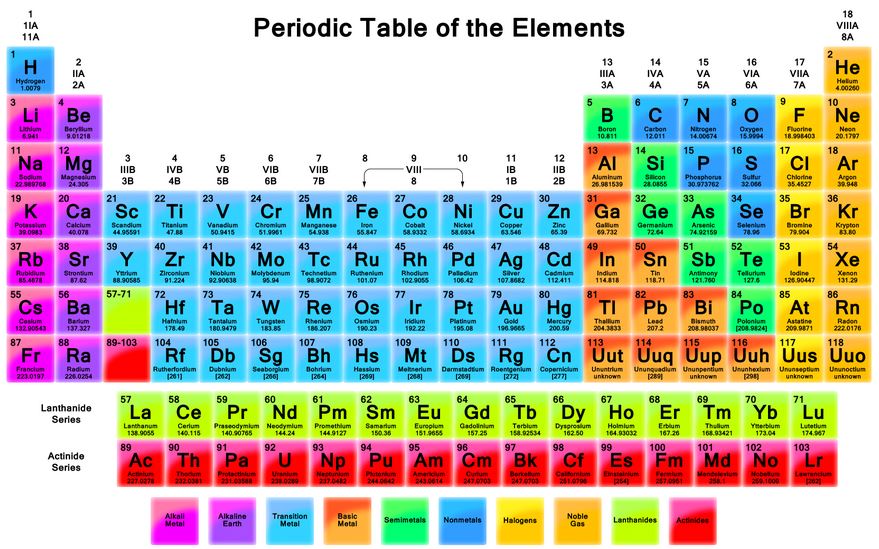
Elements on the LEFT side of the periodic table will most likely form:
a)
Positive ions
b)
Negative ions
c)
Neutral Ions
d)
None of these
2.
An ionic bond forms when atoms ___________ electrons.
a)
gain
b)
share
c)
increase
d)
transfer
3.
Which type of bond has an equal sharing of electrons?
a)
Polar Covalent 
b)
Non Polar Covalent
c)
Ionic
d)
Metallic
4.
Which type of bond has an unequal sharing of electrons?
a)
Polar Covalent 
b)
Non Polar Covalent
c)
Ionic
d)
Metallic
5.
Which type of bond has a transfer of an electron from on atom to another?
a)
Polar Covalent 
b)
Non Polar Covalent
c)
Ionic
d)
Metallic
6.
All chemical bonds involve two atoms sharing electrons.
a)
True
b)
False
7.
Bonds that form between two metals are called ______________ bonds.
a)
ionic 
b)
covalent
c)
metallic
d)
pervasive
8.
If an atom loses two electrons what charge will it have?
a)
+ 2
b)
 - 2
c)
+1
d)
-1
9.
If an atom gains one electron what charge will it have?
a)
-2
b)
-1
c)
+1
10.
Covalent compounds
a)
Share electrons
b)
transfer electrons
c)
contain a sea of electrons
d)
conduct electricity
11.
Is Hydrogen considered a metal or a non-metal?
a)
Metal
b)
Non-metal
12.
What two types of atoms make a covalent bond?
a)
2 Nonmetals
b)
1 Nonmetal and 1 Metal
c)
2 Metals
d)
2 Noble Gases
13.
What two types of atoms make a covalent bond?
a)
2 Nonmetals
b)
1 Nonmetal and 1 Metal
c)
2 Metals
d)
2 Noble Gases
14.
How are covalent bonds explained?
a)
When one atom takes the other atom's electron
b)
When the atom shares an electron with an another atom
c)
When the two nucleus merge
d)
When the neutrons leave the nucleus
15.
In chemical compounds, covalent bonds form when
a)
the electronegativity difference between two atoms is very large.
b)
electrons are completely transferred between two metals.
c)
pairs of electrons are shared between two nonmetal atoms.
d)
two nonmetal atoms are attracted to each other by opposite charges.
16.
What region of the periodic table contains atoms that form covalent bonds?
a)
the left side
b)
the middle
c)
the right side
d)
top left
17.
What region of the periodic table contains atoms that form covalent bonds?
a)
the left side
b)
the middle
c)
the right side
d)
top left
18.
A cation is a ____ ion.
a)
negative
b)
positive
c)
neutral
d)
ficticious
19.
Beryllium will ____ valence electrons when forming an ionic bond.
a)
lose 4
b)
gain 4
c)
lose 2
d)
gain 2
20.
What type of bond is this? Lithium with Fluorine?
a)
ionic
b)
covalent
21.

Which of the following is NOT a property of ionic compounds?

a)

They conduct electricity when molten

b)

They conduct electricity when in solution

c)

They have high boiling points

d)

They are insoluble in water

22.
Which of the following is a characteristic property of ionic compounds?
a)
They form hard, brittle crystals with characteristic shapes
b)
They have low melting points
c)
They have low boiling points
d)
They contain no charged particles
23.
What is the formula for magnesium phosphide?
a)
Mg3P2
b)
Mg2P3
c)
Mg2(PO4)3
d)
Mg3(PO4)2
24.
What is the formula for magnesium phosphide?
a)
Mg3P2
b)
Mg2P3
c)
Mg2(PO4)3
d)
Mg3(PO4)2
25.
Write the formula for barium + nitrogen
a)
Ba2N3
b)
Ba3N2
c)
BaN
d)
BaN3
26.
Write the formula for barium + nitrogen
a)
Ba2N3
b)
Ba3N2
c)
BaN
d)
BaN3
27.
What is the formula for tin (II) nitride?
a)
Sn3N2
b)
SnN2
c)
Sn3N
d)
SnN
28.
If copper (II) and phosphate bond together, the resulting chemical formula would be:
a)
Cu2(PO4)3
b)
CuPO4
c)
Cu3(PO4)2
d)
Cu3PO4
29.
What is the formula for aluminum sulfide?
a)
Al2S3
b)
Al3S2
c)
Al2SO4
d)
AlS
30.
What is the name for CaS?
a)
calcium sulfate
b)
calcium sulfide
c)
calcium monosulfide
d)
monocalcium monosulfide
31.
What is the basis of a metallic bond?
a)
the attraction of neutral metal atoms.
b)
the attraction between protons and neutrons.
c)
the attraction between positive metal ions and interlocking electrons.
d)
the attraction between positive metal ions and free floating electrons.
32.
What does malleable mean?
a)
able to be shaped
b)
will break easily
c)
can be used for wire
d)
is shiny
33.

Why does the melting point of metals increase across period 3, from Sodium (Na) to Aluminium (AI)?

a)

Size of atoms gets smaller

b)

Attraction force between nuclei and free electron increases

c)

Increased space between the valence electrons in the "sea"

d)

Increased number of valence electrons contributed to the "sea"

34.

Element X is in group 2, and element Y in group 17, of the periodic table. Which ions will be present in the compound formed when X and Y react together?

a)

X+ and Y

b)

X 2+ and Y

c)

X+ and Y2–

d)

X2– and Y+

35.

Based on electronegativity values, which bond is the most polar?

a)

B―C

b)

C―O

c)

N―O

d)

O―F
