
NEW
Font size
 Worksheets
Calculation of Kinetic and Potential Energy
Total questions: 60
Worksheet time: 5hrs 0mins

When a roller coaster is at the top of a hill it has
high potential energy
high kinetic energy
low potential energy
equal amounts of kinetic and potential energy
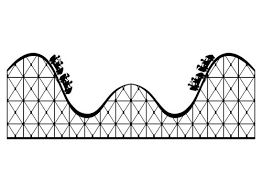
When a roller coaster is at the bottom of a hill it has
high potential energy
high kinetic energy
low kinetic energy
equal amounts of kinetic and potential energy

Kinetic energy depends on
mass and height
height and speed
mass and speed
mass and force

Potential energy depends on
mass and height
height and speed
mass and speed
height and force

I am holding a balloon that is full of air, the balloon has
kinetic energy
potential energy

I released a balloon that was full of air and it is flying around the room, the balloon has
kinetic energy
potential energy


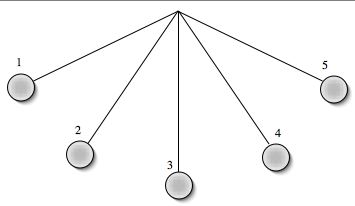
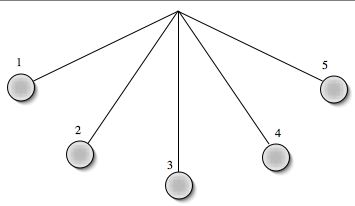
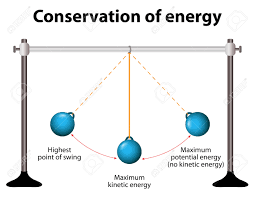
the amount of energy that is stored in an object; energy that an object has because of its position, relative to other objects, or condition
potential energy
kinetic energy
thermal energy
sound energy
the energy an object has due to its motion
potential energy
gravitational potential energy
elastic potential energy
kinetic energy
the energy stored by objects due to their position above Earth's surface
gravitational potential energy
elastic potential energy
chemical potential energy
mechanical energy
the energy stored in stretched or compressed objects
gravitational potential energy
elastic potential energy
chemical potential energy
electric energy
the energy stored in the chemical bonds of a substance
gravitational potential energy
elastic potential energy
chemical potential energy
nuclear energy
The formula to find the height of an object when given the mass and potential energy is:
h = PE / m * g
KE = 1/2m * (v2)
m = PE / g * h
PE = m * g * h
The law that state that energy cannot be created or destroyed but can be changed from one form to another
gravitational potential energy
magnetic potential energy
law of conservation of energy
law of thermal dynamics
The energy stored in an object because of its position
chemical potential energy
elastic potential energy
kinetic energy
potential energy
The formula used to find the mass of an object when given the height and potential energy
h = PE / m * g
PE = m * g * h
KE = 1/2 m * (v2)
m = PE / h * g
Formula for Potential Energy
PE = m * g * H
KE = 1/2 m * (v2)
m = PE / g * h
h = PE / m * g
Kinetic Energy formula is
PE = m * g * h
KE = 1/2 m * v
KE = 1/2 m * (v2)
KE = m * v
Kinetic and Potential energy is measured in
Mass
Gravity
Joules
Speed
The acceleration due to gravity is
9.8 m/s2
there is no set acceleration
98 m/s
9.8 m/ s
As the mass increases in an object what happens to the kinetic energy
The kinetic energy increases
Th kinetic energy decreases
The kinetic energy does not change
Calculate the Kinetic Energy when the mass of the object is 10 kg and the velocity is 2 m/s
KE = 1/2(m) * v2
10 Joules
20 Joules
40 joules
5 joules
If the mass is constant and a graph shows the kinetic energy increase what must be true about the speed
It decreases
It remains constant
It increases
Two magnets rest on a table. Because like poles of a magnet repel each other, the magnets exert a force on each other. If Magnet 1 is moved closer to Magnet 2, Magnet 2 will move. This is because–
objects need to touch each other in order to cause movement.
magnets can only exert a force on other magnets.
forces can affect objects over a distance
moving Magnet 1 changed the force needed to move Magnet 2.

At which position on the diagram would an apple have the greatest potential energy?
Position 1---at the very top of the tree
Position 2--in the middle of the tree
Position 3--at the bottom of the tree
Position 4---on the ground away from the tree
Students build an electrostatic charge on the surface of two balloons by rubbing them with wool cloth. Placing the balloons close to each other creates a system with potential energy. The potential energy in this system is a result of the fact that the balloons–
are filled with air under pressure.
exert a force on each other.
have exactly equal masses
are not being pulled by gravity

Two balloons are given an electrostatic charge by rubbing them with a wool cloth. Which observation provides evidence of the force that the balloons exert on each other over a distance because of their charge?
The amount of rubbing with the wool cloth can change the amount of charge.
Both Balloon 1 and Balloon 2 are pulled downward by the force of gravity.
Moving Balloon 1 can make Balloon 2 move without the balloons touching.
The charge on the balloons gets weaker over time until there is no charge.

Students build an electrostatic charge on the surface of two balloons by rubbing them with wool cloth. Placing the balloons close to each other creates a system with potential energy. The potential energy in this system is a result of the fact that the balloons–
are filled with air under pressure
exert a force on each other.
have exactly equal masses.
are not being pulled by gravity.
A group of elements working together as a whole
relative position
system
energy
force
A push or pull that can change an object’s motion
relative position
system
force
energy
The position of two or more objects with respect to one another
relative position
system
force
energy
_______________ potential energy depends on its distance from the ground. The potential energy decreases the _____________ the object is to the ground.
gravitational , closer
gravitational , farther
elastic, closer
elastic, farther
When two objects interact, each one exerts a ____________ on the other that can cause _____________ to be transferred to or from the object.
force, energy
energy, force
A system of objects can contain both _______________ energy and ______________ energy
elastic, gravitional
kinetic, potential
elastic, kinetic
gravitational, potential
A ball is hit up in the air. At its highest point the ball has the _____________ amount of potential energy. Right before it hits the ground it has the _______________ amount of potential energy
maximum, minimum
minimum, maximum
Distance with respect to time
kinetic energy
potential energy
speed
energy
The change in an object’s position
speed
kinetic energy
motion
speed
Movement of energy from one system to another
kinetic energy
energy transfer
speed
motion
Kinetic energy is proportional to the of an object.
speed
mass
motion
distance
KE = 2 1mass ⋅ velocity2
if an object has a mass of 1400 kg and a velocity of 2.78 m/s what is the kinetic energy
1,946 Joules
5, 409 Joules
7,784 joules
10,819 Joules
KE = 2 1m ⋅ velocity2
What is the kinetic energy when the mass of the object is 1,200 kg and the velocity is 5.55 m/s
3,330 joules
6,660 joules
18,481 joules
13,320 joules
PE − mass ⋅ gravity ⋅ height
An Olympian lifts a 1,375-kilogram set of weights a vertical distance of 2 meters in the weightlifting event. The force of gravity equals 9.8 m/s2 . What is the potential energy of the weights?
1386 Joules
26,950 Joules
13,475 Joules
53,900 Joules
PE − mass ⋅ gravity ⋅ height
height = PE ÷(mass ⋅ gravity)
28.22 Joules
1.28 Joues
0.13 Joules
0.01 Joules
PE = mass ⋅ gravity ⋅ height
A weight training ball is put on a ledge 3 m high. The potential energy of the ball on the ledge is 200 J. What is the mass of the ball? Round your answer to the nearest hundredth.
Solve for mass by using this formula
mass = PE ÷(height ⋅ gravity) .
0.68 Joules
6.80 Joules
5,880 Joules
0.15 Joules

