
 Worksheets
Biology HMWK Quiz #5 - Population Ecology
Total questions: 20
Worksheet time: 2hrs 40mins


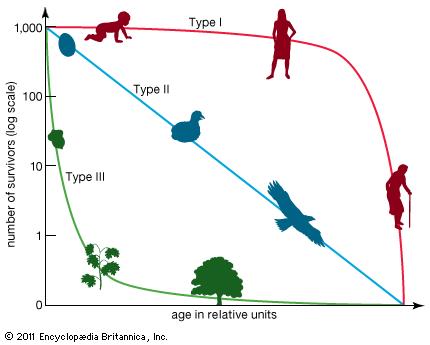
The mortality rate of organisms following a type I survivorship curve is __________.
fairly constant throughout life
higher in post-reproductive years
lower after the organisms become established
unrelated to age

Animals such as pandas are long lived, mature slowly, and generally produce fewer offspring during their life spans but place a greater investment in each. What term is applied to this type of reproductive strategy?
K-strategy
r-strategy
Which contribute to a positive population growth?
immigration
positive birth rate
emigration
positive death rate

Which of the following describes the population of elephants in Kenya from 1973-1989?
(immigration + births) – (emigration + deaths) = 0
(immigration + births) – (emigration + deaths) = 1
(immigration + births) – (emigration + deaths) < 0
(immigration + births) – (emigration + deaths) > 0
What type of factor has an increasing impact as the population size increases?
density-independent
density-dependent
cohort effect
survivorship factor
Factors like predation can have a positive benefit to the population of prey organisms because predators tend to keep prey populations below their ___________.
carrying capacity
sustainibility number
exponential growth point
competition level
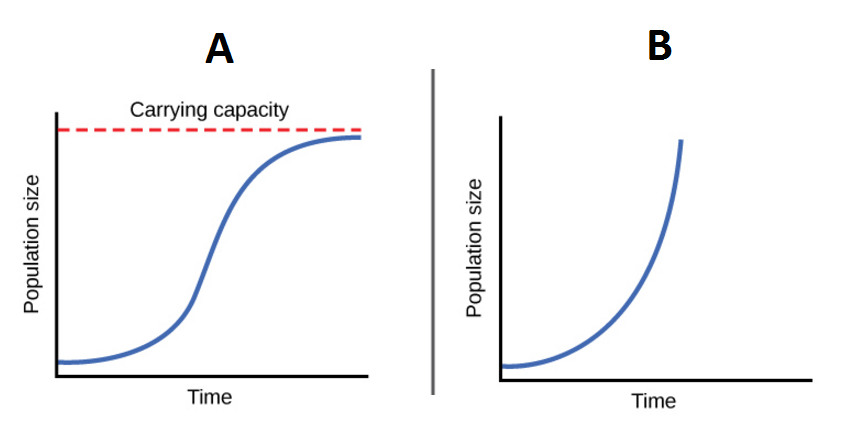
What type of growth model is shown in image A?
Exponential
Logistic


Review the graph provided. What statements can be made about the significant decline in moose in the mid 1990's?
The moose decline was a direct result of wolf decline.
The is no way to know why the moose population dropped.
The drop is most likely due to the declining wolf population, but more information would be needed to determine that.
The drop is most likely due to the increasing wolf population, but more information would be needed to determine that.

