wayground logo

Free Printable Worksheets

NEW

Font size

S
M
L
XL
Worksheets

3-2 Netwon's 1st and 2nd Laws / Gravity

Total questions: 30

Worksheet time: 51mins

Name
Class
Date
1.
What is Newton's First Law of Motion?
a)
F=m x a
b)
Every action has an equal and opposite reaction
c)
An object at rest stays at rest, an object in motion stays in motion unless acted on by another force. 
d)
Friction 
2.
What is Newton's First Law known as? The Law of
a)
Friction
b)
Mass
c)
Inertia
d)
Gravity
3.
What is inertia?
a)
the force that opposes motion
b)
the force of attraction between 2 objects
c)
an object's tendency to stay in motion or to stay at rest
d)
a change in an object's speed and/or direction
4.
Which has more Inertia? (and more force to move) 
a)
Truck
b)
Ant
5.
According to Newton’s first law of motion, a moving object that is not acted on by an unbalanced force will
a)
remain in motion.
b)
eventually come to a stop.
c)
change its momentum.
d)
accelerate.
6.
According to Newton’s first law of motion, an object at rest that is not acted on by an unbalanced force will
a)
remain in motion.
b)
eventually come to a stop.
c)
change its momentum.
d)
remain at rest
7.
Why does an 18-wheeler have more inertia than a bicycle?
a)
it has more mass
b)
it has more volume
c)
it is not as aerodynamic
8.
What kind(s) of objects have inertia?
a)
all objects with mass
b)
only objects at rest
c)
only objects in motion
d)
only objects whose motion is being changed
9.
An object in motion will stay in what kind of motion as long as the net forces acting on it are zero?
a)
slowing motion in a straight line
b)
accelerating motion in a straight line
c)
constant motion in a straight line
d)
constant motion in an unpredictable direction
10.
After a cannonball is fired into frictionless space, the amount of force needed to keep it going equals
a)
twice the force with which it was fired
b)
the same amount of force with which it was fired
c)
1/2 the force with which it was fired
d)
zero, since no force is requires to keep it moving. 
11.
One object has twice as much mass as another object. The first object also has also twice as much...
a)
velocity
b)
gracitational acceleration
c)
inertia
d)
all of these
12.
Which one needs a greater net force to move, a kilogram of feathers or a kilogram of iron? 
a)
feathers 
b)
iron
c)
same
d)
depends on their friction
13.

A 20 kg bike accelerates at 10 m/s2. What was the force?

a)

25 Newtons

b)

20 Newtons

c)

200 Newtons

d)

10 Newtons

14.

Jenny applies a 60 N force to a 20 Kg cart, what is the acceleration of the cart if friction can be neglected?

a)

1200 m/s/s

b)

0.33 m/s/s

c)

20 m/s/s

d)

3 m/s/s

15.

The mass of a wagon is 40 kg. The wagon accelerates at 8 m/s2 . What is the force?

a)

38.25 Kg

b)

320N

c)

5N

d)

3.825Kg

16.

What is Newton's 2nd Law?

a)

F=ma

b)

Every action has an equal and opposite reaction

c)

An object at rest stays at rest, an object in motion stays in motion.

d)

Friction

17.

If an object was accelerating at 10 m/s2, and a force of 10 newtons was required to accelerate it, what was the object's mass?

a)

1kg

b)

10kg

c)

5kg

d)

2kg

18.
How much force is needed to accelerate a 3kg skateboard at 5m/s2. 
a)
8N
b)
1.6N
c)
0.6N
d)
15N
19.
Accelerations are produced by
a)
forces.
b)
 velocities.
c)
 accelerations.
d)
 masses.
20.

Football A has a greater mass than football B. Which football will have greater acceleration when both are thrown with the same force in the same direction?

a)

Football A

b)

Football B

c)

They will have the same acceleration

d)

Mass has no effect on acceleration

21.
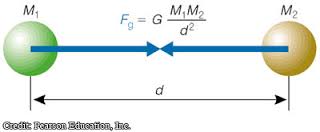
What is the Universal law of gravitation equation? 
a)
G=F ⋅ m⋅m2/r2
b)
F=G ⋅ m⋅m2/(r)2
c)
F=G ⋅ r2/m⋅m2
d)
G=F ⋅ r2/m⋅m2
22.
The law of universal gravitation is credited to whom?
a)
Einstein
b)
Galileo
c)
Darwin
d)
Newton
23.
Two factors effecting the magnitude of the force of gravity between 2 objects are...
a)
mass and distance 
b)
mass and matter
c)
distance and weight 
d)
weight and mass
24.
Gravity attracts all objects towards one another.
a)
False
b)
True
c)
It depends
25.
Complete the following statement: The farther away two planets are the _______ the gravitational force between them.
a)
more
b)
same
c)
dosen't matter
d)
less
26.
Gravity is the force objects put on each other because of their ______.
a)
Mass
b)
Friendliness
c)
Acceleration
d)
Speed
27.

Which configuration will result in the greatest gravitational force?

a)

small masses far apart

b)

large masses far apart

c)

small masses close together

d)

large masses close together

28.
Two objects are attracted to each other with 36 N of gravitational force.
What would the force between them be if the distance between them were doubled?
a)
9
b)
18
c)
72
d)
144
29.

If Earth's mass was cut in half, what would happen to your weight?

a)

increase because gravitational force increases

b)

decrease because gravitational force decreases

c)

decrease because gravitational force increases

d)

increase because gravitational force decreases

30.
Force of gravity is inversely proportional to
a)
Mass
b)
Weight
c)
Distance
d)
Time