Wayground logo

Free Printable Worksheets

Font size

S
M
L
XL
Worksheets

Periodic Trends

Total questions: 55

Worksheet time: 43mins

Name
Class
Date
1.
Which of the following will have a larger radius than Zinc?
a)
Gallium
b)
Aluminum
c)
Magnesium
d)
Strontium
2.
Which of the following will have a lower ionization energy than Scandium (Sc)?
a)
Helium (He)
b)
Titanium (Ti)
c)
Calcium (Ca)
d)
Magnesium (Mg)
3.
As you move down the periodic table atoms get bigger.  This is because ____________.
a)
The atoms have more mass.
b)
The atoms have more protons.
c)
The atoms have more energy levels
d)
The atoms have more nuetrons
4.
Atoms that have a high electronegativity, _______________.
a)
give up their electrons more easily.
b)
hold on to their electrons more tightly.
c)
have more electron shells.
5.
Electronegativity is...
a)
how good an atom is at attracting electrons
b)
the ability of an atom to lose electrons
c)
the energy required to remove an electron from a specific atom
d)
how easy it is to make friends. 
6.
Which periodic group has the smallest atomic radius?
a)
Alkali metals
b)
Halogens
c)
Noble Gases
d)
Transition metals
7.
As you move down the periodic table atoms get bigger.  This is because ____________.
a)
The atoms have more mass.
b)
The atoms have more protons.
c)
The atoms have more energy levels
d)
The atoms have more nuetrons
8.
Ionization energy is...
a)
the energy required to add an electron to a specific atom
b)
how much energy it takes to remove an electron from an atom
c)
the energy required to shield the outer electrons from the nucleus
d)
a measure of the ability of an atom to attract electrons
9.
Which of the following will have a lower ionization energy than Scandium (Sc)?
a)
Helium (He)
b)
Titanium (Ti)
c)
Calcium (Ca)
d)
Magnesium (Mg)
10.
What term is used to describe "The energy required to remove an electron from gaseous atoms"
a)
excitation energy
b)
ionization energy
c)
polarization energy
d)
electrolytic energy 
11.
A negatively charged subatomic particle that exists in various energy levels outside the nucleus of an atom
a)
neutron
b)
electron
c)
proton
d)
subatomic particle
12.

The order of elements in the periodic table is based on

a)

the number of protons in the nucleus.

b)

the electric charge of the nucleus.

c)

the number of neutrons in the nucleus.

d)

atomic mass.

13.

Atoms of elements that are in the same group have the same number of

a)

protons.

b)

neutrons.

c)

valence electrons.

d)

protons and neutrons.

14.

Which of the following elements is an alkali metal?

a)

calcium

b)

magnesium

c)

mercury

d)

sodium

15.

How was Mendeleev's periodic table arranged?

a)

by increasing atomic mass

b)

by decreasing atomic mass

c)

by increasing atomic number

d)

by decreasing atomic number

16.

Mendeleev left gaps in his periodic table because

a)

the table was too small.

b)

protons belonged there.

c)

the table was too full.

d)

no known elements fit there.

17.

Each column of the periodic table is

a)

an element.

b)

a group.

c)

an isotope.

d)

a period.

18.

The three main groups of elements are metals, nonmetals, and

a)

inert gases.

b)

alkali metals.

c)

radioactive isotopes.

d)

semiconductors/metalloids.

19.

Most elements are

a)

metals.

b)

nonmetals.

c)

metalloids.

d)

semiconductors.

20.

Elements in an elemental family have similar

a)

atomic symbols.

b)

atomic sizes.

c)

atomic weights.

d)

chemical properties.

21.

Which statement about the alkali metals is correct?

a)

They are located in the left-most column of the periodic table.

b)

They are extremely nonreactive.

c)

They are usually gases.

d)

They form negative ions with a 1- charge.

22.

Metals tend to be

a)

gases.

b)

dull.

c)

brittle.

d)

good conductors.

23.

Which group is very stable due to the fact that they have a full outermost energy level?

a)

alkali metals

b)

halogens

c)

alkaline-earth metals

d)

noble gases

24.

Which of the following is a property of group 18 elements?

a)

malleable

b)

brittleness

c)

high electrical conductivity

d)

unlikely to react with other elements

25.

Based on its location on the periodic table, which of these elements most likely has physical and chemical properties most similar to boron (B)?

a)

magnesium (Mg)

b)

aluminum (Al)

c)

neon (Ne)

d)

chlorine (Cl)

26.

Which of the following groups on the Periodic Table is likely to form positively charged ions (or cations)?

a)

group 1

b)

group 13

c)

group 17

d)

group 18

27.

Which of the following elements would most likely be a shiny, gray-colored solid at room temperature, conduct electricity, and dent when hit with a hammer?

a)

argon (Ar)

b)

chlorine (Cl)

c)

sulfur (S)

d)

aluminum (Al)

28.
What is an ion?
a)
A Charged Atom
b)
A Large Atom
c)
A Small Atom
d)
A Cute Atom
29.
Cations are...
a)
Positive
b)
Negative
c)
Neutral
d)
Purring
30.
Anions are...
a)
Positive
b)
Negative
c)
Neutral
d)
Crying
31.
An atom becomes _________ when it gains electrons.
a)
Positive
b)
Negative
c)
Neutral
d)
Invinsible
32.
An atom becomes _______ when it loses electrons.
a)
Positive
b)
Negative
c)
Neutral
d)
Invinsible
33.
A Radium atom wants...
a)
One more electron
b)
One less electron
c)
Two more electrons
d)
Two less electrons
34.
Which particles change the charge in atoms when ions are formed?
a)
Protons
b)
Electrons
c)
Neutrons
d)
Kittens
35.
How did Mendeleev arrange the elements?
a)
alphabetical 
b)
density
c)
melting point
d)
atomic mass
36.
The horizontal row on the periodic table is called a
a)
group
b)
family
c)
period
d)
atomic number
37.
A vertical column is called...
a)
group
b)
tower
c)
period
d)
crew
38.
The number at the top of each square on the periodic table is the ...
a)
atomic number
b)
atomic mass
c)
Chemical Symbol
d)
Element Name
39.
The number at the bottom of each square on the periodic table is the ...
a)
atomic number
b)
atomic mass
c)
chemical symbol
d)
element name
40.
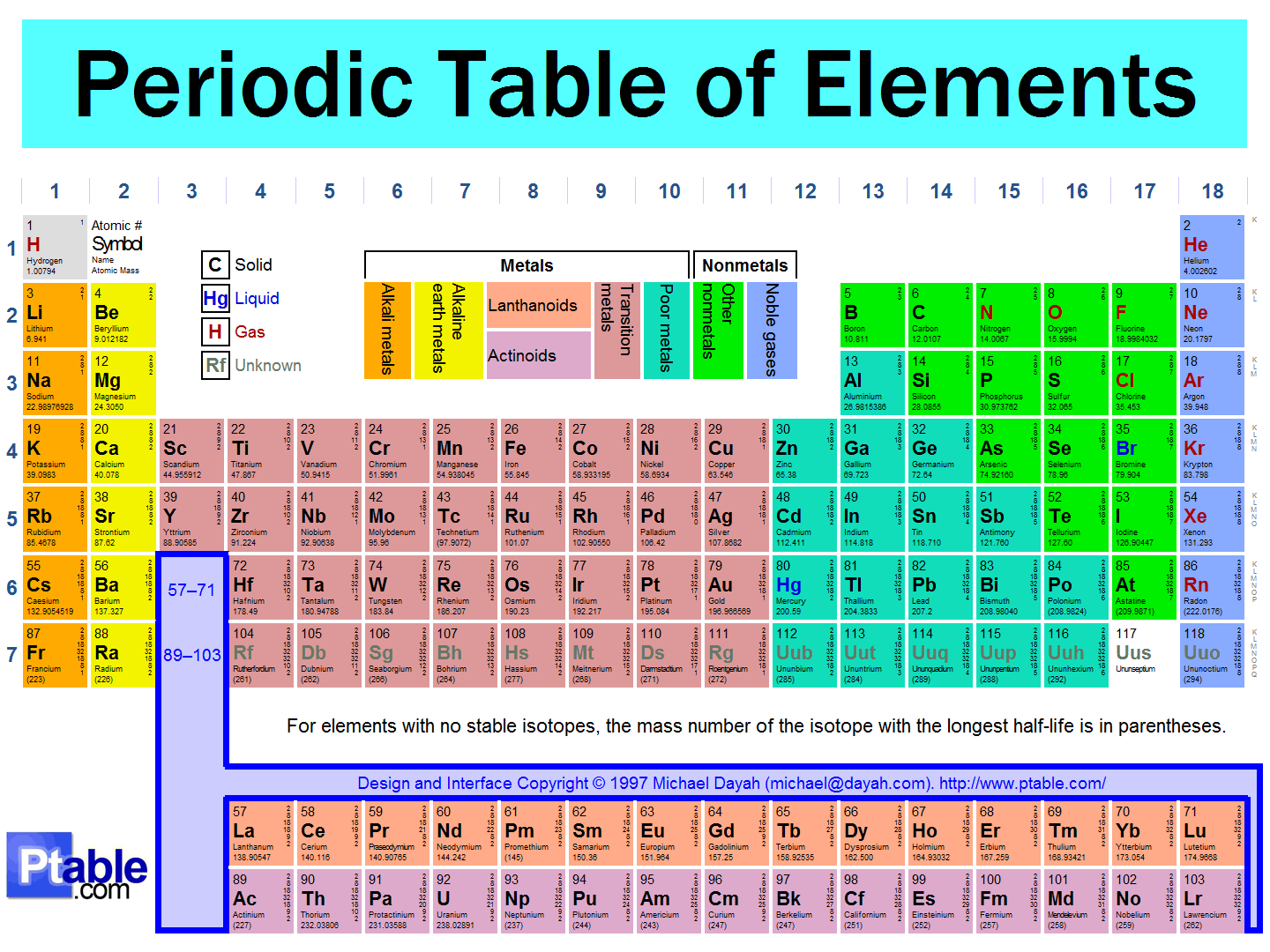
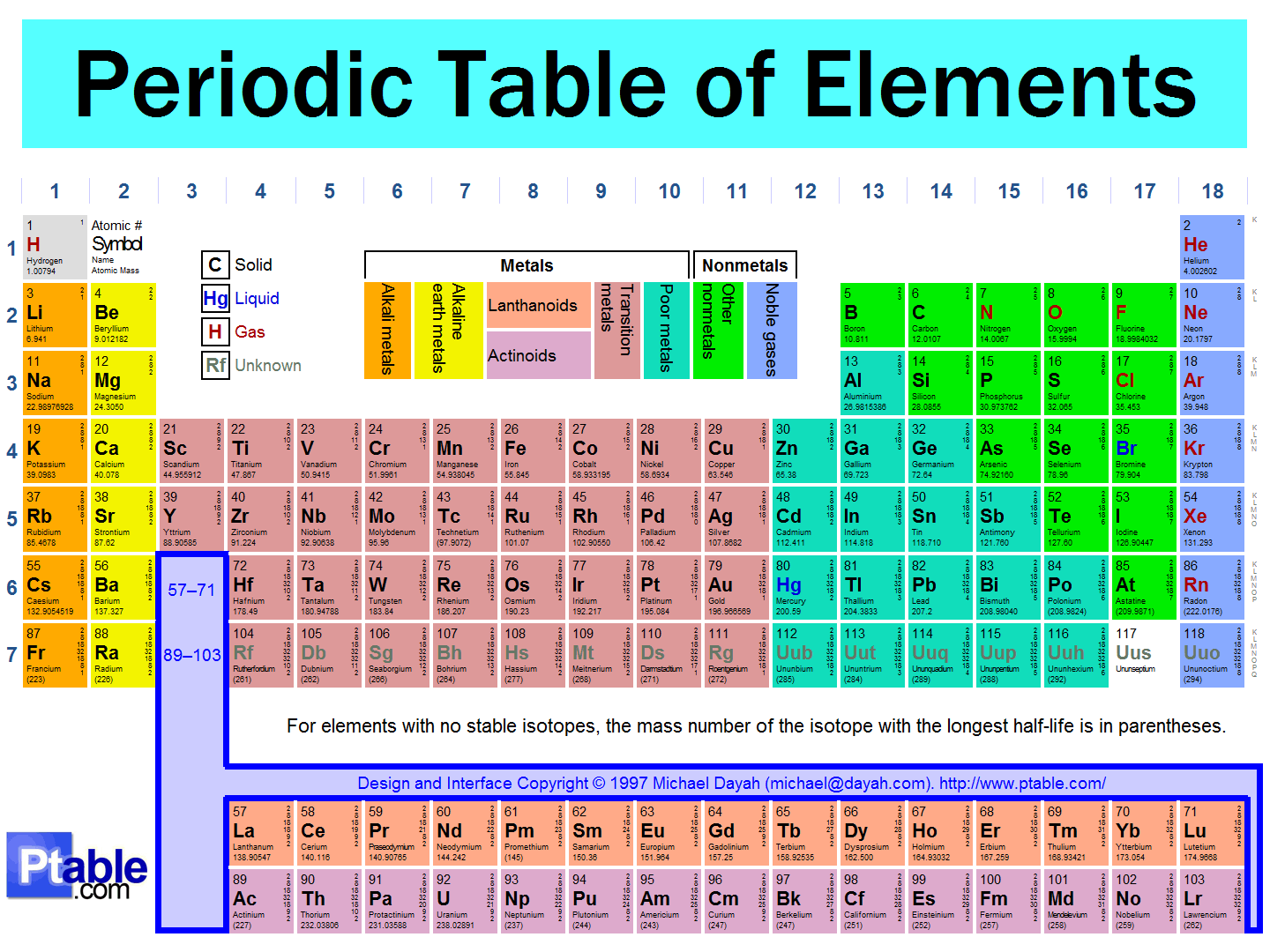
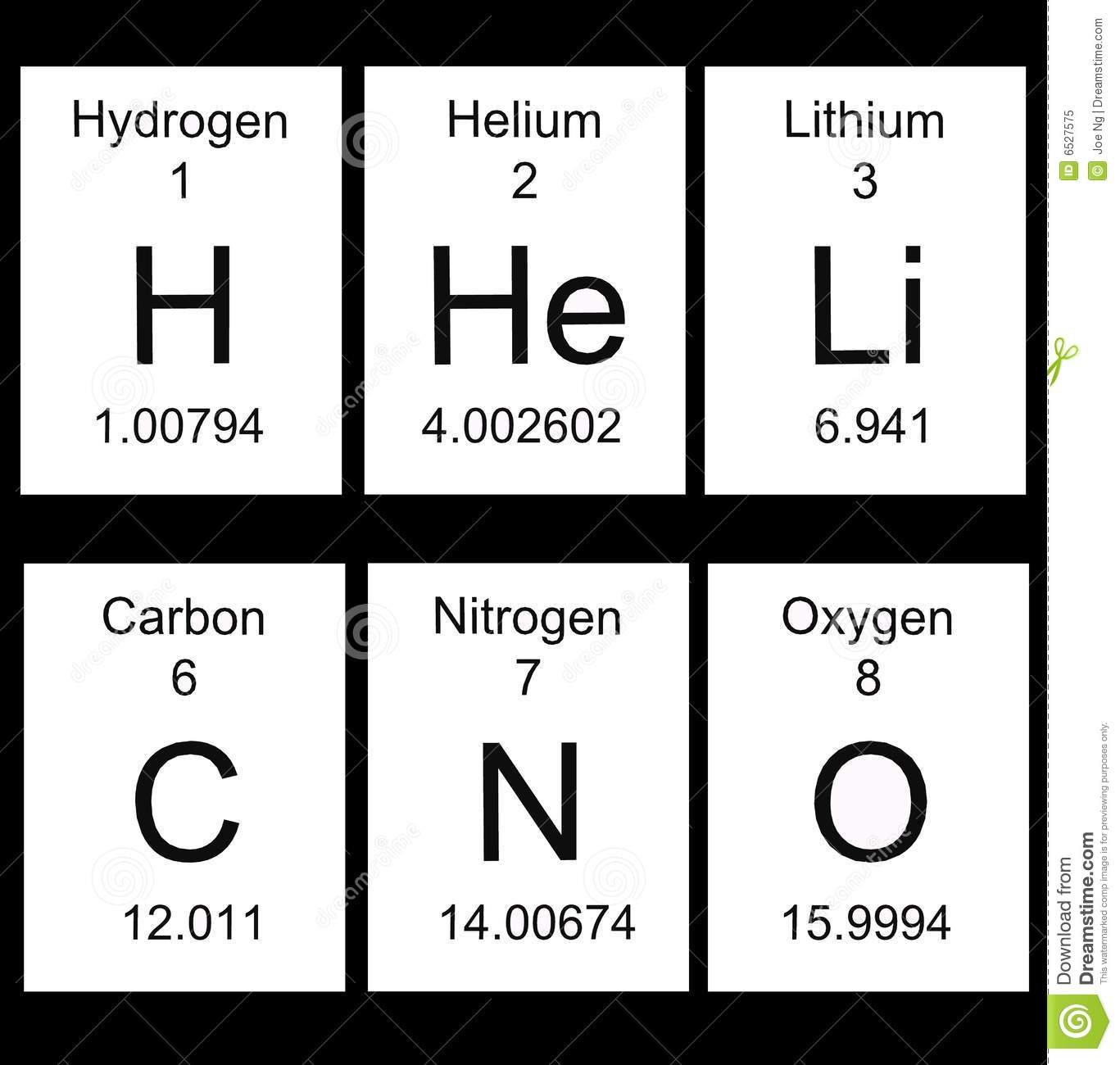
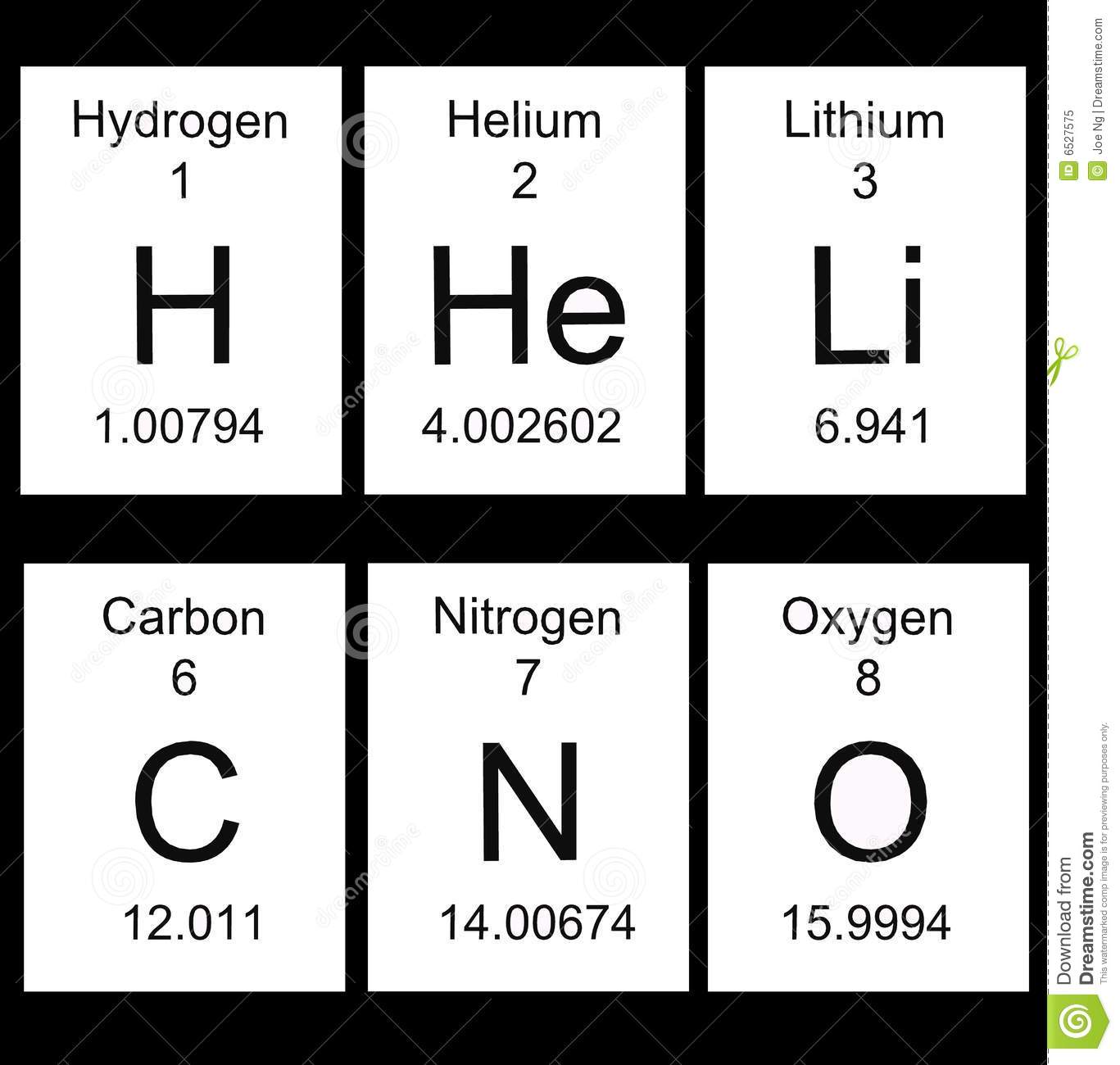
What is the name of this element?
a)
Helium
b)
Hydrogen
c)
Argon
d)
Silver
41.
What element is represented in this Bohr Model? 
a)
Carbon
b)
Hydrogen
c)
Aluminum
d)
Lithium
42.
What does the atomic number tell you?
a)
Number of Protons
b)
Number of Neutrons
c)
Sum of protons and neutrons
43.

Which class of elements are malleable, ductile, shiny when clean and polished, good conductors of heat and electricity, and reacts with acids to form hydrogen gas?

a)

metals

b)

nonmetals

c)

metalloids

d)

ions

44.

What is an atom or bonded group of atoms that has a positive or negative charge?

a)

ion

b)

atom

c)

metal

d)

nonmetal

45.

Where are metalloids located on the Periodic Table?

a)

In the s block.

b)

In the f block.

c)

In the d block.

d)

The elements that touch the staircase except aluminum.

46.

What does the atomic radius increase down a group?

a)

There are more electrons and energy levels.

b)

There are fewer electrons and energy levels.

c)

There are more protons that need more energy levels.

d)

There are more neutrons that need more energy levels.

47.

What element has the largest atomic radius?

a)

oxygen

b)

neon

c)

carbon

d)

sodium

48.

What is the trend for ionization energy?

a)

Across a period (left to right) it increases and down a group it decreases.

b)

Across a period (left to right) it decreases and down a group it increases.

c)

Across a period (left to right) it decreases and down a group it decreases.

d)

Across a period (left to right) it increases and down a group it increases.

49.

Which element has the highest ionization energy?

a)

oxygen

b)

sulfur

c)

silicon

d)

potassium

50.

Which elements have properties in common?

a)

elements in a group

b)

elements in a period

51.

These elements are in a:

a)

group

b)

period

52.

These elements are in a:

a)

group

b)

period

53.

Which elements are stable?

a)

Group 1

b)

Group 8

c)

Group 18

54.

Which elements have 1 valence electron?

a)

period 1

b)

group 1

c)

group 4

55.

which elements have 4 valence electrons?

a)

group 3

b)

group 4

c)

group 14