Wayground logo

Free Printable Worksheets

Font size

S
M
L
XL
Worksheets

NCEA L1 Science Externals

Total questions: 162

Worksheet time: 4hrs 44mins

Name
Class
Date
1.

What is v

a)

very fast

b)

velocity

c)

veracious

d)

time

2.

What is d

a)

duration

b)

distance

c)

drive

d)

delta

3.

What to t

a)

torque

b)

tumeke

c)

travel

d)

time

4.

What is  Δ\Delta  ?

a)

up

b)

down

c)

a change in

d)

during

5.

What is a?

a)

acceleration

b)

accept

c)

average

d)

answer

6.

What is  Δ\Delta  v? 

a)

Change in distance

b)

Change in time

c)

Change in speed

d)

Change in velocity

7.

What is F

a)

Friends

b)

Field

c)

Force

d)

Fire

8.

What is m?

a)

motion

b)

move

c)

weight

d)

mass

9.

What is a?

a)

acceleration

b)

average

c)

answer

d)

speed

10.

What is P?

a)

Power

b)

Pressure

c)

Potential

d)

Push

11.

What is A?

a)

Area

b)

Average

c)

Acceleration

d)

Answer

12.

What is Ep

a)

Energy

b)

Potential energy

c)

Kinetic energy

d)

Epic

13.

What is m?

a)

movement

b)

metres

c)

weight

d)

mass

14.

What is g?

a)

Gravity

b)

Go

c)

Kinetic

d)

Graph

15.

What is h?

a)

height

b)

heavy

c)

hour

d)

hard

16.

What is Ep?

a)

Push

b)

Power

c)

Energy

d)

Potential Energy

17.

What is W?

a)

Walk

b)

Weight

c)

Work

d)

Worry

18.

What is d?

a)

distance

b)

drive

c)

determination

d)

time

19.

What is P?

a)

Pressure

b)

Power

c)

Potential Energy

d)

Push

20.

Which of the following statements is true concerning acids and bases?

a)

acids and bases don't react with each other

b)

acids mixed with bases neutralize each other

c)

acids mixed with bases make stronger bases

d)

acids mixed with bases make stronger acids

21.

True or false: bases are sometimes called alkaline.

a)

True

b)

False

22.

Which is the correct set of acid properties, as described by Boyle:

a)

sour taste, corrosive, change litmus from red to blue

b)

sour taste, corrosive, change litmus from blue to red

c)

sweet taste, slippery, change litmus from blue to red

d)

sour taste, slippery, change litmus from blue to red

23.

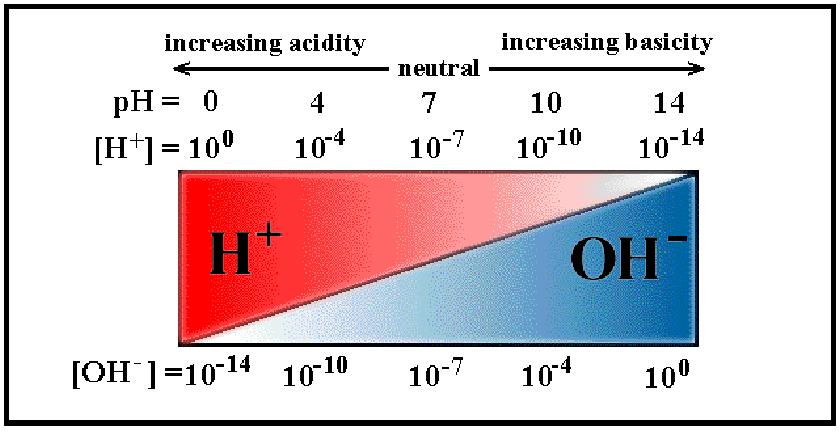
Neutral solutions have a pH of:

a)

0

b)

1

c)

7

d)

14

24.

True or false: a neutral solution has equal amounts of H+ and OH-.

a)

True

b)

False

25.

Which is true?

a)

pH of less than 7 is basic; pH of more than 7 is acidic

b)

pH of less than 7 is acidic; pH of more than 7 is basic

26.

Vinegar, fruit juice, and cola are examples of:

a)

strong acids

b)

strong bases

c)

strong bases

d)

weak acids

27.

HCl is found in household products, including some toilet bowl cleaners. Is HCl an acid or a base?

a)

Acid

b)

Base

c)

Neither (Neutral)

28.

NaOH may be found in drain cleaners and as a component of soaps. Is NaOH an acid or a base?

a)

Acid

b)

Base

c)

Neither (Neutral)

29.

Is laundry detergent an acid or a base?

a)

Acid

b)

Base

c)

Neither (Neutral)

30.
Which has a pH below 7?
a)
Acid
b)
Base
31.
what happens when a solution of  an acid is mixed with a solution of a base in a test tube?a
a)
temperature of the solution increases 
b)
temperature of the solution decreases
c)
temperature remains constant
d)
no reaction
32.
an aqueous soln turns red lithmus blue . excess addition of which of the following would reverse the change
a)
baking powder
b)
lime
c)
ammonium hydroxide solution
d)
HCL
33.
during preparation of HCL gas on a humid day the gas is usually passed through the guardtube containing calcium chloride .The role of calcium chloride is 
a)
absorb the evolved gas
b)
moisten the gas
c)
absorb moisture from the gas
d)
absorb CL ions from the evolved gas
34.

Which reaction is NOT a neutralisation reaction

a)

Metal + acid

b)

Acid + Base

c)

Acid + Metal Carbonate

35.

Acid + Base makes what?

a)

Salt

b)

saltwater

c)

an explosion

d)

Water

36.

Neutralisation reactions must make which two products?

a)

carbonate

b)

salt

c)

pepper

d)

water

37.

Which one of these is a base?

a)

Metal Hydroxide?

b)

Metal Carbonate

c)

Metal Oxide

d)

Alkali Metals

38.

which one of these is an alkali?

a)

metal hydroxide

b)

metal oxide

c)

metal carbonate

d)

Alkali metals

39.

How did you know Hydrogen gas was evolved in your experiment

a)

It turned lime water cloudy

b)

It had a squeaky pop when offered a lit splint

c)

I smelled it

d)

I didn't get any hydrogen gas

40.

which of these general equations are correct?

a)

acid + base makes a salt + water

b)

acid + metal carbonate makes a salt + carbon dioxide + water

c)

acid + metal makes a salt + Hydrogen gas

d)

Acid + metal oxide makes a salt + water

e)

Acid + metal hydroxide makes a salt and water

41.

metal oxides are .....

a)

bases only

b)

bases and alkalis

c)

alkalis only

42.

metal hydroxides are ....

a)

bases only

b)

both bases and alkalis

c)

alkalis only

43.

an alkali is ...

a)

a base that dissolves in alcohol

b)

a metal that dissolves in water

c)

a base that dissolves in water

d)

all bases are alkalis

44.

What number do you get if you neutralise pH 1 - pH 14 ?

a)

pH 9

b)

pH 4

c)

pH 6

d)

pH 7

45.

from what number to what number does alkali on the pH scale ?

a)

1-7

b)

8-14

c)

8-12

d)

8-100

46.

from what number to what number is the pH scale ?

a)

1-14

b)

2-14

c)

7-14

d)

0-14

47.
Which of the following best describes a DNA molecule?
a)
double helix
b)
contains ribose
c)
made of amino acids
d)
contains Uracil
48.
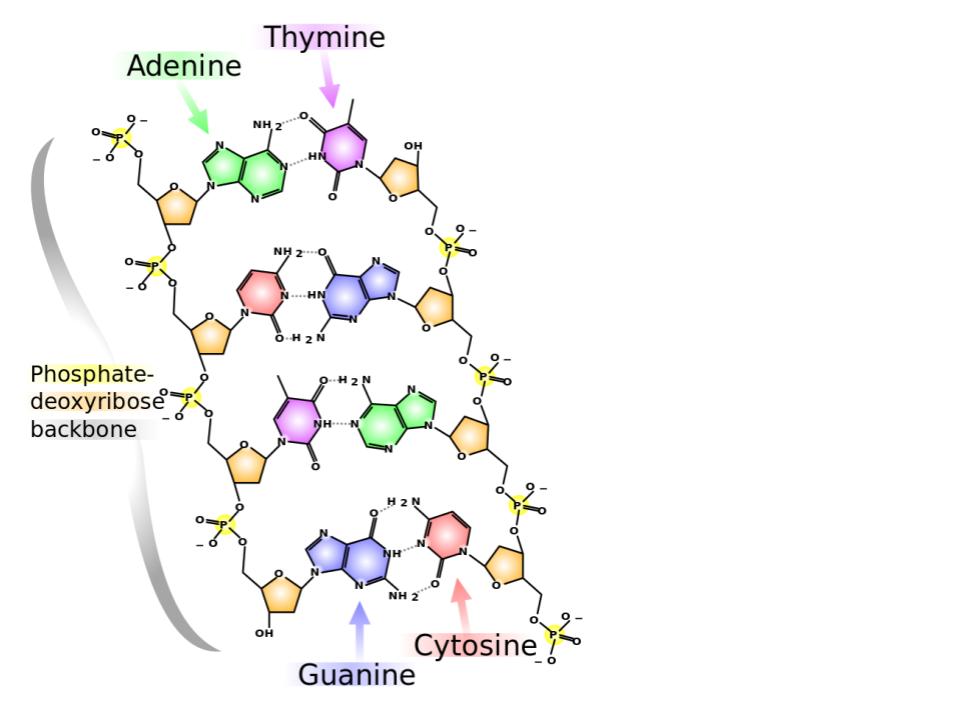
Which shows the correct complementary base pairing for DNA?
a)
C-A, T-G
b)
A-G, C-T
c)
C-G, U-A
d)
T-A, G-C
49.
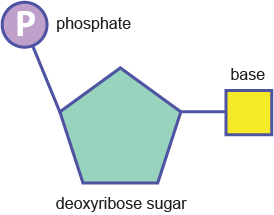
Nucleotides are made up of a sugar, phosphate, and..?
a)
nitrogenous base
b)
nucleic acid
c)
cholesterol
d)
fatty acid
50.
Which organelle is DNA usually found in?
a)
cell membrane
b)
vacuole
c)
ribosome
d)
nucleus
51.
What does DNA stand for?
a)
Deoxyribonucleic acid
b)
Denitrogenous acid
c)
Deribonucleic acid
d)
Diribonucleic acid
52.
DNA polymerase is a(n)
a)
lipid
b)
enzyme
c)
sugar
d)
starch
53.
The two strands of DNA are held together by:
a)
Hydrogen Bonds
b)
Phosphodiester Bonds
c)
Glycolsyl Bonds
d)
Glycosidic Linkages
54.
Why is DNA important?
a)
it is very small and very complicated
b)
it's in everything
c)
it serves as the blueprint for traits of all living things
d)
because we eat it every day for energy
55.
Replicate the following strand of DNA: 
AATCATGGA
a)
AATCATGGA
b)
TTAGTACCT
c)
UUAGUACCU
d)
GGATAUCUA
56.
What is the correct structure of DNA?
a)
A double strand of nucleotides 
b)
A single strand of nucleotides
c)
A double strand of amino acids 
d)
A single strand of amino acids
57.
DNA Replication is the process of turning 1 DNA molecule into...
a)
1 DNA molecule
b)
2 DNA molecules
c)
3 DNA molecules
d)
4 DNA molecule
58.
Which enzyme is responsible for adding nucleotides ("The Builder")?
a)
Topoisomerase
b)
DNA Polymerase
c)
Ligase
d)
Primase
59.
The enzyme that unzips the DNA to prepare for replication ("The Unzipper") 
a)
helicase
b)
replicase
c)
polymerase
d)
synthase
60.
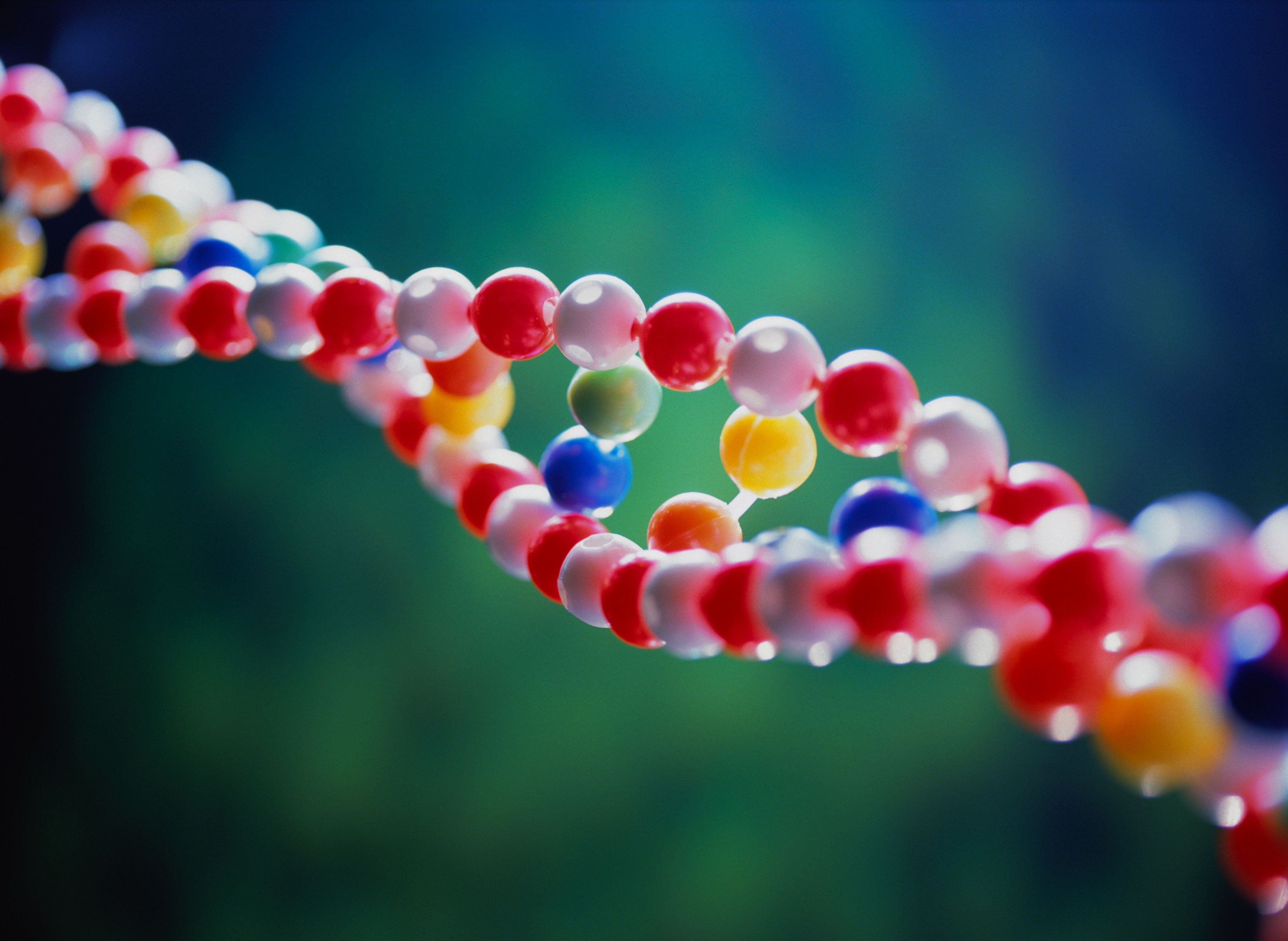
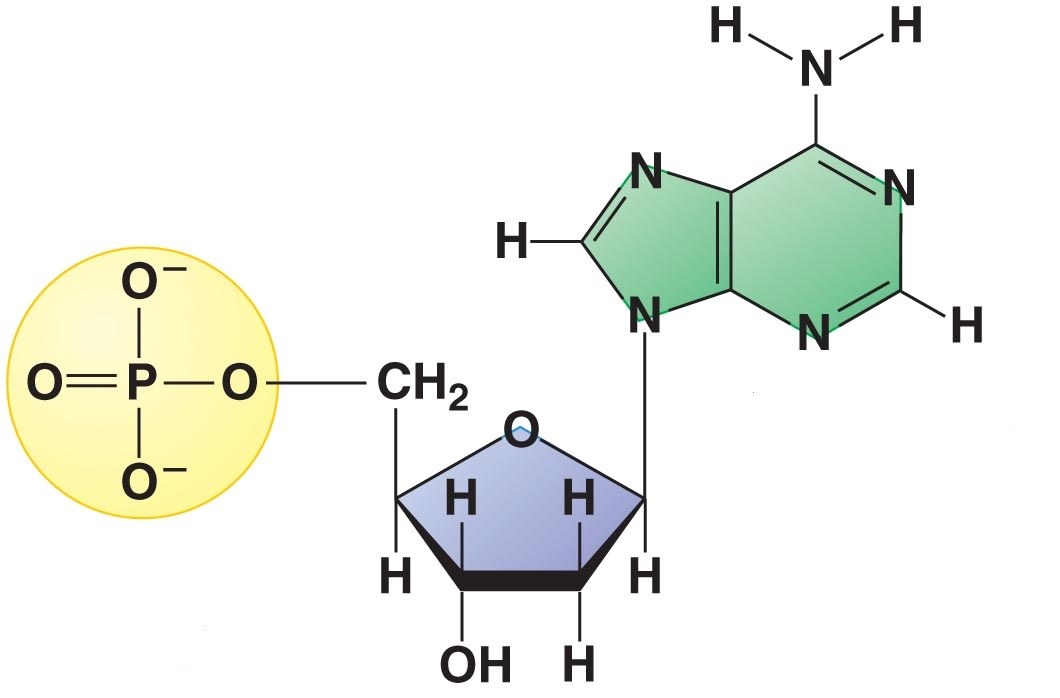
Name this structure
a)
double helix
b)
nucelotide
c)
twisted ladder
d)
hydrogen bond
61.
What determines the code, or information, of a DNA molecule?
a)
the shape (structure) of the nitrogen bases
b)
the order (sequence) of the nitrogen bases
c)
the color of the nitrogen bases
d)
the frequency (number) of nitrogen bases
62.
The sugar in DNA is ?
a)
sucrose
b)
glucose
c)
deoxyribose
d)
fructose
63.
DNA makes a copy of itself in a process called ________________________________?
a)
translation
b)
replication
c)
translation
d)
division
64.
Adenine bonds with ______________.
a)
Guanine
b)
Thymine
c)
Cytosine
d)
Adenine
65.
Guanine bonds with ______________.
a)
Adenine
b)
Guanine
c)
Cytosine
d)
Thymine
66.
order of replication
a)
3, 2, 1, 4
b)
2, 1, 4, 3
c)
2, 3, 1, 4
d)
3, 4, 1, 2
67.

Penguins live in the Antarctic, which of the following is an adaptation that allows the penguin to survive the very cold region?

a)

Swimming under water

b)

Black and White body color

c)

Extra fatty layer for warmth

d)

Little wings

68.

Which of the following describes heredity?

a)

A tiger teaching its young how to hunt

b)

A tree making food by photosynthesis

c)

Bacteria dividing into to make a new bacteria

d)

An animal eating a plant

69.

Due to climatic change the turtles who lay their eggs close to shore will not hatch. Which of the following are true.

a)

Near shore turtles will survive more than far shore turtles

b)

Far shore turtles will survive more than near shore turtles

c)

All turtles will survive about the same

d)

None of the above is true

70.

Fire ants which are not native to Texas will aggressively attack bird's eggs that have a nest on the ground. Which is most likely to happen due to the fire ants arrival to Texas?

a)

Tree nesting bird population will decrease

b)

Tree nesting bird population will increase

c)

Ground nesting bird population will increase

d)

Ground nesting bird population will decrease

71.

Sexual reproduction happens in

a)

plants only

b)

animals only

c)

some plants and animals

d)

only in one celled organisms

72.

___________ reproduction happens when sex cells from both parents join.

a)

Asexual

b)

Sexual

c)

Binary fission

d)

Budding

73.

Inherited traits are controlled by

a)

nucleus

b)

chromosomes

c)

genes

d)

cells

74.

Budding is asexual reproduction because

a)

the genetic material is the same as both parents

b)

the genetic material is the same as one parent

c)

the genetic material is different from both parents

d)

the genetic material is the different than both parents

75.

Vines grow more in the rain forest because

a)

there are more trees in the rain forest

b)

vines need sun and grow up trees to get more sun

c)

vines need support and can't grow on the ground

d)

because vines are plants

76.

The Galapagos Finches have different beaks because

a)

it is an adaptation to the food type available in the bird's habitat

b)

they come from a different species of bird

c)

the beak stretches farther

d)

they use it to fight different birds

77.
Which of these is an inherited trait for humans?
a)
knowing how to read
b)
speaking English
c)
being able to play the violin
d)
having two arms 
78.
Which of these is a learned behavior for a dog?
a)
walking on four legs
b)
rolling over on command
c)
barking
d)
panting 
79.
Which sentence is TRUE?
a)
Acquired traits are passed from parents to offspring
b)
Inherited traits are passed from parents to offspring
c)
Behaviors are never inherited
d)
Behaviors are always inherited 
80.
Knowing how to read a book is an example of
a)
a physical trait
b)
an inherited behavior
c)
a learned behavior 
d)
an inherited trait
81.
A mother dog and her puppy both have curly fur. Which best explains this?
a)
in dogs, curly fur is more common than straight fur
b)
in dogs, curly fur is an acquired trait
c)
the mother dog acquired curly fur and passed on that trait to her puppy
d)
the mother dog inherited curly fur and passed on that trait to her puppy
82.
Which of these is a learned behavior for a human?
a)
sleeping
b)
laughing 
c)
playing violin 
d)
having brown eyes 
83.
Which of the following is a definition of inherited trait?
a)
a characteristic that a living thing gets from its parents
b)
a characteristic that a living thing gets during its lifetime
c)
a behavior that a living thing learns from its parents
d)
a skill that an animal develops after it is born 
84.
In a population of cardinals, all the birds have short beaks. Their short beaks are an example of
a)
a learned behavior 
b)
an inherited trait
c)
an acquired trait
d)
an inherited behavior 
85.
Which of the following is an acquired trait?
a)
blue eyes
b)
a good sense of smell
c)
a chipped tooth
d)
yellow flowers 
86.
Genotype refers to the ...
a)
physical expression of the genes
b)
the possible combination of alleles in a gene
c)
whether an allele is dominant or recessive
d)
how an organism will appear
87.
What is a phenotype
a)
The genetic make up (code)
b)
The physical trait
88.
having two of the same genes for the trait (sometimes called purebred).
a)
homozygous
b)
hetrozygous
c)
protein
d)
chromosome
89.
having two different genes for a trait (sometimes called hybrid).
a)
protein
b)
homozygous
c)
heterozygous
d)
genotype
90.
G = green, g = yellow
The genotype for a yellow plant is...
a)
GG
b)
Gg
c)
gg
d)
all of the choices result in yellow
91.
What type of "square" helps us solve genetic problems?
a)
carpenter square
b)
Mendel square
c)
Punnett square
d)
genetic square
92.
The exact genetic makeup of an organism, such as RR, Tt, PP is its?
a)
phenotype
b)
dominance
c)
genotype
d)
trait
93.
"The Great White Shark was 20 feet in length.  Phenotype or Genotype?
a)
phenotype
b)
genotype
94.
Females-XX; MalesXY.  A couple has 4 girls.  What is the chance the next child will be a boy?
a)
75%
b)
100%
c)
25%
d)
50%
95.
If "T" is the allele for tall and "t" is the allele for short, then Tt would produce?
a)
tall
b)
short
c)
medium
d)
not enough info
96.
A physical characteristic that can be passed from parent to offspring.
a)
behavior
b)
trait
c)
strong muscles
d)
ability to fly a plane.
97.
An offspring will receive how many alleles from each parent to determine a specific trait?
a)
one
b)
two
c)
three
d)
five
98.
Genotype refers to the ...
a)
physical expression of the genes
b)
the possible combination of alleles in a gene
c)
whether an allele is dominant or recessive
d)
how an organism will appear
99.
Which of the following is a phenotype?
a)
BB
b)
Bb
c)
bb
d)
Blue eyes
100.
having two different genes for a trait (sometimes called hybrid).
a)
protein
b)
homozygous
c)
heterozygous
d)
genotype
101.
having two of the same genes for the trait (sometimes called purebred).
a)
homozygous
b)
hetrozygous
c)
protein
d)
chromosome
102.
Two brown eyed parents (Bb) have a baby. What is the chance the baby is blue eyed?
a)
0 %
b)
25%
c)
50%
d)
75%
103.
An allele whose trait only shows up when no dominant allele is present.
a)
hidden allele
b)
dominant allele
c)
recessive allele
d)
present allele
104.
One form of a gene is called_______________
a)
a DNA
b)
a Phenotype
c)
a trait
d)
an allele
105.
Which of the following genotypes is a purebred?
a)
Bb
b)
Gg
c)
bb
d)
Dd
106.
If green is dominant over purple, then what is the genotype for this individual?
a)
Purple
b)
Green
c)
GG
d)
gg
107.
Brown fur color is dominant over black fur color. Which of the following is the actual genotype of ALL of the offspring in the next generation of this cross for fur color?
AA x aa
a)
AA
b)
Aa
c)
aa
d)
brown fur
108.
Which is the correct phenotype for this organism?
a)
BB
b)
blue
c)
green
d)
bb
109.
Tt is-
a)
homozygous dominant
b)
homozygous recessive
c)
heterozygous
d)
none of these
110.

What is  Δ\Delta  v? 

a)

Change in distance

b)

Change in time

c)

Change in speed

d)

Change in velocity

111.

Negative acceleration

a)

speeding up

b)

constant speed

c)

deceleration

d)

at rest / stopped

112.

In a distance-time graph, the gradient of a sloping straight line shows

a)

object has stopped

b)

object is at constant speed

c)

object is accelerating

d)

object is returning to start position

113.

How do you know that A to B had a faster constant velocity than C to D?

a)

It was frist

b)

The AB line was steeper

c)

The CD line was curved

d)

A to B and C to D had the same velocity.

114.

Calculate the average speed for the whole journey

a)

8.3 ms-1

b)

83 ms-1

c)

500 ms-1

d)

30 ms-1

115.
Two boys X and Y each have the same total weight and are standing on soft ground. 
Which boy is more likely to sink into the soft ground and why? 
a)
A
b)
B
c)
C
d)
D
116.

What does that shape tell you about the objects motion?

a)

Constant velocity

b)

Stationary / not moving

c)

Decelerating

d)

Accelerating

117.
Two cars have different masses and different speeds as shown. 

How do the momentum and the kinetic energy of the two cars compare? 
a)
A
b)
B
c)
C
d)
D
118.
One side of a cube stands on the ground. 
The cube weighs 200 N and its sides are 0.10 m long. How much pressure does the cube exert on the ground?
a)
2.0Pa
b)
20Pa 
c)
2000Pa 
d)
20 000Pa 
119.

What advantage do organisms that reproduce sexually have or organisms that reproduce asexually?

a)

Organisms that reproduce sexually can reproduce faster

b)

Organisms that reproduce sexually don't need a mate

c)

Organisms that reproduce sexually have a better chance of survival if the environment changes

d)

Organisms that reproduce sexually are exactly like their parents.

120.
To adjust to a changing environment
a)
Mutation
b)
Adapt
121.
Which term refers to the process by which individuals that are better suited to the environment survive and reproduce therefore passing down their genes to their offspring? 
a)
Evolution 
b)
Variation 
c)
Adaptation
d)
Natural Selection 
122.
The white feathers of a snowy owl allow it to blend in with its environment during the winter months (snow). This is an example of ________________
a)
Species
b)
Environmental Change
c)
Adaptation
d)
Variation
123.
Genetic differences between organisms of the same species
a)
Variation
b)
Adaptation
c)
Behavior
d)
Environment
124.
The struggle for existence against other members of an organisms species is
a)
Competition
b)
Natural Selection
c)
gene flow
d)
genetic drift
125.
Remains of ancient organisms are called
a)
Extinctions
b)
Fossils
c)
Mutations
d)
Variations
126.
What is another name for natural selection?
a)
survival of the smartest
b)
survival of the fastest
c)
survival of the biggest
d)
survival of the fittest
127.
What is a change in an organism that allows for it to survive in its environment?
a)
homologous
b)
vestigial
c)
variation
d)
adaptation
128.
What is an organism that has similar characteristics and can reproduce?
a)
species
b)
organism
c)
embryology
d)
vestigial 
129.
What is this an example of?
a)
diversity of species
b)
variation
c)
vestigial structures
d)
DNA studies
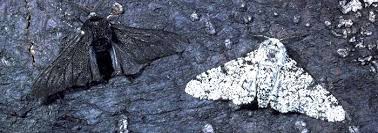
130.
Predict which moth would increase in population
a)
light 
b)
dark
131.
Which term refers to the process by which individuals that are better suited to the environment survive and reproduce therefore passing down their genes to their offspring? 
a)
Evolution 
b)
Variation 
c)
Adaptation
d)
Natural Selection 
132.
Inside the nucleus, genes are found on which of the following?
a)
Chromosomes
b)
Chloroplasts
c)
Mitochondria
d)
Vacuole
133.
Which type of reproduction will produce offspring that are genetically identical to the parent organism?
a)
sexual reproduction
b)
asexual reproduction
c)
both
d)
neither
134.
Which of the following is a disadvantage of asexual reproduction?
a)
The organisms are smaller
b)
Increase in physical variation
c)
genetic similarity and less likely to survive environmental change
d)
takes a relatively short amount of time
135.
Group of organisms all of the same species, living in the same place at the same time.
a)
gene pool
b)
population
c)
species
d)
evolution
136.

NaCl is a

a)

Acid

b)

Base

c)

Salt

d)

Water

137.

A neutralization reaction will always produce

a)

Water & salt

b)

Water

c)

Salt

d)

Water and carbon

138.

In a neutral solution the litmus paper color remain same

a)

True

b)

False

139.

Neutralization reaction of sodium hydroxide(NaOH) and Hydrochloric acid is


NaOH + HCL ----------- NaCl + H2O

a)

True

b)

False

140.
If there is excess hydrogen ions, the solution will be...
a)
acidic
b)
basic
141.
If there is excess hydroxide ions, the solution will be...
a)
acidic
b)
basic
142.
Zn(OH)2 is an example of a...
a)
acid
b)
base
c)
salt
143.
Identify the salt in the following equation:
Zn(OH)2 + HNO3   ---> H2O  + Zn(NO3)2
a)
Zn(OH)2
b)
HNO3
c)
H2O
d)
Zn(NO3)2
144.
NaCl is a ...
a)
acid
b)
base
c)
salt
d)
water
145.
In a ____ reaction, an acid and a base produce a salt and a water. 
a)
concentrated
b)
decomposition
c)
dilute
d)
neutralization
146.
What are the products to a neutralization reaction?
a)
H2 + Ionic Salt
b)
H2O + Ionic Salt
c)
H3O+ + Ionic Salt
d)
OH- + Ionic Salt
147.

Complete the following reaction:

HCl + Mg(OH)2 -->

a)

MgCl2 + H2O

b)

Mg +H2O

c)

MgCl2 + H2

d)

MgCl2 + H2O + CO2

148.
pH less than 7.
a)
Acids
b)
Bases
c)
All
149.

What is considered to be in the middle of the pH scale

a)

acidic

b)

neutral

c)

basic

d)

indicator

150.

Complete the following reaction:

HCl + Mg(OH)2 -->

a)

MgCl2 + H2O

b)

Mg +H2O

c)

MgCl2 + H2

d)

MgCl2 + H2O + CO2

151.
Complete the following reaction:
Hydrochloric acid + magnesium hydroxide --> 
a)
Magnesium chloride + water 
b)
Magnesium + water
c)
Magnesium chloride + hydrogen gas 
d)
Magnesium chloride + water + carbon dioxide 
152.

metal oxides are .....

a)

bases only

b)

bases and alkalis

c)

alkalis only

153.

metal hydroxides are ....

a)

bases only

b)

both bases and alkalis

c)

alkalis only

154.

an alkali is ...

a)

a base that dissolves in alcohol

b)

a metal that dissolves in water

c)

a base that dissolves in water

d)

all bases are alkalis

155.

Which of these general equations are correct?

a)

acid + base → salt + water (+ sometimes carbon dioxide)

b)

acid + metal carbonate → salt + carbon dioxide + water

c)

acid + metal → salt + hydrogen gas

d)

acid + metal oxide → salt + water

e)

acid + metal hydroxide → salt and water

156.

.............................. + sodium hydroxide --> sodium chloride + water

a)

Nitric acid

b)

Sulphuric acid

c)

Hydrochloric acid

d)

Ethanoic acid

157.

Complete the word equation below:

Acid + alkali --> ............... + water

a)

water

b)

salt

c)

gold

d)

metal

158.

Sulphuric acid + kalium hydroxide --> ........................ + water

a)

kalium sulphate

b)

kalium sulphurate

c)

potassium nitrate

d)

magnesium hydroxide

159.
If a solution is basic which ion will be more present?
a)
H+
b)
K+
c)
OH-
d)
H-
160.
What are the products of the following reaction?
H2SO4  +  KOH  -->  
a)
HK  +  HSO4
b)
H2O  +  KSO4
c)
H2O  +  K2SO4
d)
H2  +  K2SO4
161.
Which one of the following equations is correct for the reaction between hydrochloric acid (HCl) and sodium hydroxide (NaOH)?
a)
HCl + NaOH ➞ H₂O + NaOCl
b)
HCl + NaOH ➞ HCl + H₂O
c)
HCl + NaOH ➞ NaCl + H₂O
d)
HCl + NaOH ➞ NaH + HOCl
162.

sulfuric acid + magnesium -->

a)

magnesium sulfate + hydrogen

b)

magnesium sulfate + water

c)

magnesium sulfate + water + carbon dioxide

d)

magnesium sulfate + water + ammonia