wayground logo

Free Printable Worksheets

NEW

Font size

S
M
L
XL
Worksheets

Periodic Table

Total questions: 48

Worksheet time: 16mins
Name
Class
Date
1.

The vertical (up and down) columns in the Periodic Table are called

a)

groups

b)

towers

c)

periods

d)

atomic numbers

2.
The Modern Periodic Table of Elements is arranged by
a)
atomic mass
b)
atomic number
c)
valence electrons
d)
number of isotopes
3.
The atomic number tells you what?  READ THE ANSWERS CAREFULLY
a)
only the number of electrons
b)
 only the number of protons
c)
only the number of neutrons
d)
the number of both electrons and protons in an atom.
4.
What does the atomic mass tell you? 
a)
Basically,the number of electrons and protons
b)
The number of neutrons
c)
Basically, the number of protons and neutrons
d)
The number of protons.
5.
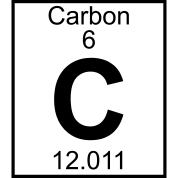
What does the 6 represent?
a)
atomic mass
b)
atomic number
c)
element name
d)
chemical symbol 
6.
What does 12.011 represent?
a)
atomic mass
b)
atomic number
c)
element name
d)
chemical symbol 
7.
What does the C represent?
a)
atomic mass
b)
atomic number
c)
element name
d)
chemical symbol 
8.
These are found on the Periodic Table.
a)
Compounds
b)
Elements
c)
Mixtures
9.

The horizontal (side to side) rows in the Periodic Table are called

a)

groups

b)

families

c)

periods

d)

atomic numbers

10.
___________ is the only metal that is a liquid at room temperature.
a)
Platinum
b)
Water
c)
Tin
d)
Mercury
11.
An element's identity is determined by the number of
a)
electrons.
b)
protons.
c)
neutrons.
d)
valence.
12.
All matter is made of .....
a)
energy 
b)
atoms 
c)
air
d)
chemistry
13.
Most of the mass of an atom is found it its _____.
a)
electron cloud
b)
nucleus
c)
atomic number
d)
empty space
14.
Each is an example of matter except _____.
a)
a cloud
b)
air
c)
a dust particle
d)
a beam of light
15.
An element is made up of only one kind of _____.
a)
isotope
b)
plastic
c)
atom
d)
metal
16.
Rutherford's experiment showed that most of an atom is made up of _____.
a)
a nucleus
b)
an electron cloud
c)
empty space
d)
alpha particles
17.
What subatomic particles are located in the electron cloud?
a)
quarks
b)
protons
c)
electrons
d)
neutrons
18.
Which subatomic particle has a negative charge in the atom?
a)
proton
b)
neutron
c)
electron
d)
quark
19.
Which is an electron?
a)
A
b)
B
c)
C
20.
Which is a proton?
a)
A
b)
B
c)
C
21.
Which is a neutron?
a)
A
b)
B
c)
C
22.
Which item on this element square is the chemical symbol?
a)
Copper
b)
29
c)
Cu
d)
63.546
23.
What is the number of protons that the element in this image contain?
a)
14
b)
7
c)
15
d)
18
24.
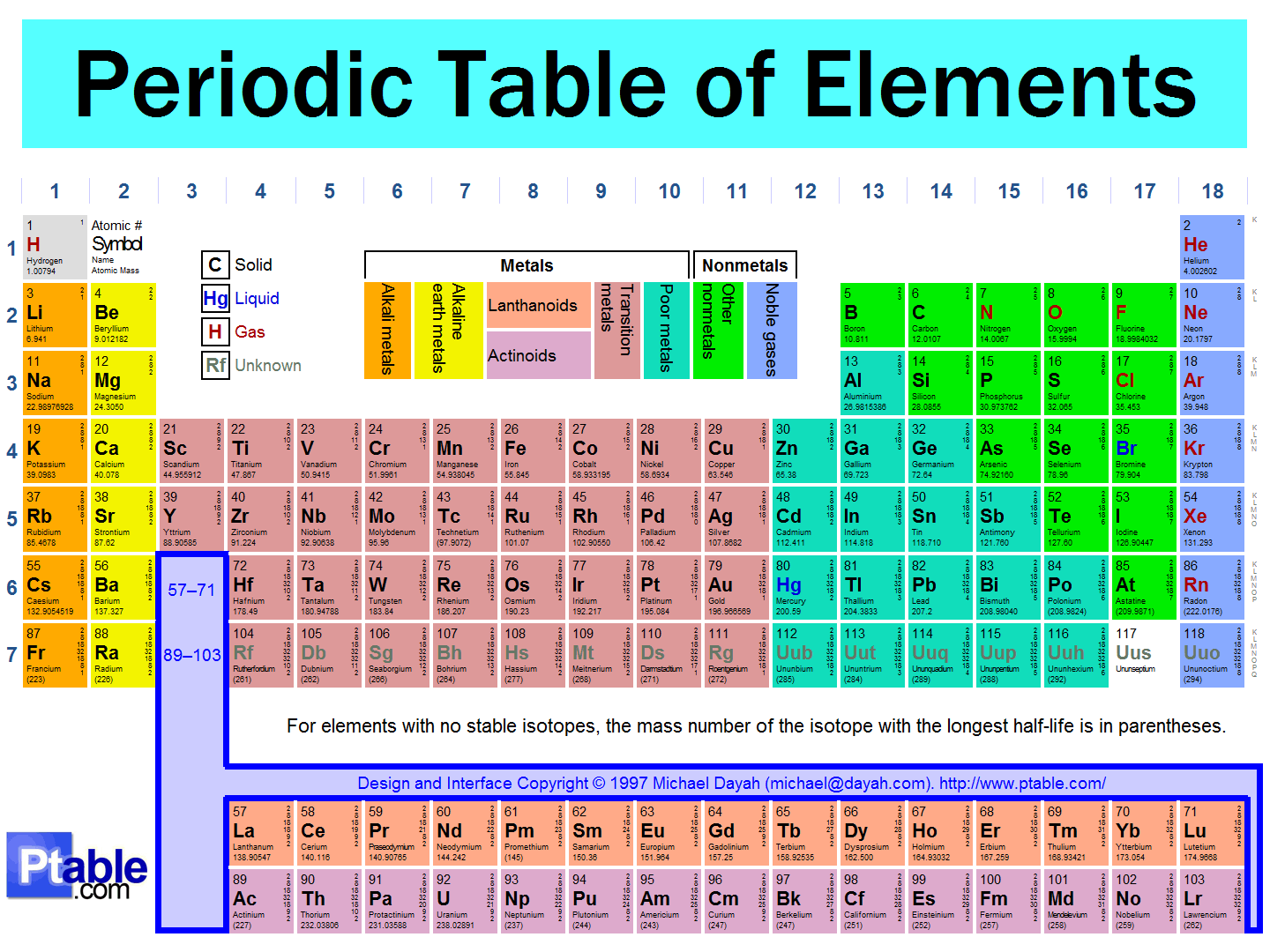
What is the atomic mass of "F"
a)
9
b)
18
c)
17
d)
19
25.
An atom of the element with atomic number 6 always has _____.
a)
six protons in its nucleus
b)
an atomic mass of six
c)
more than six neutrons
d)
six electron clouds
26.
What are subatomic particles? 
a)
the nucleus 
b)
electron cloud
c)
positive charge
d)
electrons, protons, and neutrons
27.

what is the biggest group on the table

a)

metals

b)

nonmetals

c)

metaloids

d)

halogens

28.

how many rows are on the table

a)

4

b)

5

c)

6

d)

7

29.

how many groups/families are on the table

a)

15

b)

16

c)

17

d)

18

30.

what is the name of group number 1

a)

halogens

b)

noble gases

c)

alkali

d)

alkaline earth

31.

period

a)

Elements that occur in vertical columns on the periodic table.

b)

A horizontal row of elements in the periodic table

c)

Found in group two of the periodic table; highly reactive

d)

A subatomic particle that has a negative charge

32.

neutron

a)

A subatomic particle that has a positive charge and that is found in the nucleus of an atom

b)

not able to conduct heat or electricity, little to no metallic luster

c)

A subatomic particle that has a negative charge

d)

A small particle in the nucleus of the atom, with no electrical charge

33.

A subatomic particle that has a positive charge and that is found in the nucleus of an atom

a)

Proton

b)

elecrtron

c)

groups

d)

neutrons

34.

A subatomic particle that has a negative charge

a)

nobles gases

b)

protons

c)

electrons

d)

neutrons

35.

not able to conduct heat or electricity, little to no metallic luster

a)

Non-metals

b)

noble gases

c)

atomic mass

d)

Neutron

36.

Elements that occur in vertical columns on the periodic table.

a)

Neutron

b)

metalloids (semimetals)

c)

groups

d)

Proton

37.

good thermal conductors, shiny, electric conductors, higher density and melting points than group

a)

alkali metals (group 1)

b)

Transition Metals (Groups 3-12)

c)

Non-metals

d)

metalloids (semimetals)

38.

metalloids (semimetals)

a)

Elements that occur in vertical columns on the periodic table.

b)

an element that has both metallic and nonmetallic properties

c)

not able to conduct heat or electricity, little to no metallic luster

d)

found in group one of the periodic table; highly reactive

39.
Two elements chemically bonded form
a)
element
b)
compound
c)
mixture
d)
solutions
40.
Elements that are arranged in __________ have the most similar physical and chemical properties to each other.
a)
periods
b)
groups
41.
Elements which are shiny, conduct electricity and heat are called
a)
metal
b)
nonmetal
c)
metalloid
d)
nonexistent
42.
The atoms along the staircase are called 
a)
metals
b)
nonmetals
c)
metalloids
d)
noble gases
43.
How many neutrons are in a Gold atom?
a)
79
b)
196
c)
118
d)
275
44.
What does the 1.00794 stand for?
a)
Hydrogen
b)
atomic number
c)
atomic mass
d)
atomic explosion
45.
A ___________ is an arrangement of elements in columns
a)
columns
b)
rows
c)
periodic table
d)
electron shell
46.
The simplest substance is..?
a)
Carbon
b)
An element
c)
Water
d)
A simple compound 
47.
A neutron has a charge of
a)
+2
b)
No charge
c)
-1
d)
+1
48.

an atom or group of atoms that has gained or lost one or more electrons and is now either positively or negatively charged

a)

isotope

b)

ion

c)

orbital

d)

nucleus