wayground logo

Free Printable Worksheets

Font size

S
M
L
XL
Worksheets

CH2: The Chemistry of Life CH 2.1-2.2

Total questions: 36

Worksheet time: 1hrs 1mins

Name
Class
Date
1.
What is the smallest unit of matter that cannot be broken down by chemical means?
a)
Atom
b)
Element
c)
Ion
d)
Isotope
2.
What is the strongest of all the bonding types?
a)
Covalent
b)
Ionic
c)
Hydrogen
d)
Metallic
3.
What are the four elements that all life is made up of?
a)
Hydrogen, Oxygen, Nitrogen and Carbon
b)
Helium, Oxygen, Neon and Carbon
c)
Hydrogen, Titanium, Carbon, Nitrogen
d)
Oxygen, Chlorine, Iron, Nitrogen
4.
This biomolecule is used to make energy for our cells. The simplest is glucose, a monosaccharide.
a)
Carbohydrates
b)
Lipids
c)
Nucleic Acids
d)
Proteins
5.
These biomolecules are fats, oils, waxes and steroids. They are also a result if we eat too many carbohydrates and why we don't melt in water.
a)
Carbohydrates
b)
Lipids
c)
Nucleic Acids
d)
Enzymes
6.

Electrons orbit the nucleus of an atom that is composed of these two other particles:

a)

Protons

b)

Neutrons

c)

Positrons

d)

Photons

7.

The simplest pure substances, containing only one type of atom, are referred to as:

a)

Elements

b)

Compounds

c)

Mixtures

d)

Haloclines

8.

Covalent bonds occur between two atoms when the following occurs:

a)

One or more pairs of electrons are shared between atoms

b)

One or more electrons are transferred between atoms

c)

One or more protons become negatively charged

d)

A nuclear fission reaction occurs

9.

An ionic bond forms when

a)

One or more electrons are transferred

b)

One or more electrons are shared

c)

A proton gains a negative charge

d)

The atoms becomes exothermic and undergoes thermolysis

10.

Water has these two physical properties that allow it to interact with other substances.

a)

Cohesion

b)

Adhesion

c)

Non-polar

d)

Ionically charged

11.

Carbon is called the element of life because

a)

It can bond with itself in different ways

b)

It forms four covalent bonds

c)

It is found in all living things

d)

All of these answers are correct

12.

Water's ability to dissolve many substances arises from:

a)

Water molecules being polar

b)

Water molecules being non-polar

c)

Water's high heat capacity

d)

Water being hydrophobic in nature
13.
What 3 subatomic particles make up atoms?
a)
Isotopes, protons, covalent bonds
b)
quarks, quirks, compounds
c)
protons, neutrons, isotopes
d)
protons, neutrons, electrons
14.
The isotopes of an element all have the same number of:
a)
electrons
b)
neutrons
c)
protons
15.
A chemical ________ is a pure substance made entirely of 1 type of atom.
a)
element
b)
compound
c)
mixture
d)
blend
16.
The nucleus of an atom usually contains:
a)
protons and neutrons
b)
electrons
c)
electrons and protons
d)
isotopes
17.
The main types of chemical bonds are:
a)
ionic and subliminal
b)
covalent and hydrogenated
c)
ionic and covalent
d)
ionic and flourite
18.
A slight attraction between oppositely charged regions of nearby molecules are called:
a)
Van Der Waals forces
b)
ionic bonds
c)
covalent bonds
d)
hydrogen bonds
19.
The electrons involved in chemical bonds are called ___________ electrons.
a)
valence
b)
ionic
c)
Van Der Waals
d)
covalent
20.
What atoms make up all carbohydrates?
a)
Carbon, Sulfur, Hydrogen
b)
Carbon, Oxygen, Phosphorus
c)
Carbon, Oxygen, Nitrogen
d)
Carbon, Oxygen, Hydrogen
21.
How many sugar units make up monosaccharides?
a)
one
b)
two
c)
three
d)
zero
22.
How many sugar units make up disaccharides?
a)
one
b)
two
c)
three
d)
zero
23.
How many sugar units make up polysaccharides?
a)
one
b)
two
c)
more than two
d)
zero
24.
Which do all carbohydrates do for us?
a)
provide energy
b)
make muscle
c)
make brains
d)
make hair
25.
What molecule is this
a)
sucrose
b)
protein
c)
glucose
d)
cellulose
26.
What type of carbohydrate is this?
a)
polysaccharide
b)
disaccharide
c)
monosaccharide
d)
it isn't a carbohydrate
27.
Which of these are examples of carbohydrates?
a)
DNA, RNA
b)
Fats, hormones
c)
amino acids
d)
starches, glucose, chitin
28.
How do lipids function for cells?
a)
store information
b)
store energy
c)
breakdown wastes
d)
join with substrates
29.
Which of the following molecules make up the basic structure of a cell membrane?
a)
waxes
b)
steroids
c)
fatty acids
d)
phospholipids
30.
What are different examples of lipids?
a)
monosaccahrides, disaccharides, starch, cellulose
b)
dipetide, polypeptide, amino acids
c)
DNA, RNA, ATP
d)
triglycerides, waxes, steroids, phospholipds
31.
This molecule is a
a)
carbohydrate
b)
nucleic acid
c)
protein
d)
lipid
32.
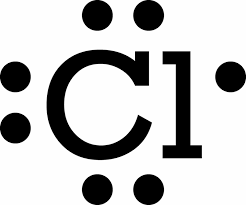
How many valence electrons in this structure?
a)
6
b)
5
c)
4
d)
7
33.
When electrons are shared unequally a/an ___________ bond is formed 
a)
ionic 
b)
hydrogen
c)
polar covalent 
34.
Which type of bond has an equal sharing of electrons?
a)
Polar Covalent 
b)
Non Polar Covalent
c)
Ionic
d)
Metallic
35.
A bond that forms when electrons are transferred is called a/an
a)
ionic bond
b)
covalent bond
c)
hydrogen bond
36.

A hydrogen bond is a type of bonding in which a partial positive Hydrogen is attracted to a partial negative

a)

Oxygen, Fluorine, Nitrogen

b)

Oxygen, Chlorine, Sodium

c)

Only Oxygen

d)

Only Nitrogen