wayground logo

Free Printable Worksheets

Font size

S
M
L
XL
Worksheets

Benchmark #2 Review Fall Honors Biology

Total questions: 251

Worksheet time: 5hrs 16mins

Name
Class
Date
1.
Prokaryotes used to be classified as a single kingdom. New technology allowed them to be split into...
a)
Protista and Prokaryota
b)
Protista and Bacteria
c)
Eubacteria and Archaea
d)
Archaea and Eukarya
2.
Movement of materials down the concentration gradient through a protein channel is an example of 
a)
facilitated diffusion
b)
active transport
c)
respiration
d)
osmosis 
3.
Which list includes only structures that would be found in a prokaryotic cell? 
a)
Cell wall, plasma membrane, mitochondria
b)
Central vacuole, cell wall, lysosome
c)
Cell wall, plasma membrane, cytoplasm
d)
Plasma membrane, nucleus, mitochondria
4.
Which of the following statements vest describes the cell cycle? 
a)
Interphase is the reproductive phase, mitosis is the growth phase
b)
Interphase is the growth phase, mitosis is the reproductive phase
c)
Cytokinesis is the growth phase, S-phase is the reproductive phase
d)
Cytokinesis is the reproductive phase, S-phase is the growth phase
5.
What is the function of this molecule in organisms? 
a)
Storage of genetic information
b)
Structure and support
c)
Short term energy storage
d)
Long term energy storage
6.
Which best describes the function of enzymes?
a)
to speed up chemical reactions in a cell
b)
to produce cellular energy
c)
to produce proteins
d)
to speed up cell division
7.
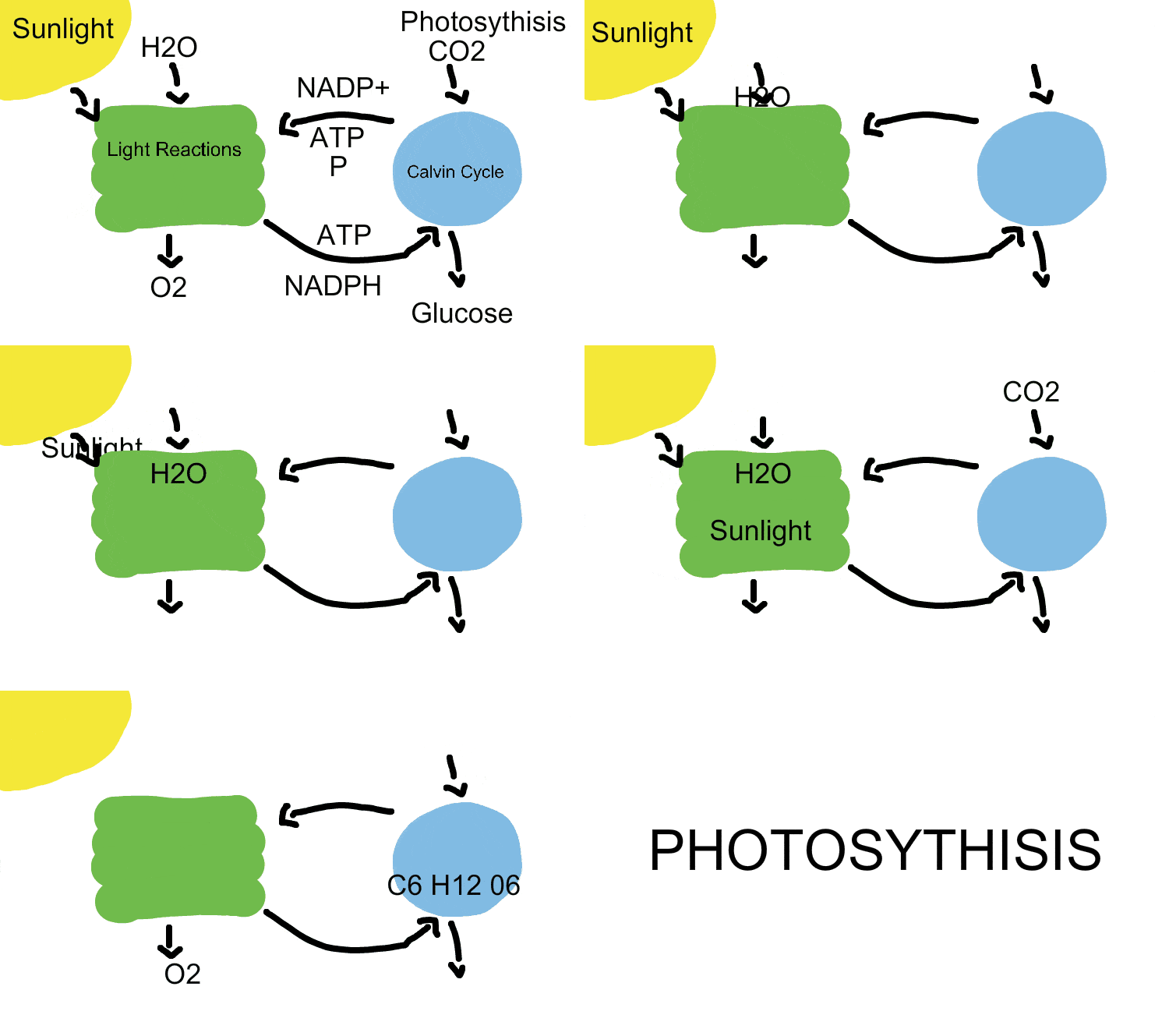
What are the products of photosynthesis? 
a)
glucose and oxygen
b)
glucose and carbon dioxide
c)
glucose and water
d)
water, carbon dioxide, and energy
8.
Which process uses ATP to move materials across the plasma membrane against the concentration gradient?
a)
passive transport
b)
active transport 
c)
facilitated diffusion
d)
osmosis
9.
Which process of the carbon cycle removes carbon dioxide from the atmosphere? 
a)
photosynthesis
b)
cellular respiration
c)
combustion of fossil fuels 
d)
death and decomposing organisms 
10.
Which of these statements is NOT part of the cell theory?
a)
all cells emerge from pre-existing cells
b)
all organisms are composed of one or more cells
c)
every cell has a nucleus that contains genetic material
d)
cells are the basic units of structure and function in living things
11.
A somatic cell of a ferret contains 40 chromosomes. How many will it have after mitosis?
a)
20
b)
40
c)
80
d)
depends if it undergoes mitosis or meiosis
12.
A student explains that plant cells have cell walls but not cell membranes, while animal cells have cell membranes but not cell walls. What is wrong with this statement?
a)
plant cells do not have cell walls
b)
animal cells do not have cell membranes
c)
both plant and animal cells have cell walls
d)
both plant and animal cells have cell membranes
13.
Which of these lists organizes the phases of mitosis in order from first to last?
a)
prophase, anaphase, telophase, metaphase
b)
metaphase, prophase, telophase, anaphase
c)
prophase, metaphase, anaphase, telophase
d)
metaphase, anaphase, prophase, telophase
14.
Which of these lists organizes the parts of a complex organism from most basic to most complex?
a)
cell - organ - tissue
b)
tissue - cell - organ
c)
cell - tissue - organ
d)
organ - tissue - cell
15.
How do enzymes increase the speed of chemical reactions?
a)
reducing the number of products   
b)
reducing the activation energy
c)
increasing the temperature of the cell
d)
increasing the concentration of reactants 
16.
Which of these is NOT true?
a)
Enzymes can denature (change shape) when the temperature gets too high.
b)
Enzymes can only be used once in a chemical reaction. 
c)
Extreme pH can denature enzymes.
d)
Enzymes speed up chemical reactions. 
17.
What molecule is this
a)
sucrose
b)
protein
c)
glucose
d)
cellulose
18.
This picture represents which type of cellular transport?
a)
passive transport
b)
endocytosis
c)
exocytosis
d)
osmosis
19.
The cell below is in a _________ solution.
a)
Hypotonic
b)
Hypertonic
c)
Isotonic
20.
What two products does a plant make during photosynthesis?
a)
Water and Glucose
b)
Oxygen and Glucose
c)
Oxygen and Water
d)
CO2 and Glucose
21.
The diagram below represents a cell. Which organelle is the site where amino acids are synthesized into proteins? 
a)
1
b)
2
c)
3
d)
4
22.

Which of the following produces diverse offspring?

a)

both asexual and sexual reproduction

b)

asexual reproduction

c)

sexual reproduction

d)

vegetation

23.
Which of the following organelles is responsible for allowing things in and out of the cell?
a)
cell membrane
b)
golgi apparatus
c)
lysosomes
d)
mitochondria
24.
Which of the following organelles is responsible for producing energy for the cell?
a)
cell membrane
b)
golgi apparatus
c)
lysosomes
d)
mitochondria
25.
Enzymes are made up of:
a)
carbohydrates
b)
proteins
c)
DNA
d)
lipids
26.
Enzymes are able to be denatured by all of the following EXCEPT:
a)
heat
b)
pH
c)
salt concentration
d)
light
27.
_______ is to the ability of the body or a cell to seek and maintain a condition of equilibrium or stability within its internal environment when dealing with external changes.
a)
cell theory
b)
homeostasis
c)
evolution
d)
growth
28.
Which of the following macromolecules is made up of carbon, hydrogen, and oxygen?
a)
carbohydrates
b)
proteins
c)
lipids
d)
both carbohydrates and lipids
29.

What are the three main parts of a nucleotide?

a)

carbon, hydrogen, and oxygen

b)

phosphate, sugar, and nitrogen base

c)

phosphate, sulfate, and nitrate

d)

adenine, thymine, and uracil

30.
This structure is large and centrally located in plant cells.  It stores water and when full helps the plant maintain its structure. 
a)
Large Central Vacuole
b)
Vacuole
c)
Endoplasmic Reticulum
d)
Golgi Apparatus
31.
What is an important component of ATP that is needed to transfer and release energy directly?
a)
nitrogen
b)
uracil
c)
zinc
d)
phosphate
32.
Which of the following process removes CO2 from the atmosphere?
a)
protein synthesis
b)
transcription
c)
photosynthesis
d)
cellular respiration
33.
The teacher asks Ella to look at slides of onion cells. The slides show the stages of the cell cycle. The slides are labeled and in the correct order, starting with interphase. In which slide would Ella first see chromosomes? 
a)
anaphase
b)
prophase
c)
telophase
d)
cytokinesis
34.
What is the functions of lipids?
a)
Quick source of energy
b)
Builds muscles, skin, enzymes
c)
Stores genetic information
d)
Stores energy, insulation, protection
35.
What is structure C?
a)
Substrate
b)
Active site
c)
Enzyme
d)
Products
36.
The graph shows how enzymes affect reactions in cells. Which statement best summarizes the information shown in the graph?
a)
Enzymes increase the energy of the reactants.
b)
Enzymes decrease the energy level of the products.
c)
Enzyme decrease the activation energy of the reaction.
d)
Enzymes reverse the direction of the reaction.
37.
Which is true of prokaryotic and eukaryotic cells?
a)
Prokaryotic cells are larger than eukaryotic cells.
b)
Eukaryotic cells do not have nuclei, and prokaryotic cells do have nuclei.
c)
Prokaryotic cells lack membrane-bound organelles, and eukaryotic cells contain membrane-bound organelles.
d)
Eukaryotic cells are simpler than prokaryotic cells.
38.
Which is true about active transport?
a)
It requires energy
b)
it does not require energy
c)
It moves substances down the concentration gradient
d)
it moves material from high to low concentration
39.
Which of the following is the correct equation for PHOTOSYNTHESIS?
a)
6CO2 + 6H2O --> 6O+ C6H12O6
b)
6CO+ C6H12O6 + 6H2O --> O
c)
6O2 + 6H2O --> 6CO+ C6H12O6
d)
C6H12O6 + 6O2 ---> 6H2O + 6CO2 
40.
Which process and type of resulting cells are represented?
a)
mitosis, gametes
b)
mitosis, body cells
c)
meiosis, gametes
d)
meiosis, body cells
41.
Which is Metaphase?
a)
A
b)
E
c)
C
d)
F
42.
Which statement best compares aerobic and anaerobic respiration?
a)
Less ATP is generated during anaerobic respiration than during aerobic respiration
b)
More water is generated during anaerobic respiration than during aerobic respiration
c)
More oxygen is generated during anaerobic respiration than during aerobic respiration
d)
Less lactic acid is generated during anaerobic respiration than during aerobic respiration.
43.
During which phase of the cell cycle is the cell growing and preparing for cellular division?
a)
cytokinesis
b)
prophase
c)
anaphase
d)
interphase
44.
Which list of organelles could be found in both eukaryotic and prokaryotic cells?
a)
mitochondria, cytoplasm, nucleus
b)
ribosomes, cytoplasm, mitochondria
c)
cytoplasm, plasma membrane, ribosomes
d)
cytoplasm, chloroplasts, plasma membrane
45.
Which is responsible for muscle pain felt after repeatedly lifting weights?
a)
a buildup of ethanol due to aerobic respiration
b)
a buildup of ethanol due to anaerobic respiration
c)
a buildup of lactic acid due to aerobic respiration
d)
a buildup of lactic acid due to anaerobic respiration
46.
Which organelle would be found in large quantities in muscle cells?
a)
centriole
b)
vacuole
c)
mitochindrion
d)
ribosome
47.
Which is a result of mitosis
a)
4 sex cells
b)
4 haploid cells
c)
2 diploid daughter cells
d)
2 haploid daughter cells
48.
Which best explains how the structure of enzymes is related to their function?
a)
Enzyme structures release the energy in their substrates.
b)
Enzyme structures react with their substrates.
c)
Enzymes’ unique active site allows it to fit with only one substrate molecule.
d)
Enzymes interact with their substrates like welders building a steel skyscraper.
49.
Which will most likely occur when a few of the mitochondria within a cell are slightly damaged?
a)
The mitochondria will produce less adenosine diphosphate (ADP)
b)
The mitochondria will produce less adenosine triphosphate (ATP).
c)
The mitochondria will produce more adenosine diphosphate (ADP).
d)
The mitochondria will produce more adenosine triphosphate (ATP)
50.
In which case will a cell most likely shrink? 
a)
When placed in an isotonic solution
b)
When placed in a solution with a low pH
c)
When placed in a solution of distilled water
d)
When placed in a high salt solution. 
51.
A muscle cell absorbs the water it needs without using energy. Which process does the cell use to take in water?
a)
Osmosis
b)
Diffusion
c)
exocytosis
d)
active transport. 
52.
Which distinguishes mitosis from meiosis? 
a)
Mitosis has one DNA replication, while meiosis has two DNA replications.
b)
In mitosis, one nuclear division occurs. In meiosis, two nuclear divisions occur.
c)
In mitosis, homologous chromosomes pair up. In meiosis, there is no pairing of chromosomes.
d)
Mitosis results in the production of gametes, while meiosis results in the production of body cells.
53.
Which best signals that equilibrium has been reached across a selectively permeable membrane?
a)
The movement of water across the membrane stops.
b)
The movement of water across the membrane is balanced.
c)
The membrane will begin to allow all substances to pass through.
d)
The movement of dissolved particles across the membrane begins.
54.
Based on physical features, this cell is most likely a(n) ____________ cell.
a)
eukaryotic plant
b)
eukaryotic animal
c)
prokaryotic fungus
d)
prokaryotic bacterial
55.
The graph illustrates the activity level of three common digestive enzymes, across a range of pH values. Which enzyme is likely to be active in the acidic environment of the stomach?
a)
pepsin
b)
trypsin
c)
amylase
d)
none of the above
56.
At the end of meiosis II, how does the DNA in each of the four new cells compare to the DNA from the original cell?
a)
half as much and genetically the same as the original
b)
twice as much and genetically the same as the original
c)
half as much and genetically different from the original
d)
twice as much and genetically different from the original
57.
During the winter time, the total number of hours of sunlight decreases. What effect would this have on the process of photosynthesis?
a)
The rate of photosynthesis would decrease and less glucose would be produced.
b)
The rate of photosynthesis would increase and more glucose would be produced.
c)
The amount of available sunlight does not influence the rate of photosynthesis.
d)
It would have no effect on plants having needles instead of leaves, that stay green all year long
58.
While working in the lab with samples of food, Rachel saw this rod-shaped organism under the microscope. With further tests, Rachel noticed that the organism was single-celled and did not contain a nucleus. Which of these did Rachel conclude was the best way to classify this organism?
a)
bacteria
b)
fungus
c)
protist
d)
virus
59.
Proteins are composed of chains of _____________ which are joined together with peptide bonds.
a)
fatty acids
b)
amino acids
c)
nucleic acids
d)
monosaccharides
60.
If stranded on a deserted island with no freshwater, it is not advisable to drink sea water. Why not?
a)
The salty snacks cause an ionic imbalance that triggers a nervous response.
b)
The salt in the body creates a hypertonic solution around cells, which causes water to diffuse out of cells and make them crenate.
c)
The salt in the body creates a hypotonic solution around cells, which causes water to diffuse into cells and make them cytolyse.
d)
The salt in the body creates an isotonic solution around cells, which causes water to diffuse into and out of cells which makes them unstable.
61.
Which molecule holds the most energy?
a)
ATP
b)
ADP
62.
What are the two inputs of cellular respiration?
a)
Carbon & Oxygen
b)
Carbon Dioxide and Water
c)
Oxygen and Glucose
d)
Glucose and Carbon
63.
Which of the following elements is not found in carbohydrates?
a)
Carbon
b)
Nitrogen
c)
Oxygen
d)
Hydrogen
64.
Which is true about a water molecule?
a)
The oxygen has a partially positive charge
b)
The hydrogen has a partially negative charge
c)
The oxygen has a partially negative charge
d)
The carbon is neutral
65.
The monomer of this polymer is a nucleotide
a)
Lipid
b)
Protein
c)
Carbohydrate
d)
Nucleic Acid
66.
What is happening to the energy in this reaction?
a)
Energy is absorbed
b)
Energy is released
67.

What is the result when a single cell reproduces by mitosis?

a)

two cells with genetic material identical to the parent cell

b)

two cells with half the genetic material of the parent cell

c)

four cells with half the genetic material of the parent cell

d)

four cells with genetic material identical to the parent cell

68.

How are sexual reproduction and asexual reproduction different?

a)

Sexual reproduction produces offspring identical to the parents, but asexual reproduction produces offspring with traits from both parents.

b)

Asexual reproduction produces offspring identical to the parents, but sexual reproduction produces offspring with traits from both parents.

c)

Sexual reproduction only occurs in multicellular organisms, but asexual reproduction only occurs in unicellular organisms.

d)

Asexual reproduction only occurs in multicellular organisms, but sexual reproduction only occurs in unicellular organisms.

69.

Which statement best compares aerobic and anaerobic respiration?

a)

Less ATP is generated during anaerobic respiration than during aerobic respiration.

b)

More water is generated during anaerobic respiration than during aerobic respiration.

c)

More oxygen is generated during anaerobic respiration than during aerobic respiration.

d)

Less lactic acid is generated during anaerobic respiration than during aerobic respiration.

70.
a)

A

b)

B

c)

C

d)

D

71.
a)

A

b)

B

c)

C

d)

D

72.
Maintaining a stable internal environment.
a)
Homeostasis
b)
Metabolism
c)
Stimulus
d)
DNA
73.
___________ are the main source of energy for cells.
a)
Proteins
b)
Lipids
c)
Nucleic acids
d)
Carbohydrates
74.
Chlorophyll absorbs a higher percentage of _____ and _______ light.
a)
purple and green
b)
red and blue
c)
black and orange
d)
yellow and green
75.
What pigment absorbs sunlight for photosynthesis?
a)
chloroplast
b)
thylakoid
c)
grana
d)
chlorophyll
76.
In which  organelle does photosynthesis occur?
a)
mitochondria
b)
stomata
c)
xylem
d)
chloroplast
77.
How can photosynthesis be related to cellular respiration?
a)
What's produced (made) by one is needed (the reactants) for the other
b)
They both produce the same products
c)
They both have the same reactants (need the same things)
d)
These 2 processes have nothing in common
78.
Which statement best describes the roles of photosynthesis and respiration in the carbon cycle?
a)
Respiration and photosynthesis both add carbon to the atmosphere.
b)
Respiration and photosynthesis both remove carbon from the atmosphere
c)
Respiration adds carbon to the atmosphere, while photosynthesis removes carbon from the
  atmosphere.
d)
Photosynthesis adds carbon to the atmosphere, while respiration removes carbon from the
  atmosphere.
79.
This process releases chemical energy from sugars and other carbon-based molecules to make ATP when oxygen is present.
a)
photosynthesis
b)
light-independent reaction
c)
cellular respiration
d)
light-dependent reaction
80.
Glucose is broken down during which process
a)
Krebs cycle
b)
Calvin cycle
c)
Glycolysis
d)
Photosynthesis
81.
What is the net gain of ATP during glycolysis?
a)
1
b)
2
c)
3
d)
4
82.
Which is not a waste product of cellular respiration?
a)
Water
b)
Heat
c)
Carbon Dioxide
d)
Oxygen
83.
Up to how many ATP molecules are made from the breakdown of one glucose molecule?
a)
2
b)
24
c)
38
d)
45
84.
Anaerobic respiration.....
a)
doesn't require CO2
b)
requires CO2
c)
doesn't require oxygen
d)
requires oxygen
85.
Which organelle is DNA usually found in?
a)
cell membrane
b)
vacuole
c)
chloroplast
d)
nucleus
86.
In what phase of the cell cycle does DNA replication take place?
a)
G1
b)
S
c)
G2
d)
M
87.
The division of the nucleus is known as:
a)
Synthesis
b)
Mitosis
c)
G1
d)
G2
88.
Before cells can divide, what must be copied?
a)
mitochondria
b)
cytoplasm
c)
DNA
d)
Cell Wall
89.
In the G1 stage of the cell cycle, the cell
a)
Grows
b)
Matures
c)
Carries on normal activities
d)
All of the above
90.
A human cell has 46 chromosomes before mitotic division.  How many chromosomes will the daughter cells after mitosis.
a)
12
b)
23
c)
46
d)
92
91.
Cells of organism must replicate for ?
a)
growth
b)
repair of damaged cells
c)
replacement of dying cells.
d)
All of the above
92.
Uncontrollable cell growth is known as _____
a)
obesity
b)
cancer
c)
diabetes
d)
hepatitis
93.
The maintenance of stable internal conditions even though environmental conditions are constantly changing is called
a)
metabolism
b)
pseudoscience
c)
development
d)
homeostasis
94.
Pairs of autosomes that contain the same genetic information are called
a)
heterozygous pairs
b)
homologous pairs
c)
diploid
d)
haploid
95.
Which type of cell division results in 4 haploid daughter cells?
a)
mitosis
b)
meiosis
96.
Females have ____ as sex chromosomes.
a)
Eggs
b)
Sperm
c)
XX
d)
XY
97.
Males have ____ as sex cells (or gametes).
a)
XY
b)
XX
c)
sperm
d)
eggs
98.
These contain digestive enzymes and are responsible for getting rid of waste and attacking foreign invaders.
a)
mitochondria
b)
lysosomes
c)
vacuoles
d)
Rough ER
99.
The process that some yeast can use to produce energy when oxygen levels are low is called
a)
cellular respiration
b)
lactic acid fermentation
c)
ethyl alcohol fermentation
d)
photosynthesis
100.
Weak bonds that occur between two oppositely charged poles of molecules are called
a)
hydrogen bonds
b)
covalent bonds
c)
ionic bonds
d)
James Bonds
101.
Which is NOT one of the four biological molecules?
a)
Water
b)
Proteins
c)
Lipids
d)
Nucleic acids
102.

If water were to move through one of the large proteins in this cell membrane, that would be considered which form of transport?

a)

Osmosis

b)

Facilitated diffusion

103.

When water moves across the semipermeable membrane, it is considered:

a)

Osmosis

b)

Active transport

104.

What solution must you put a plant cell into for it to look like the picture on the left? (extra water)

a)

Hypertonic

b)

Hypotonic

105.
The longest phase of the cell cycle 
a)
prophase
b)
interphase
c)
metaphase
d)
mitosis
106.
Identify the phase of mitosis
a)
prophase
b)
metaphase
c)
anaphase
d)
telophase
107.
The point on the chromosome where the two chromatids are held together is the
a)
centromere
b)
centriole
c)
chromosome
d)
chromatid
108.
What is this phase of mitosis?
a)
prophase
b)
metaphase
c)
anaphase
d)
telophase
109.
Put the stages of mitosis in the correct order.
a)
prophase - metaphase - anaphase - telophase
b)
metaphase - anaphase - prophase - telophase
c)
anaphase - prophase - telophase - metaphase
d)
telophase - metaphase - prophase - anaphase
110.
Chromosomes are made up of two identical sister _____________.
a)
chloroplasts
b)
nuclei
c)
chromatids 
d)
gens
111.
How does cytokinesis differ in plant and animal cells?
a)
Cytokinesis only takes place in animal cells.
b)
Cytokinesis only takes place in plant cells.
c)
Plant cells form a cell plate, animal cells form a cleavage furrow.
d)
Animal cells form a cell plate, plant cells form a cleavage furrow.
112.
What is the result of mitosis?
a)
1 cell
b)
2 genetically identical cells
c)
2 genetically different cells
d)
4 genetically identical cells
113.

During which stage of the cell cycle does the cell membrane pinch the cell into two?

a)

Cytokinesis

b)

Anaphase

c)

Cell cycle

d)

Interphase

114.
Which of the following describes the purpose of the mitosis cell cycle?
a)
To make more of the same cells.
b)
For growth and repair.
c)
To prevent the cell from becoming too large.
d)
All of the above.
115.
We are the threads that pull the sister chromatids apart during anaphase
a)
poles
b)
centriole
c)
spindle
d)
centromere
116.
What is the name of the structure labeled X?
a)
Centriole
b)
Centrosome
c)
Chromatid
d)
Chromosome 
117.
the uncontrolled division of cells that results in malignant growth 
a)
tissues
b)
cancer
c)
mitosis
d)
anaphase
118.
What phase is represented by letter C?
a)
Anaphase
b)
Metaphase
c)
Prophase
d)
Telophase
119.
What phase is represented by letter D?
a)
Anaphase
b)
Metaphase
c)
Prophase
d)
Telophase
120.

The formation of a cell plate is a

characteristic of

a)

cytokinesis in plant cells

b)

cytokinesis in animal cells

c)

both A and B

d)

neither A nor B

121.
Name the phase:
a)
Prophase
b)
Metaphase
c)
Anaphase
d)
Telophase
122.
About 90% of the cell cycle is spent in this phase.
a)
interphase
b)
metaphase
c)
cytokinesis
d)
telophase
123.
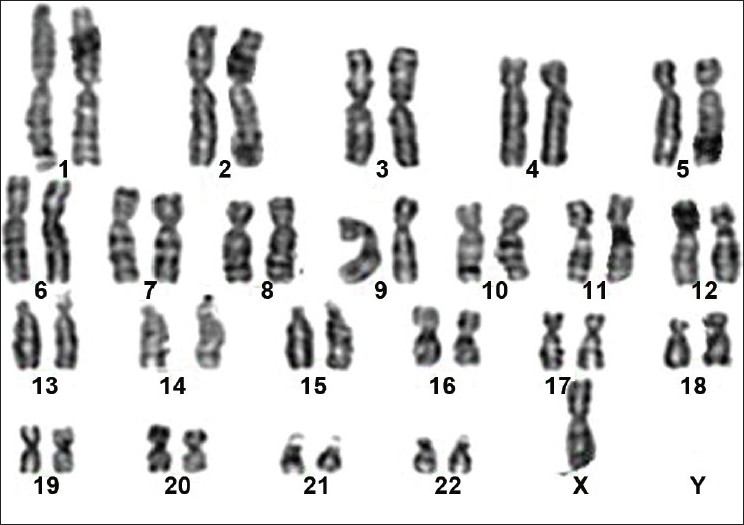
a)
This karyotype shows Trisomy 21
b)
This karyotype has no abnormality
c)
This karyotype is missing a sex chromosome (monosomy x)
d)
This karyotype is from a gamete
124.

Many glucose bonded together makes starch (Amylose), which is a...

a)

Polysaccharide

b)

Monosaccharide

c)

Disaccharide

d)

Bisaccharide

125.

The quick energy that your body uses for simple tasks is...

a)

carbohydrates

b)

lipids

c)

proteins

d)

nucleic acids

126.

The slow burning energy storage in your body is...

a)

lipids

b)

proteins

c)

carbohydrates

d)

nucleic acids

127.

In the process of dehydration synthesis, a molecule of _____________ is created when monomers bond together.

a)

water

b)

glucose

c)

sucrose

d)

fructose

128.
A molecule that does NOT share electrons evenly between atoms, and results in poles on either side of the molecule has formed a(n)
a)
ionic bond
b)
polar covalent bond
c)
nonpolar covalent bond
129.
Identical copies of chromosomes that are joined together at the centromere are called
a)
homologous pairs
b)
sister chromatin
c)
sister histones
d)
sister chromatids
130.
Body cells are
a)
diploid (2n)
b)
haploid (1n)
131.
Water easily sticks to other molecules of water through hydrogen bonds.
a)
True
b)
False
132.

_____________ cells contain 23 chromosomes in humans and _____________ cells contain 46 chromosomes.

a)

gamete, somatic

b)

somatic, gamete

c)

mitosis, meiosis

d)

nondisjunction, normal

133.

meiosis results in

a)

four genetically different gametes

b)

two genetically different gametes

c)

four genetically identical somatic cells

d)

two genetically identical somatic cells

134.

What process is pictured here?

a)

crossing over

b)

separation of sister chromatid (anaphase II)

135.

How can you tell if a cell is in meiosis I vs meiosis II?

a)

homologous chromosomes only exist in meiosis I

b)

homologous chromosomes only exist in meiosis II

136.

When does this process occur?

a)

during all phases of mitosis

b)

prophase I of meiosis

c)

prophase II of meiosis

d)

telophase I or meiosis

137.

Which phase of meiosis is pictured?

a)

anaphase I

b)

anaphase II

c)

metaphase I

d)

metaphase II

138.

If a chimpanzee has 48 chromosomes in its somatic cells. How many chromosomes would you expect to find in its gametes?

a)

23

b)

24

c)

48

d)

96

139.

When does a cell first become haploid?

a)

at the end of meiosis I

b)

at the end of meiosis II

c)

cells don't become haploid during meiosis at all...they do after mitosis though

140.

meiosis results in four, _______________ cells and mitosis results in four, _________________ cells

a)

genetically different, genetically identical

b)

genetically identical, genetically different

c)

genetically identical, genetically identical

d)

genetically different, genetically different

141.

somatic cells have ______ SET(S) of chromosomes and gametes have ______ SET(S) of chromosomes

a)

one, two

b)

two, one

c)

three, six

d)

four, two

142.

______ produces cells with identical DNA (to the original cell)

a)

meiosis

b)

mitosis

c)

both mitosis and meiosis

d)

neither mitosis nor meiosis

143.
Which is an example of a prokaryotic cell?
a)
chloroplast
b)
bacterium
c)
fungus
d)
muscle cell
144.
Chemical reactions change substances into different substances by
a)
reaching chemical equilibrium
b)
breaking and forming bonds
c)
changing the substance's properties
d)
maintaining constant energy
145.
What phrase best describes the process shown?
a)
osmosis
b)
facilitated diffusion
c)
the formation of a transport protein
d)
the formation of a receptor-ligand complex
146.
Water enters the cell when the solution surrounding the cell is
a)
concentrated
b)
hypertonic
c)
hypotonic
d)
isotonic
147.
Which of the following phrases best describes active transport?
a)
moves substances against concentration gradient
b)
does not use chemical energy
c)
forms a vesicle around a large particle 
d)
relies on diffusion of materials
148.
Which phrase best describes the process of facilitated diffusion?
a)
moves molecules against a concentration gradient
b)
requires ATP
c)
moves only nonpolar molecules
d)
requires no energy from the cell
149.
Which sentence best describes exocytosis?
a)
A vesicle fuses to a lysosome and its contents are destroyed
b)
A vesicle fuses to the cell membrane and its contents enter the cell
c)
A vesicle fuses to the cell membrane and its contents leave the cell.
d)
A vesicle fuses to the nuclear envelope and its contents enter the nucleus.   
150.
Which of the following reactions provides the chemical energy for most cell functions?
a)
ATP - P -> ADP
b)
ATP + P -> ADP
c)
ADP - P -> ATP
d)
ADP + P -> ATP
151.
Which of the following is the site of the photosystems in the light-dependent reactions of photosynthesis?
a)
stroma
b)
thylakoid memebrane
c)
ATP synthase
d)
mitochondrial membrane
152.
The aerobic stages of cellular respiration take place in the
a)
cell membrane
b)
mitochondria
c)
cytoplasm
d)
grana
153.
Which process is best represented by the chemical equation C6H12O6 + 6O2 -> 6CO2 + 6H2O?
a)
cellular respiration
b)
photosynthesis
c)
glycolysis
d)
fermentation
154.
An electron transport chain is part of
a)
Krebs Cycle only
b)
cellular respiration
c)
both photosynthesis and cellular resrespiration
d)
both glycolysis and Calvin cycle
155.
Which process allows glycolysis to continue in the absence of oxygen?
a)
chemosynthesis
b)
photosystem I
c)
cellular respiration
d)
fermentation
156.
The bacteria Kingdom where you can find bacteria from extreme environments is called
a)
Archaebacteria
b)
Eubacteria
c)
Viruses
d)
Cyanobacteria
157.

The maximum size of a cell is limited by

a)

its need for enough surface area for exchange with its environment

b)

the number of organelles that can be packed inside

c)

the amount of flexibility it needs to be able to move

d)

the amount of food it needs to survive

158.
Using this image, what organelle is C?
a)
Cell Wall
b)
Mitochondria
c)
Large Cell Vacuole
d)
Chloroplast
159.
What are two types of passive transport?
a)
endo and exocytosis 
b)
cookies and milk
c)
active and passive 
d)
Osmosis and diffusion
160.
Special proteins help move particles, but NO energy is needed. This is..
a)
facilitated diffusion
b)
exocytosis
c)
active transport
d)
equilibrium
161.
Osmosis is the movement of _____ across a membrane.
a)
food
b)
energy
c)
oxygen
d)
water
162.
Most of the cell membrane is made of...
a)
Lipids
b)
Carbs
c)
Proteins
d)
Nucleic acids
163.
How many layers is the lipid bilayer?
a)
1
b)
2
c)
3
d)
4
164.
Which organelles are like custodians in that they remove waste, and break down and recycle macromolecules? 
a)
ribosomes
b)
golgi apparatus
c)
chloroplasts
d)
lysosomes
165.

This causes on end of the molecule to be negative, while the other is positive.

a)

hydrogen bond

b)

moleculer bond

c)

negative

d)

polarity

166.

What make up a polymer?

a)

miopolymer

b)

monomers

c)

biopolymer

d)

triomer

167.
I am a protein packaging and shipping machine! Who am I?
a)
vacuole
b)
ribosome
c)
endoplasmic reticulum
d)
golgi apparatus
168.
This organelle takes food and turns it into ENERGY for plant and animal cells.
a)
Chloroplast
b)
Mitochondria
c)
Lysosome
d)
Ribosome
169.
A rigid layer that lies outside the cell's  membrane is...
a)
Cytoskeleton
b)
Cilia
c)
Cell Wall
d)
Flagella
170.
Bacteria are ________________
a)
Eukaryotes
b)
Prokaryotes
171.
______________ produces the most ATP.
a)
photosnthesis
b)
aerobic respiration
c)
anaerobic respiration
d)
glycolysis
172.
In photosynthesis ...
a)
chemical energy is changed to light energy
b)
light energy is changed to chemical energy
c)
sunlight is converted to ATP
d)
Glucose is used to make ATP
173.
Which of the following answers links a biomolecule with one of its proper functions?
a)
Lipids - Store genetic information
b)
Carbohydrates - short term energy storage
c)
Nucleic Acids - Catalyze reactions
d)
Proteins - long term energy storage
174.
The amount of energy required to start a chemical reaction
a)
Activation Energy
b)
Energy in bonds
c)
Active site
d)
Amino Acids
175.
Which biomolecule contains fats, oils, and waxes?
a)
Proteins
b)
Nucleic Acid
c)
Lipids
d)
Carbohydrate
176.
What does it mean that a cell membrane is, "selectively or semi-permeable?"
a)
It allows all substances in
b)
It allows some substances in but not others
c)
It allows nothing in
177.
In passive transport, material moves from
a)
high to low concentration
b)
low to high concentration
c)
inside to outside of the cell
d)
outside to inside of the cell
178.
Which type of cell?
a)
Prokaryote
b)
Eukaryote
179.
Prokaryotic does not have…….
a)
membrane bound organelles 
b)
cell membrane 
c)
DNA or RNA 
d)
life
180.
What happens when enzymes are heated to a high temperature?
a)
The enzymes die.
b)
The shapes of the enzyme are altered or denatured
c)
The enzymes' amino acid sequence changes.
d)
The enzymes remain the same
181.
Letter D...
a)
active site
b)
enzyme
c)
substrate
d)
products
182.
Letter B...
a)
active site
b)
enzyme
c)
substrate
d)
products
183.
Letter C...
a)
active site
b)
enzymes
c)
substrate
d)
products
184.
Which of the following conclusions can be drawn from this graph?
a)
The optimum pH of the enzyme is 6.6.
b)
The optimum pH of the enzyme is 5.8
c)
The enzyme’s activity increases as pH increases 5.0 to 9.0
d)
The enzyme’s activity is greater around pH of 8.0 .
185.

Tobacco contains chemicals known as carcinogens. What do these chemicals do?

a)

cause cancer

b)

make tobacco more addictive

c)

make tobacco safer than street drugs

d)

help relieve stress when using tobacco

186.

Mr. McNiece wanted to see how different types of music affected students' pulse/heart rates. She played different types of music: heavy metal, rap, R&B, alternative, pop, country, and classical music.


Identify the independent variable.


{UNIT ONE: BIOLOGY BASICS}

a)

The end result was that classical music resulted in the highest pulse rate.

b)

none of these

c)

measure of pulse rate

d)

different types of music

187.

Which of the following is the correct equation for PHOTOSYNTHESIS?


{UNIT THREE: ENERGY FLOW}

a)

CO2 + light + H2O --> O2 + Sugar

b)

CO2 + sugar + H2O --> O2 + light

c)

O2 + light + H2O --> CO2 + Sugar

d)

CO2 + O2 + H2O --> Light+ Sugar

188.

The diffusion of WATER across a semi-permeable membrane is ____________.


{UNIT TWO: CELLS}

a)

osmosis

b)

diffusion

c)

endocytosis

d)

exocytosis

189.

Name the phase of mitosis.


{UNIT TWO: CELLS}

a)

Anaphase

b)

Telophase

c)

Metaphase

d)

Prophase

190.

What phase of meiosis is represented?


{UNIT TWO: CELLS}

a)

metaphase 1

b)

metaphase 2

c)

anaphase 1

d)

anaphase 2

191.

A cell has a higher concentration of molecules inside the cell than outside the cell. The cell wants to move molecules from the outside to the inside. What transport would be required for this?

a)

Osmosis

b)

Diffusion

c)

Facilitated diffusion

d)

Active transport

192.

You are looking at a cell under a microscope. You spot a nucleus, organelles, and a cell wall. This cell most likely is

a)

Prokaryote cell

b)

Bacterial cell

c)

Eukaryotic cell

d)

None of the above

193.

The cell on the left is considered a _______ cell and the one on the right is considered a _________ cell.

a)

animal, bacteria

b)

bacteria, prokaryote

c)

prokaryote, eukaryote

d)

plant, animal

194.

When a cell is placed in an isotonic solution water will flow

a)

into the cell

b)

outside of the cell

c)

at equal rates

d)

water will not flow

195.

Which process occurs when molecules move from LOW TO HIGH concentration?

a)

Passive Transport

b)

Active Transport

c)

Osmosis

d)

Diffusion

196.

Which type of reproduction results in the most variety in offspring?

a)

Asexual Reproduction

b)

Cloning

c)

Mitosis

d)

Sexual Reproduction

197.

Which type of cell division is responsible for the production of gametes?

a)

Mitosis

b)

Meiosis

c)

Cloning

d)

Asexual reproduction

198.

Which type of reproduction is responsible for the production of body cells (brain cells, muscle cells, skin cells, etc.)

a)

Meiosis

b)

Asexual Reproduction

c)

Homeostasis

d)

Sexual reproduction

199.
Which are enzymes?
a)
simple carbohydrates
b)
proteins that speed up chemical reactions
c)
lipids that make up the cell membrane
d)
a building block of DNA
200.
What disorder results when human body cells lose the ability to respond to signals that control cell growth?
a)
cellulitis
b)
diabetes
c)
hemophilia
d)
cancer
201.
Which structure if found in a cell would provide the best evidence that the cell is eukaryotic?
a)
Chromosomes
b)
Cell Wall
c)
Internal Membranes
d)
Carbohydrates
202.
The cell below is in a _________ solution.
a)
Hypotonic
b)
Hypertonic
c)
Isotonic
d)
None
203.
What are the building blocks of proteins?
a)
amino acid
b)
fatty acid
c)
nucleotide
d)
lipid
204.
Enzymes are
a)
nucleic acids
b)
proteins
c)
lipids
d)
carbohydrates
205.
In the S stage of interphase_______________
a)
the cell grows
b)
the nucleus divides
c)
the cell membrane divides
d)
the DNA is replicated
206.
Uncontrollable cell growth is known as _____
a)
obesity
b)
cancer
c)
diabetes
d)
hepatitis
207.
Before cells can divide, what must be copied?
a)
mitochondria
b)
cytoplasm
c)
DNA
d)
Cell Wall
208.
a)
Prophase
b)
Interphase
c)
Anaphase
d)
Telophase
209.
a)
Anaphase
b)
Cytokinesis
c)
Telophase
d)
Metaphase
210.
a)
Cytokinesis
b)
Interphase
c)
Anaphase
d)
Metaphase
211.
a)
Interphase
b)
Anaphase
c)
Telophase
d)
Prophase
212.
What causes genetic variation in meiosis?
a)
chromosomes lining up
b)
crossing over of chromosomes
c)
separation of chromosomes
d)
chromosomes pulling apart
213.
What gas does the light independent reaction release?
a)
Air
b)
Carbon dioxide
c)
Carbon monoxide
d)
Oxygen
214.
When water is used to break down particles
a)
photosynthesis
b)
hydrolysis
c)
calvin cycle
d)
light independent cycle
215.
All chemical reactions that occur in an organism
a)
metabolism
b)
cellular repiration
c)
photosynthesis
d)
Calvin Cycle
216.

In order for a covalent bond to be considered polar the electrons must

a)

be shared unequally (which results in partial positive and negative charges)

b)

be shared equally (which does not result in partial positive and negative charges)

c)

be transferred completely

d)

not form bonds at all

217.

Bonds that form BETWEEN water molecules as a result of the partial positive and negative charges are called

a)

covalent bonds

b)

hydrogen bonds

c)

sulfur bonds

d)

peptide bonds

218.

Which of the following is an incorrect pairing of monomer to polymer?

a)

glucose, glycogen

b)

amino acid, protein

c)

nucleotide, RNA

d)

triglyceride, carbohydrate

219.

_____________ is the breakdown of polymers into monomers and ____________ is the formation of polymers from monomers

a)

dehydration synthesis, hydrolysis

b)

disulfide bonds, hydrolysis

c)

hydrolysis, dehydration synthesis

d)

dehydration synthesis, peptide bonds

220.

This lowers activation energy, is substrate-specific, and reusable in multiple reactions.

a)

enzymes

b)

RNA polymerase

c)

hydrogen bonds

d)

cell membrane protein channels

221.

The cell membrane is primarily constructed out of

a)

phospholipids and proteins

b)

phospholipids and nucleic acids

c)

proteins and carbohydrates

d)

carbohydrates and nucleic acids

222.

In the diagram B represents ______________ which are _____________

a)

phosphate heads, hydrophilic

b)

phosphate heads, hydrophobic

c)

fatty acid tails, hydrophilic

d)

fatty acid tails, hydrophobic

223.

What process is being depicted in the diagram? What structure are the molecules travelling through?

a)

osmosis, protein pump

b)

simple diffusion, protein pump

c)

osmosis, aquaporins

d)

active transport, protein channel

224.

If cells containing 10% sodium are placed in a solution with 20% sodium. What type of solution is this and what would happen?

a)

hypertonic, water would enter the cell

b)

hypotonic, water would enter the cell

c)

hypertonic, water would leave the cell

d)

hypotonic, water would leave the cell

225.

The second state of glucose metabolism (cellular respiration) is

a)

Glycolysis

b)

Krebs Cycle

c)

Electron Transport Chain

d)

Light dependent reactions

226.

Which stage of glucose metabolism (cellular respiration) produces the most ATP?

a)

Glycolysis

b)

Krebs Cycle

c)

Electron Transport Chain

d)

Calvin Cycle

227.

How are photosynthesis and cellular respiration related to each other?

a)

the products of one are the reactants of the other (and vice versa)

b)

they both occur exclusively in animal cells

c)

they use the same exact organelle for both processes

d)

none of these

228.

What plays the role of "final electron acceptor" in the electron transport chain of cellular respiration?

a)

oxygen

b)

glucose

c)

carbon dioxide

d)

fructose

229.

All of the following pathways are aerobic (require oxygen) EXCEPT

a)

Krebs Cycle

b)

Electron Transport Chain

c)

Glycolysis

230.

Humans have _____ chromosomes in each of their somatic cells and _______ in their gametes (sperm & egg cells)

a)

23, 46

b)

46, 23

c)

50, 100

d)

100, 50

231.

Cell division consists of two phases. The division of genetic material is _________ and the splitting of the cytoplasm is ___________.

a)

mitosis, cytokinesis

b)

cytokinesis, mitosis

c)

interphase, mitosis

d)

G1 phase, cytokinesis

232.

Which phase of mitosis is shown here?

a)

metaphase

b)

anaphase

c)

telophase

d)

prophase

233.

How is cancer related to mitosis?

a)

cancerous cells have lost their ability to control their division cycles

b)

they are not related whatsoever

c)

mitosis always results in cancer

d)

mitosis can be used to treat cancer

234.
1. Which pathway for aerobic cellular respiration is located in the cytoplasm of the cell?  
a)
A. glycolysis
b)
B. Kreb's Cycle
c)
C. Electron Transport Chain
d)
D. Transition Reaction
235.
8. Haploid cells in the human body:
a)
A. are typical example of human body cell
b)
B. Are caused by allelic variation.
c)
C. Are gametes, which allow sexual reproduction. 
d)
A.Contain 46 chromosomes.
236.
Which property makes water molecules stick to other water molecules?
a)
adhesion
b)
cohesion
c)
capillary action
d)
polarity
237.
Which of the following elements make up nucleic acids?
a)
C, H, O
b)
C, H, O, N
c)
C, H, O, N, P
d)
C, H, O, Ca, S
238.
The diagram shows a bond forming between two amino acids. What is the name of this reciprocation?
a)
Dehydration Synthesis
b)
Hydrolysis
c)
Pepysis
d)
Oxidation
239.
Which way would the purple molecules move through the semi-permeable membrane?
a)
From the  A side  to the B-side
b)
From the B side to the A side
c)
none of the purple molecules would move
d)
they would move equally back and forth in a state of dynamic equilibrium
240.
The picture is an example of...
a)
active tranport
b)
passive transport
c)
diffusion
d)
osmosis
241.
Which form of active transport is being shown? (Inside of  the cell is tan colored) 
a)
Facilitated Diffusion
b)
Exocytosis
c)
Endocytosis
d)
Receptor-mediated endocytosis
242.
 If a cell containing 5% salt is placed into a glass of water with 20% salt, the water is _______ compared to the cell.
a)
hypertonic-
b)
hypotonic
c)
isotonic
243.
If the message never gets through for a cell to stop dividing and it just keeps dividing over and over again, what can form?
a)
tumor
b)
freckle
c)
goosebump
d)
scab
244.
A is:
B is:
C is:
a)
A: chromatid
B: centromere
C: chromosome
b)
A: chromosome
B: chromatid
C: centromere
c)
A: chromosome
B: centromere
C: chromatid
d)
A: centromere
B: chromosome
C: chromatid
245.
The process on the left is:
The process on the right is:
a)
Left: meiosis
Right: meiosis
b)
Left: meiosis
Right: cloning
c)
Left: mitosis
Right: meiosis
d)
Left: mitosis
Right: mitosis
246.
Crossing over occurs in which phase?*
a)
Prophase I
b)
Prophase II
c)
Metaphase I
d)
Anaphase I
247.
The step of aerobic respiration that makes the most ATP is
a)
krebs cycle
b)
glycolysis
c)
prep reaction
d)
electron transport
248.
Which of these occurs in BOTH aerobic and anaerobic respiration
a)
fermentation
b)
glycolysis
c)
kreb's cycle
d)
electron transport
249.
The products of the light dependent reaction include
a)
oxygen, NADPH and ATP
b)
glucose and oxygen
c)
Carbon dioxide and water
d)
NADH and oxygen
250.
The step of aerobic respiration that makes the most CO2 is
a)
Calvin cycle
b)
Krebs cycle
c)
prep reaction
d)
electron transport
251.
The step that makes the water during respiration is 
a)
electron transport
b)
krebs cycle
c)
glycolysis
d)
prep reaction