wayground logo

Free Printable Worksheets

Font size

S
M
L
XL
Worksheets

Types of weathering and erosion

Total questions: 21

Worksheet time: 20mins

Name
Class
Date
1.
What is weathering?
a)
The process by which
water, ice, wind or gravity
moves fragments of rock
and soil.
b)
The process by which
water, ice, wind or gravity
deposit rock sediments
and soil in a new place.
c)
The breaking down of
Earth’s crust into smaller
and smaller pieces.
2.
Which of the following is NOT a type of physical weathering?
a)
burrowing plants
b)
ice wedging
c)
plant roots
d)
acid rain
3.
Which of the following is an example of mechanical weathering?
a)
Acidic groundwater dissolving limestone
b)
frost wedging
c)
Paper being burned
4.
What is mechanical weathering?
a)
Process through which rocks are physically broken into smaller pieces.
b)
Rocks are broken down through chemical changes.
c)
Rocks are worn away from acid in plant roots.
d)
Rocks broken down by machinery.
5.
How do plants weather rocks?
a)
during photosynthesis
b)
when roots grow into cracks of rocks and expand the rock
c)
when the plant moves water from the roots to the leaves
6.

the general terms for the movement of sediment by wind, water, glaciers

a)

weathering

b)

erosion

c)

deposition

7.
the breakdown or decomposition of rock that takes place when minerals change through chemical processes
a)
chemical weathering
b)
mechanical weathering
c)
erosion
d)
deposition
8.
oxidation produces rust on some rocks containing iron
a)
chemical weathering
b)
mechanical weathering
c)
erosion
d)
deposition
9.
plants produce weak acids that slowly dissolve the rock they are growing on
a)
chemical weathering
b)
mechanical weathering
c)
erosion
d)
deposition
10.
carbon dioxide dissolves in water then weathers marble and limestone
a)
chemical weathering
b)
mechanical weathering
c)
erosion
d)
deposition
11.
Roots break apart a side walk
a)
Chemical weathering
b)
Physical weathering
12.

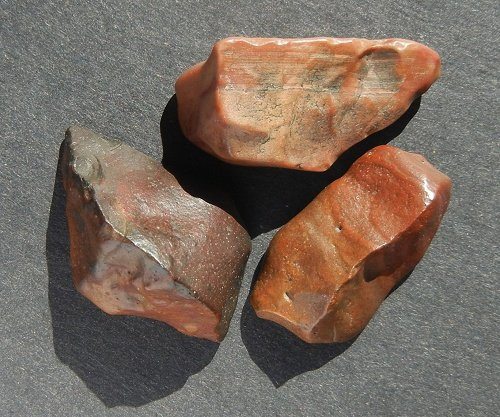
These rocks were made smooth by wind blowing smaller rock particles across their surface. This is an example of:

a)

ice wedging

b)

chemical weathering

c)

acid rain

d)

abrasion

13.
A mass of ice that covers a large area and moves slowly
a)
gravity
b)
glacier
c)
sediment
14.
How does freezing water cause the weathering of rocks?  The freezing water—
a)
keeps the rocks in place
b)
makes the rocks last longer
c)
expands cracks and breaks rocks
d)
causes rocks to fall in landslides
15.
These rocks were broken apart from the continuous freeze/thaw of water in the cracks of the rocks. This is an example of:
a)
ice wedging
b)
acid rain
c)
permeability
d)
abrasion
16.
How might a weathered mountain appear different than an unweathered mountain?
a)
Weathered mountain would be taller.
b)
Weathered mountain would be rounder and less jagged.
c)
Weathered mountain would be more jagged and less rounded.
d)
Weathered mountain would have no trees.
17.
How is mechanical weathering different from chemical weathering?
a)
Chemical weathering happens over much shorter time frame than mechanical weathering.
b)
Chemical weathering changes the chemical composition of rocks; mechanical weathering does not.
c)
Chemical weathering occurs only in tropical climates; mechanical weathering occurs only in cool climates.
d)
Chemical weathering occurs only in the mountains; mechanical weathering occurs only on flat land.
18.
What are the two factors that affect the rate at which weathering occurs?
a)
climate and mass of rock
b)
climate and size of rock
c)
type of rock and size of rock
d)
type of rock and climate
19.

the breakdown or decomposition of rock that takes place when minerals change through chemical processes

a)

chemical weathering

b)

mechanical weathering

c)

erosion

d)

deposition

20.

How is mechanical weathering different from chemical weathering?

a)

Chemical weathering happens over much shorter time frame than mechanical weathering.

b)

Chemical weathering changes the chemical composition of rocks; mechanical weathering does not.

c)

Chemical weathering occurs only in tropical climates; mechanical weathering occurs only in cool climates.

d)

Chemical weathering occurs only in the mountains; mechanical weathering occurs only on flat land.

21.

carbon dioxide dissolves in water then weathers marble and limestone

a)

chemical weathering

b)

mechanical weathering

c)

erosion

d)

deposition