
 Worksheets
Science
Total questions: 25
Worksheet time: 19mins
Branch of chemistry in which we study carbon-containing compounds
(a)
Contains carbon, usually bonded to hydrogen
Covalent bonding
(a)
Ionic bonding
Usually don't contain carbon
(a)
organic compounds are composed exclusively of carbon and hydrogen
(a)
Single covalent bonds (alkane)
Saturated hydrocarbons
Unsaturated hydrocarbons
double or triple bond (alkene or alkyne) (alkane)
Saturated hydrocarbons
Unsaturated hydrocarbons

Name the Hydrocarbon
(a)
Consists of linear, branched, straight-chained, and/or exist in cyclic structures
Can be saturated or unsaturated
Aliphatic
Aromatic
Contains benzene or a heterocyclic ring
Aliphatic
Aromatic
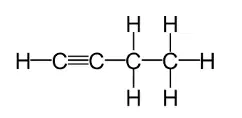
Identify if it is Aliphatic or Aromatic
Aliphatic
Aromatic
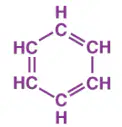
Identify if it is Aliphatic or Aromatic
Aliphatic
Aromatic
He created the Bohr model, the most widely accepted model of the atom.
(a)
Building blocks of matter.
(a)
Anything that has mass and occupies space
(a)
It is the arrangement of electrons in energy levels around an atomic nucleus
(a)
It is in the outermost shell of an atom. They are also able to interact with other atoms to form chemical bonds.
(a)
States that atoms gain, lose or share electrons to fill their outermost energy shell with 8 valence electrons.
(a)
If an atom gives or receives an electron, they become (a) which means that an atom or molecule with a positive or negative charge.
It refers to the formation of a chemical bond between two or more atoms, molecules, or ions to give rise to a chemical compound.
(a)
Valence electrons are “transferred” to another atom.
Ionic Bonding
Covalent Bonding
Metallic Bonding
Occurs between a nonmetal and metal (or a metalloid and metal).
Ionic Bonding
Covalent Bonding
Metallic Bonding
Occurs between 2 nonmetals (or metalloid and nonmetal) with similar electronegativity
“share” with number of electrons.
Ionic Bonding
Covalent Bonding
Metallic Bonding
Responsible for the formation of metals
Ionic Bonding
Covalent Bonding
Metallic Bonding
The Number of Protons and Number of Electrons are equal to the Atomic Number
True
False
To get the Number of Neutrons, add the Mass Number and Atomic Number.
True
False

