wayground logo

Free Printable Worksheets

Font size

S
M
L
XL
Worksheets

Atomic Theory Practice Test

Total questions: 84

Worksheet time: 19hrs 57mins

Name
Class
Date
1.

Subatomic particles with a negative charge

a)

Electrons

b)

Neutrons

c)

Protons

d)

Quarks

2.
Subatomic particles with a positive charge
a)
neutrons
b)
atomic mass
c)
protons
d)
isotopes
3.
Value representing the number of protons in an element
a)
Atomic Mass
b)
Mass Number
c)
Valence Electrons
d)
Atomic Number
4.
Subatomic particles that are neutral in charge
a)
Neutrons
b)
Protons
c)
Nucleus 
d)
Electrons
5.
Atoms of the same element with a different number of neutrons
a)
Ion
b)
Gluons
c)
Isotope
d)
Quarks
6.
The smallest particle of an element that shows all the properties of that element.
a)
Subatomic Particles
b)
Atom
c)
Quarks
d)
Gluons
7.
Where electrons are likely to be found as they travel around the nucleus
a)
Nucleus
b)
Electron Cloud
c)
Within a Proton
d)
Within a Neutron
8.
A tiny but very dense, positively charged portion of the atom that holds most of the atomic mass
a)
Electron Shells
b)
Orbitals
c)
Electron Cloud
d)
Nucleus
9.
Discovered the nucleus of the atom through the Gold Foil Experiment
a)
Rutherford
b)
Chadwick
c)
Thomson
d)
Dalton
10.
Discovered the electron within the atom
a)
Thomson
b)
Chadwick 
c)
Schrodinger & Heisenberg
d)
Dalton
11.
Believed that atoms of the same element are identical to each other
a)
Bohr
b)
Rutherford
c)
Dalton
d)
Thomson
12.
Calculation used to find the number of neutrons in an atom
a)
Atomic Mass - Atomic Number
b)
Atomic Number - Atomic Mass
c)
Atomic Mass - Electrons
d)
none of these
13.
John Dalton stated:
a)
elements are made of atoms
b)
atoms of a given element are identical
c)
atoms cannot be subdivided, created, nor destroyed
d)
all of the above
14.
The scientist responsible for "discovering" the nucleus is:
a)
Bohr
b)
Rutherford
c)
Schroedinger
d)
Einstein
15.
The nucleus of an atom can be described as:
a)
spacious and negatively charged
b)
dense and positively charged
c)
spacious and positively charged
d)
dense and negatively charged
16.
Electrons are not factored into atomic mass because:
a)
They are so small their mass is negligible
b)
They're not in the nucleus
c)
They're too big
d)
They move so quickly their mass is zero
17.
How did Rutherford discover the proton?
a)
Cathode tube ray experiment
b)
Gold Foil Experiment
c)
Planetary Model
d)
Plum Pudding Model
18.
What does the nucleus of an atom contain?
a)
Electrons and neutrons
b)
Protons and neutrons
c)
Neutrinos and positrons
d)
DNA and RN
19.
True or False: The majority of an atom is made up of empty space
a)
True
b)
False
20.
What scientist is best known for his "Plum Pudding" model of the atom?
a)
J.J. Thomson
b)
Ernest Rutherford
c)
John Dalton
d)
Democritus
21.
Place the following scientists in order, from earliest to latest: 
Rutherford, Dalton, Bohr, Thomson
a)
Dalton, Rutherford, Bohr, Thomson
b)
Thomson, Dalton, Rutherford, Bohr
c)
Dalton, Thomson, Rutherford, Bohr
d)
Bohr, Dalton, Rutherford, Thomson
22.
Rutherford's gold foil experiment provided evidence that...
a)
negative and positive charges are spread evenly throughout the atom.
b)
alpha particles have a positive charge.
c)
gold is not a dense as previously thought.
d)
there is a dense positively charged nucleus at the center of an atom.
23.
He discovered the electron using cathode ray tube experiment.
a)
Joseph Thomson
b)
John Dalton
c)
Ernest Rutherford
d)
Robert Millikan
24.
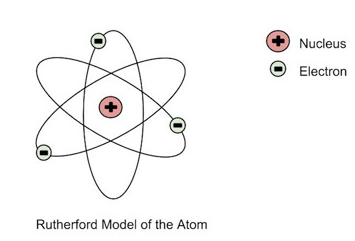
Who's model is this? 
a)
Millikan
b)
Rutherford
c)
Thomson
d)
Bohr
25.
Who discovered the proton?
a)
Thomson
b)
Dalton
c)
Bohr
d)
Rutherford
26.
What did Thomson discover?
a)
electron
b)
proton
c)
neutron
d)
electron cloud
27.
The Gold Foil experiment was done by __________.
a)
Chadwick
b)
Bohr
c)
Rutherford
d)
Thomson
28.
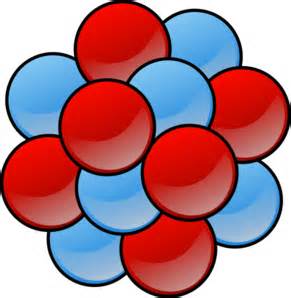
The subatomic particles in blue are...
a)
Neutrons
b)
Protons
c)
Electrons
29.
The subatomic particles in green are...
a)
Protons
b)
Neutrons
c)
Electrons
30.
The subatomic particles in red are
a)
Electrons
b)
Neutrons
c)
Protons
31.
What is atomic number?
a)
Number of protons in an atoms 
b)
Number of neutrons in an atom
c)
Mass of an atom
d)
Charge on an atom
32.
The total number of protons and neutrons in an atom is called the...
a)
Atomic number
b)
Proton number
c)
Mass number
d)
Weight number
33.
Atoms of the same element must always have the same number of _________
a)
electrons
b)
neutrons
c)
isotopes
d)
protons
34.
The mass number of an element that has18 protons, 18 electrons, and 19 neutrons is _____.
a)
12.5
b)
13
c)
25
d)
37
35.
The atomic number of an element that has 9 protons, 9 electrons, and 10 neutrons is _____.
a)
9
b)
10
c)
19
d)
28
36.
These particles have a mass of 1 amu
a)
protons and neutrons
b)
protons and electrons
c)
neutrons and electrons
37.
A particle that orbits around the nucleus is a(n)...
a)
Proton
b)
Neutron
c)
Electron
d)
Quark
38.
What are the 3 subatomic particles that make-up the atom?
a)
protons, neutrons, and isotopes
b)
neutrons, isotopes, and electrons
c)
positives, negatives, and electrons
d)
protons, neutrons, and electrons
39.
All matter is made of what?
a)
energy 
b)
atoms 
c)
volume
d)
compounds 
40.
An atom with atomic number 6 would have how many protons?
a)
6
b)
12
c)
3
d)
cannot be determined 
41.
The mass of one proton is greater than the mass of one...
a)
neutron
b)
electron
42.
Most of the mass in an atom is made up of _____________________?
a)
protons and electrons
b)
protons and neutrons
c)
neutrons and electrons
d)
electrons and quarks
43.
Water is an element
a)
true
b)
false
44.
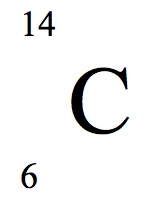
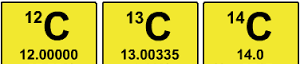
The photo above shows the isotopic notation for which isotope?
a)
Carbon 12
b)
Carbon 13
c)
Carbon 14
d)
Carbon 15
45.
What is an isotope? 
a)
A charged atom
b)
An atom with different amounts of neutrons
c)
An atom with different amounts of protons
d)
A neutral atom
46.
Different isotopes have...
a)
different masses
b)
different atomic numbers
c)
different electrons
d)
different protons
47.
How many neutrons does a Carbon 13 atom have?
a)
6
b)
5
c)
7
d)
8
48.
How many neutrons does a Calcium 48 isotope have?
a)
16
b)
20
c)
28
d)
12
49.
How many neutrons does an Oxygen-19 isotope have?
a)
19
b)
8
c)
11
d)
10
50.
How many neutrons does an Iodine-133 isotope have?
a)
80
b)
133
c)
53
d)
77
51.
How many neutrons does a Flourine-14 isotope have?
a)
4
b)
5
c)
9
d)
14
52.
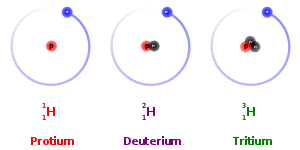
What is the atomic mass of the pictured isotope?
a)
2
b)
4
c)
6
d)
Hehehehe
53.
What do these isotopes of carbon all have in common?
a)
neutrons & mass number
b)
atomic number and neutrons
c)
atomic number and electrons
d)
protons, atomic number, and mass number
54.
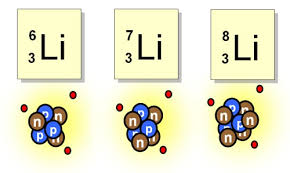
How many neutrons does the isotope of lithium have?
a)
8
b)
3
c)
4
d)
5
55.
In a correctly written symbol what would be located in the "A" position?
a)
number of neutrons
b)
atomic number
c)
number of electrons 
d)
mass number
56.
What quantities vary between isotopes of an element?
a)
protons, electrons, and atomic mass
b)
protons, electrons, and atomic number
c)
neutrons and electrons
d)
neutrons and atomic mass
57.
which atom has  4 neutrons?
a)
Li-6
b)
Li-7
c)
Li-8
d)
they have the same # of neutrons
58.
Isotopes are atoms of the same element with different #’s of __________ & therefore different __________.
a)
n0 ;  atomic #’s
b)
p+ ; atomic #’s
c)
e- ; atomic masses
d)
n0 ; atomic masses
59.
An atom is electrically neutral when
a)
protons and neutrons are the same
b)
protons and electrons are the same
c)
neutrons and electrons are the same
d)
neutrons balance the protons and electrons
60.
How many protons does P-30 have?
a)
30
b)
16
c)
12
d)
15
61.
What element has 42 protons?
a)
Ca
b)
Mo
c)
Zr
d)
Po
62.
Which is the correct definition of isotope?
a)
Isotopes are atoms of the same element with different numbers of neutrons
b)
Isotopes are atoms of the same element with different numbers of protons
c)
Isotopes are atoms of the same element with different numbers of electrons
63.

_____________ are atoms that have the same atomic numbers but differing mass numbers.

a)

ions

b)

isotopes

c)

elements

d)

compound

64.

Isotopes are elements that have the same number of ____________ but different amounts of ______________.

a)

same electrons but different protons

b)

same neutrons but different electrons

c)

same protons but different electrons

d)

same protons but different neutrons

65.

Light is emitted when electrons ...

a)

return from high energy state to low energy state

b)

jump from low energy state to high energy state

c)

either of these

d)

none of these

66.
The ground state is the highest energy state of an atom.
a)
True
b)
False
67.

The lowest energy configurations for electrons in an atom is called the

a)

neutral state

b)

home state

c)

ground state

d)

base state

68.

All stars are composed of a mixture of elements. When these elements are heated they emit specific amounts of electromagnetic radiation, known as an emission spectrum. Each element emits a unique, identifiable, spectrum.


Using the Bright-line emission spectrum chart below, identify the elements present in this modeled star (found in the line labeled “mixture”).

a)

Lithium and cadmium are in the mixture. Strontium is not in the mixture.

b)

Lithium and strontium are in the mixture. Cadmium is not in the mixture

c)

Cadmium and strontium are in the mixture. Lithium is not in the mixture

d)

All of the shown elements are present in the mixture.

69.
Which is a possible excited state electron configuration for Silicon?
a)
2-8-4
b)
1-9-4
c)
2-8-8
d)
2-8-3-1
70.

What is the electron configuration of a sulfur atom in the ground state?

a)

2-4

b)

2-6

c)

2-8-4

d)

2-8-6

71.

Which is an excited state electron configuration of Bromine?

a)

2-8-18-7

b)

2-8-18-8

c)

2-3

d)

2-8-17-8

72.

When an electron returns to ground state from an excited state, the atom will

a)

emit energy

b)

absorb energy

c)

rotate

d)

wiggle

73.
What is the ground state electron configuration of Bromine?
a)
2-8-18-7
b)
2-8-18-8
c)
2-3
d)
2-8-17-8
74.

Which is an excited state electron configuration of Bromine?

a)

2-8-18-7

b)

2-8-18-8

c)

2-3

d)

2-8-17-8

75.
Light is emitted when an electron moves from the ________ state to the _________ state
a)
excited, ground
b)
ground, excited
76.
4.35% of all X atoms have a mass of 39.946 amu. 83.79% have a mass of 41.941 amu, 9.50% have a mass of 42.941 amu, and 2.36% have a mass of 43.939 amu. What is the average atomic mass of atom X?
a)
41.97 amu
b)
42.19 amu
c)
10.43 amu
d)
40.04 amu
77.
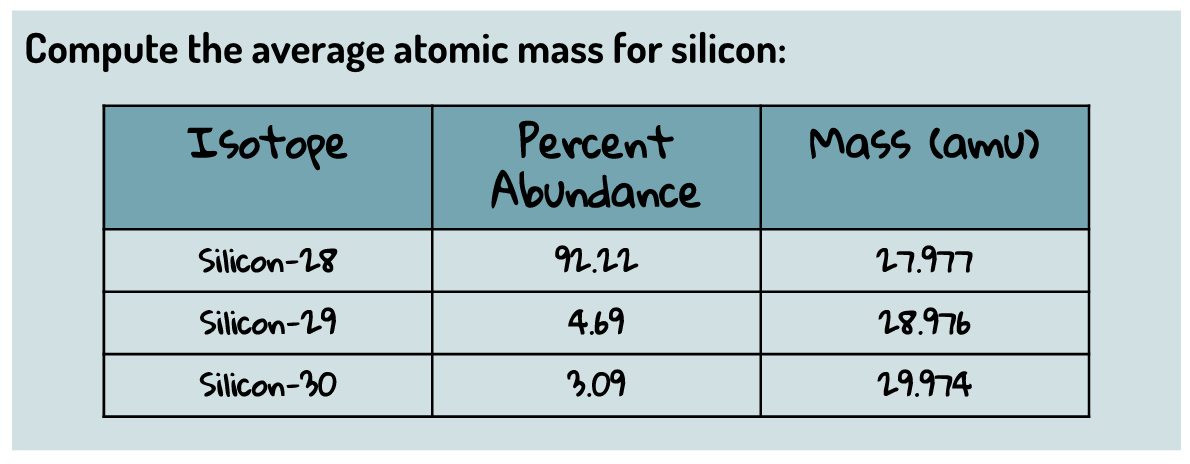
Compute the average atomic mass for silicon:
a)
27.977
b)
28.09
c)
28.976
d)
The average mass cannot be determined from provided information.
78.
24.1% of all the isotopes of a an element have a mass of 75.23 amu, 48.7% have a mass of 74.61 amu, and 27.2% have a mass of 75.20 amu.
How many protons does this element have?

a)
32
b)
33
c)
34
d)
no way to know
79.
An element with 4.35% have a mass of 49.9461 amu, 83.79% have amass of 51.9405 amu, 9.50% have a mass of 52.9407 amu, and 2.36% have a mass of 53.9389amu.
a)
51.99 amu
b)
52.19 amu
c)
53.45 amu
d)
17.33 amu
80.
An isotope has three forms.  30% have a mass of 4 amu, 20% have a mass of 5 amu and 50% have a mass of 3 amu.  Average atomic mass will be closest to
a)
2 amu
b)
3 amu
c)
4 amu
d)
5 amu
81.
Calculate the average atomic mass of silver.
a)
106.38649amu
b)
111.91896amu
c)
107.8677amu
d)
121
82.
An element has two naturally occurring isotopes. One is 10.013 amu and is 19.9% abundant. The other is 11.01 amu and is 80.1% abundant. What is the average atomic mass? What element is it?
a)
9.012, Beryllium
b)
12.011, Carbon
c)
6.941, Lithium
d)
10.812, Boron
83.
What is the name of the atom pictured here?
a)
Nitrogen
b)
Nitrogen-15
c)
Nitrogen-7
d)
Nitrogen-8
84.
Which of the following could have 82 neutrons?
a)
W-182
b)
Ta-181
c)
Cs-132
d)
Ba-138