
 Worksheets
Amplify chapter 2
Total questions: 150
Worksheet time: 4hrs 47mins
Which is larger: cells or molecules?
cells
molecules
Molecules are measured in ________________.
millimeters
nanometers
micrometers
centimeters
All living things are made of one or more ____________.
cells
tissues
bones
roots
The human microbiome consists of over 100 trillion _____________which help us stay healthy.
skin cells
blood cells
microorganisms
consumers
True or False: Taking antibiotics as medicine will only kill the harmful bacteria and not the good bacteria.
True
False
True or False: Cells both die and reproduce.
True
False
Which is true regarding cells?
all cells are the same size and shape
cells are only present in plant life
cells are the basic building block of life
cells are smaller than molecules
Which of these units of measure is the largest?
centimeter
micrometer
nanometer
meter
Which of these is a microorganism?
human
rabbit
tree
bacteria
Many organisms are _____________—so small that they cannot be seen with the naked eye.
microscopic
gigantic
small
ordinary
All living things are made of __________.
wood
bone
cells
blood
Almost all cells are _______________.
animal cells
plant cells
visible to the naked eye
microscopic
Even though they are both too small to see, cells are much ___________ than molecules.
larger
smaller
The human microbiome contains approximately 100 trillion ___________. Most of these are bacteria.
microorganisms
blood cells
fungi
C. jejuni
The human body provides an environment (food and _______) for bacteria to survive.
nitrogen
blood
oxygen
space
An infection of harmful bacteria in the human microbiome can make a person __________.
healthy
happy
sick
hungry
Antibiotics reduce the number of ________ and harmful bacteria in the microbiome.
dangerous
microscopic
single-cell
helpful
Living things with ________ than normal helpful bacteria in their guts can become infected more easily because there is more food and space available for harmful bacteria.
fewer
more
True or False: Fecal transplants are both gross and unable to help with bacterial issues in the gut.
True
False
True or False: Patient 23 was able to eliminate ONLY the C. jejuni bacteria and no other types of bacteria by taking an antibiotic.
True
False
Is it possible for there to be bacteria or fungus to be growing on something without it being visible to the naked eye?
Yes, bacteria and fungi are microscopic.
No, we should see it if it is there.
Life science is the study of ___ ___
natural life
living things
animals and plants
bacteria and viruses
Where do microorganisms live?
Everywhere
In the human body
On the human body
On and in the human body
All living things are made of:
nanometers
cells
skin
DNA
A living thing that is too small to be seen with the naked eye is called
Microchip
Micrometer
Microscope
Microorganism
Which one of these things is NOT microscopic?
yeast cell
molecule
grain of salt
blood cell
Cells are typically measured in:
micrometers
nanometers
centimeters
feet
Molecules are typically measured in:
Micrometers
Nanometers
Centimeters
Feet
Micrometers are a ____ times smaller than a meter
two
thousand
hundred thousand
million
Nanometers are a ____ times smaller than a meter
thousand
hundred thousand
million
billion
Scientists use _______ to gather evidence about microorganisms
Microscope
Petri dish
Magnifying glass
Radio waves
Antibiotics can get rid of ________________ and _________________ bacteria
small and large
inside and outside
white and red
harmful and helpful
Every scientific argument has 4 things: a question, a _________, evidence, and reasoning
answer
guess
theory
claim
All the organisms that live in a particular environment are called:
population
microbiome
family
habitat
There are over _____________ microorganisms in and on the human body.
5000
100 million
1 trillion
100 trillion
the basic unit of structure and function in living things.
antibiotics
scale
cells
researchers

Too small to be seen with the naked eye.
microscopic
scale
a researcher
invisible
Living things, such as plants, animals and bacteria.
a marble
The rain
a rock
organisms

The relative size of things.
organisms
population
bigness
scale
After using antibiotics there are _________ healthy bacteria in the gut.
More
The same
Less
All of the microbes in and on the human body.
sick people
The human microbiome "Inner Space"
antibiotic
The "Outer Space"
An organism that is too small to be seen with the naked eye.
organisms
microorganisms
a mouse
A fly

True of False: Antibiotics kill only harmful bacteria.
False
True

What tool is used to study microorganisms?
binoculars
glasses
Microscope
a telescope

How can we control the spread of microorganisms?
spit them out
blow your nose
wash your hands
pet a dog
How does bacteria help our bodies function?
They make our skin smooth
They make our muscles strong
The help our bodies to digest our food
They smell bad
What happens to our bodies when we take too many antibiotics medicines in a short period of time?
We eventually get sicker
They no longer are effective.
They can kill our healthy bacteria
All of the above
Which structure is found in a plant cell but not in an animal cell?
mitochondria
cell membrane
nucleus
cell wall
What type of cell has chloroplasts and a cell wall
animal cell
Plant cell
You can prevent catching many diseases from microorganisms by:
Washing your hands
Showering
Staying out of the rain
exercising

Can you eat without microorganisms?
No
Yes
How can microorganisms get into your body?
putting on your shoes
taking a shower
picking your nose
brushing your hair
Researchers are using what new way to treat illnesses?
prescribing taking naps
Fecal transplants
hospitalization
hair transplants
Almost all _______ are microscopic.
microorganisms
bacteria
cells
molecules
Almost all _______ are microscopic.
microorganisms
bacteria
cells
molecules
All __________ are made of cells.
molecules
turtles
carpets
microorganisms
A micrometer is....
1/10 of a centimeter.
1/1000 of a millimeter.
1/1000 of a meter.
1000 nanometers.
A microorganism is....
made of cells.
visible with the human eye.
microscopic.
bigger than a grain of salt.
Which ones are microscopic?
powdered sugar.
a single yeast cell.
a single water molecule.
a cocoa puff.
There are over ___________ microorganisms in the human body.
5,000
1 trillion
100 million
100 trillion
the basic unit of structure and function in living things.
antibiotics
scale
cells
researchers
Living things, such as plants, animals and bacteria.
a marble
The rain
a rock
organisms
Which is larger: cells or molecules?
cells
molecules
Medicines that kill microorganisms, especially bacteria
Probiotics
Antibiotics
Microbiome
None of the Above
Living things such as plants, animals and bacteria.
Population
Microorganism
Microbiome
Organism
The process of making clear how your evidence supports your claim
Claim
Evidence
Reasoning
Scientific Argument
A claim supported by evidence
Claim
Evidence
Reasoning
Scientific Argument
Information about the natural world that is used to support or go against (refute) a claim
Claim
Evidence
Reasoning
Scientific Argument
Sickness caused by harmful microorganisms
Bacteria
Cells
Infection
Microorganism
Too small to be seen with the naked eye
Organism
Microscopic
Microorganisms
Microbiome
A proposed answer to a question about the natural world
Claim
Evidence
Scientific Argument
Reasoning
A proposed answer to a question about the natural world
Claim
Evidence
Scientific Argument
Reasoning
the tiny structures that make up all living things and are the smallest units able to perform life functions
Bacteria
Microorganisms
Cells
Molecules
There are over ___________ microorganisms in the human body.
5,000
1 trillion
100 million
100 trillion
Are microorganisms helpful or harmful?
Helpful
Both
Harmful
Neither
True or false: We can live without microorganisms.
True
False
Tiny organisms that are made of a single cell are...
bacteria
cells
eukarya
fungi
an organism that is too small to be seen with the naked eye is a...
microorganism
parassite
host
bacteria
all of the organisms that live in a particular environment, such as a human body is called a ...
microbiome
population
domain
evidence
Sickness caused by harmful microorganisms is an..
infection
archaea
antibiotic
evidence
A treatment meant to cure C. difficile when antibiotics are no longer an option is a..
fecal transplant
urinary transplant
bacterial infection
antibiotic transplant
Information about the natural world that is used to support or go against (refute) a claim is..
evidence
a claim
a resolution
data
a proposed answer to a question about the natural world is a..
claim
evidence
reason
data
Medicines that kill microorganisms, especial bacteria are called..
antibiotics
acetaminophen
cure
antihistamines
Which bacteria creates immune cells to kill harmful bacteria?
B. fragilis
L. reuteri
C. difficile
B. animalis
Which bacteria creates gut mucus to help prevent the invasion of harmful bacteria?
B. fragilis
L. reuteri
C. difficile
B. animalis
Which animal microbiome is so closely similar to humans that we use their info to compare experiments on?
mice
snakes
reptiles
bears
When a person has a harmful bacteria in their microbiome, the patient will report symptoms such as,
vomiting
dizziness
diarrhea
headaches
People are more susceptible to harmful bacterias when they have a _____________ gut microbiome.
normal
low-bacteria
high-bacteria
med-bacteria
Select the healthy bacterias only.
Bacilli
Salmonella
B. fragilis
L. reuteri
C. jejuni
True or False: Even though they are tiny, bacteria still need food to survive.
True
False
A healthy _______________ has various helpful types of bacteria.
nanometer
micrometer
microbiome
computer
An Organism is...
Non-living things such as plants, animals, and bacteria.
Living things such as plants, animals, and bacteria.
Living things such as dogs, rugs, and matter.
A Microorganism is...
An organism that is too big to be seen with the naked eye.
An organism that is too small to be seen with a microscope.
An organism that is too small to be seen with the naked eye.
Scale is..
The relative size of things.
The average size of things.
The true size of things.
Microscopic is...
Too small but can be seen with the naked eye.
Too small to be seen with the naked eye.
Too large to be seen with the naked eye.
Cells are....
The tiny structures that make up all non-living things and are the biggest units able to perform life functions.
The big structures that make up all living things and are the smallest units able to perform life functions.
The tiny structures that make up all living things and are the smallest units able to perform life functions.
The size of a molecule can be measured in...
meters
micrometers
centimeters
nanometers
Which one of these is microscopic?
ringworm fungus
a marble
width of a human hair
salt grains
Which one of these can be seen with the naked eye?
salt grains
ringworm fungus
E. coli bacteria
DNA
Even though they are both too small to see, cells are much bigger than...
organelles
other cells
molecules
ants

After using antibiotics there are _________ healthy bacteria in the gut.
More
Less
The Same
The term "human microbiome" refers to...
humans that cannot be seen with the naked eye
all of the bacteria living on and in the human body
all of the dirt on a human body
an environment where humans live
One type of harmful bacteria is called...
B. fragilis
C. jejuni
L. reuteri
B. animalis
Antibiotics ONLY kill harmful or bad bacteria.
True
False
Harmful bacteria can invade the human body through... [select all that apply]
spoiled food
the air we breathe
wearing sneakers
cuts
playing sports
Many microorganisms are helpful to us and keep us healthy.
True
False
Microorganisms are everywhere!
True
False
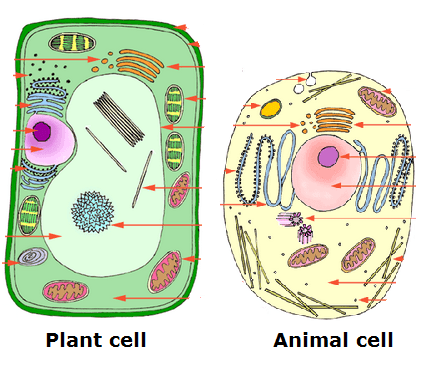
What distinguishes a plant cell from an animal cell? (How do you tell them apart) Hint: There's 3 ways (Check all 3)
Central Vacuole
Mitochondria
Cell Wall
Ribosomes
Chloroplasts

The 3 parts of the Cell Theory are...?
All living things are composed of cells
Cells are the basic units of structure and function in living things
All cells are produced from other cells
All living things are composed of cells
Cells are the basic units of dance and vibes in living things
All cells are destroyed from other aliens
All living things are composed of Jell-O
Cells are the basic units of structure and function in living things
All cells are produced from factories in Canada
All living things are composed of cells
Cells do karate and practice eating whole pies in their free time
All cells are produced from other cells

Cellular Respiration occurs within me and I am in BOTH plant and animal cells. I am a....
Nucleus
Golgi Body
Cytoskeleton
Mitochondria

I like to be thought of as the "storage bubble" for both plant and animal cells. I am a...
Cell Membrane
Cytoskeleton
Vacuole
Endoplasmic Reticulum

I am the "brain" of the cell or the "control center" for everything happening within the cell. I am a...
Golgi Body/Apparatus
Nucleus
Ribosome
Lysosome

Photosynthesis takes place within me. I am a...
Mitochondria
Cell Wall
Chlorine
Chloroplast

I decide what goes in and out of the cell. I am fluid like and found in BOTH plant and animal cells. I am a...
Cell Wall
Cell Membrane
Cytoplasm
Golgi Apparatus

I provide plant cells their rigid shape. I am the...
Basketball that Nic Quarne left in Mr. Woller's room last week
Cytoskeleton
Cell Membrane
Cell Wall

I am found in a plant cell and I provide a "central" and LARGE amount of storage. I am a...
Central Vacuole
Cytoplasm
Central Membrane
Mitochondria
Animal and Plant Cells are...
Shopkoytes
Eukaryotes
Prokaryotes
The building blocks of non-living things



Details from an image can be textual evidence.
Which sentence is the claim?
Which sentence is the evidence?
Which sentence is the reasoning?
(Or therefore, or due to, or as a result of, or according to).

