
 Worksheets
EnzoGrScienceQ3
Total questions: 151
Worksheet time: 2hrs 4mins
A repeating disturbance or movement that transfers energy through matter or space.
Wave
Energy
Waves transfer energy.
true
false
A wave us a traveling disturbance that transports energy but not matter.
true
false
Waves exist as excitations of an elastic medium.
true
false
A wave is any disturbance that transmits energy through matter or empty space.
true
false
Part of a wave - the high points on a wave.
Crests
Troughs
Amplitude
Part of a wave - the low points on a wave.
Crests
Troughs
Amplitude
Part of a wave - the distance from midpoint to the crest (or trough) of th wave.
Crests
Troughs
Amplitude
Part of a wave - the maximum displaceme from equilibrium.
Crests
Troughs
Amplitude
A periodic wiggle in time.
Vibration
Wave
A periodic wiggle in both space and time.
Vibration
Wave
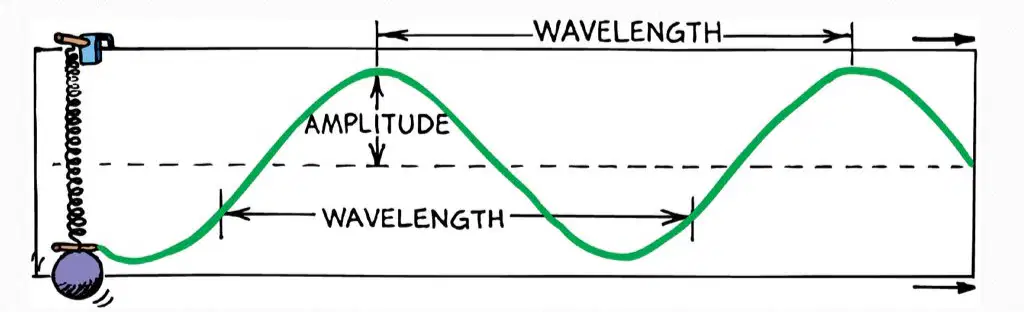
Amplitude equals the maximum displacement from the equilibrium point.
true
false
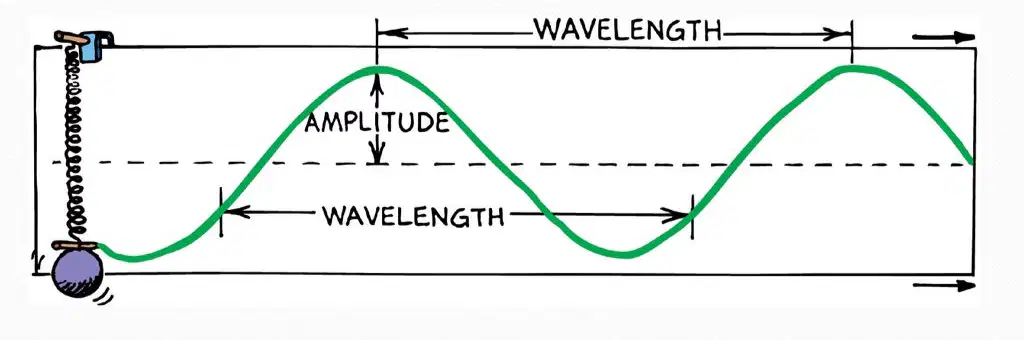
Is the distance from the top of one crest to the top of the next crest.
wavelength
frequency
Is how a frequent a vibration happens.
wavelength
frequency
Are those waves in which the particles of the medium move parallel to the propagation of the wave. Example - Sound Waves
Longitudinal Wave
Transverse Wave
Are those waves in which the particles of the medium move perpendicular to the direction of the propagation of teh wave. Example - ripples formed on the surface of the water.
Longitudinal Wave
Transverse Wave
A kind of wave that requires a medium.
Mechanical Waves
Electromagnetic Waves
A kind of wave that does not require a medium.
Mechanical Waves
Electromagnetic Waves
Sound waves are considered this type of wave.
Longitudinal Waves
Transverse waves
Water waves are considered this type of wave.
Longitudinal Waves
Transverse waves
Sound wave is a mechanical wave.
true
false
Light is an electromagnetic wave,
true
false
sound waves
water waves
light waves
microwaves
infrared
x-rays
ultraviolet rays
radio waves
Sound is a wave.
true
false
Light, sound and water waves may seem different, but they are all waves.
true
false
The lower the frequency is the longer the time period will be.
true
false
Hertz or Hz is the unit for the frequency of a vibration.
true
false

The frequency of a wave length is equal to the reciprocal of the period.
true
false
A dog's tail wags 50.0 times in 40.0 seconds. What is the frequency? Express your answer in Hz units.
(a)

The period of a pendulum is 8.00 s. What is its frequency in Hz?
(a)
A dog's tail wags 50.0 times in 40.0 seconds. What is the period of vibration of the tail in seconds?
(P = 1/f)
(a)
Measures the displacement of the disturbance.
Amplitude
Wavelength
Velocity
Distance of a repeating unit. Also called a cycle.
Amplitude
Wavelength
Velocity
How fast wave travels.
Amplitude
Wavelength
Velocity
Wavelength and frequency are inversely related.
true
false
The smaller the wavelength, the more times it will pass through a point in one second.
true
false
The larger the wavelength, the fewer times it will pass through a point in one second.
true
false
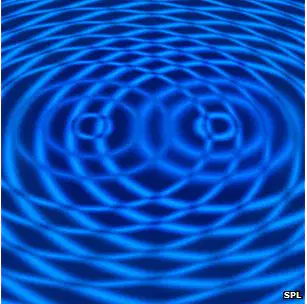
Wave interference is a phenomena that occurs when two waves interact within the same medium.
true
false
Are a type of electromagnetic radiation. They transmit through free space by modulation of electromagnetic waves with frequencies below those of light.
Radio waves
Sound Waves
Any vibration (wave) travelig through the air or other medium which can be heard when it reaches a person's ear.
Radio waves
Sound
Can travel through space that contains almost no matter.
Radio waves
Light waves
Can travel through space that contains almost no matter.
Sound waves
Light waves
A disturbance that travels through a medium as a longitudinal wave.
Sound waves
Light waves
If you pluck a guitar string, it vibrates back and forth.
Sound waves
Light waves
Most sounds are produced by the vibrations of matter.
true
false
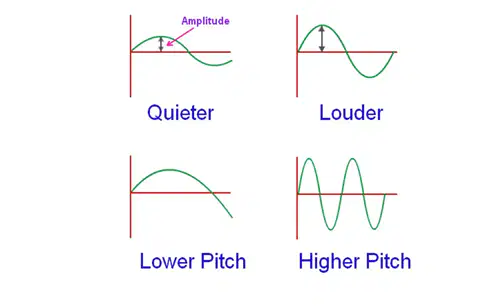
The higher the frequency or pitch, the thinner the sound.
true
false
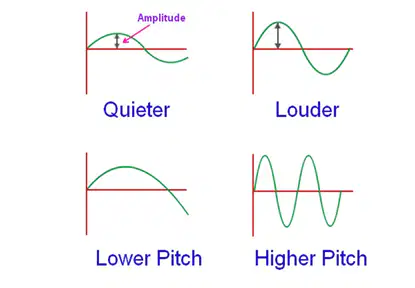
A lower-pitched fuller sound has a lower frequency.
true
false
Sound waves below 20 Hertz.
Infrasonic
Ultrasonic
Frequencies above 20,000 Hertz
Infrasonic
Ultrasonic
Humans cannot hear infrasonic and ultrasonic waves.
true
false
Animals can hear infrasonic and ultrasonic waves.
true
false
The pulse of compressed air is called a __________
Compression
Rarefaction
The section of lower pressure in between compression is called ___________
Compression
Rarefaction
The unit used for the intensity of sound is called a _________
Hertz
Decibel
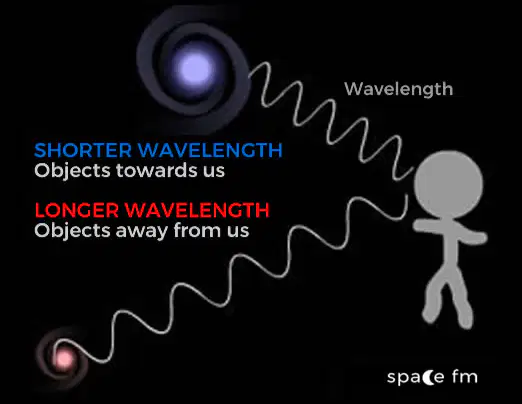
A wave phenomenon where a detected wavelength is different from source wavelength due to a relative radial motion between the source and observer.
Doppler effect
Krueger effect
Light that has been shifted to higher frequencies due to approach.
blueshifted light
redshifted light
Lightshifted to lower frequencies
blueshifted light
redshifted light
Sounds are longitudinal mechanical waves traveling through elastic media.
true
false
Sounds waves are transmitted from one place to another by the vibration of particles of the medium.
true
false
Solids are the best conductors of sounds followed by liquids then gases.
true
false
Velocity of sound depends on the elasticity and density of the medium.
true
false
Is a measure of the loudness of sound.
Intensity
Reflection
Refers to the bouncing back of the sound waves when it strikes against another body particularly a surface.
Intensity
Reflection
Is a reflected sound wave
Echo
Reverberation
A repeated echo.
Refraction
Reverberation
____________ of sound waves occur as it passes from one medium to one with a different property.
Refraction
Reverberation
___________are under the 20 Hz to 20,000 Hz.
Audible sound waves
Ultrasonic waves
Infrasonic waves
___________are sound waves above 20 000 Hz
Audible sound waves
Ultrasonic waves
Infrasonic waves
___________are sound waves below 20 Hz
Audible sound waves
Ultrasonic waves
Infrasonic waves
The series of compression's and rarefaction's of air that travels outward from the vocal cords produces the sound of our voice.
true
false
Loud noise may cause temporary loss of hearing or may affect a person psychologically.
true
false
Musical sounds have characteristics such as pitch, intensity, and quality.
true
false
Musical sounds are produced by stringed and wind instruments through vibration of their parts.
true
false
The measurement for Frequency is...
Cycle
Meters
Hertz
Seconds
The "formula" for Wavelength is.....
Distance between 2 crest
Wave Speed divided by Frequency
The distance between crest and trough
Meters divided by seconds
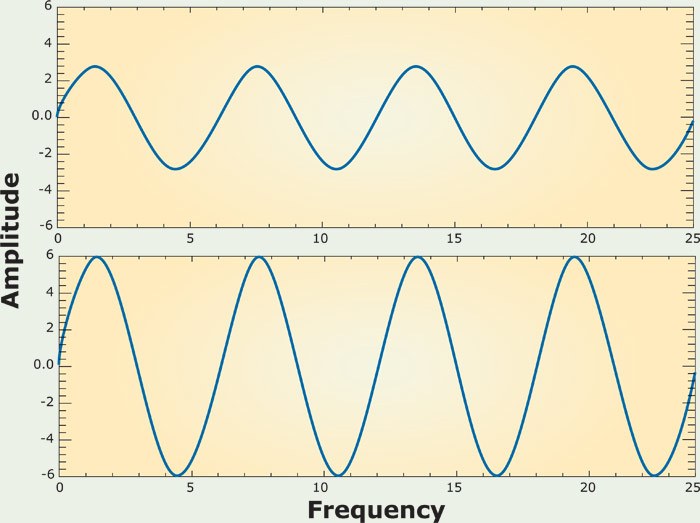

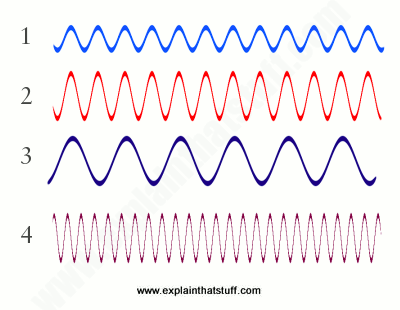
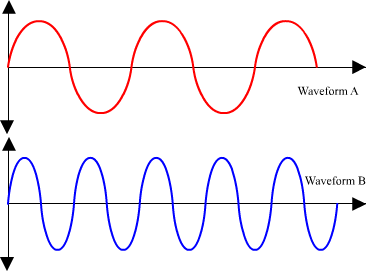


The displacement marked in the diagram by a red arrow is known as the ____ of the wave.
time
speed
frequency
amplitude
Material some waves travel through, such as the type of solid, liquid, or gas.
Trough
Peak
Wavelength
Medium
All waves carry ______________.
Sound
Light
Water
Energy
A _ is a disturbance that transfers energy from one place to another.
wavelength
wave
frequency
hertz
A wave's _ is a measure of how far the particles in the medium move away from their normal rest position.
frequency
hertz
amplitude
wavelength
The _ is the distance from any point on a wave to an identical point on the next wave.
frequency
hertz
amplitude
wavelength
The _ of a wave tells how many cycles occur in an amount of time, usually 1 s.
hertz
frequency
wave period
length
One hertz is equal to _.
frequency
one cycle per second
one cycle per minute
Question: If a wave has a frequency of 6 Hz, what is its period in seconds? Round off answer up to 3 decimal place.
Solution:
Period (T) = 1 / Frequency
(a)
A wave takes 0.04 seconds to complete one oscillation. What is its frequency in Hz?
Solution: Frequency (f) = 1 / Period
(a)
Question: If the period of a wave is 0.1 seconds, what is its frequency in Hz?
Solution: Frequency (f) = 1 / Period
(a)
If a wave has a frequency of 12 Hz, what is its period in seconds? Round off answer up to 4 decimal places.
Solution: Period (T) = 1 / Frequency
(a)
Question: If the period of a wave is 0.1 seconds, what is its frequency in Hz?
Solution: Frequency (f) = 1 / Period
(a)
Sound is a form of energy. How is it produced?
by waiting
by vibrating objects
Do sound waves travel through a medium?
YES
NO
It is the highness or lowness of sound or a musical note.
Timbre
Loudness
Pitch
It is the unit used for frequency.
Hertz (Hz)
decibel (dB)
A _____ frequency sound has a higher pitch. A lower frequency sound has a _____ pitch.
higher, higher
lower, higher
higher, lower
lower, lower
The human ear can only sense within the frequency range of _____.
20 Hz to 20,000 Hz
1,000 Hz to 100, 000 Hz
Vibrational frequencies beyond 20,000 Hz is called _____.
infrasonic frequencies
ultrasonic frequencies
Extremely low frequencies are known as _____
infrasonic frequencies
ultrasonic frequencies
It determines the s loudness or volume of a sound wave.
frequency
amplitude
A high amplitude sound means _____ sound, and a low amplitude sound means _____ sound.
softer, louder
louder, softer
louder, louder
softer, softer
The unit of intensity level for sound _____.
Hertz (Hz)
decibel (dB)
On the decibel scale, an increase of 1 dB means that sound intensity is increased by a factor of _____.
2
5
10
100
It is a sound wave that is distorted and not pleasing to the senses.
Music
Noise
Sound plays a vital role in our daily living. Communication is one among of its uses. Can we also use sound in emergency response?
No, because sound is used only for communication
No, because it leads others in panic if a loud sound will be produced.
Yes, because a loud sound can drive away a strong typhoon or flood.
Yes, because a loud sound can be the fastest way inform the community that a disaster might come.
Which of the following gives the correct order of speed of sound from slowest to fastest in the given material?
air, steel, water
steel, water, air
water, air, steel
air, water, steel
Which of the following is NOT capable of transporting sound?
AIR
ICE
WATER
VACUUM
Which of the following describes sound wave?
OCEANIC WAVE
STANDING WAVE
TRANSVERSE WAVE
LONGITUDINAL WAVE
Which of the following is NOT a characteristic of sound?
AMPLITUDE
VELOCITY
WAVELENGTH
ZONE
In what material does sound travel the fastest?
SOLID
LIQUID
GAS
ALL OF THEABOVE
Solids, liquids, and gases are different in terms of its molecules. These molecules are important in production and transmission of sounds effectively.
What makes sounds travel faster in solid than in gas?
The arrangement of molecules
The arrangement of the container
The temperature of each material
The temperature of each container

Solids, liquids, and gases are different in terms of its molecules. These molecules are important in production and transmission of sounds effectively.
Which of the following statements BEST describes the relationship between a sound and medium?
Sound is affected by different media.
Sound cannot pass in different media except in gas.
Sound is affected by different molecules of each given material. Thus, it makes this travels fast and slow.
Sound is not affected by different molecules of each given material. Thus, it makes this travels fast and slow
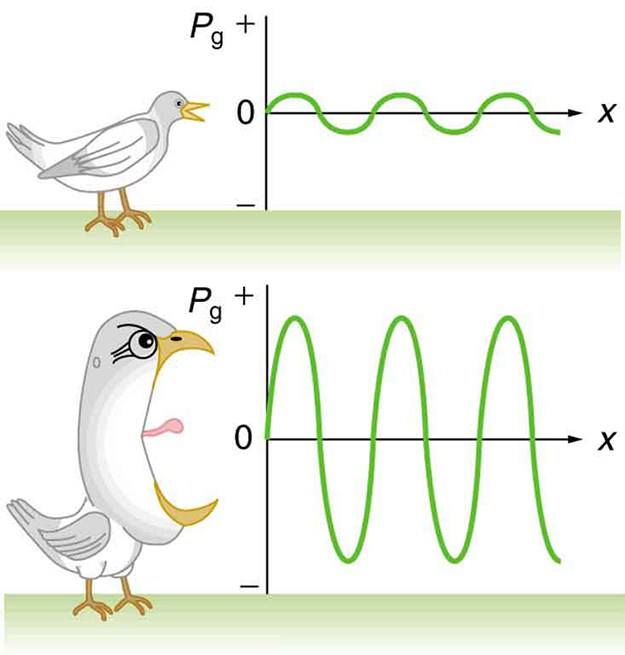
When a sound is louder what measurement gets higher?
Frequency
Amplitude
Wavelength
Crest

In general, sound waves travel the slowest in __________
solid
liquid
Gas
Plasma
Sound Waves
are Longitudinal waves.
are Surface Waves.
are Transverse Waves
move in a circular motion.
Mechanical Waves
consist of Transverse, Surface and Electromagnetic.
do not require a medium to pass through.
require a medium to pass through.
Sound waves that bounce off a solid surface are called
are absorbed and lose the majority of energy.
do not require a medium to pass through.
reflected waves.
The process of sound waves losing energy in a porous surface is called
reflected waves.
do not require a medium to pass through.
absorption.
diffraction.
Your awareness of the energy of sound is
absorption.
loudness.
reflected waves.
diffraction.
The distance between the highest crest and the resting position of a wave marks the
frequency.
loudness.
pitch.
amplitude.
The distance a wave travels before it start to repeat is the
frequency.
wavelength.
pitch.
amplitude.
The number of times a wave repeats in a given amount of time is the
frequency.
wavelength.
pitch.
amplitude.
Which of these is needed for a sound to be made?
heat
light
liquid
vibration
A place where no sound exists is...
in the air.
under water.
space.
all of the above
Sound waves require a __________ to travel through.
medium
person
transverse
Slinky
Which of the following statements are TRUE on solid materials?
I. Solid materials make sound moves fast.
II. Solid materials have compact molecules.
III. Solid materials are the best materials that allows sound to moves fastest
IV. Solid materials does not allow sound particles to move faster than in other materials
I and II only
II and III only
I, II, and III only
II, III and IV only
A guitar is a musical instrument with strings.
Which one of these is needed to make a sound from the guitar?
The guitar is made from wood.
The guitar strings vibrate.
There is air inside the guitar.
There are metal parts on the guitar.
Zara is playing the guitar by plucking a string.
Which statement describes a way that Zara can make the sound louder?
Pluck the string with more force.
Pluck the string with less force.
Make the string tighter.
Make the string looser.

High frequency sounds have _______ pitch
HIgh
Low
True or False: Sound needs a medium.
True
False
The sound that we actually hear is the vibration of molecules.
True
False
A change in frequency results in a change of wave length; a change in amplitude does not.
true
false

Calculate the velocity of a wave if the frequency is 54 Hz and the wavelength is 25 m/s. (express your answer in m/s)
(a)
What is the wavelength of a water wave if its frequency is 4 Hz and its velocity is 12 m/s?
(a)
Radio waves travel a speed of 300,000,000 m/s. WFNX broadcasts radio waves at a frequency of 101,700,000 Hertz. What is the wavelength of WFNX's radio waves?
(a)
A fisherman notices that wave crests pass the bow of his anchored boat every 3 seconds. He measures the distance between two crests to be 7.5 meters. How fast are the waves traveling?
(a)
You count 17 complete waves pass a certain point in 120 s and you measure 5.50 m from a crest to a trough on the passing waves. What is the velocity of these waves? (express your answer up to 3 decimal places)
(a)

