Wayground logo

Free Printable Worksheets

Font size

S
M
L
XL
Worksheets

Rocks and minerals

Total questions: 39

Worksheet time: 29mins

Name
Class
Date
1.

How do sedimentary rock form?

a)

by pressure of layers of sediment

b)

by heat from volcanos

c)

by heat and pressure deep underground

d)

deep below earth's surface

2.

What type of rock is formed from melted materials that cook and then harden?

a)

Sedimentary rocks

b)

Metamorphic rocks

c)

Igneous Rocks

d)

Classic rock

3.
What mineral can be identified by bubbles when tested in vinegar?
a)
feldspar
b)
calcite
c)
talc
d)
quartz
4.

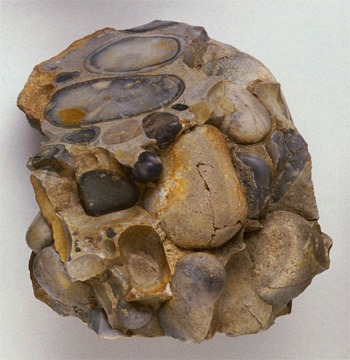
What type of rock is pictured?

a)

Igneous

b)

Metamorphic

c)

Sedimentary

d)

Punk

5.

What are the three types of rocks?

a)

lava, metamorphic, and sedimentary

b)

igneous, sedimentary, and barley

c)

metamorphic, secondary, and igneous

d)

igneous, sedimentary, and metamorphic

6.

What mineral has the lowest hardness?

a)

quartz (7)

b)

mica (2)

c)

feldspar (6)

d)

talc (1)

7.

What was the purpose of the scratch test?

a)

to find if the rock contained calcite

b)

to find the hardness of the mineral

c)

to find the color

d)

to help an itch

8.

What properties are most helpful for identifying minerals?

a)

luster and streak

b)

color and size

c)

shape and hardness

d)

color and shape

9.

A rock is...

a)

usually made of 2 or more minerals

b)

something found in nature

c)

solid

d)

all answers

10.

A mineral is...

a)

solid material made from many different kinds of rocks

b)

a solid, naturally occurring and found in inorganic

c)

made from layers of sediment

d)

formed from heat of magma

11.
Using the Mohs Hardness Scale, what  mineral is the hardest?
a)
Quartz
b)
Diamond
c)
Feldspar
d)
Talc
12.

Using the Mohs Hardness Scale (click the text to see the Scale), name two minerals harder than Fluorite.

a)

Talc and Calcite

b)

Gypsum and Quartz

c)

Quartz and Feldspar

d)

Diamond and Talc

13.
Which type of rock forms from extreme heat and pressure?
a)
Igneous
b)
Sedimentary
c)
Organic
d)
Metamorphic
14.
When sediments are pressed together tightly, this is called ____________.
a)
Compaction
b)
Cementation
c)
Weathering
d)
Erosion
15.

This rock was formed by smaller pieces of rock that settled at the bottom of a lake millions of years ago. What type of rock is this?

a)

Sedimentary

b)

Igneous

c)

Metamorphic

d)

Alternative

16.
The color of a mineral in powder form is called the mineral's 
a)
hardness
b)
specific gravity
c)
luster
d)
streak
17.
By definition, a mineral has which of the following characteristic(s)?
a)
definite chemical composition
b)
crystal structure
c)
naturally occuring
d)
all of the above
18.
What mineral is used for pencils?
a)
Graphite
b)
Galena
c)
Magnetite
d)
Quartz
19.
The five characteristics that all minerals share are:
a)
Definite Chemical Composition, Color, Density, Igneous, and Solid
b)
Definite Chemical Composition,  Crystal Structure, Inorganic, Naturally Occurring, and Solid
c)
Cleavage, Faces, Hardness, Metamorphic, and Streak
d)
Cleavage, Crystal Structure, Density, Igneous, and Solid
20.
Means that a mineral cannot come from something that was once living.
a)
Inorganic
b)
Organic
c)
Naturally Occurring
d)
Not Living
21.

Fossils are often found in this rock.

a)

Sedimentary Rock

b)

Metamorphic Rock

c)

Igneous Rock

d)

Kid Rock

22.

This rock is changed by heat and pressure.

a)

Sedimentary Rock

b)

Metamorphic Rock

c)

Igneous Rock

d)

Heavy Metal

23.
Which BEST describes the rock cycle?
a)
New rocks form from older rocks.
b)
Lunar rocks change into terrestrial rocks.
c)
Rocks in the ocean become rocks on land.
d)
Layers of rock are broken by faults.
24.
Which of these substances is a mineral?
a)
sandstone
b)
granite
c)
quartz
d)
coal
25.
Which processes must occur in order for an igneous rock to change into a metamorphic rock?
a)
heating and pressure
b)
compaction and cementation
c)
melting and cooling
d)
uplift and erosion
26.

Which process forms rock salt?

a)

the slow crystallization of magma deep in the crust

b)

the cementing together of sediment particles

c)

the hardening of lava in seawater

d)

the evaporation of seawater

27.
One rock was formed from rapidly cooling lava and is smooth and glassy. The other rock was formed from slow-cooling magma, so has large crystals. Which rock property is represented by these characteristics?
a)
color
b)
texture
c)
fracture
d)
hardness
28.
Which process causes sand grains to stick together to form sandstone?
a)
cementation
b)
abrasion
c)
combustion
d)
erosion
29.
Coal is formed from
a)
plant remains decomposed under pressure.
b)
melted and cooled metamorphic rock.
c)
natural gas subjected to heat.
d)
seas that have evaporated.
30.
Sedimentary rock forms when rock is first
a)
broken down by weathering.
b)
melted into liquid magma.
c)
exposed to great temperature.
d)
crystallized into natural glass.
31.

What type of rock forms from heat and pressure deep inside earth's surface?

a)

Sedimentary

b)

Metamorphic

c)

Igneous

d)

Glam Rock

32.

What type of rock forms from lava that has cooled at or near earth's surface?

a)

Sedimentary

b)

Metamorphic

c)

Igneous

d)

Modern

33.
Fossils are sometimes found in which type of rock?  (Fossils can only survive this rock's process of formation.)
a)
intrusive igneous
b)
extrusive igneous
c)
metamorphic
d)
sedimentary
34.

Rock that was once melted and then cooled and hardened

a)

igneous rock

b)

sedimentary rock

c)

metamorphic rock

d)

fraggle rock

35.
The following image shows what mineral property?
a)
Hardness
b)
Streak
c)
Cleavage
d)
Density
36.
This rock was formed when magma cooled very slowly inside the Earth. What specific type of rock is it?
a)
Intrusive Igneous Rock
b)
Extrusive Igneous Rock
c)
Foliated Metamorphic Rock
d)
Clastic Sedimentary Rock
37.
This rock formed when lava cooled very quickly on Earth's surface. What specific type of rock is it?
a)
Extrusive Igneous Rock
b)
Intrusive Igneous Rock
c)
Non-Foliated Metamorphic Rock
d)
Biochemical Sedimentary Rock
38.
When you are describing the sizes of the mineral grains in a rock, you are detailing the rock's _____
a)
Texture
b)
Composition
c)
Sedimentation
d)
Igneous-ness
39.

This rock was formed by smaller pieces of rock that settled at the bottom of a lake millions of years ago. What type of rock is this?

a)

Sedimentary

b)

Igneous

c)

Metamorphic

d)

Brittsh Invasion