Wayground logo

Free Printable Worksheets

Font size

S
M
L
XL
Worksheets

3.1 and 3.2 Quiz Practice

Total questions: 40

Worksheet time: 1hrs 20mins

Name
Class
Date
1.
Calculate the KE of a moving 4 kilogram object traveling at a velocity of 3 m/s.
a)
18 J
b)
36 J
c)
12 J
d)
6 J
2.
A moving 10 kilogram object has 20 Joules of KE. What is its velocity?
a)
2 m/s
b)
4 m/s
c)
200 m/s
d)
10 m/s
3.
As mass increases, KE ...
a)
increases
b)
decreases
c)
stays the same
4.
As the velocity of an object decreases its KE will...
a)
increase
b)
decrease
c)
stay the same
5.
Which has a greater impact on KE?
a)
mass
b)
velocity
6.
The PE of a boulder on a hill will be ______ the KE of the boulder as it rolls down the hill.
a)
greater than
b)
less than
c)
the same as
7.
The Law of Conservation of Energy states that
a)
energy cannot be created nor destroyed, only transformed or transferred
b)
energy can be destroyed but not created
c)
energy can be created but not destroyed
8.
When one energy form is changed into another it is called a
a)
transformation
b)
transfer
c)
translocation
d)
transcription
9.

Kinetic energy is...

a)

energy carried in ultraviolet waves

b)

energy stored in food

c)

energy in motion

d)

energy from splitting an atom

10.

What two factors affect an object's kinetic energy?

a)

area and volume

b)

mass and weight

c)

weight and height

d)

mass and speed

11.

Where would this tossed baseball have the least amount of kinetic energy?

a)

point W

b)

point X

c)

point y

d)

point z

12.

Where would this tossed baseball have the greatest amount of kinetic energy?

a)

point W

b)

point X

c)

point y

d)

point z

13.

Increasing an object's speed will increase its kinetic energy.

a)

false

b)

true

14.

Increasing an object's mass will increase its kinetic energy.

a)

true

b)

false

15.

____________ is the ability to do work or cause change.

a)

Energy

b)

Force

c)

Friction

d)

Motion

16.

__________ energy is stored energy.

a)

Potential

b)

Kinetic

c)

Force

d)

Gravity

17.

At which point is potential energy greatest?

a)

W

b)

X

c)

Y

d)

Z

18.

What energy does a rock at the edge of a cliff have?

a)

Potential

b)

Kinetic

19.

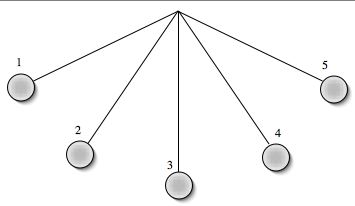
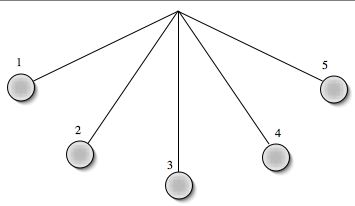
When a pendulum swings, at which point is kinetic energy greatest?

a)

1

b)

2

c)

3

d)

4

20.

What is happening to the potential energy between position 1 to 3?

a)

Decreasing

b)

Increasing

c)

Stays the same

21.

In order to INCREASE the potential energy of an object, you need to:

a)

put the object lower to the ground

b)

raise the object higher

22.
A rabbit of mass 3kg walks at a speed of 0.5m/s. Calculate its kinetic energy.
a)
0.5 J
b)
0.75 J
c)
0.255 J
d)
0.375 J
23.

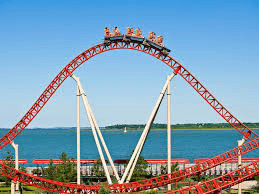
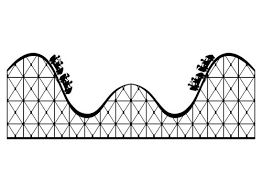
When a roller coaster is at the top of a hill it has

a)

high potential energy

b)

high kinetic energy

c)

low potential energy

d)

equal amounts of kinetic and potential energy
24.

When a roller coaster is at the bottom of a hill it has

a)

high potential energy

b)

high kinetic energy

c)

low kinetic energy

d)

equal amounts of kinetic and potential energy

25.

The sum of potential energy and kinetic energy equals

a)

work

b)

transformation

c)

total energy

d)

mechanical energy

26.
What kind of energy is represented in the picture?
a)
Thermal
b)
Chemical
c)
Sound
d)
Nuclear
27.
What type of energy is in this picture?
a)
Kinetic
b)
Potential
c)
Chemical
d)
Sound
28.
What machine changes electrical energy into light and sound energy?
a)
battery
b)
lightbulb
c)
alarm clock
d)
apple
29.
Energy that is stored in the nucleus of an atom is called _________ energy.
a)
Chemical
b)
Nuclear
c)
Gravitational
d)
Elastic
30.
Electromagnetic energy (such as visible light waves, X-rays, gamma rays and radio waves) is called _______ energy.
a)
Thermal
b)
Radiant
c)
Sound
d)
Electrical
31.
What type of energy does this provide?
a)
thermal
b)
radiant
c)
sound
d)
mechanical
32.
Food, batteries, and fuel such as gasoline are similar because they are sources of _________ energy.
a)
chemical energy
b)
kinetic energy
c)
mechanical energy
d)
heat energy
33.
What type of energy includes both kinetic and potential energy?
a)
mechanical energy
b)
chemical energy
c)
heat energy
d)
sound energy
34.
What is the transformation shown in the picture?
a)
chemical to electrical to light
b)
electrical to chemical to light
c)
light to chemical to electrical
d)
chemical to light to electrical
35.
Roger Federer’s tennis ball has a mass of 0.3 kg. If he holds the ball above the ground at a height of 2.0 m to serve, what is its gravitational potential energy (GPE)?
a)
5.88 J
b)
0.6 J
c)
6.67 J
d)
0.15 J
36.
A leopard with a mass of 55.00 kg climbs 12.0 m up a tree. What is its GPE?
a)
6,468 J
b)
660 J
c)
4.58 J
d)
0.22 J
37.
With all of his Batgear on, Batman has a mass of 90.7 kg. How much potential energy does he have if he's perched on top of a 1,575 m building? 
a)
142,852.5 J
b)
1,399,954.5 J
c)
0.058 J
d)
17.36 J
38.
An 8kg dog chases a cat. if the dog has 400J of kinetic energy. What is the speed of the dog?
a)
10 m/s
b)
5 m/s
c)
1 m/s
d)
100 m/s
39.
An explosion of gas from a Hawaiian volcano blows a rock into the sky. the rock has 2000J of kinetic energy. What was its mass if the rock had a velocity of 20m/s
a)
200Kg
b)
20,000Kg
c)
10Kg
d)
200Kg
40.
What would have the greatest kinetic energy?
a)
A car driving down a hill.
b)
A person running down a hill. 
c)
A ball rolling down a hill. 
d)
leaves rolling down a hill