

wayground logo

Free Printable Worksheets

NEW

Font size

S
M
L
XL
Worksheets

Cell Structure and Function

Total questions: 40

Worksheet time: 30mins

Name
Class
Date
1.

Cells only come ___

a)

from prokaryotes

b)

from other cells dividing

c)

from fungi

d)

from eukaryotes

2.

The smallest unit of life is ____

a)

a protist

b)

an atom

c)

bacteria

d)

a cell

3.

Prokaryote ___

a)

contain simple cells

b)

are unicellular

c)

alway have a flagellum

d)

are a product of endosymbiosis

4.

True or False. Prokaryotes contain cytoplasm.

a)

True

b)

False

5.

An organelle involved in breaking down lipids, proteins, carbohydrates, damage organelles, and bacteria are ___

a)

Golgi Appaparatus

b)

Vesicles

c)

Vacule

d)

Lysosomes

6.
What is the structure labeled #1?
a)
Chloroplast
b)
Nucleus
c)
Cell Membrane
d)
Mitochondria
7.
What is the structure labeled #5?
a)
Vacuole
b)
Chloroplast
c)
Mitochondria
d)
Lysosome
8.
What is the structure labeled #3?
a)
Golgi body
b)
Endoplasmic reticulum
c)
Vacuole
d)
Mitochondria
9.
What is the structure labeled #9?
a)
Cell Wall
b)
Cytoplasm
c)
Chloroplast
d)
Mitochondria
10.
What is the structure labeled #6?
a)
Smooth ER
b)
Golgi Body
c)
Nucleus
d)
Rough ER
11.
What is the structure labeled #8?
a)
Vacuole
b)
Golgi body
c)
Nucleus
d)
Lysosome
12.
What is the structure labeled #4?
a)
Vacuole
b)
Cell wall
c)
Cytoplasm
d)
Cell membrane
13.
What is the structure labeled #7?
a)
Rough ER
b)
Smooth ER
c)
Golgi body
d)
Flagella
14.
What is the structure labeled #2?
a)
Lysosome
b)
Vesicle
c)
Ribosome
d)
Mitochondria
15.
What is the structure labeled #10?
a)
Cell membrane
b)
Cell wall
c)
Cytoplasm
d)
Centriole
16.
What is the function of the chloroplast?
a)
site of digestive enzymes
b)
site of ATP (energy) production
c)
site of photosynthesis
d)
site of protein production
17.
What is the function of the lysosome?
a)
site of digestive enzymes
b)
site of ATP (energy) production
c)
site of photosynthesis
d)
site of protein production
18.
A collection of cells with similar functions form ____
a)
an organ
b)
a tissue
c)
an organism
d)
an organ system
19.
What is considered to be the lowest level of organization in a multicellular organism?
a)
cell
b)
organ system
c)
tissue
d)
organ
20.
The stomach, small intestines, and large intestine are all organs.  When they work together to process food, they form a functional unit known as _____
a)

an organism

b)
an organ system
c)
a tissue
d)
a cell
21.
Which of the following correctly orders the organization in plants and animals from least to complex?
a)
Cell --> Organ --> Tissue --> Organ System --> Organism
b)
Atom --> Cell --> Organ --> Tissue --> Organism
c)
Cell --> Tissue --> Organ --> Organ System --> Organism
d)
Organism --> Organ System --> Organ --> Tissue --> Cell
22.
Tissues working together to perform specialized functions are called ___
a)
an organ
b)
an organism
c)
a population
d)
a cell
23.
In the sequence from simplest to most complex level of organization, which level is one level more complex than cells?
a)
Cells
b)
Tissues
c)
Organ Systems
d)
Organisms
24.
Viruses are...
a)
prokaryotic
b)
eukaryotic
c)
non-living
d)
endospores
25.
Needs host cell to reproduce.
a)
Virus
b)
Bacteria
c)
Fungus
d)
Protozoan
26.
How does a virus cause a person to develop the common cold?
a)
invades the host cell to reproduce
b)
removes energy from the host cell
c)
produces toxins in the host cell
d)
protects the host cell from bacteria
27.
What do viruses have in common with living cells? They both...
a)
store genetic information
b)
have chloroplasts
c)
use glucose for cellular respiration
d)
have endoplasmic reticulum
28.
Antibiotics kill viruses
a)
True
b)
False
29.
How could you describe the size of a virus?
a)
Smaller than bacteria
b)
Larger than a parasite
c)
About the size of a dime
d)
Smaller than a proton
30.
Which is not one of the 6 characteristics of all living things?
a)
Needs oxygen 
b)
Grows and Develops
c)
Reproduces
d)
Made of Cells
31.
Which is bigger, a bacteria or a virus?
a)
Bacteria
b)
Virus
32.
What do viruses need to reproduce?
a)
they need genetic material
b)
They need a host cell
c)
They need  bacteria
d)
They need insulin
33.
Viruses are larger than bacteria
a)
True
b)
False
34.

The 3 parts of the Cell Theory are...?

a)

All living things are composed of cells

Cells are the basic units of structure and function in living things

All cells are produced from other cells

b)

All living things are composed of cells

Cells are the basic units of dance and vibes in living things

All cells are destroyed from other aliens

c)

All living things are composed of Jell-O

Cells are the basic units of structure and function in living things

All cells are produced from factories in Canada

d)

All living things are composed of cells

Cells do karate and practice eating whole pies in their free time

All cells are produced from other cells

35.
Where are proteins made in the cell? 
a)
Golgi body
b)
mitochondrion
c)
nucleus
d)
ribosomes
36.
Which of the following scientists contributed to the cell theory?
a)
Rudolf Virchow, Robert Hooke, Anton van Leuwenhoek
b)
Matthais Schleiden, Theodor Schwann, Rudolf Virchow
c)
Robert Hooke, Theodor Schwann, Anton von Leuwenhoek
d)

Theodor Schwann, Matthais Schleiden, Robert Hooke, Watson and Crick
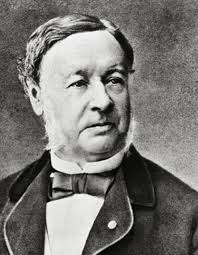
37.
Which of the following scientists concluded that all animals are made of cells?
a)
Rudolf Virchow
b)
Matthais Schleiden
c)
Robert Hooke
d)
Theodor Schwann
38.
All cells come from___________ cells.
a)
pregnant
b)
pre-existing
c)
paternal
d)
pin size
39.
Which of the following scientists was the first to observe bacteria under a microscope?
a)
Anton van Leuwenhoek
b)
Matthais Schleiden
c)
Robert Hooke
d)
Theodor Schwann
40.
Who discovered and named cells? 
a)
Captain Hook
b)
Robert Hooke
c)
Zacharias Janssen
d)
Rudolf Virchow
