NEW
Font size
 Worksheets
Earth Science Unit Test Review
Total questions: 74
Worksheet time: 1hrs 14mins

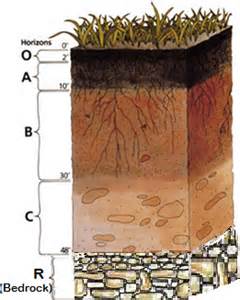
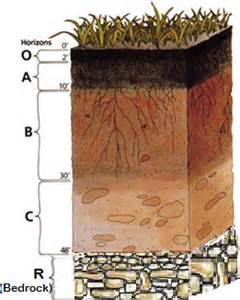


Which soil particle is the largest and feels gritty?
Sand
Silt
Clay
Which soil particle is the smallest, feels smooth, and gets heavy when wet (like a sponge)?
Sand
Silt
Clay

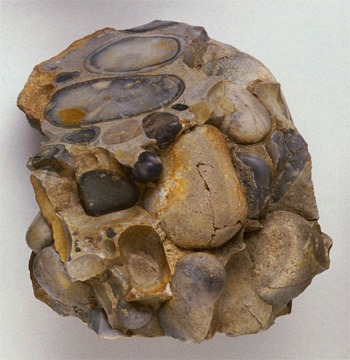


what is the rock cycle.
molten rock that is stored underground.
rock material that forms where rocks are broken down into smaller pieces.
a process that changes one type of rock into another type of rock.
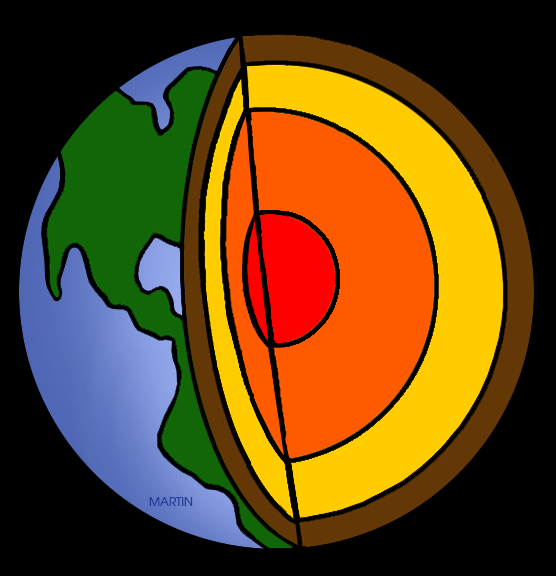
Which layer is shown in red?
crust
mantle
outer core
inner core
Which layer is shown in orange?
crust
mantle
outer core
inner core
Which layer is shown in yellow?
crust
mantle
outer core
inner core
Which layer is shown in brown?
crust
mantle
outer core
inner core

Which shows the order of the layers from COOLEST to HOTTEST?
crust, mantle, outer core, inner core
inner core, outer core, mantle, crust
crust, outer core, inner core, mantle
Trick question! All of the layers are the same temperature!
Convection currents, which may be the driving force for the movement of lithospheric plates, are mostly found in Earth’s
crust
outer core
mantle
inner core
Which of Earth's layers is best described as liquid metal?
crust
mantle
outer core
inner core
Which of the following is true regarding the composition of the lithosphere?
The lithosphere is mostly liquid, with some medium-density materials, such as silicon.
The lithosphere is more plastic and flows slowly compared to the solid crust of Earth.
The lithosphere includes the core and the lower portion of the mantle.
The lithosphere includes the crust and the uppermost portion of the mantle, which is sold and rigid.
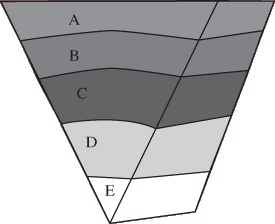
What does layer D show?
upper mantle
lower mantle
outer core
inner core
the place where two different plates have contact.
Pacific Plate
Mountains
Earthquakes
Plate Boundaries
Occurs when two tectonic plates move toward each other and collide
convergent boundary
subduction
volcanic eruptions
divergent boundary
Events in which molten rock spews out from the mantle to the surface of Earth as ash, lava and gases; major geological events that occur when a dense plate subducts below a less dense plate
Mountain Building
Convergent boundary
Divergent boundary
Volcanic eruptions
Major geological event that occurs when continental plates of equal density converge, resulting in mountain chains
Mountain Building
Subduction
Volcanic eruptions
Divergent Boundary
Occurs when two tectonic plates move away from each other.
Divergent Boundary
Convergent Boundary
Volcanic eruptions
Mountain building
Major geological events that occur when plates shift suddenly and release stored energy; frequent occurrences along all types of plate boundaries
Volcano
Earthquakes
Tsunami
Tornado

This type of boundary occurs when tectonic plate move together.
covergent
divergent
transform
none of the above

This type of boundary occurs when tectonic plates slide past one another.
convergent
divergent
transform
none of the above

The theory of plate tectonics is based on hot magma rising and cool magma sinking. This cycle is called:
subduction
convection
hot pockets
radial fracture
This is the first planet from the Sun; it is very hot in the day and very cold in the night.
Mercury
Neptune
Earth
Jupiter
These are the four planets the Sun; Jupiter, Saturn, Uranus, and Neptune are classified as
terrestrial planets
gas giants
solar planets
the best planets
When the Moon is directly between the Sun and the Earth, what phase would the Moon be in?
Full Moon
New Moon
Half Moon
Waxing Crescent
What term is associated with the moons that are increasing in size (more light on them) each day?
Waxing moons
Waning moons
Crescent moons
Gibbous moons

What phase of the moon is shown?
waning gibbous
1st quarter
waxing crescent
Waxing gibbous

What is the phase of the Moon at position #5?
New Moon
Third Quarter Moon
First Quarter Moon
Full Moon
What is the correct phases of the Moon at position 3?
Waning Crescent
First Quarter (or Waxing Half)
Third Quarter (or Waning Half)
Waxing Gibbous

What is a high tide?
Sea pulled TOWARD the moon where Earth is CLOSEST to the moon
Sea pulled AWAY from the moon where Earth is FARTHEST to the moon
Sea pulled AWAY from the moon where Earth is CLOSEST to the moon


Wha type of tide would this arrangement of earth-moon-sun create?
full moon tide
new moon tide
neap tide
spring tide

A lunar eclipse occurs about
once in 3 years
twice a year
once a month
once in 5 years