wayground logo

Free Printable Worksheets

Font size

S
M
L
XL
Worksheets

Human Impact

Total questions: 62

Worksheet time: 37mins

Name
Class
Date
1.
The Jones family cares about the environment. They run their dishwasher only when it is completely full. Which of the following BEST explains why they do this?
a)
To save money
b)
To recycle dish soap
c)
To reduce sewage
d)
To conserve water
2.
What does conserving resources mean?
a)
Use as much of the resources as you can
b)
Only use the resources at school
c)
Protecting the resource so it does not run out
3.
The careful use of a resource is....
a)
recycling
b)
pollution
c)
depositing
d)
conservation
4.
An endangered species is
a)
One whose numbers are so small that it is at risk of extinction
b)
One whose not been spotted after many years.
c)
One whose numbers are abundant.
5.

If a species in no longer found living on Earth it is

a)

pollutants

b)

extinct

c)

species

d)

endangered

6.

Something that is in danger of disappearing, or becoming extinct is called

a)

species

b)

endangered species

c)

fossil

d)

extinct

7.
The major cause of extinction is ____________________.
a)
habitat fragmentation
b)
habitat destruction
c)
pollution
d)
poaching
8.
Scientists think people have directly caused the extinction of some species through ______________.
a)
habitat destruction
b)
poaching
c)
pollution
d)
All of these
9.
What is Deforestation?
a)
A forest in which there are too many deers.
b)
A forest party where deers hang out
c)
The adding of trees in a forest.
d)
The clearing of trees; transforming of a forest into cleared land.
10.
What is THE most major cause of extinction today?
a)
habitat destruction by humans
b)
poaching
c)
disease
d)
hunting
11.
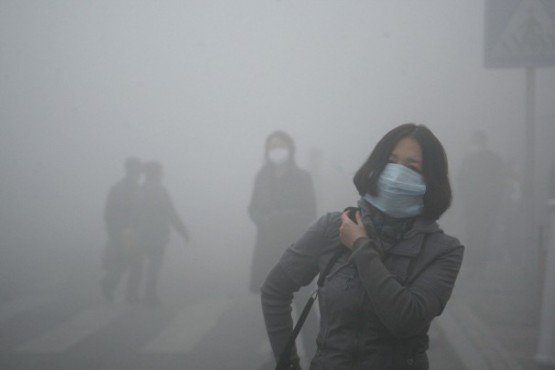
This picture shows people walking through a highly-polluted city in China. From what type of pollution are they protecting themselves based on what they are wearing?

a)
air pollution
b)
water pollution
c)
land pollution
d)
noise pollution
12.
Where is pollution found on the earth?


a)
only in the air 
b)
only on the land 
c)
only in the water 
d)
on land, in the air, and in the water 
13.
Which way can people best reduce land pollution caused by large amounts of waste dumped in landfills?  
a)
They can use a water filter to use fewer water bottles.
b)
They can recycle their plastic, glass, paper, and cardboard items and only throw away non-recyclable items.
c)
They can watch less television, reducing electricity use and allowing their electronics to last much longer.
d)
They can refill large plastic containers, like those used for laundry detergent, instead of throwing them away.
14.

illegal killing or hunting of wildlife from its habitat is called...

a)

plastic

b)

punching

c)

poaching

d)

pooching

15.
What do we call it when an ecosystem is able to maintain its structure and be stable over time?
a)
It is dependable.
b)
It is sustainable.
c)
It is independent.
d)
It is adaptable.
16.
What does conserving resources mean?
a)
Use as much of the resources as you can
b)
Only use the resources at school
c)
Protecting the resource so it does not run out
17.

1. What are renewable resources?

a)

. Resources that are used faster than they form

b)

resources that can replenish themselves over time

c)

resources that formed over millions of years

d)

resources that exist only in rural areas

18.

According to the graph, what material’s recycling would reduce the largest portion of America’s trash?

a)

Metals

b)

paper

c)

plastics

d)

Yard trimmings

19.

1. Which biome has the highest biodiversity and is the most threatened?

a)

Temperate forests

b)

grasslands

c)

tropical rain forests

d)

deserts

20.

1. Why is firewood considered to be a renewable resource?

a)

It can be replenished over time.

b)

It is used up faster than it can form.

c)

It is made from coal.

d)

It can be made synthetically.

21.

1. Which of the following is not a renewable resource?

a)

coal

b)

wind energy

c)

solar energy

d)

water

22.

What is global warming

a)

the normal temperature fluctuations of Earth's climate cycle

b)

the melting of the polar ice caps

c)

the trend of increasing temperatures on Earth

d)

the changes in Earth's biosphere that affect the atmosphere

23.

How might an introduced plant species kill native plant species?

a)

. Its rapid growth can deprive native plants of sunlight.

b)

Its rapid growth can deprive native plants of food.

c)

It can cause soil loss from erosion.

d)

Its rapid growth can deprive native plants of oxygen.

24.

1. What is one of the greatest threats to biodiversity on Earth?

a)

habitat destruction

b)

loss of drinking water

c)

decrease in food supply

d)

pollution

25.

1. Why might an introduced animal species overrun native species in an ecosystem?

a)

. Its population size is smaller than those of native species.

b)

. It is more energy efficient, so it eats less food.

c)

It is a predator of the native species.

d)

It often has no natural enemies

26.

1. What does the Endangered Species Act do?

a)

It provides food for endangered species.

b)

It protects organisms that are near extinction and their environments

c)

It protects populations of animals from predators

d)

It protects endangered plant species only.

27.
Many different types of organisms. 
a)
Pioneer species
b)
Community
c)
Biodiversity
d)
Population
28.
Another name for plants.
a)
Vegetation
b)
Consumer
c)
Predator
29.
Which human activity would preserve nonrenewable resources?
a)
deforestation
b)
removing carnivores from a forest 
c)
recycling
d)
heating homes with fossil fuels  
30.
Which human activity would be most likely to have a negative impact on the environment?
a)
Planting trees to control soil erosion
b)
Limiting the use of chemicals that kill weeds.
c)
Stopping the draining of swamps.
d)
Burning coal and oil to generate electric power.
31.
What is the greenhouse effect?
a)
the burning of fossil fuels causes gases to mix with water in the atmosphere
b)
ground level ozone and vehicle exhaust react in the presence of sunlight
c)
certain gases such as carbon dioxide act like a blanket and keep the sun's energy close to earth
32.
Which is a cause of climate change?
a)
melting of sea ice
b)
cutting down trees
c)
severe storms 
d)
changes in plant life 
33.
Which is an effect of climate change?
a)
melting of sea ice 
b)
burning of fossil fuels
c)
cutting down trees 
d)
vehicle exhaust
34.
What is one way to prevent climate change?
a)
avoid dumping in storm drains
b)
turn off electricity when you are not using it
c)
pick up after your pet's litter
d)
open windows 
35.
Which of the following issues is the cause of the other environmental impacts caused by humans?
a)
pollution
b)
human population growth
c)
climate change
d)
habitat destruction 
36.
Which of the following results when nitrogen and sulfur-containing compounds mix with water in the atmosphere?
a)
global warming
b)
ozone depletion 
c)
acid rain
d)
thermal pollution
37.
Which of the following results when levels of COin the atmosphere increase due to fossil fuel burning?
a)
ecological succession 
b)
acid rain 
c)
ozone depletion
d)
global warming
38.
Which of the following is NOT a method of energy conservation?
a)
taking public transportation to work (bus, subway)
b)
riding your bike to work
c)
walking to work 
d)
driving alone in your car to work
39.
Fishermen have harvested certain fish to the point where the population of that fish is decreasing. This level of direct harvesting could cause
a)
ecosystems to be improved for future generations
b)
ecosystems to be severely damaged
c)
the restoration of environmental stability
d)
all other fish species to increase in number
40.
Pollution can cause harm to the ___________.  
a)
air
b)
land
c)
water
d)
all of the above
41.
Conservation is the act of conserving, or protecting the environment, plants, and animals. What are some things you can do to help conserve our environment? 
a)
leave water on, leave TV on, run dishwasher with 1 plate
b)
run the washing machine with 1 shirt
c)
leave the refrigerator door open
d)
turn off water, turn off lights, turn off TV
42.

Why should we remove an invasive species?

a)

They won't be able to survive in a new environment.

b)

They will eat native species and cause other species to decrease.

c)

We should not remove them and let nature be.

43.

Which is a consequence of an increase in greenhouse gases?

a)

Ice caps freezing

b)

global cooling

c)

sea levels rising

44.

What do we need to replace nonrenewable resources with?

a)

renewable/sustainable resources

b)

other nonrenewable resources

c)

We don't need to replace them

45.

As species go extinct what will happen to the biodiversity in that ecosystem?

a)

Decrease

b)

Increase

c)

Stay the same

46.

What will happen to ocean life if the water gets warmer?

a)

They will be fine

b)

decrease in variation

c)

increase in variation

47.

Does what we do today to the environment affect those after us?

a)

NO

b)

YES

c)

MAYBE

48.

What is a good way to tell people the good about renewable resources and bad about fossil fuels?

a)

let them read it for themselves

b)

Education

c)

they already know

d)

they don't need to know

49.

Which are example of fossil fuels?

a)

Oxygen

b)

Coal

c)

Oil

d)

Natural gas

50.

Which are examples of renewable resources?

a)

coal

b)

wind power

c)

solar power

d)

water power

51.

What will happen to the populations of seals, polar bears and penguins if the ice caps melt?

a)

Populations will increase

b)

Nothing will happen to the populations

c)

Populations will decrease

52.
Global warming has been linked to a decrease in 
a)
the size of the polar ice caps 
b)
the temperature of Earth 
c)
the rate of species extinction 
d)
the rate of carbon dioxide production
53.
Which human activity would preserve nonrenewable resources?
a)
deforestation
b)
removing carnivores from a forest 
c)
recycling
d)
heating homes with fossil fuels  
54.
Increased industrialization will most likely
a)
decrease available habitats 
b)
increase environmental carrying capacity 
c)
increase the stability of ecosystems 
d)
decrease global warming
55.
Which human activity would most likely deplete nonrenewable resources?
a)
use of natural enemies to eliminate insect pests
b)
development of wildlife refuges 
c)
governmental restriction of industrial pollution 
d)
increased use of fossil fuels
56.
Deforestation of areas considered to be rich sources of genetic material could limit future agricultural and medical advances due to
a)
the maintenance of dynamic equilibrium 
b)
the loss of biodiversity 
c)
an increase in the ecosystem’s carrying capacity
d)
the depletion of the ozone layer
57.
Deforestation by burning has been described as a "double whammy" to the environment, meaning it has 2 negative impacts. Why is this description accurate? 
a)
Forest burning releases CO2 while decreasing oxygen, which disrupts cycles
b)
Deforestation reduces the amount of oxygen in the atmosphere, which depletes the ozone layer
c)
Forest clearing is often followed by land development, which often leads to increased noise pollution
d)
Deforestation increases the number of plant and animal species by destroying habitat
58.
Approximately 75 percent of the Earth's surface is covered in water. So why is water considered such a precious resource?
a)
The greenhouse effect is causing most of the world's freshwater to be trapped in the atmosphere
b)
Only a small fraction of the Earth's water is freshwater available for drinking and irrigation
c)
Each year, more freshwater is being trapped in icecaps located at the North and South Poles
d)
Global warming caused by greenhouse gas emissions will likely cause Earth's oceans to evaporate
59.
Many common products, such as wooden furniture, paper, and books, are made from trees. Which of the following is a likely consequence of humans cutting down a forest in order to make use of the natural resources there? 
a)
the decrease of chemical runoff into the oceans
b)
increased acid rain
c)
the increase of light pollution in cities
d)
the destruction of habitats
60.
What are renewable resources?
a)
Resources that are used faster than they form
b)
a.  Resources that can replenish themselves over time
c)
a.  Resources that exist only in urban areas
d)
Resources that exist only in rural areas
61.
Humans often change ecosystems as a result of population growth, consumption, and technology. Which of the following exemplifies a way in which humans modify ecosystems? 
a)
factory and automotive emissions causing acid rain 
b)
redirecting and storing freshwater behind dams 
c)
cutting down trees to build new buildings and roads 
d)
all of these
62.
Which of the following is a renewable resource?
a)
coal
b)
solar energy
c)
natural gas
d)
oil