
 Worksheets
1st semester exam review Biology
Total questions: 94
Worksheet time: 2hrs 32mins
The information you collect while doing your experiment is called
conclusions
data
hypotheses
procedures
The _________________________ answers the problem you are trying to solve in an experiment and explains the results to others.
procedure
hypothesis
conclusion
data
A(n) ___________________________ is what you can learn about an object by using your 5 senses.
Observation
Quantitative Observation
Inference
Hypothesis

The variable that is being measured or observed is called the _______________. Hint: this is the variable that is the result or effect
independent variable
dependent variable
control variable

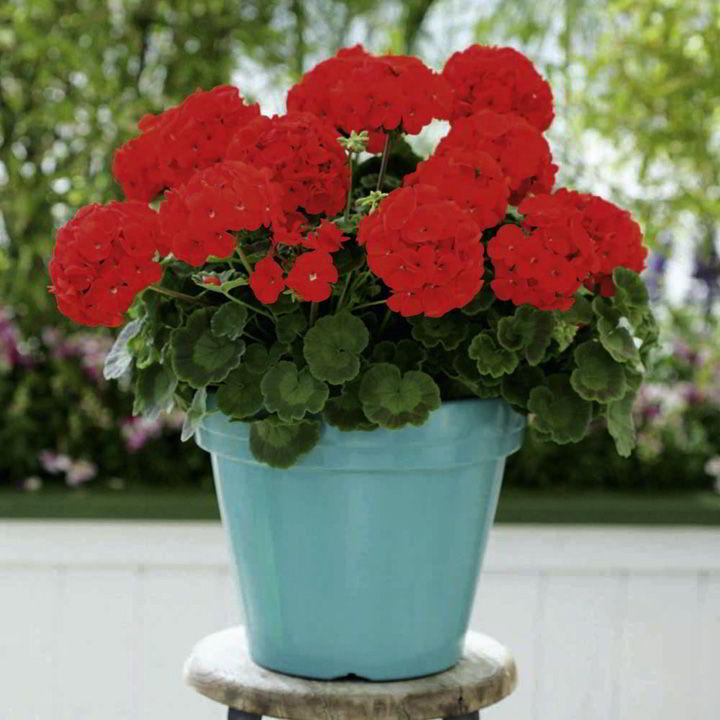
Susan said, “If I fertilize my geranium plants, then they will have more flowers.”
recognize a problem
test the hypothesis with an experiment
form a hypothesis
draw conclusions
How many independent variables should you have in an experiment?
two
as many as possible
four
one
Heliotropism is the seasonal motion of plant parts (flowers or leaves) to face their direction of the Sun. This is an example of ...
all living things being made of cells.
all living things maintaining homeostasis.
all living things growing and developing.
all living things responding to stimuli.
After eating, the pancreas releases a hormone called insulin to help the cells take in the sugar from the food to keep the blood stream at the appropriate sugar level. This is an example of ...
all living things containing DNA.
all living things maintaining homeostasis.
all living things evolving.
all living things reproducing.
True or False: Living things must be multicellular.
True
False

Which kingdom is prokaryotic?
Animalia
Archaebacteria
Planta
Fungi
Three cell structures that ALL cells have are:
(Pick the three)
Cell Membrane
Cell Wall
Cytoplasm
Chloroplasts
Ribosomes
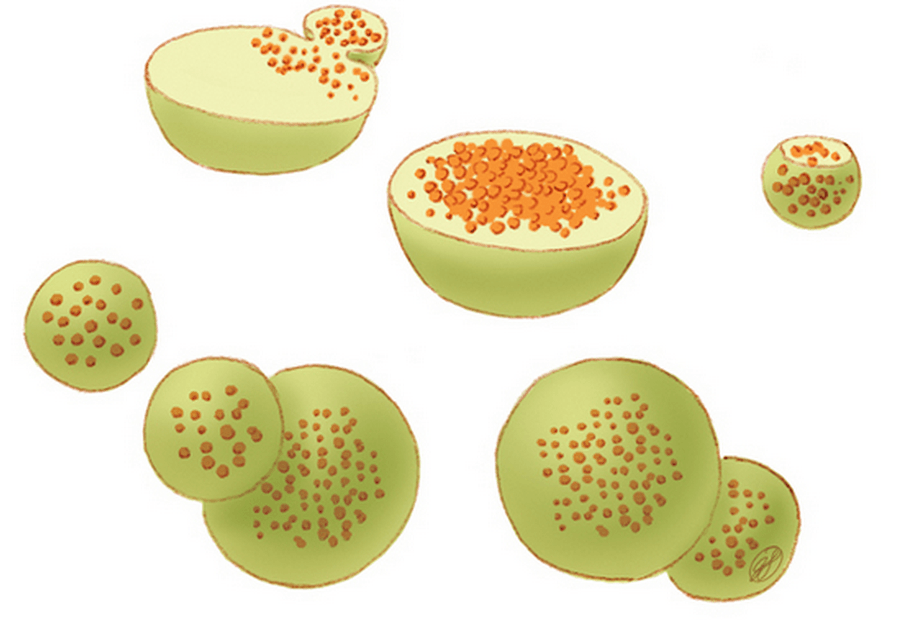
Which organelle is the trash collector, but also recycles parts of the cell?
mitochondria
lysosome
vacuole
ribosome
This organelle takes food and turns it into ENERGY for plant and animal cells.
chloroplast
mitochondria
lysosome
ribosome
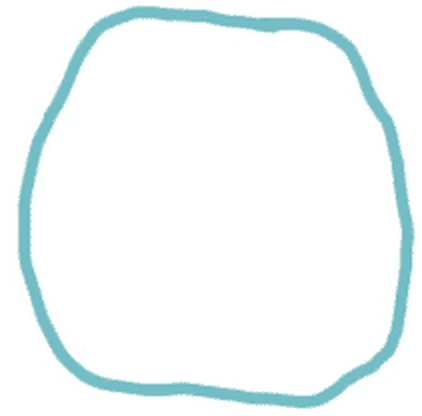
This controls what goes in and out of the cell.
lysosomes
nucleus
cell membrane
cytoplasm
What is the gel-like substance inside of cells called?
photoplasm
cell membrane
cytoskeleton
cytoplasm

What is the blue organelle surrounding the nucleus?
mitochondria
lysosomes
golgi apparatus
endoplasmic reticulum
Which organelles are the workers that make proteins?
golgi apparatus
lysosomes
endoplasmic reticulum
ribosomes
Which organelle stores the genetic material, DNA?
lysosomes
vacuoles
ribosomes
nucleus


What molecule is pictured?
Integral Protein
Carbohydrate chain
Phospholipid


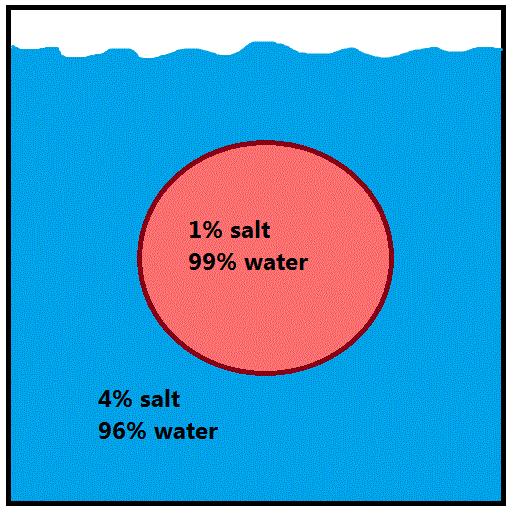
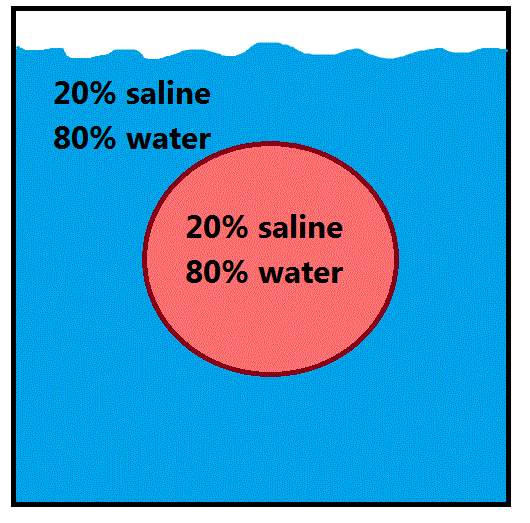
when some molecules can cross the membrane while others cannot.


Viruses are bacteria.
True
False

Which of the following pictures is NOT a example of a virus?
a
b
c
d
A viruses are considered
Living
Non-living
What is a host?
An organism that eats another organism
An organism or a cell that the virus needs to reproduce in
Something that causes harm to the cell
The person that greats you at a resturant
What type of genetic material do viruses have?
Only DNA
Only RNA
It could be DNA or RNA
None of these are true.


Which of the following equations represents the overall chemical reaction for photosynthesis?
6O2+ 6H2O → C6H12O6+ 6O2
C6H12O6 + 6H2O→ 6O2+ 6O2
6CO2+ 6H2O→ C6H12O6+ 6O2
6O2 + 6H2O→ C6H12O6 + 6CO2

what are the inputs of the calvin cycle?
NADPH
ATP
CO2
H2O
chlorophyll
Autotrophs (producers) can perform photosynthesis because they have -
Mitochondria
Ribosomes
A Nucleus
Chloroplasts
What products from the light reactions are used in the Calvin Cycle?
ATP, NADPH
ATP, FADH2
NADPH, O2
Water + Carbon Dioxide
What greenhouse gas does the Calvin Cycle use?
Oxygen
Methane
Carbon Dioxide
Water Vapor
Main products of the Calvin Cycle
Oxygen, NADP+, ADP
Glucose, CO2, ADP
ADP, NADP+, Glucose
ATP, NADPH, Oxygen
Cellular Respiration occurs in what cell organelle?
chloroplast
cytoplasm
mitochondria
animal
Which organism go through cellular respiration?
animals
plants
both animals and plants
none
Which molecule is the product of Glycolysis and the reactant of the Krebs Cycle?
pyruvic acid
carbon dioxide
water
oxygen
The Electron Transport Chain is a series of chemical reactions in which energy is transferred to form a large amount of what molecule?
glucose
oxygen
pyruvic acid
ATP
What is formed at the end of the Electron Transport Chain by the combination of its reactant and hydrogen?
water
oxygen
carbon dioxide
glucose
What is an inhibitor?
the region of an enzyme that attaches to a substrate
a change in the shape of a protein
substance that can bind to an enzyme and prevent the substrate from binding
macromolecules that contain carbon, hydrogen, oxygen, and nitrogen
Where does Digestion start?
(a)

Involuntary muscle contractions that move food.
Chemical breakdown
Flexion
Swallowing
Peristalsis

What is the chemical that breaks down food in your mouth?
Saliva
Lipase
Lipid
Bile

The physical & chemical breakdown of food is called?
Digestion
Absorption
Swallowing
Excretion

Pick the correct order of digestion
Mouth,stomach,esophagus,large intestine,small intestine
Mouth,esophagus,stomach,small intestine, large intestine
Mouth, esophagus, stomach, large intestine, small intestine, colon
Mouth, stomach, esophagus, small intestine, large intestine

What does the Gall Bladder store?
Bile
Fat
Carbohydrates
Insulin

What organ produces Insulin?
Liver
Stomach
Appendix
Pancreas
Your stomach has what 3 functions?
Stores food
Makes Chyme
Breaks down Fat
Controls food moving into the small intestine
Most absorption of nutrients occurs in the _
stomach
large intestine
small intestine
pancreas
When your glucose levels are too high, what is the appropriate response?
urinate
release glucagon
eat sugar
release insulin
Glucagon causes muscles and the liver to release _____ back into the bloodstream
glucose
glucagon
glycogen
insulin

