
 Worksheets
Unit 3 Test Review
Total questions: 44
Worksheet time: 27mins
Name
Class
Date
1.
All living things do which of the following?
a)
Chemosynthesis
b)
Respiration
c)
photosynthesis
d)
all of the answers
2.
What is one of the reactants of cellular respiration?
a)
energy
b)
glucose
c)
carbon dioxide
d)
water
3.
______________ produces the most ATP.
a)
photosnthesis
b)
aerobic respiration
c)
anaerobic respiration
d)
glycolysis
4.
Where does glycolysis take place?
a)
Cytoplasm
b)
Stroma
c)
Thylakoid
d)
Mitochondria
5.
What is the name of the 1st step of cellular respiration?
a)
Glycolysis
b)
Kreb's Cycle
c)
ETC
d)
Anaerobic respiration
6.
What is the net gain of ATP during glycolysis?
a)
1
b)
2
c)
4
d)
34
7.
Which type of respiration occurs in the presence of oxygen?
a)
Aerobic
b)
Anaerobic
8.
Which type of respiration occurs without the presence of oxygen?
a)
Aerobic
b)
Anaerobic
9.
What are the two reactants of cellular respiration?
a)
C6H12O6 & 6CO2
b)
6 CO2 & 6H2O
c)
C6H12O6 & 6O2
d)
6CO2 & 6O2
10.
Glucose is broken down during which process?
a)
Calvin cycle
b)
Glycolysis
c)
Krebs Cycle
d)
Photosynthesis
11.
Along with 2ATP, what is produced during glycolysis?
a)
6CO2
b)
6O2
c)
C6H12O6
d)
2 pyruvate
12.
___ produces the most ATP.
a)
Aerobic respiration
b)
Anaerobic respriation
c)
Glycolysis
d)
Photosynthesis
13.
The overall goal of cellular respiration is to make:
a)
Glucose
b)
ATP
c)
Oxygen
d)
Water
14.
Which is a product of Kreb's Cycle?
a)
Carbon dioxide
b)
Glucose
c)
Pyruvate
d)
Water
15.
Which is a product of the ETC?
a)
Carbon dioxide
b)
Glucose
c)
Oxygen
d)
Water
16.
What is the name of the process that helps make beer and wine?
a)
Fermentation
b)
Alcoholic fermentation
c)
Lactic acid fermentation
d)
Glycolysis
17.
Which type of fermentation occurs in muscles?
a)
Alcoholic
b)
Lactic acid
18.
What process occurs when light energy is captured in autotrophs and converted into sugar?
a)
Photosynthesis
b)
Cellular Respiration
19.
What are the products of photosynthesis?
a)
water and carbon dioxide
b)
oxygen and glucose
c)
oxygen and carbon dioxide
d)
oxygen and water
20.
What is the pigment in chloroplasts that performs photosynthesis?
a)
Chlorosynthesis
b)
Chlorophyll
c)
ADP
d)
Electron Transport
21.

What is the function of NADPH and ATP?
a)
They absorb light
b)
They power the light-dependent reactions
c)
They are light-reflecting pigments
d)
They are short term energy carriers
22.
The calvin cycle takes place in __________.
a)
stroma
b)
thylakoid membrane
c)
chlorophyll
d)
granum
23.
What is the ultimate ORIGINAL source of energy for living things
a)
Sugar
b)
Sun
c)
Moon
d)
Carbon Dioxide
24.
Which system happens first?
a)
photosystem 1
b)
photosystem 2
c)
Calvin Cycle
25.
The Photosystems take place in the
a)
thylakoid
b)
stroma
c)
stomata
d)
mitochondria
26.
ADP + P =
a)
ATP
b)
AMP
c)
ADP
27.
ATP - P =
a)
ADP
b)
ATP
c)
AMP
d)
NADP
28.

In Cyclic Electron flow, electrons are returned to:
a)
Photosystem I
b)
Photosystem II
c)
H2O
d)
NADPH
29.

Which molecule is ONLY produced in Cyclic electron flow:
a)
ATP
b)
O2
c)
H2O
d)
NADPH
30.

Both cyclic and non-cyclic electron flow result in the production of ATP.
a)
True
b)
False
31.
What is a substance called if it speeds up a chemical reaction?
a)
reusable
b)
catalyst
c)
specific
d)
fragile
32.
Each enzyme only has 1 substrate that will fit its active site. What is this called?
a)
reusablility
b)
denaturation
c)
specificity
d)
fragility
33.
Any substance that is acted upon by an enzyme is called a(n)?
a)
Coenzyme
b)
Substrate
c)
Vitamin
d)
Polypeptide
34.
Enzymes are...
a)
nucleic acids
b)
proteins
c)
lipids
d)
carbohydrates
35.
An enzyme speeds up a chemical reaction in the cell but can only be used once. True or False?
a)
true
b)
false
36.
What is the function of an enzyme?
a)
enzymes break themselves into small pieces
b)
enzymes slow down chemical reactions
c)
enzymes speed up chemical reactions
d)
enzymes combine products to form reactants
37.
What happens when enzymes are heated to a high temperature?
a)
The enzymes die.
b)
The shapes of the enzyme are altered denature
c)
The enzymes' amino acid sequence changes.
d)
The enzymes remain the same
38.
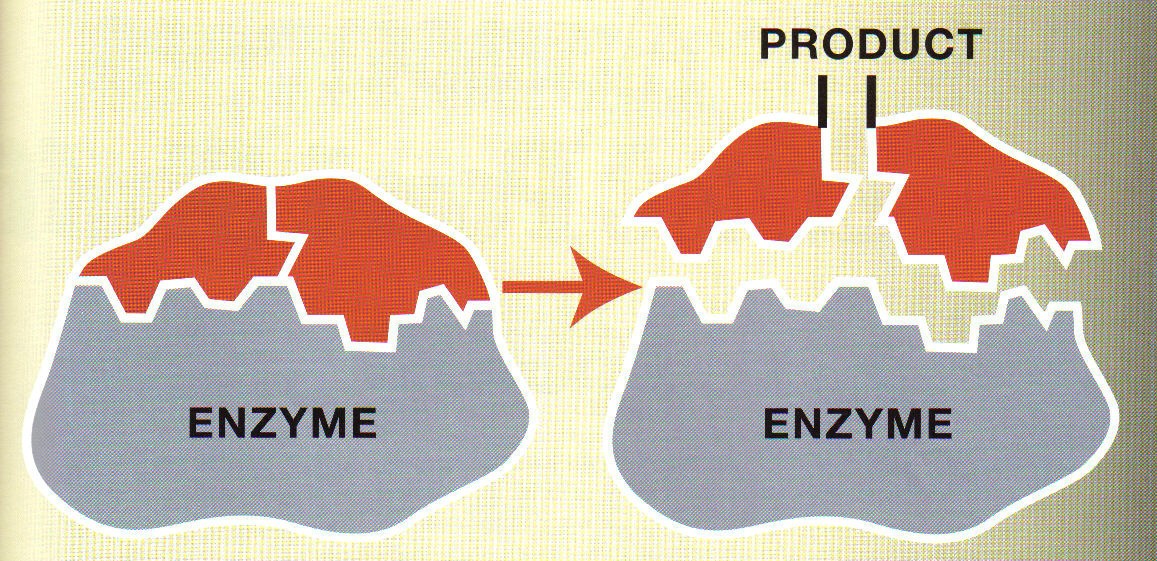
Enzymes speed up reaction rates by changing:
a)
Activation Energy
b)
pH
c)
Hydrogen Bonds
d)
Kinetic Energy
39.
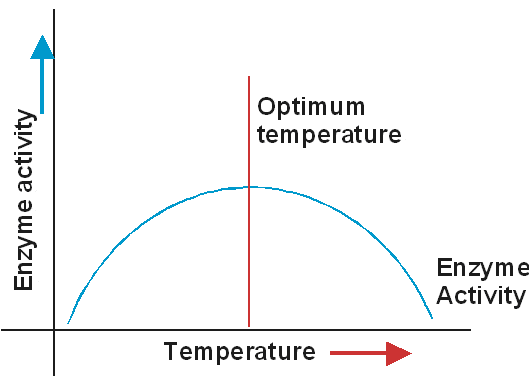
At high temperatures enzyme activity declines because of:
a)
Denaturation
b)
Decreased Kinetic Motion
c)
Increased H-Bonding
d)
Dissociation of Ionic Compounds
40.
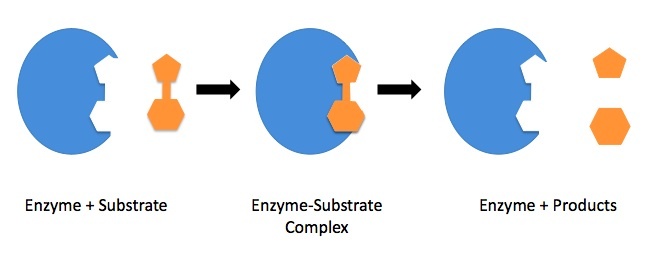
A molecule binds to an enzyme and decreases the ability of the active site to bind to the substrate. This is called:
a)
Allosteric Activation
b)
Allosteric Inhibition
c)
Competitive Activation
d)
Competitive Inhibition
41.
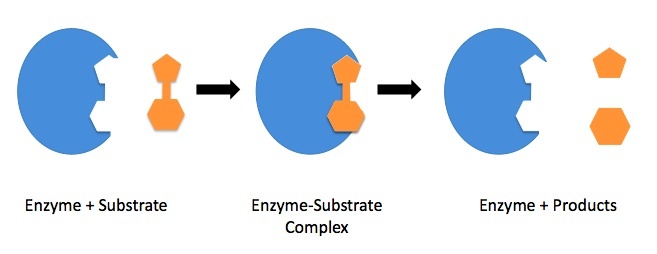
A molecule binds to an enzyme and opens the active site so it can bind to the substrate. This is called:
a)
Allosteric Activation
b)
Allosteric Inhibition
c)
Competitive Activation
d)
Competitive Inhibition
42.
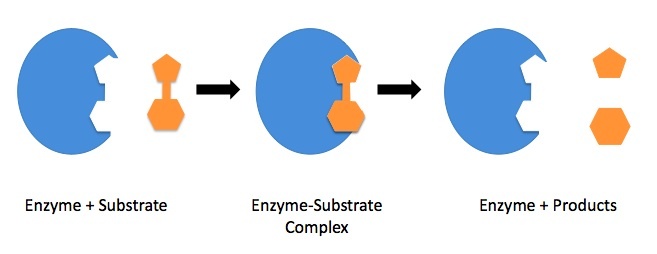
When a molecule can occupy the same active site as the substrate, a situation called __________________ can result
a)
Competitive lnhibition
b)
Allosteric Regulation
c)
Non-Competitive Inhibition
d)
Feedback Inhibition
43.
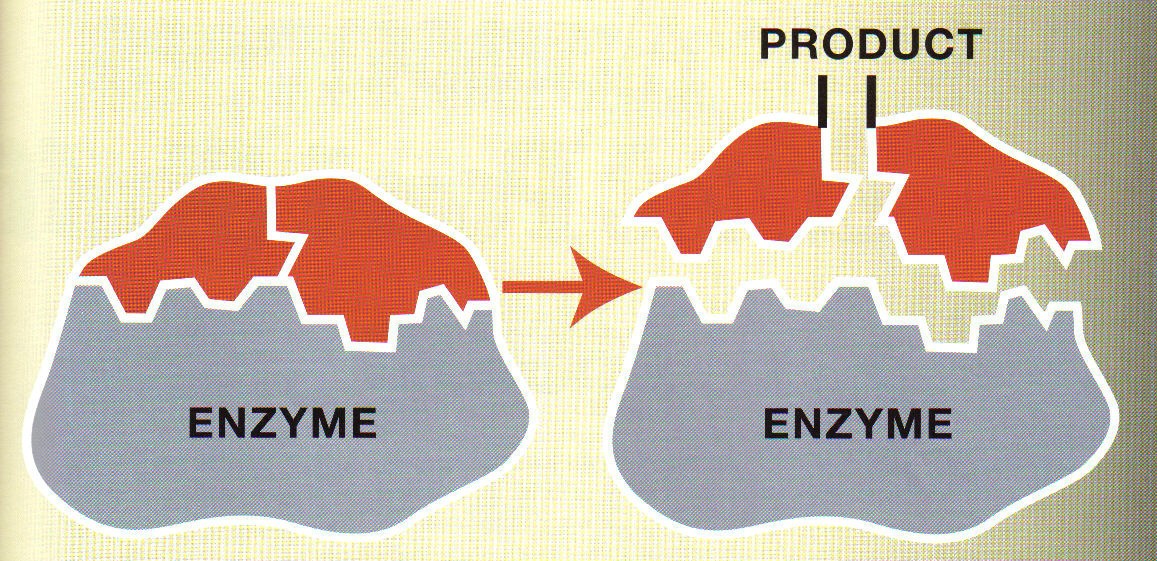
Organic molecules that temporarily bind to enzymes and enhance an enzyme's ability are called:
a)
Cofactors
b)
Coenzymes
c)
Allosteric Inhibitors
d)
Allosteric Activators
44.
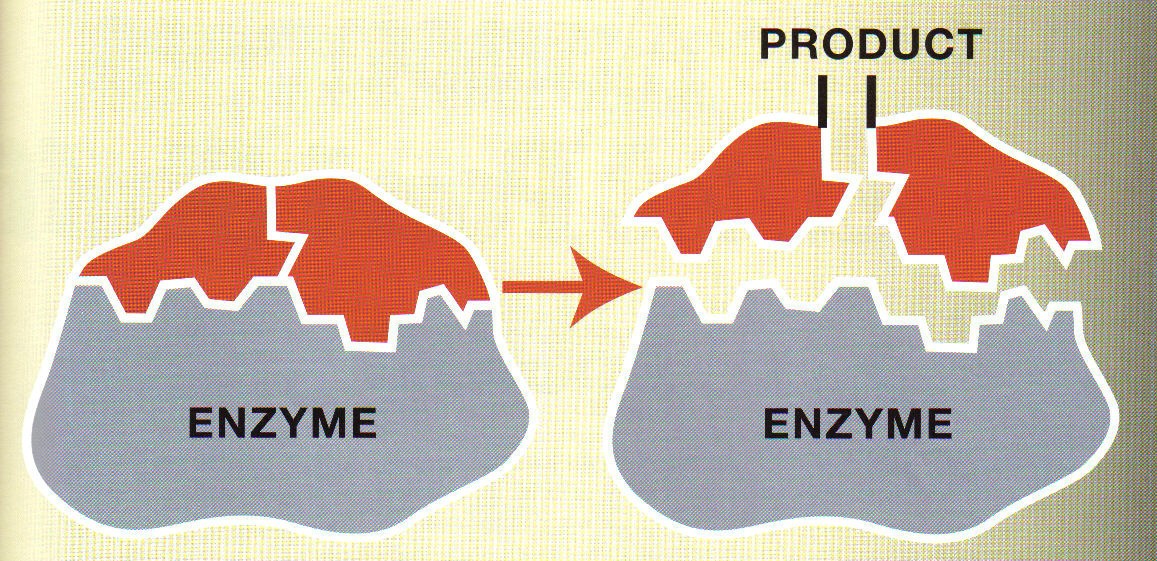
Inorganic molecules that bind to enzymes and enhance an enzyme's ability are called:
a)
Cofactors
b)
Coenzymes
c)
Allosteric Inhibitors
d)
Allosteric Activators
100 %

